

 Förhandsvisa
 Skicka
 Dela
Dela
 Visa detaljer

 Ladda ner
 Liknande objekt
 Röntgen
 Bildspel
 Statistik
Cupid with a Tambourine
 Etching
- WallArt
- Symbolist Illustration
 19th Century
 14.0 x 10.0 cm
 Hammer Museum
 Visa mer
Handgjord oljereproduktion
Handmålad olja på duk i din valda storlek och ram, tillverkad efter beställning av våra konstnärer. ( Byt till tryck Byt till digital bild)




P118B $10

P118H $10

P118W $10

P438Z $10

P508JH $12

P508YH $12

P805H $10

P805Z $10

P919BZ $10

P919G $10

P919XJ $10

P959ZH $10

P968JZ $12

W106C $8

W218G $10

W218JH $8

W218Y $10

W307PJ $10

W316G $10

W316PJ $8

W316Y $10

W398PJ $8

W4111J $10

W500HY $15

W500JH $15

W692G $12

W849H $8

W940BG $15

W953PJ $8




Välj bland våra förinställda storlekar som motsvarar konstverkets ursprungliga proportioner.

Du kan ange egna mått för att passa en specifik ram eller yta. Om den valda storleken inte matchar originalbildens proportioner kommer vi antingen att beskära konstverket eller utöka målningen med ytterligare handmålade element. En digital skiss skickas till dig för godkännande innan produktionen påbörjas.
Observera att förhandsvisningen på skärmen inte återspeglar den faktiska beskärningen eller utökningen. Endast skissen visar den slutgiltiga kompositionen korrekt.
Även om anpassade storlekar är möjliga, rekommenderar vi att du väljer en dimension från den fördefinierade listan för att bevara originalproportionerna.
Efter beställning kommer OriginalUniqueArt.com team att mejla kunden för instruktioner och tillhandahålla en skissförhandsvisning
Leverans över hela världen () på 3–4 veckor istället för standard 5 veckor. (18 september). Inga kompromisser med kvaliteten.

Fri expressfrakt över hela världen

Högkvalitativ linnecanvas

Fullständig fraktförsäkring

Garantier för återbetalning av tullavgifter

Garantier för exakt färgåtergivning

100 dagars returrätt (endast vid defekter)

100% pengarna tillbaka-garanti

Mängdrabatt erbjuds
 Glasalternativet är endast tillgängligt i storlekar under 110 cm.

Cupid with a Tambourine
Reproduktionsmedium
Storlek på reproduktion
-


Slutgiltigt pris
$ 300
Felicien Rops’s “Cupid with a Tambourine”: A Study in Melancholic Beauty
Felicien Rops's "Cupid with a Tambourine," an etching from 1875, is not merely a depiction of the Roman god of love; it’s a carefully constructed tableau of wistful contemplation and subtle unease. Rops, a pivotal figure bridging Realism, Symbolism, and the nascent world of illustrated storytelling, masterfully employs line and tone to evoke an atmosphere far deeper than simple romantic imagery. The work, now housed within the UCLA Grunwald Center for the Graphic Arts at the Hammer Museum, offers a glimpse into Rops’s uniquely shadowed vision – one that frequently explored themes of beauty intertwined with melancholy and a fascination with the darker corners of human experience.
A Technical Masterpiece: Line, Tone, and Etching
The etching itself is a testament to Rops's technical skill. The foundation lies in the meticulous process of etching – a technique involving scratching lines into a metal plate (typically copper) before applying ink and then transferring the image onto paper through pressure. Rops’s control over this medium is remarkable, evidenced by the incredibly fine, delicate lines that delineate Cupid’s features, his wings, and even the scattered leaves beneath him. The use of hatching and cross-hatching creates a rich tapestry of tones, lending depth and volume to the composition without resorting to broad, flat areas of color. Notice how the varying density of these lines subtly suggests texture – the rough surface of the ground, the smooth curve of the tambourine, and the delicate folds in Cupid’s clothing.
Symbolism and Emotional Resonance: A Quiet Lament
Beyond its technical brilliance, “Cupid with a Tambourine” is laden with symbolic meaning. The figure of Cupid himself is presented not as an exuberant embodiment of passion, but rather in a posture of quiet introspection. He’s seated cross-legged, holding the tambourine close – an instrument often associated with celebration and joy – yet his gaze is averted, suggesting a detachment from the very emotions he represents. The setting, a simple ground plane strewn with leaves, reinforces this sense of solitude. The choice of a muted color palette—primarily shades of gray, white, and black—contributes to the overall mood of melancholy. It’s as if Rops is inviting us to contemplate not the fleeting pleasures of love, but its deeper, more complex implications – perhaps even hinting at the bittersweet nature of longing and unfulfilled desire.
Contextualizing a Symbolist Vision
To fully appreciate “Cupid with a Tambourine,” it’s crucial to understand Rops's place within the broader context of 19th-century art. He was deeply influenced by Symbolism, an artistic movement that sought to express subjective emotions and ideas rather than objective reality. Rops shared this interest in exploring the darker side of human experience, often depicting scenes of beauty intertwined with decay, death, and psychological distress. His work frequently drew inspiration from mythology, folklore, and literature – particularly works by Edgar Allan Poe and Charles Baudelaire. The etching’s quiet intensity and evocative atmosphere align perfectly with the aesthetic sensibilities of the Symbolist movement, offering a poignant meditation on love, loss, and the human condition.
A Timeless Image for Collectors and Designers
“Cupid with a Tambourine” remains a powerfully resonant image today. Its exquisite craftsmanship, evocative symbolism, and haunting beauty make it an ideal choice for collectors seeking works of art that transcend mere decoration. The piece’s understated elegance also lends itself beautifully to interior design – its muted tones and contemplative mood providing a sophisticated counterpoint to brighter spaces. Reproductions, such as those offered by OriginalUniqueArt.com, allow us to experience the full impact of Rops's vision without the limitations of the original medium, ensuring that this timeless image continues to captivate audiences for generations to come.
Konstnärsbiografi
A Shadowy Visionary: The Life and Art of Félicien Rops
Félicien Victor Joseph Rops, born in 1833 in Namur, Belgium, emerged as a pivotal figure bridging the gap between Realism, Symbolism, and the burgeoning world of modern graphic storytelling. His life, steeped in both bourgeois comfort – his father was a prosperous textile manufacturer – and a restless artistic spirit, unfolded against a backdrop of rapid social and intellectual change. Early training at local academies provided a foundation, but it was his move to Brussels at twenty that truly ignited his creative trajectory. Though briefly enrolled at the University of Brussels, Rops found himself drawn inexorably towards the Académie de Saint-Luc, where he honed his skills not just in painting and drawing, but also in the art of satire through lithography. His early work quickly gained recognition in student magazines like *Le Crocodile* and *L'Uylenspiegel*, establishing him as a gifted caricaturist with a keen eye for societal foibles. These formative years weren’t merely about developing technical proficiency; they were about finding his voice, a voice that would soon become synonymous with challenging conventions and exploring the darker recesses of the human psyche.Early Influences and Artistic Training
Rops's artistic education began in Namur, where he received instruction from private tutors focusing on drawing and painting—skills honed further during his time at Notre Dame de la Paix de Namur and the Athénée Royal de Namur. These formative years instilled a meticulous attention to detail and an understanding of classical aesthetics that would inform his later stylistic choices. Recognizing his talent, Rops pursued advanced studies at the Académie de Saint-Luc in Brussels, immersing himself in the burgeoning Symbolist movement and encountering influential artists who championed expressive abstraction alongside traditional techniques. This exposure solidified his conviction that art should transcend mere representation, aiming instead to evoke emotion and convey psychological truths—a principle that would permeate his entire oeuvre. The Académie’s emphasis on etching and printmaking proved particularly crucial, equipping him with the technical mastery necessary for his groundbreaking explorations of intaglio methods.Parisian Encounters and Artistic Transformation
The year 1862 marked a decisive turning point when Rops relocated to Paris—a city pulsating with artistic innovation and intellectual ferment—seeking inspiration from the epicenter of Symbolist thought. Immediately, he connected with Félix Bracquemond and Jules Ferdinand Jacquemart, renowned etchers who recognized his exceptional talent and encouraged him to embrace innovative printmaking techniques. Abandoning lithography around 1865, Rops dedicated himself wholeheartedly to mastering intaglio methods—etching and aquatint—transforming his artistic vision and establishing himself as a pioneer of the medium. This commitment culminated in an unforgettable encounter with Charles Baudelaire in 1864—a meeting that profoundly shaped his aesthetic sensibilities and fueled his fascination with decadent themes. Baudelaire’s poetic exploration of beauty within decay, mirroring Rops's own artistic inclinations, inspired him to delve into unsettling subjects—the grotesque, the perverse—challenging societal norms and confronting taboo desires. This collaboration resulted in the iconic frontispiece for *Les Épaves*, cementing Baudelaire’s influence on Rops’s artistic trajectory.A Master of Printmaking: Technique and Style
Rops's artistic style is instantly recognizable for its meticulous detail, dramatic chiaroscuro—the interplay of light and shadow—and an atmosphere imbued with haunting melancholy. He wasn’t merely depicting scenes; he was conveying psychological states, emotional intensities often veiled in ambiguity. His mastery of intaglio techniques—particularly soft-ground etching—allowed him to achieve unparalleled textural richness and expressive nuance. Unlike many of his contemporaries who favored Impressionistic brushstrokes, Rops meticulously rendered surfaces with painstaking precision, capturing subtle nuances of color and form that conveyed profound psychological depth. This distinctive approach is evident in masterpieces such as “Pornokratès,” a chilling depiction of female power and transgression—a work celebrated for its unsettling beauty and masterful execution. Similarly, his illustrations for Jules Barbey d’Aurevilly's *Les Diaboliques* exemplify his fascination with decadent themes and his ability to evoke visceral emotion through visual imagery. He skillfully combined etching and aquatint, sometimes adding hand-coloring to heighten the mood and texture of his prints—a technique that underscored his commitment to artistic innovation.Legacy and Influence Beyond Printmaking
Beyond his celebrated printmaking achievements, Rops’s impact extended into other artistic realms—most notably comic strips. His early contributions to publications like *Le Crocodile* and *L'Uylenspiegel*, featuring sequential drawings with recurring characters and narratives, predated many milestones in the history of comics. These “comics” weren’t merely humorous; they were often biting social commentary, utilizing satire to critique political figures, societal norms, and religious institutions—a characteristic that mirrored Rops’s broader artistic ethos. He joined Les XX ("the twenty"), formed in Brussels in 1884—a group of avant-garde artists who championed experimental aesthetics and challenged conventional artistic conventions. His work continues to resonate today, recognized for its artistic merit, historical significance, and willingness to confront taboo subjects—inspiring subsequent generations of artists to push creative boundaries and explore the complexities of human psychology. Félicien Rops remains a cornerstone of Belgian art history and an enduring symbol of Symbolist artistry—a visionary who dared to gaze into the darkness and illuminate it with breathtaking beauty.
Félicien Rops
1833 - 1898 , Belgien
Kortfakta
- Artistic Movement Or Style: Symbolism, Decadence
- Artists Or Movements Influenced By This Artist:
- Edvard Munch
- Max Klinger
- Artists Who Influenced This Artist:
- Félix Bracquemond
- Jules Jacquemart
- Charles Baudelaire
- Date Of Birth: 7 juli 1833
- Date Of Death: 23 augusti 1898
- Full Name: Félicien Victor Joseph Rops
- Nationality: Belgien
- Notable Artworks:
- Pornokratès
- Satan Sowing Seeds
- The Temptation of St. Anthony
- Place Of Birth: Namur, Belgien
Relaterade artiklar

The Intricate World of Etching: A Historical Survey of Technique, Aesthetic Evolution, and Enduring Artistic Impact
Explore the rich history of etching, from its origins to modern practice. Discover techniques, key artists like Rembrandt, and insights for collectors. A comprehensive guide by OriginalUniqueArt.

10 Etser som Förändrade Konsthistorien – Mästverk för Ditt Hem
Utforska 10 legendariska etsningar av Rembrandt, Goya och Dürer! Lär känna historien bakom dessa mästerverk & tekniken som förändrade konsten. Köp reproduktioner av högsta kvalitet på OriginalUniqueArt.com – för en tidlös inredning.

Etching: A Historical Survey of Technique, Aesthetic Qualities & Enduring Artistic Significance
Explore the rich history of etching, from its origins to Rembrandt's masterful innovations. Discover the technique, aesthetic qualities & enduring legacy of this captivating art form. Expert insights for collectors and enthusiasts.
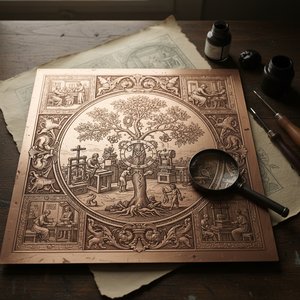
The Art of Etching: Mastering Lines, Texture, and Depth in the Intaglio Tradition
Explore the intricate world of etching and intaglio printmaking. Discover how masters use acid and metal to create profound textures and lines, from Romanticism to modern era, through an expert lens of art history and technical mastery.
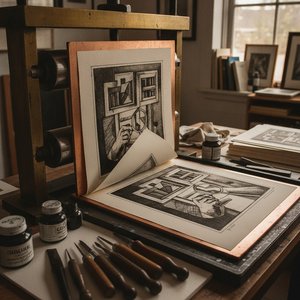
Etching Unlocked: The Sharp, High-Impact Art of Line and Shadow for the Modern Collector
Master the high-impact world of etching. Explore the transformative power of line and shadow through the intaglio tradition, from its armor-making origins to modern collecting strategies for the sophisticated art enthusiast.