

 Visa i rummet
 Skicka
 Dela
Dela
 Detaljer
 Guide
Guide

 Ladda ner
 Liknande objekt
 Röntgen
 Bildspel
 Besökstatistik
Self-Portrait
 Oil On Canvas
- WallArt
- Baroque Period
 1570
1570 33.0 x 25.0 cm
 Galleria degli Uffizi
 Läs mer
Giclée / Konsttryck
Giclée- eller canvasprint av museumskvalitet med snabb produktion och flexibla ytbehandlingsalternativ. ( Köp handmålat konstverk Byt till digital bildförsäljning)




P118B $10

P118H $10

P118W $10

P438Z $10

P508JH $12

P508YH $12

P805H $10

P805Z $10

P919BZ $10

P919G $10

P919XJ $10

P959ZH $10

P968JZ $12

W106C $8

W218G $10

W218JH $8

W218Y $10

W307PJ $10

W316G $10

W316PJ $8

W316Y $10

W398PJ $8

W4111J $10

W500HY $15

W500JH $15

W692G $12

W849H $8

W940BG $15

W953PJ $8




Välj bland våra förinställda storlekar som motsvarar konstverkets ursprungliga proportioner.

Du kan ange egna mått för att passa en specifik ram eller yta. Om det valda måttet inte överensstämmer med originalbildens proportioner kommer vi antingen att beskära konstverket eller utöka bilden med en speglad eller enfärgad kant. En digital mockup skickas för ditt godkännande innan produktionen påbörjas.
Vänligen notera att förhandsvisningen på skärmen inte återspeglar den faktiska beskärningen eller utökningen. Endast mockuppen visar den slutgiltiga kompositionen korrekt.
Även om anpassade storlekar är möjliga, rekommenderar vi att du väljer ett mått från den fördefinierade listan för att bevara de ursprungliga proportionerna.
Leverans över hela världen () på 2 veckor istället för standard 4/5 veckor. (20 september)

Fri expressfrakt över hela världen

Högkvalitativ linnecanvas

Fullständig fraktförsäkring

Garantier för återbetalning av tullavgifter

Garantier för exakt färgåtergivning

100 dagars returrätt vid fabrikationsfel

100% pengarna tillbaka-garanti

Mängdrabatt erbjuds
 Glasalternativet är endast tillgängligt i storlekar under 110 cm.

Self-Portrait
Giclée / Konsttryck
Reproduktionsstorlek
-


Totalpris
$ 80
A Window to the Soul: Federico Fiori Barocci’s “Self-Portrait”
Federico Fiori Barocci's "Self-Portrait," painted in 1570, isn't merely a likeness; it’s a carefully constructed invitation into the artist’s mind and spirit. Housed within the hallowed halls of the Galleria degli Uffizi in Florence, this oil on canvas offers a remarkably intimate glimpse into the world of a pivotal figure bridging the Renaissance and the burgeoning Baroque era. Measuring just 33 x 25 centimeters, its modest scale belies the profound depth of emotion and technical mastery contained within.
Barocci’s style, as evidenced here, is characterized by an exquisite balance between classical restraint and a growing expressive intensity – a hallmark that would later define his most celebrated works. The painting immediately draws the eye to the subject's face, rendered with meticulous detail; the subtle play of light and shadow sculpts his features, hinting at both age and a contemplative demeanor. The artist’s skill is undeniable: visible brushstrokes create a textured surface, lending a sense of immediacy and vitality to the portrait. The careful rendering of the beard and mustache – meticulously detailed strands capturing the texture and sheen of hair – speaks volumes about Barocci's dedication to his craft.
The Baroque’s Embrace: Emotion and Drama
Painted during a period of significant artistic transition, “Self-Portrait” embodies the shift from the idealized formality of the High Renaissance towards the dramatic emotionalism of the Baroque. While retaining elements of Renaissance portraiture – particularly in the careful attention to anatomical accuracy – Barocci introduces a new level of psychological depth. The subject’s gaze is direct and engaging, almost challenging the viewer to connect with his inner world. This deliberate engagement was a key element of the Baroque's focus on evoking emotion and conveying spiritual experience.
The dark background serves not as mere backdrop but as a strategic device, intensifying the luminosity of the subject’s face and drawing all attention to his expression. It’s a technique frequently employed during this period, prioritizing the psychological impact of the portrait over elaborate settings or distracting details. The inclusion of the lace collar – a detail suggesting wealth and perhaps even a position of authority – subtly hints at Barocci's social standing within Urbino’s aristocratic circles.
A Masterpiece in Miniature: Technique and Materials
The choice of oil on canvas was crucial to Barocci’s artistic vision. This medium allowed for rich, vibrant colors and a remarkable level of detail – essential for capturing the nuances of skin tone, fabric texture, and the subtle play of light. The layering of paint creates a sense of depth and volume, while the visible brushstrokes contribute to the painting's overall dynamism. The artist’s masterful control over chiaroscuro—the dramatic contrast between light and dark—further enhances the portrait’s emotional impact, creating a captivating interplay of shadows and highlights.
Beyond the Canvas: A Legacy of Emotion
Federico Fiori Barocci's "Self-Portrait" is more than just a representation of an individual; it’s a window into the artist’s soul. It stands as a testament to his technical skill, his understanding of human psychology, and his pivotal role in shaping the artistic landscape of the 16th century. The painting's enduring appeal lies not only in its aesthetic beauty but also in its ability to evoke a sense of empathy and connection – a reminder that even within a small canvas, a profound story can be told.
Further exploration into Barocci’s life and work is encouraged through the resources linked below. Consider commissioning a high-quality reproduction to bring this captivating masterpiece into your own home or office—a tangible connection to one of art history's most intriguing figures.
Om konstnären
Tidigt liv och utbildning
- Född: Urbino, Italien (1535)
- Död: 1612
- Federico Fiori Barocci, en italiensk renässansmålare och gravör, föddes 1535 i Urbino, Italien.
- Hans ursprungliga namn var Federico Fiori, och han fick smeknamnet "il Baroccio", vilket på nordvästitalienska dialekter betyder en tvåhjulig kärra dragen av oxar.
- Barocci fick sin första lärlingsutbildning hos sin far, Ambrogio Barocci, en skulptör med viss lokal betydelse.
- Han blev därefter lärling hos målaren Battista Franco i Urbino. Denna utbildning lade grunden för hans framtida framgångar.
Konstnärlig karriär och influenser
- Baroccis verk var högt ansedda och inflytelserika, och förebådade den barockstil som senare skulle förknippas med Peter Paul Rubens.
- Han arbetade i den framstående ateljén hos Taddeo och Federico Zuccari i Rom, där han exponerades för en mängd olika konstnärliga influenser.
- Hans första betydande verk var en "Sankta Margareta", utförd för confraternità del Santissimo Sacramento (Det heliga sakramentets brödraskap).
- Han blev inbjuden av påve Pius IV att medverka i dekorationen av Vatikanens Belvedere-palats i Rom, där han målade Jungfru Maria och barnet tillsammans med flera helgon, samt ett takfresk som föreställer Bebådelsen.
- Baroccis stil kännetecknades av en blandning av manieristiska och barocka element.
Betydande verk och arv
- Fem studier av manlig figur samt två av hans högra hand och arm (Uffizigalleriet, Florens, Italien) – Ett bevis på Baroccis skicklighet i att fånga den mänskliga formen.
- Kompositionsstudie (för ”Omskärelsen”, Paris, Musée du Louvre) – Demonstrerar hans förmåga att balansera komposition och emotion.
- Manshuvud (för ”Sankt Andreas kallelse”, Bryssel, Musées Royaux des Beaux-Arts de Belgique) – Visar Baroccis uppmärksamhet på detaljer och uttryck.
- Födelsen (oljemålning från 1597 på Prado).
- Madonna del Popolo (Uffizigalleriet, Florens, Italien).
- Madonnan med katten (La Madonna del Gatto)
- Bebådelsen (1582)
Konstnärlig påverkan och efterföljare
- Baroccis inflytande kan ses i arbetena hos flera olika konstnärer, däribland Peter Paul Rubens, som inspirerades av Baroccis dramatiska och känslosamma penseldrag.
- Hans arv fortsätter att hyllas genom hans många verk, som idag finns bevarade på museer såsom Uffizigalleriet (Florens, Italien) och Musée du Louvre (Paris, Frankrike).

Federico Barocci
1535 - 1612 , Italien
Snabbfakta
- Artistic Movement Or Style: Renässans, Barock
- Artists Or Movements Influenced By This Artist: ['Peter Paul Rubens']
- Artists Who Influenced This Artist: ['Battista Franco']
- Date Of Birth: 1535
- Date Of Death: 1612
- Full Name: Federico Fiori Barocci
- Nationality: Italiensk
- Notable Artworks:
- Nativity
- Madonna del Popolo
- Annunciation
- Place Of Birth (City And Country): Urbino, Italien
Relaterade artiklar

The Enduring Legacy of Oil on Canvas: Technique, History & Aesthetic Impact
Explore the rich history & techniques of oil painting – from Renaissance masters to Impressionism. Discover pigments, layering methods, and why this timeless medium endures. Expert insights for artists & art enthusiasts.
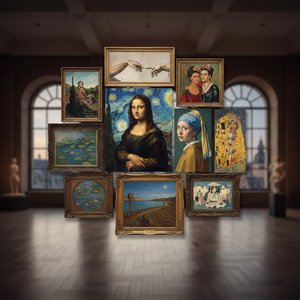
Topp 10 ikoniska oljemålningar som förändrade konsthistorien – OriginalUniqueArt.com
Utforska de 10 mest ikoniska oljemålningarna som revolutionerade konsthistorien! Lär känna Monet, Van Gogh och Da Vinci. Hitta inspiration & köp museumkvalitativa reproduktioner på OriginalUniqueArt.com – för en tidlös inredning.

The Soul of Impressionism: Why Oil on Canvas Captures Eternal Light and Timeless Emotion
Discover the enchanting alchemy of Impressionism. Explore how the mastery of oil on canvas, through glazing and impasto, captures eternal light and emotion. Perfect for lovers of Monet and Van Gogh seeking the profound depth of hand-painted fine art.

Olja på dukens bestående arv: Teknik, historia och samtida praktik
Utforska oljemåleriets rika historia och tekniker – från renässansens mästare till dagens konstnärer. Lär dig om material, metoder och konservering för att bevara konsten.

Olja på duk: En tidlös teknik – Historik, process och konstnärliga möjligheter
Utforska oljemålningskonsten! Lär dig om flamländsk teknik, materialval och historisk utveckling. Expertguider för både nybörjare och erfarna konstnärer – bevara dina målningar med bästa praxis.
