- Hem

- Digital bild
- eugène laermans
- Bathing children
 Köp tryck Beställ målning
 Skicka
 Dela
Dela
 Visa detaljer
 Lägg till i favoriter

 Ladda ner
 Liknande objekt
 Röntgen
 Bildspel
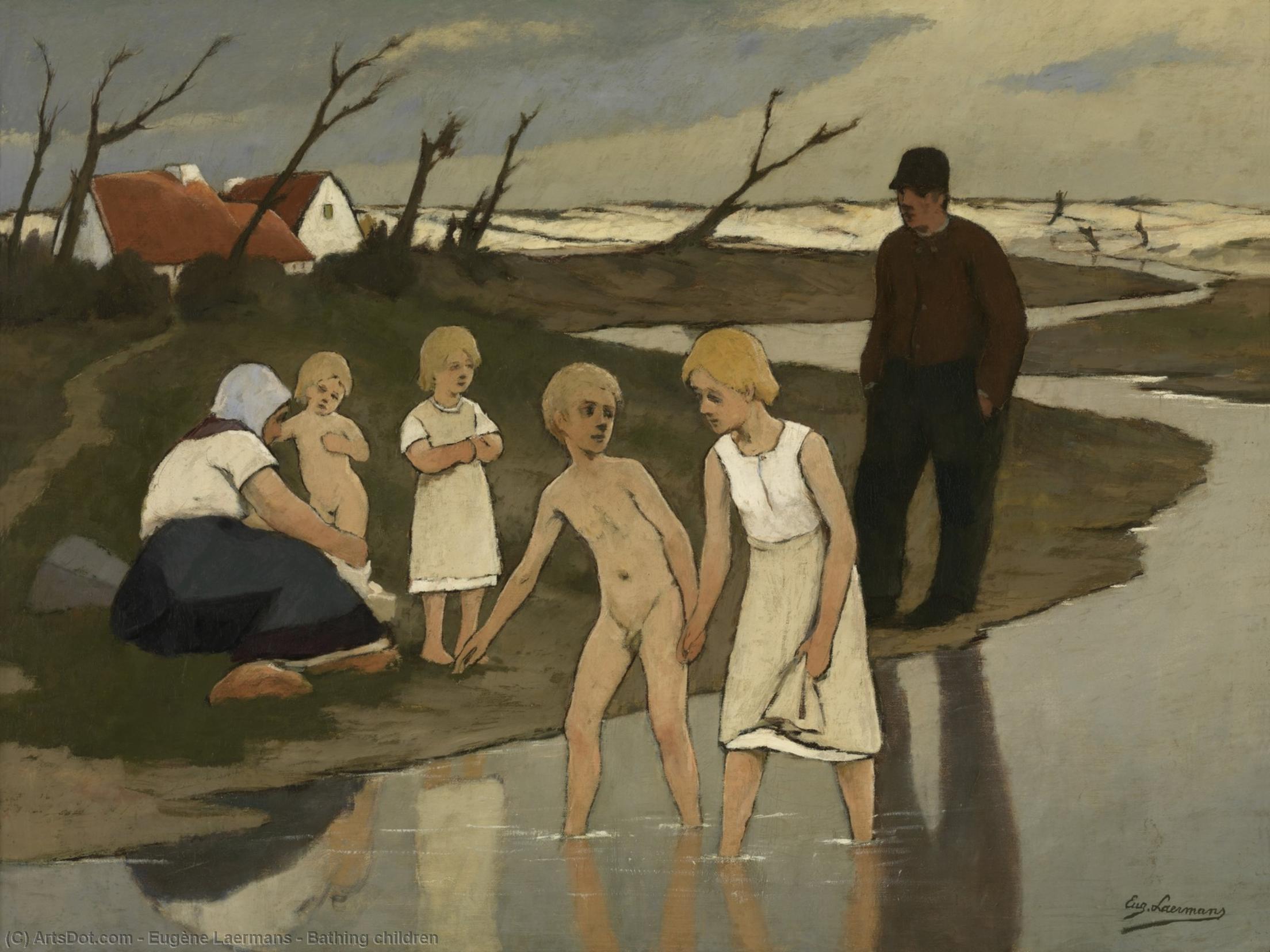
Bathing children
 Oil
Oil- WallArt
- Social Realism
 1908
1908- Modern
 73.0 x 98.0 cm
 Royal Museum of Fine Arts Antwerp
 Visa mer
Köp en högupplöst, förbättrad digital bild som är vida överlägsen förhandsvisningen online.
Varje fil är noggrant förberedd av våra interna specialister med hjälp av avancerade verktyg och professionell manuell retuschering. Vi säkerställer att varje bild har exceptionell skärpa, exakt färgåtergivning och fina detaljer.
Den slutgiltiga filen levereras via e-post inom 72 timmar, optimerad för omedelbar användning i professionella sammanhang, redaktionellt bruk och tryckmiljöer. Detta är samma kvalitet som används med förtroende av ledande designstudior, förlag och gallerier.
Digital bild
Ladda ner en högupplöst fil för personlig visning, utskrift och kreativa projekt.
Ingår i varje beställning av digital bild
Professionell digital leverans, garanterad
När du väljer OriginalUniqueArt.com får du inte bara en bild – du får ett professionellt förädlat digitalt konstverk, skapat med precision och med en garanterad tillfredsställelse. Här är allt som ingår i din beställning, automatiskt:

Snabb leverans via e-post
Din högupplösta digitala bildfil skickas till dig via e-post inom 72 timmar efter beställning – redo för omedelbar användning.

AI-förbättrad digital bild
Ditt konstverk optimeras professionellt med hjälp av avancerade AI-verktyg och manuell redigering, vilket garanterar maximal detaljrikedom, skärpa och färgnoggrannhet.

Gratis livstidsåterutskick
Har du råkat radera eller tappa bort din fil? Ingen oro – vi skickar den kostnadsfritt till dig när som helst.

Inga importavgifter – någonsin
Njut av ditt konstverk omedelbart utan tull, importavgifter eller leveranskostnader – digitala nedladdningar är alltid skattefria.

Garanterad färgåtergivning
Vi säkerställer att din digitala bild återger de ursprungliga färgerna så exakt som möjligt med hjälp av professionella verktyg och färghantering.

60 dagars nöjdhetsgaranti
Om du inte är nöjd med din digitala bild kommer vi att revidera den eller återbetala 100% inom 60 dagar – utan frågor.

100% pengarna-tillbaka-garanti
Inte nöjd? Få full återbetalning inom 60 dagar efter att du har tagit emot din digitala fil – inga frågor åsett.

Rabatt vid storköp
Köp 3 bilder, spara 10% - Köp 5, spara 15% - Köp 10+, spara 20%. Perfekt för kreativa projekt, gallerier och byråer.
Beskrivning av samlarobjektet
A Moment of Pure Innocence: The World of Eugène Laermans
In the quiet, sun-dappled corners of 1908, Eugène Laermans captured a scene that transcends the boundaries of time and social class. Bathing Children is not merely a depiction of leisure; it is a profound window into a world where the simplicity of childhood joy meets the steady, watchful gaze of adulthood. The painting invites the viewer to step onto the shoreline, where the gentle ripples of the water mirror the rhythmic play of youth. As children wade through the shallows and others linger on the grassy banks, there is an undeniable sense of communal harmony. This piece serves as a poignant reminder of those fleeting moments of unburdened existence, making it a captivating centerpiece for any collection that seeks to evoke nostalgia and peace.
The composition is masterfully balanced, utilizing a naturalistic approach that draws the eye through the landscape. Laermans, a master of Belgian social realism, employs a technique that emphasizes texture and light, allowing the viewer to almost feel the coolness of the water and the warmth of the afternoon sun. While his broader body of work often grapples with the heavy, somber realities of the working class and the hardships of peasant life, Bathing Children offers a luminous departure. Here, the artist uses a softer palette and more fluid brushwork to convey movement and vitality. The presence of small boats scattered across the water adds a layer of depth and atmospheric tranquility, suggesting a lifestyle deeply intertwined with the rhythms of nature.
The Silent Observer: Technique and Emotional Resonance
To understand the emotional weight of this work, one must consider the unique perspective of Laermans himself. Having navigated the world through the lens of deafness, his visual sensitivity was unparalleled. In Bathing Children, this heightened sense of sight translates into an extraordinary ability to capture subtle interactions—the way a child leans toward a peer, or the protective stance of the adults watching from the periphery. The figures are not merely subjects; they are characters in a silent, beautiful narrative of care and community. For the interior designer, this painting offers a sophisticated balance of movement and stillness, capable of breathing life into a room while maintaining an air of classical elegance.
For collectors and lovers of fine art, this reproduction represents more than just a decorative element; it is an invitation to contemplate the enduring strength of human connection. The interplay between the shore and the water creates a sense of infinite space, making it an ideal choice for large-scale wall displays in galleries or residential studies. By bringing this piece into a home, one does not just acquire a painting, but rather captures a fragment of a lost era—a time when the simple act of playing by the water was enough to define the beauty of life. It is a soulful addition to any curated space, offering a timeless aesthetic that complements both modern and traditional decor.
Konstnärsbiografi
Eugène Laermans: A Visionary of Marginal Lives
Eugène Jules Joseph Baron Laermans (1864-1940) stands as a singular figure in Belgian art history—a painter who wrestled with deafness and blindness, yet relentlessly pursued an uncompromising vision of social realism. Born in Sint-jans-molenbeek, Brussels, his early life was marked by tragedy; meningitis at the age of eleven robbed him of hearing and nearly silenced his voice, profoundly shaping his artistic trajectory. Rather than retreating from the world, Laermans turned his gaze outwards, honing his observational skills and dedicating himself to capturing the dignity and hardship of ordinary laborers and impoverished peasants—a preoccupation that would define his oeuvre for decades.- Early Life & Deafness: Diagnosed with meningitis as a child, Laermans’ deafness instilled in him an acute sensitivity to visual perception. This formative experience fueled his determination to become a painter, prioritizing sight above all else.
- Academic Training & Influences: He enrolled at the Académie royale des beaux-arts in Brussels under Jean-François Portaels, absorbing stylistic lessons from Portaels and developing a deep admiration for Félicien Rops’ expressive landscapes. Equally significant were the writings of Charles Baudelaire, whose decadent aesthetic resonated with Laermans' artistic sensibilities.
- The Decadent Movement & Baudelaire’s Influence: Embracing the tenets of decadence in 1890, Laermans actively participated in the movement and illustrated Baudelaire’s controversial “Les Fleurs du Mal,” demonstrating his willingness to confront uncomfortable truths about human nature.
- Genre Painting & Social Commentary: Laermans’ paintings are notable for their meticulous observation of everyday life, capturing the textures and nuances of rural poverty with remarkable accuracy. His depictions challenged prevailing social norms and provoked contemplation on human suffering.
- Illustrations & Notable Projects: He gained recognition as an illustrator, notably contributing to Georges Eekhoud's novel “La Nouvelle Carthage” and embarking on a monumental triptych titled "Landverhuisers" (Emigrants)—a project he considered his magnum opus, reflecting his unwavering commitment to portraying the human condition.
- Recognition & Legacy: Laermans’ enduring legacy resides in his unflinching portrayal of human dignity amidst adversity—a testament to the power of art to illuminate social injustices and inspire compassion.
- The “Laermansmuur” & Community Spirit: A local wall in Wemmel bears witness to Laermans' generosity as a young man, saving a drowning swimmer—a gesture that cemented his place in the collective memory of Brussels and embodies the artist’s humanist values.

eugène laermans
1864 - 1940
Kortfattad information
- Artistic Movement Or Style: Decadent Art; Genre Painting; Bruegel Influence
- Artists Or Movements Influenced By This Artist: ['Bruegel']
- Artists Who Influenced This Artist:
- Jean-François Portaels
- Charles Baudelaire
- Félicien Rops
- Date Of Birth: 1864
- Date Of Death: 1940
- Full Name: Eugène Jules Joseph Baron Laermans
- Nationality: Belgian
- Notable Artworks:
- English The Staircase
- Oasis
- The Drinker
- Landverhuisers
- Place Of Birth: Saint-jans-molenbeek, Belgium

