
 Förhandsvisa
 Skicka
 Dela
Dela
 Visa detaljer

 Ladda ner
 Liknande objekt
 Röntgen
 Bildspel
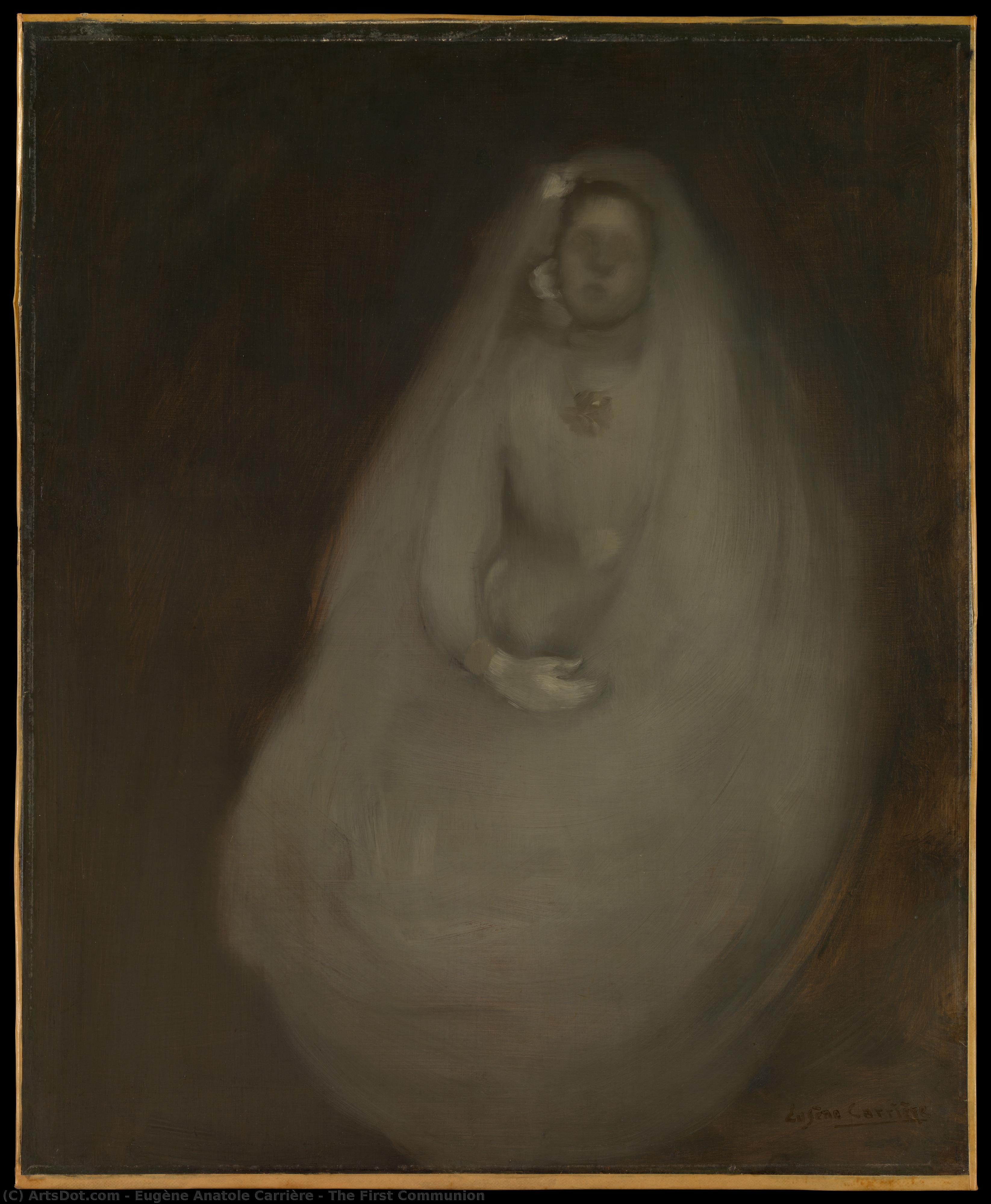
The First Communion
 Oil On Canvas
- WallArt
- Symbolism
 1896
1896- 19th Century
 65.0 x 53.0 cm
 Metropolitan Museum of Art
 Visa mer
Handgjord oljereproduktion
Handmålad olja på duk i din valda storlek och ram, tillverkad efter beställning av våra konstnärer. ( Beställ tryck Köp högupplöst bild)




P118B $10

P118H $10

P118W $10

P438Z $10

P508JH $12

P508YH $12

P805H $10

P805Z $10

P919BZ $10

P919G $10

P919XJ $10

P959ZH $10

P968JZ $12

W106C $8

W218G $10

W218JH $8

W218Y $10

W307PJ $10

W316G $10

W316PJ $8

W316Y $10

W398PJ $8

W4111J $10

W500HY $15

W500JH $15

W692G $12

W849H $8

W940BG $15

W953PJ $8




Välj bland våra förinställda storlekar som motsvarar konstverkets ursprungliga proportioner.

Du kan ange egna mått för att passa en specifik ram eller yta. Om den valda storleken inte matchar originalbildens proportioner kommer vi antingen att beskära konstverket eller utöka målningen med ytterligare handmålade element. En digital skiss skickas till dig för godkännande innan produktionen påbörjas.
Observera att förhandsvisningen på skärmen inte återspeglar den faktiska beskärningen eller utökningen. Endast skissen visar den slutgiltiga kompositionen korrekt.
Även om anpassade storlekar är möjliga, rekommenderar vi att du väljer en dimension från den fördefinierade listan för att bevara originalproportionerna.
Efter beställning kommer OriginalUniqueArt.com team att mejla kunden för instruktioner och tillhandahålla en skissförhandsvisning
Leverans över hela världen () på 3–4 veckor istället för standard 5 veckor. (20 augusti). Inga kompromisser med kvaliteten.

Fri expressfrakt över hela världen

Högkvalitativ linnecanvas

Fullständig fraktförsäkring

Garantier för återbetalning av tullavgifter

Garantier för exakt färgåtergivning

60 dagars returrätt (endast vid fabrikationsfel)

100% pengarna tillbaka-garanti

Mängdrabatt erbjuds
 Glasalternativet är endast tillgängligt i storlekar under 110 cm.

The First Communion
Reproduktionsmedium
Storlek på reproduktion
-


Slutgiltigt pris
$ 300
Beskrivning av konstverket
The Haunting Beauty of "The First Communion": A Symbolist Portrait of Innocence
Eugène Anatole Carrière’s “The First Communion,” painted in 1896, isn't merely a depiction of a religious ceremony; it’s a profoundly evocative exploration of childhood innocence, spiritual yearning, and the subtle anxieties that lie beneath the surface of faith. This masterpiece, now housed within the collections of art institutions worldwide, exemplifies Carrière’s signature style – a near-monochrome palette dominated by muted browns and greys, creating an atmosphere of ethereal mystery and quiet melancholy. The painting immediately draws the viewer into a dreamlike space, where reality seems to soften and blur at the edges.
Carrière's artistic journey was deeply influenced by his time as a prisoner in Dresden during the Franco-Prussian War. Exposure to the works of Peter Paul Rubens, with their rich, glowing colors and dramatic lighting, left an indelible mark on his approach to painting. This influence is subtly present in “The First Communion,” though Carrière ultimately developed his own distinctive style – one characterized by a deliberate reduction of color to its most essential tones, emphasizing mood and atmosphere over precise representation. The use of brown creates a sense of timelessness, suggesting that the scene unfolds outside of specific time or place, existing instead within a realm of spiritual contemplation.
A Study in Symbolism: Veil, Light, and Shadow
The central figure of the painting – a young girl receiving communion – is enveloped in a veil, a potent symbol of purity, concealment, and nascent faith. The veil isn’t simply an article of clothing; it acts as a visual barrier, hinting at the mysteries surrounding religious initiation and the vulnerability inherent in entering into a sacred tradition. The lighting within the painting is equally significant. A diffused light source casts long shadows across the girl's face and gown, contributing to the overall sense of solemnity and introspection. The interplay of light and shadow creates a visual metaphor for the spiritual journey – a movement from darkness towards enlightenment.
Carrière’s technique is notable for its meticulous layering of paint and subtle blending. He eschews sharp outlines and bold brushstrokes, opting instead for a fluid, almost watercolor-like application that lends the scene an ethereal quality. The smooth texture of the canvas, combined with the delicate gradations of color, creates a sense of translucence, as if the girl herself is partially obscured by a veil of spiritual mist. The simplified forms and flattened perspective further enhance this dreamlike effect, distancing the viewer from a realistic portrayal and inviting them to contemplate the painting’s symbolic meaning.
Historical Context and Artistic Legacy
"The First Communion" was created during the late 19th century, a period of profound social and artistic change. The Symbolist movement, which Carrière embraced, sought to express subjective emotions and spiritual experiences through art, often rejecting the realism and materialism of earlier artistic traditions. This painting aligns perfectly with the Symbolist aesthetic – it’s not about depicting a literal event but rather conveying a complex range of feelings associated with religious initiation and the transition from childhood innocence to adult faith.
Carrière's work had a significant impact on subsequent generations of artists, particularly Pablo Picasso. The influence of Carrière’s monochrome palette and his exploration of psychological themes can be seen in Picasso’s Blue Period, demonstrating the enduring legacy of this enigmatic French artist. “The First Communion” remains a powerful testament to Carrière's artistic vision – a hauntingly beautiful portrayal of faith, innocence, and the mysteries of the human spirit.
Collecting a Timeless Masterpiece: Reproductions and Beyond
OriginalUniqueArt offers high-quality reproductions of “The First Communion,” allowing art lovers worldwide to experience the beauty and emotional depth of this iconic painting. Whether you’re seeking a stunning addition to your home or office, or simply want to connect with the artistic legacy of Eugène Carrière, our meticulously crafted reproductions capture the essence of the original while offering exceptional value. Explore our collection today and bring this evocative masterpiece into your world.
Konstnärsbiografi
Eugène Anatole Carrière (1849–1906)
Eugène Anatole Carrière, född den 16 januari 1849 på Gournay-sur-Marne i Frankrike och död den 27 mars 1906 i Paris, var en fransk målare och litograf, och en av de mera betydande representanterna för den senromantiska riktningen i Frankrike. Hans måleri utmärkes av ett konturupplösande ljusdunkel i brungrå, nästan enahanda färgtoner. Han föddes till familjen Carrière i Strasbourg där hans första konstnärliga utbildning genomfördes vid École Municipale de Dessin som del av sin lärlingskap inom kommersiell litografi. Året efter återvände han till Paris och blev inspirerad av Rubens målningar i Louvren vilket ledde honom till att bestämma sig för att bli konstnär. Hans studier under Alexandre Cabanel vid École des Beaux-Arts avbröts av Fransktyska kriget där han förvarades som fång och detta präglade hans konstnärliga utveckling. Efter kriget arbetade han kortfattat i ateliern till Jules Chéret och träffade Auguste Rodin som blev en nära vän och deras samarbete var betydelsefullt för både honom och Rodin. Han fick även ett arbete vid Sèvres porcelensklipperi där han mötte ytterligare konstnärer och utvecklade sina färdigheter inom keramiken. Carrière grundade Société nationale des beaux-arts tillsammans med andra konstnärliga personer vilket bidrog till att främja konstnärlig verksamhet och kultur i Paris. Han var särskilt engagerad i utvecklingen av samtida konst och dess betydelse för samhället.- Hans första stora verk, ”Ung moder”, finns nu på Musée des Beaux-Arts de Rouen och är ett exempel på hans tidiga fokus på familjeliv och hemvistens atmosfär.
- Han var en pionjär inom Symbolismen och utvecklade en unik stil präglad av konturupplösande ljusdunkel i brungrå färgtoner vilket inspirerade senare konstnärer som Pablo Picasso. Detta är särskilt märkbart i Picassos blå period där Carrière hade ett stort inflytande.
- Carrières verk inkluderar porträtt av välkända personer såsom Paul Verlaine och Stéphane Mallarmé samt Alphonse Daudet, vilket visar hans förmåga att fånga subjektets essens och känslor på ett subtilt sätt. Han är också representerad vid Göteborgs konstmuseum och Thielska Galleriet där hans konstverk fortsätter att fascinera besökare.

Eugène Anatole Carrière
1849 - 1906 , Frankrike
Kortfakta
- Artistic Movement Or Style: Symbolism
- Artists Or Movements Influenced By This Artist: ['Pablo Picasso']
- Artists Who Influenced This Artist: ['Peter Paul Rubens']
- Date Of Birth: 16 januari 1849
- Full Name: Eugène Anatole Carrière
- Nationality: Fransk
- Notable Artworks:
- Ung moder
- Kristus på korset
- Place Of Birth: Gournay-sur-Marne, Frankrike
Relaterade artiklar
Eugène Carrière: The 'Peintre d'Âme' & Symbolist Portraiture’s Intimate Vision
Explore the haunting world of Eugène Carrière, a pivotal French Symbolist artist known for his deeply intimate portraits & 'peinture d'âme'. Discover his life, style, and lasting influence on modern masters like Picasso. Shop high-quality reproductions at OriginalUniqueArt.
Simon Vouet: A Baroque Master's Journey from Italian Influence to French Classicism
Explore the life & art of Simon Vouet, a pivotal French Baroque painter who introduced Italian styles to France. Discover his masterpieces and lasting influence on 17th-century art.
Sacred Narratives Embodied: A Comprehensive Exploration of Religious Iconography in Art History
Explore the rich history of religious iconography in art! Discover symbolism, movements & masterpieces from Byzantine to Renaissance periods. Expert insights for collectors and enthusiasts at OriginalUniqueArt.
Charles Le Brun: Master of French Baroque Classicism & His Enduring Legacy
Explore the life & art of Charles Le Brun, master of French Baroque Classicism. Discover his royal commissions, influence on Versailles, and enduring legacy through detailed analysis & stunning artworks.
Sacred Narratives on Canvas: Exploring Religious Painting Through History
Explore the rich history of religious painting with OriginalUniqueArt.com! Discover iconic artworks, symbolism & techniques from antiquity to the Renaissance. Enhance your art appreciation today.

