
 Förhandsvisa
 Skicka
 Dela
Dela
 Visa detaljer
 Guide
Guide

 Ladda ner
 Liknande objekt
 Röntgen
 Bildspel
 Q&A
Q&A Statistik
Child at Table


 Visa mer
Giclée / Konsttryck
Giclée- eller canvasprint av museumskvalitet med snabb produktion och flexibla ytbehandlingsalternativ. ( Beställ handmålad reproduktion Byt till digital bild)




P118B Skr10

P118H Skr10

P118W Skr10

P438Z Skr10

P508JH Skr12

P508YH Skr12

P805H Skr10

P805Z Skr10

P919BZ Skr10

P919G Skr10

P919XJ Skr10

P959ZH Skr10

P968JZ Skr12

W106C Skr8

W218G Skr10

W218JH Skr8

W218Y Skr10

W307PJ Skr10

W316G Skr10

W316PJ Skr8

W316Y Skr10

W398PJ Skr8

W4111J Skr10

W500HY Skr15

W500JH Skr15

W692G Skr12

W849H Skr8

W940BG Skr15

W953PJ Skr8




Välj bland våra förinställda storlekar som motsvarar konstverkets ursprungliga proportioner.

Ange den bredd och höjd du behöver för att passa din ram eller vägg. Ett tryck kan endast beskäras, aldrig göras större än originalbilden, vilket innebär att ett format med en annan proportion leder till att en del av bilden går förlorad. Vi skickar en digital mockup för godkännande innan vi påbörjar tryckningen. Bilden som visas på denna sida visar inte den faktiska beskärningen — det är endast mockuppen som gör det.
Leverans över hela världen () på 2 veckor istället för standard 4/5 veckor. (3 november)

Fri expressfrakt över hela världen

Högkvalitativ linnecanvas

Fullständig fraktförsäkring

Garantier för återbetalning av tullavgifter

Garantier för exakt färgåtergivning

100 dagars returrätt (endast vid fel)

100% pengarna tillbaka-garanti

Mängdrabatt erbjuds
 Glasalternativet är endast tillgängligt i storlekar under 110 cm.

Child at Table
Giclée / Konsttryck
Storlek på reproduktion
-


Slutgiltigt pris
Skr 803
Eugène Carrière’s ‘Child at Table’: A Monochromatic Meditation on Innocence
Eugène Anatole Carrière's Child at Table (1880) is not merely a portrait; it’s an immersion into a world of quiet contemplation, rendered with a startlingly spare palette and imbued with the profound symbolism characteristic of the Symbolist movement. Created during a period of intense artistic experimentation in France – a direct response to the Impressionists' focus on fleeting moments of light – Carrière sought to evoke deeper emotional and spiritual truths through his art. This work, depicting a young boy, likely his son Jean René, captured around 1888, exemplifies this approach with remarkable clarity.
- A Monochromatic Universe: Carrière’s signature style is immediately apparent in the painting's stark contrast. The almost entirely monochrome palette – shades of blue, gray, and brown – creates a sense of detachment from the everyday, elevating the scene to something almost sacred. This deliberate restriction of color wasn’t simply an aesthetic choice; it was rooted in Carrière’s early experience as a lithographer, where he honed his skills in creating dramatic tonal effects.
- The Power of Light and Shadow: Despite the lack of vibrant hues, Carrière masterfully manipulates light and shadow to generate a luminous effect. The creamy-white skin of the child is dramatically highlighted against the enveloping darkness, drawing the viewer’s eye directly to this vulnerable subject. This technique, reminiscent of Rubens' influence, suggests an almost ethereal quality, hinting at a timeless innocence.
Symbolism and Domestic Themes
Child at Table firmly places itself within the Symbolist tradition, which prioritized subjective emotion and spiritual meaning over realistic representation. The scene’s quiet intimacy – the boy seated at a table with a cup – speaks to themes of childhood, vulnerability, and perhaps even religious devotion. Carrière frequently depicted domestic scenes featuring his family, often exploring the complexities of motherhood and familial bonds. This particular work, like The Sick Child (Montargis), reflects this recurring motif, offering a poignant glimpse into the artist’s personal life.
- A Mystical Atmosphere: The dark background isn't merely a backdrop; it actively contributes to the painting's symbolic weight. It creates an atmosphere of mystery and introspection, inviting viewers to contemplate the child’s gaze upwards – a gesture that could be interpreted as prayerful or simply filled with wonder.
- The Artist's Lineage: The fact that Carrière was the grandson of artists further informs our understanding of this work. His artistic lineage undoubtedly influenced his approach, adding another layer of meaning to the scene’s quiet contemplation.
Technique and Historical Context
Carrière’s meticulous technique is evident in the smooth application of paint and the precise rendering of detail. The use of a glazing technique – applying thin layers of translucent color over dried underlayers – would have enhanced the luminosity of the skin tones and created subtle variations within the monochrome palette. Produced around 1880, this painting represents a pivotal moment in Carrière’s career, solidifying his reputation as a leading figure in the Symbolist movement and demonstrating his ability to create emotionally resonant works through masterful control of light, shadow, and tone.
Emotional Impact and Reproduction
Child at Table possesses an undeniable emotional power. The painting's quiet intimacy and the vulnerability of its subject evoke a sense of tenderness and nostalgia. A hand-painted reproduction captures not only the visual details but also the very essence of Carrière’s artistic vision, allowing you to experience this profound work in your own space.
Frågor och svar
Vilken plats har "Child at Table" av Eugène Anatole Carrière i konsthistorien?
Den konsthistoriska klassificeringen av "Child at Table" av Eugène Anatole Carrière är Symbolist Art, under perioden 19th Century.
Vem har skapat "Child at Table"?
Konstnären bakom "Child at Table" är Eugène Anatole Carrière. Verket är katalogiserat under Eugène Anatole Carrières namn.
Var rekommenderas det att visa "Child at Table" i Landscape-formatet?
Formatet Landscape för "Child at Table" av Eugène Anatole Carrière rekommenderas för ett Dining Room. Format och rymd samverkar för att vägleda placeringen av en reproduktion.
Konstnärsbiografi
Eugène Anatole Carrière (1849–1906)
Eugène Anatole Carrière, född den 16 januari 1849 på Gournay-sur-Marne i Frankrike och död den 27 mars 1906 i Paris, var en fransk målare och litograf, och en av de mera betydande representanterna för den senromantiska riktningen i Frankrike. Hans måleri utmärkes av ett konturupplösande ljusdunkel i brungrå, nästan enahanda färgtoner. Han föddes till familjen Carrière i Strasbourg där hans första konstnärliga utbildning genomfördes vid École Municipale de Dessin som del av sin lärlingskap inom kommersiell litografi. Året efter återvände han till Paris och blev inspirerad av Rubens målningar i Louvren vilket ledde honom till att bestämma sig för att bli konstnär. Hans studier under Alexandre Cabanel vid École des Beaux-Arts avbröts av Fransktyska kriget där han förvarades som fång och detta präglade hans konstnärliga utveckling. Efter kriget arbetade han kortfattat i ateliern till Jules Chéret och träffade Auguste Rodin som blev en nära vän och deras samarbete var betydelsefullt för både honom och Rodin. Han fick även ett arbete vid Sèvres porcelensklipperi där han mötte ytterligare konstnärer och utvecklade sina färdigheter inom keramiken. Carrière grundade Société nationale des beaux-arts tillsammans med andra konstnärliga personer vilket bidrog till att främja konstnärlig verksamhet och kultur i Paris. Han var särskilt engagerad i utvecklingen av samtida konst och dess betydelse för samhället.- Hans första stora verk, ”Ung moder”, finns nu på Musée des Beaux-Arts de Rouen och är ett exempel på hans tidiga fokus på familjeliv och hemvistens atmosfär.
- Han var en pionjär inom Symbolismen och utvecklade en unik stil präglad av konturupplösande ljusdunkel i brungrå färgtoner vilket inspirerade senare konstnärer som Pablo Picasso. Detta är särskilt märkbart i Picassos blå period där Carrière hade ett stort inflytande.
- Carrières verk inkluderar porträtt av välkända personer såsom Paul Verlaine och Stéphane Mallarmé samt Alphonse Daudet, vilket visar hans förmåga att fånga subjektets essens och känslor på ett subtilt sätt. Han är också representerad vid Göteborgs konstmuseum och Thielska Galleriet där hans konstverk fortsätter att fascinera besökare.

Eugène Anatole Carrière
1849 - 1906 , Frankrike
Kortfakta
- Artistic Movement Or Style: Symbolism
- Artists Or Movements Influenced By This Artist: ['Pablo Picasso']
- Artists Who Influenced This Artist: ['Peter Paul Rubens']
- Date Of Birth: 16 januari 1849
- Full Name: Eugène Anatole Carrière
- Nationality: Fransk
- Notable Artworks:
- Ung moder
- Kristus på korset
- Place Of Birth: Gournay-sur-Marne, Frankrike
Relaterade artiklar
The Enduring Legacy of Printmaking: Techniques, Themes & Artistic Innovation Across Centuries
Explore the rich history of printmaking with OriginalUniqueArt. Discover techniques from intaglio to lithography, learn about collecting valuable prints & find museum-quality reproductions. Expert insights for art enthusiasts and collectors.

Echoes of Time: Exploring the Enduring Appeal & Historical Context of Vintage Art Prints
Explore the captivating world of vintage art prints! Discover their history, collecting tips & enduring appeal. Expert insights on chromolithography and building a legacy collection with OriginalUniqueArt.
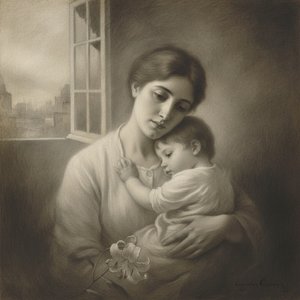
Eugène Carrière: The 'Peintre d'Âme' & Symbolist Portraiture’s Intimate Vision
Explore the haunting world of Eugène Carrière, a pivotal French Symbolist artist known for his deeply intimate portraits & 'peinture d'âme'. Discover his life, style, and lasting influence on modern masters like Picasso. Shop high-quality reproductions at OriginalUniqueArt.

The Enduring Legacy of Fine Art Prints: Technique, History & Aesthetic Impact
Explore the rich history & techniques of fine art prints. Discover investment potential, assess authenticity, and learn how to preserve your collection with expert guidance. Trusted insights for discerning collectors.

Giclée Prints: Archival Quality & Aesthetic Nuances for the Discerning Collector
Explore the world of giclée prints with OriginalUniqueArt. Learn about archival quality, aesthetic nuances & investment potential. Expert guidance for discerning art collectors seeking museum-quality reproductions and lasting value.