 Förhandsvisa
 Skicka
 Dela
Dela
 Visa detaljer
 Guide
Guide

 Ladda ner
 Liknande objekt
 Röntgen
 Bildspel
 Frågor och svar
 Statistik
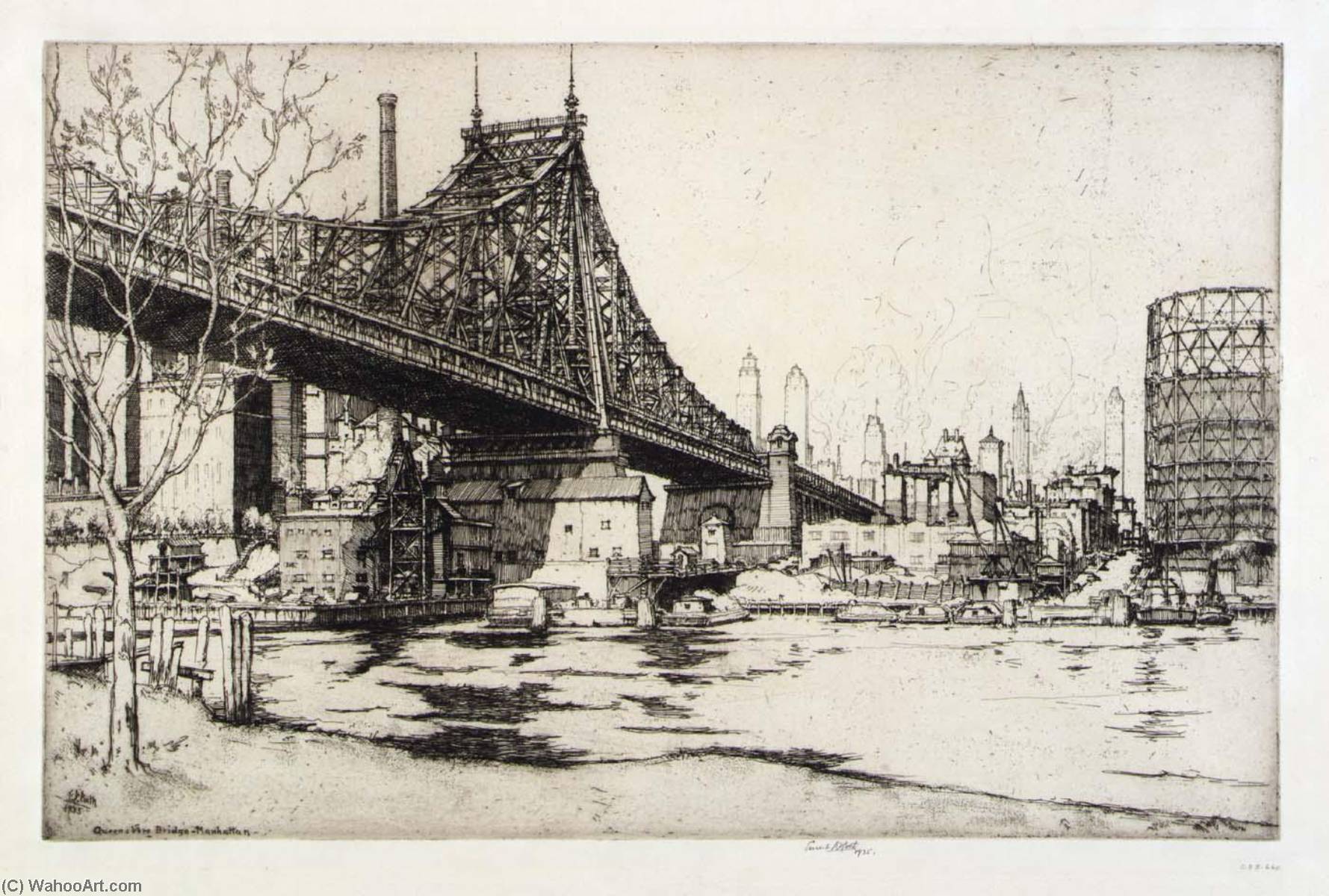
Queensboro Bridge, Manhattan

- 25.0 x 38.0 cm

 Visa mer
Få en utskriftsfärdig fil som vida överträffar webbförhandsvisningen. Varje digital bild vi säljer kommer från en högupplöst master i vår bilddatabas – vanligtvis mellan 5 000 och 15 000 pixlar bred – så att du med trygghet kan göra stora utskrifter, beskära tätt eller återge fina detaljer.
Ingen fil lämnar vår studio utan att ha bearbetats. En digital expert kontrollerar färgerna mot originalmålningen och korrigerar dem vid behov, för att sedan förbättra skärpa och detaljrikedom med professionella retuscheringsverktyg — alltid med full respekt för konstnärens penseldrag och stil. Resultatet är en bild som ser ut som målningen, inte som en filtrerad skanning.
Du godkänner innan arbetet slutförs: vår expert skickar bilden via e-post inom 72 timmar för din granskning. Inte nöjd? Be om förbättringar eller korrigeringar, eller begär återbetalning om kvaliteten inte lever upp till förväntningarna.
Detta är den kvalitet som förlag, designstudior, gallerier och tryckerier litar på.
Digital bild
Ladda ner en högupplöst fil för personlig visning, utskrift och kreativa projekt. ( Byt till tryck Beställ handmålad reproduktion)
Ingår i varje beställning av digital bild
Professionell digital leverans, garanterad
När du väljer OriginalUniqueArt.com får du inte bara en bild – du får ett professionellt förädlat digitalt konstverk, skapat med precision och med en garanterad tillfredsställelse. Här är allt som ingår i din beställning, automatiskt:

Snabb leverans via e-post
Din högupplösta digitala bild skickas till dig via e-post inom 72 timmar efter beställning – redo för omedelbar användning.

AI-förbättrad digital fil
Ditt konstverk optimeras professionellt med hjälp av avancerade AI-verktyg och manuell redigering, vilket garanterar maximal detaljrikedom, skärpa och färgnoggrannhet.

Fri livstidsåterleverans
Har du råkat radera eller tappa bort din fil? Ingen oro – vi skickar den kostnadsfritt till dig när som helst.

Inga importavgifter – någonsin
Njut av ditt konstverk omedelbart utan tull, importavgifter eller leveranskostnader – digitala nedladdningar är alltid skattefria.

Garanterad färgåtergivning
Vi säkerställer att din digitala bild återger de ursprungliga färgerna så exakt som möjligt med hjälp av professionella verktyg och färghantering.

100 dagars nöjdhetsgaranti
Om du inte är nöjd med din digitala bild kommer vi att revidera den eller återbetala 100% inom 100 dagar – utan frågor.

100% pengarna-tillbaka-garanti
Inte nöjd? Få full återbetalning inom 100 dagar efter att du mottagit din digitala fil – utan frågor.

Rabatt vid storköp
Köp 3 bilder, spara 10% – Köp 5, spara 15% – Köp 10+, spara 20%. Perfekt för kreativa projekt, gallerier och byråer.
Artistic Style and Technique
Ernest D. Roth's use of etching as a medium allows for a level of intricacy and depth that is unparalleled in other forms of art. The Queensboro Bridge, Manhattan etching showcases the artist's mastery of this technique, with delicate lines and shading that bring the scene to life. The level of detail is impressive, from the intricate architecture of the bridge to the bustling activity of the boats and people in the foreground. Key Features of the etching include:- The iconic Queensboro Bridge spanning the width of the picture
- Several boats floating along the river below the bridge
- People scattered throughout the scene, enjoying the view or going about their daily activities
Historical Significance
The Queensboro Bridge, Manhattan etching is not only a beautiful piece of art but also a historical snapshot of New York City in the 1930s. The bridge, which was completed in 1909, was a major engineering feat and a symbol of the city's growth and development. Ernest D. Roth's etching captures the essence of this iconic landmark and provides a glimpse into the daily life of New Yorkers during this period. For more information on Ernest D. Roth and his works, visit /art/list/?Filter=AQTHTE-Ernest-D-Roth-Queensboro-Bridge-Manhattan. To learn more about the Smithsonian American Art Museum, visit https://en.wikipedia.org/wiki/Smithsonian_American_Art_Museum.The Queensboro Bridge, Manhattan etching is a must-see for art lovers and history enthusiasts alike. Its beauty, intricacy, and historical significance make it a truly unique and captivating piece of art.
Frågor och svar
Kan jag beställa en oljereproduktion av "Queensboro Bridge, Manhattan"?
"Queensboro Bridge, Manhattan" finns tillgänglig som en handmålad oljereproduktion på linneväv. Du kan lägga din beställning på dess Handmålad reproduktion-sida, där du kan välja mellan olika storlekar.
Kan jag se "Queensboro Bridge, Manhattan" som ett bildspel i helskärm?
Se diaporamat för "Queensboro Bridge, Manhattan" på konstverkets sida Bildspel.
Hur beskrivs färgpaletten i "Queensboro Bridge, Manhattan" av Ernest D Roth?
Färgerna i "Queensboro Bridge, Manhattan" utgör en Neutrals palett. Denna klassificering beskriver de dominerande färggrupperna.
Konstnärsbiografi
Ernest D. Roth: A Pioneer of Parisian Academic Realism
Ernest D. Roth (1879 – 1964) stands as a significant figure in the landscape of late nineteenth-century French art, particularly renowned for his unwavering dedication to academic realism and his celebrated success within the Parisian Salon circuit. Born in Paris, Roth’s artistic journey began amidst the burgeoning Impressionist movement, yet he resolutely pursued a path distinct from its stylistic explorations—a commitment that cemented his place as one of the foremost practitioners of traditional technique and subject matter during his era.- Early Life & Education: Roth received his formative artistic training at the École Supérieure des Beaux-Arts in Paris, where he honed his skills under influential instructors who championed classical principles of composition and draughtsmanship. This grounding in academic tradition would profoundly shape his subsequent artistic endeavors.
- Salon Successes: Roth’s career gained considerable momentum through his consistent participation in the Salon exhibitions held annually by the Société Nationale des Beaux-Arts. His meticulously rendered landscapes, portraits, and architectural studies garnered critical acclaim and established him as a respected artist within Parisian intellectual circles. Notably, his etching of Riverside Church, completed in 1930, exemplifies his masterful command of drypoint technique—a testament to his unwavering adherence to classical artistic standards.
Style & Technique: Embracing Classical Precision
Roth’s artistic style is characterized by an uncompromising devotion to academic realism – a stylistic approach that prioritizes accurate representation and meticulous detail. Unlike the Impressionists who sought to capture fleeting moments of light and atmosphere, Roth meticulously studied his subjects, employing precise draughtsmanship and tonal gradations to convey their form and texture with remarkable fidelity. His favored medium was etching, specifically drypoint—a technique demanding exceptional control over linework and requiring painstaking preparation of the plate surface. This meticulous process resulted in prints imbued with a subtle luminescence and textural richness that distinguished them from more ephemeral artistic expressions.- Drypoint Technique: Roth’s mastery of drypoint involved incising lines into a copper plate using a stylus, creating a textured surface that would absorb ink during printing. This technique allowed for nuanced tonal variations and produced prints possessing an unparalleled level of detail—a hallmark of his oeuvre.
- Subject Matter Preferences: While influenced by the Impressionist aesthetic, Roth consistently focused on subjects rooted in classical tradition – landscapes depicting serene vistas of France’s countryside, portraits capturing dignified expressions of human character, and architectural renderings showcasing monumental buildings with meticulous accuracy.
Notable Works & Artistic Legacy
Roth's artistic output comprises a substantial collection of etchings and lithographs that continue to resonate with collectors and art historians alike. Among his most celebrated pieces are “Our Neighbor’s Yard” (1916), an evocative depiction of Parisian urban life rendered in exquisite detail, and "A Quiet Canal" (circa 1920), which captures the tranquil beauty of a riverside scene with understated elegance. These artworks serve as enduring reminders of Roth's commitment to classical realism and his ability to convey profound emotional depth through masterful draughtsmanship.- “Our Neighbor’s Yard”: This etching exemplifies Roth’s meticulous observation of everyday life, capturing the subtle nuances of light and shadow within a domestic setting.
- “A Quiet Canal”: Demonstrating Roth's sensitivity to atmospheric conditions, this print portrays a serene canal scene bathed in soft sunlight—a testament to his artistic vision.
Historical Significance & Influence
Ernest D. Roth’s unwavering dedication to academic realism positioned him as a counterpoint to the dominant Impressionist movement of his time – an artist who championed tradition while simultaneously acknowledging the influence of contemporary artistic trends. His Salon successes solidified his reputation as one of Paris's most respected artists, ensuring that his legacy would endure for generations to come. Furthermore, Roth’s meticulous technique and unwavering commitment to classical principles continue to inspire artists today, demonstrating the enduring relevance of traditional artistic approaches in capturing beauty and conveying emotion.
Ernest D Roth
1879 - 1964
Kort om konstnären
- Artistic Movement Or Style: Academic Realism
- Artists Or Movements Influenced By This Artist: ['École de Barbizon']
- Artists Who Influenced This Artist:
- Jean-Léon Gerhardt
- William Harnett
- Date Of Birth: 1879
- Date Of Death: 1964
- Full Name: Ernest Hébert
- Nationality: French
- Notable Artworks:
- La Païva
- Riverside Church
- Place Of Birth: Paris, France