
 Visa i rummet
 Skicka
 Dela
Dela
 Detaljer

 Ladda ner
 Liknande objekt
 Röntgen
 Bildspel
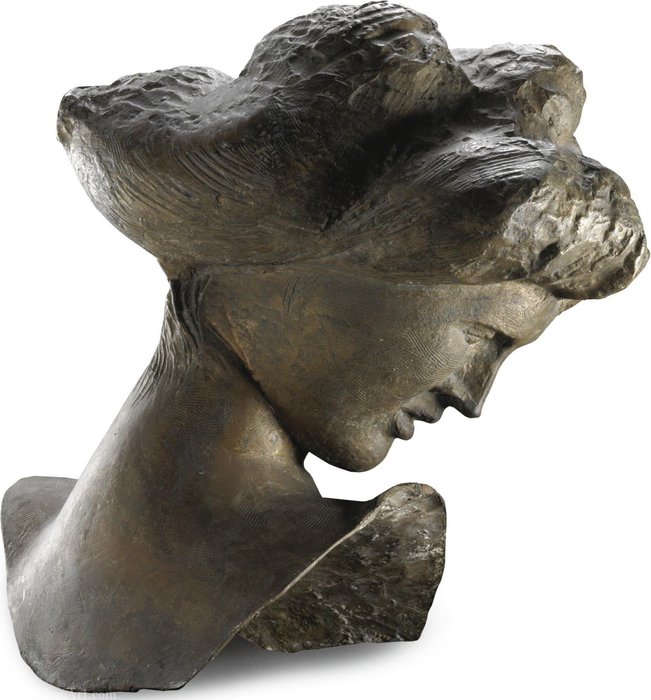
Untitled (562)
 Läs mer
Giclée / Konsttryck
Giclée- eller canvasprint av museumskvalitet med snabb produktion och flexibla ytbehandlingsalternativ. ( Byt till handmålad målning Byt till bild)




































Välj bland våra förinställda storlekar som motsvarar konstverkets ursprungliga proportioner.

Du kan ange egna mått för att passa en specifik ram eller yta. Om det valda måttet inte överensstämmer med originalbildens proportioner kommer vi antingen att beskära konstverket eller utöka bilden med en speglad eller enfärgad kant. En digital mockup skickas för ditt godkännande innan produktionen påbörjas.
Vänligen notera att förhandsvisningen på skärmen inte återspeglar den faktiska beskärningen eller utökningen. Endast mockuppen visar den slutgiltiga kompositionen korrekt.
Även om anpassade storlekar är möjliga, rekommenderar vi att du väljer ett mått från den fördefinierade listan för att bevara de ursprungliga proportionerna.
Leverans över hela världen () på 2 veckor istället för standard 4/5 veckor. (11 augusti)

Fri expressfrakt över hela världen

Högkvalitativ linnecanvas

Fullständig fraktförsäkring

Garantier för återbetalning av tullavgifter

Garantier för exakt färgåtergivning

60 dagars returrätt (endast vid fabrikationsfel)

100% pengarna tillbaka-garanti

Mängdrabatt erbjuds
 Glasalternativet är endast tillgängligt i storlekar under 110 cm.

Untitled (562)
Giclée / Konsttryck
Reproduktionsstorlek
-


Totalpris
$ 80
Om konstnären
The Sculptor of Grace: The Life and Legacy of Emilio Greco
Emilio Greco was a master of form, an artist whose hands breathed life into bronze and marble to create works that resonate with a timeless, ethereal elegance. Born in the sun-drenched landscape of Catania, Sicily, on October 11, 1913, his journey toward artistic greatness began not in a gilded academy, but through the grit and dust of manual labor. At just thirteen years old, driven by the necessity of supporting his family during his father's illness, Greco entered the world of stonemasonry as an apprentice. This formative period, spent working with the raw textures of stone and the malleability of clay, instilled in him a profound understanding of material and volume that would later define his monumental achievements. His early passion for drawing, often practiced in secret notebooks despite his father's wishes for a more practical vocation, blossomed into a disciplined pursuit of beauty at the Academy of Fine Arts in Palermo. The trajectory of Greco’s life was irrevocably altered by the shadows of the mid-twentieth century. His service in the Royal Army during the Second World War, which included deployment to Albania, brought him face-to-face with the harsh realities of conflict and displacement. Yet, from this period of upheaval, a renewed artistic clarity emerged. Upon returning to Italy, Greco found himself part of a vibrant intellectual circle, notably working at Villa Massimo in 1947. This era of his life was marked by an intense exploration of style, where he began to synthesize the classical traditions of his heritage with the burgeoning modern sensibilities of the post-war period. He moved beyond the mere imitation of antiquity, seeking instead to capture a psychological depth and a fluid, rhythmic vitality that felt entirely contemporary.A Symphony in Bronze and Form
Greco’s artistic language is one of exquisite elongation and lyrical movement. His sculptures often feature slender, attenuated figures that seem to stretch toward the heavens, embodying a sense of spiritual aspiration and physical grace. While his roots were deeply planted in the neoclassical ideals of masters like Antonio Canova, Greco infused his work with a subtle Surrealist touch, utilizing distorted perspectives and expressive gestures to evoke the complexities of the human psyche. His mastery of bronze allowed him to achieve a seamless transition between light and shadow, creating surfaces that appear almost skin-like in their softness, despite their metallic permanence. The breadth of his technical skill extended far beyond three-dimensional sculpture; he was also a gifted engraver, medallist, writer, and poet, possessing a rare ability to translate the essence of humanity across various media. His work often explored the tension between the monumental and the intimate, as seen in his celebrated public monuments which command attention in urban landscapes, contrasted with the delicate, emotive power of his smaller figurative studies. This duality allowed him to speak to both the grandeur of history and the quiet vulnerability of the individual soul.Global Recognition and Enduring Influence
The impact of Emilio Greco’s vision is etched into the very fabric of the world's most prestigious cultural institutions. His bronze masterpieces serve as permanent residents in a global gallery of human achievement, with significant collections held at:- The Tate Modern in London, where his works stand as pillars of modern figurative excellence.
- The Hermitage Museum in Saint Petersburg, showcasing the international reach of his aesthetic.
- The Musée Rodin in Paris, a fitting home for an artist whose work shares a lineage with the masters of form.
- The Hawke’s Bay Museum in New Zealand, proving that his poetic language transcends continental boundaries.
- And numerous other landmarks including the Puskin Museum, Gnam in Rome, and the Hirshhorn Museum in Washington D.C.

Emilio Greco
1913 - 1995 , Italy
Snabbfakta
- Artistic Movement Or Style: Monumental sculpture
- Date Of Birth: October 11, 1913
- Date Of Death: April 4, 1995
- Full Name: Emilio Greco
- Nationality: Italian
- Notable Artworks:
- Portrait of Giovanni Boccaccio
- Nude female figure
- Untitled (123)
- Place Of Birth: Catania, Italy

