
 Förhandsvisa
 Skicka
 Dela
Dela
 Visa detaljer
 Guide
Guide

 Ladda ner
 Liknande objekt
 Röntgen
 Bildspel
 Q&A
Q&A Statistik
Cantoria (detail)


 Visa mer
Giclée / Konsttryck
Giclée- eller canvasprint av museumskvalitet med snabb produktion och flexibla ytbehandlingsalternativ. ( Beställ handmålad reproduktion Byt till digital bild)




P118B Skr10

P118H Skr10

P118W Skr10

P438Z Skr10

P508JH Skr12

P508YH Skr12

P805H Skr10

P805Z Skr10

P919BZ Skr10

P919G Skr10

P919XJ Skr10

P959ZH Skr10

P968JZ Skr12

W106C Skr8

W218G Skr10

W218JH Skr8

W218Y Skr10

W307PJ Skr10

W316G Skr10

W316PJ Skr8

W316Y Skr10

W398PJ Skr8

W4111J Skr10

W500HY Skr15

W500JH Skr15

W692G Skr12

W849H Skr8

W940BG Skr15

W953PJ Skr8




Välj bland våra förinställda storlekar som motsvarar konstverkets ursprungliga proportioner.

Ange den bredd och höjd du behöver för att passa din ram eller vägg. Ett tryck kan endast beskäras, aldrig göras större än originalbilden, vilket innebär att ett format med en annan proportion leder till att en del av bilden går förlorad. Vi skickar en digital mockup för godkännande innan vi påbörjar tryckningen. Bilden som visas på denna sida visar inte den faktiska beskärningen — det är endast mockuppen som gör det.
Leverans över hela världen () på 2 veckor istället för standard 4/5 veckor. (1 november)

Fri expressfrakt över hela världen

Högkvalitativ linnecanvas

Fullständig fraktförsäkring

Garantier för återbetalning av tullavgifter

Garantier för exakt färgåtergivning

100 dagars returrätt (endast vid fel)

100% pengarna tillbaka-garanti

Mängdrabatt erbjuds
 Glasalternativet är endast tillgängligt i storlekar under 110 cm.

Cantoria (detail)
Giclée / Konsttryck
Storlek på reproduktion
-


Slutgiltigt pris
Skr 804
The Echoes of Florence: Donatello’s Cantoria
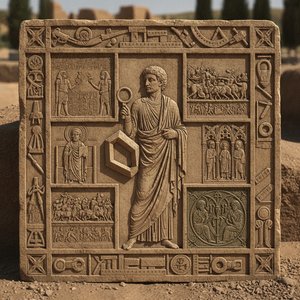
Donatello's "Cantoria," a breathtaking detail from the larger marble relief adorning the south sacristy doors of the Duomo in Florence, isn’t merely a sculpture; it’s a vibrant snapshot of Renaissance exuberance and spiritual aspiration. Crafted between 1433 and 1439 during a pivotal moment in Florentine art history, this fragment captures the dynamism of a celestial choir – angels dancing with an almost ecstatic joy, their forms rendered with a masterful blend of classical restraint and intensely expressive emotion. The sheer scale of the original work—a monumental frieze spanning nearly sixty feet—is immediately apparent even in this detailed section, hinting at the grandeur and ambition of Cosimo de’ Medici, who commissioned it as a testament to his patronage of the arts.
The technique employed is nothing short of revolutionary for its time. Donatello masterfully utilized a complex layering of materials: gleaming white marble forms the foundation, punctuated by strategically placed glass paste – a shimmering, iridescent substance that catches and refracts light with astonishing effect – and lavish inlays of gold. These elements aren’t simply decorative; they contribute to an overall sense of ethereal beauty, elevating the scene beyond mere representation and into the realm of pure visual delight. The subtle gradations of color achieved through the manipulation of these materials create a remarkable depth and luminosity, drawing the viewer into the heart of this animated tableau.
A Symphony of Movement and Symbolism
What immediately strikes the eye is the sheer energy contained within the figures. Donatello abandons the static formality often associated with early Renaissance sculpture, opting instead for a dynamic choreography of movement. The angels aren’t posed; they *dance*, their limbs outstretched in graceful arcs, their faces alight with expressions ranging from joyous laughter to rapturous contemplation. This deliberate embrace of motion reflects the humanist ideals that were gaining momentum during this period – a shift towards celebrating earthly experience and human potential. The composition itself is carefully balanced, creating a sense of visual harmony while simultaneously conveying a feeling of unrestrained vitality.
Beyond the purely aesthetic, “Cantoria” is rich in symbolic meaning. The angels themselves represent the heavenly choir, singing praises to God. Their gestures – holding instruments, raising their hands in adoration – are direct references to biblical texts and musical traditions. The swirling patterns of their movement evoke a sense of divine harmony and the interconnectedness of all things. The inclusion of children amongst the angelic figures suggests innocence, purity, and the promise of eternal life—a potent message for a society grappling with questions of faith and morality.
Contextualizing a Florentine Masterpiece
To fully appreciate “Cantoria,” it’s crucial to understand its historical context. Donatello was a pivotal figure in the transition from the Gothic to the Renaissance style, rejecting the elongated figures and stylized poses of his predecessors in favor of a more naturalistic and emotionally charged approach. His work profoundly influenced subsequent generations of artists, including Michelangelo and Raphael. The Cantoria itself was intended for the Duomo’s sacristy doors, a space dedicated to prayer and reflection – a fitting setting for such a visually arresting and spiritually evocative artwork.
The commission by Cosimo de' Medici underscores the importance of patronage in shaping Florentine art during this era. The Medici family were avid collectors and supporters of the arts, playing a key role in fostering an environment where creativity could flourish. “Cantoria” stands as a testament to their commitment to beauty, innovation, and the celebration of human achievement – a legacy that continues to resonate today.
A Timeless Vision
Even in this detailed fragment, “Cantoria” retains its power to captivate and inspire. Donatello’s masterful use of light, color, and movement creates an immersive experience for the viewer, transporting them to the heart of Renaissance Florence. The sculpture's enduring appeal lies not only in its technical brilliance but also in its profound exploration of human emotion and spiritual aspiration – a timeless vision that continues to resonate with audiences centuries later. Reproductions offer a remarkable opportunity to bring this extraordinary artwork into your home or office, allowing you to experience the beauty and energy of Donatello’s masterpiece firsthand.
Frågor och svar
Vilken storlek rekommenderas för "Cantoria (detail)" i ett Living Room?
Rekommenderad kombination för "Cantoria (detail)" av Donatello: ett tryck i storlek Large för ett Living Room.
Vilket format har "Cantoria (detail)" av Donatello?
"Cantoria (detail)" av Donatello är en komposition i Landscape. Det är värt att kontrollera proportionerna innan du väljer tryckstorlek.
Hur kan "Cantoria (detail)" av Donatello användas i heminredningen?
"Cantoria (detail)" rekommenderas för Statement och passar utmärkt i ett Living Room.
Konstnärsbiografi
Early Life and Artistic Beginnings
Donatello, egentligen Donato di Niccolò di Betto Bardi, föddes omkring 1386 i Florens – en stad som redan då var ett centrum för konst och innovation. Hans barndom präglades av den rika kulturella atmosfären i Florens, där klassisk antikens idéer fortfarande levde kvar och inspirerade konstnärer. Donatello studerade intensivt klassisk skulptur, vilket formade grunden till hans unika stil – en stil som skulle revolutionera italiensk konst under tidig renässans. Han började sin utbildning hos Ghiberti, en etablerad skulptör vars verk redan var kända för sin elegans och realism. Under Cosimo de’ Medicis beskydd fick Donatello möjlighet att utveckla sina färdigheter och experimentera med nya tekniker. Hans tidiga verk visar redan ett djärvt intresse för detaljrikedom och en förmåga att få fram livfulla uttryck i sten – något som skulle bli hans signum.Key Works and Artistic Innovations
Donatellos mest kända verk är vittnesbörd om hans konstnärliga utveckling och hans banbrytande innovationer. David, skapad mellan 1428 och 1432, representerar ett genombrott i skulpturens historia. Det var den första fristående bronsstatyn av en mänsklig figur sedan antiken, och dess nakenhet och dynamiska pose utmanade konventionerna och väckte både beundran och kontroverser. Hans skulpturer för katedralen i Florens, särskilt de väggmonumenten som han utförde tillsammans med Michelozzo, visar en imponerande förmåga att skapa djupverkan och illusion av perspektiv – en teknik som var helt ny för skulptur på den tiden. Hans *Sacrifice of Isaac* är ett annat exempel på hans konstnärliga mognad, där han lyckas få fram både tragik och mänsklig sårbarhet i en komplex allegorisk scen. Och slutligen, hans bronsrelief *The Feast of Herod*, med sin detaljerade skildring av karaktärer och dynamiska komposition, visar Donatellos förmåga att kombinera klassiska ideal med personliga uttryck.Artistic Style and Influences
Donatellos stil utvecklades genom flera faser, från en initial period präglad av expressivitet och monumentala former till senare verk som kännetecknas av en större intimitet och realism. Han var starkt influerad av antiken, särskilt av den grekiska skulpturen, men han lyckades inte bara kopiera klassiska ideal utan snarare transformera dem till något nytt och unikt. Hans verk är fyllda med en känsla för rörelse och dynamik, och hans förmåga att få fram mänskliga känslor i sten var exceptionell. Det finns teorier som hävdar att Donatello var homosexuell eller åtminstone hade en intim relation till män, vilket kan ha påverkat hans konstnärliga uttryck – särskilt hans skulptur av David. Hans stil var inte omedelbart accepterad av alla i Florens, men den blev med tiden den mest populära och influerade andra italienska hov och europeiska konstnärer.Personal Life and Working Style
Donatello var känd för att vara en charmig och omtyckt person, men han hade svårt med de mer praktiska aspekterna av sitt yrke. Han tenderade att ta emot fler beställningar än han kunde hantera, vilket ofta ledde till förseningar eller att han lämnade över arbetet till andra skulptörer. Trots detta var Donatello en visionär konstnär som alltid strävade efter att skapa verk av högsta kvalitet och som utmanade konventionerna. Hans liv präglades av en ständig strävan efter nya idéer och tekniker, vilket gjorde honom till en av de mest betydelsefulla konstnärerna under den tidiga renässansen.Museums and Art Collections
Donatellos verk finns att beundra på flera museer runt om i Italien och världen. Museo Nazionale del Bargello i Florens bjuder in besökare att upptäcka Donatello, Michelangelo & mer – en fascinerande resa genom konsthistoriens hjärta. Museet har bland annat Donatellos David. Santa Maria Gloriosa dei Frari i Venedig är hem för ett av hans mest kända altareverk, *The Feast of Herod*. Museo della collegiata i Empoli bjuder in besökare att upptäcka en dold skatt från renässansen, med verk av Francesco Botticini och Raffaello Botticini.
Donatello
1386 - 1466 , Italien
Kortfakta
- Artistic Movement Or Style: Tidig Renässans
- Artists Or Movements Influenced By This Artist: ['Italiensk Renässans']
- Artists Who Influenced This Artist: ['Antiken skulptur']
- Date Of Birth: c. 1386
- Date Of Death: 1466
- Full Name: Donatello di Niccolò
- Nationality: Italiensk
- Notable Artworks:
- David
- St Louis
- Offer av Isaac
- Place Of Birth: Florens, Italien
Relaterade artiklar

Bronsålderns Mästerverk: 10 Skulpturer Som Förändrade Konsthistorien | OriginalUniqueArt
Upptäck 10 legendariska brons skulpturer som revolutionerade konsthistorien! Lär känna Rodin, Michelangelo och andra mästare. Köp museumkvalitativa repliker & hitta inspiration för din inredning på OriginalUniqueArt.com.

10 Bronsskulpturer Som Förändrade Konsthistorien – Upptäck Mästerverken
Utforska 10 legendariska bronsmästerverk som revolutionerade konsten! Lär känna Michelangelo, Rodin och andra ikoniska skulptörer. Hitta inspiration & museumskvalitativa konsttryck på OriginalUniqueArt.com – för en tidlös inredning.
Mastering Dimension: An Art Historian's Guide to the Elegance of Sculptural Relief Art
Explore the profound beauty of sculptural relief art. From classical bas-relief to modern geometric textures, discover how depth and light transform spaces through an expert guide on art history and sophisticated curation for discerning collectors.

The Enduring Form: Exploring Themes & Techniques in Sculpture Across Historical Periods
Explore the rich history of sculpture from ancient masterpieces to contemporary innovations. Discover key techniques, influential artists & investment potential for discerning art collectors.

The Enduring Allure of Marble in Art History: From Classical Sculpture to Modern Abstraction
Explore the captivating history of marble sculpture from ancient Greece to modern art. Discover renowned artists like Canova & Michelangelo, carving techniques, and investment insights at OriginalUniqueArt.
