

 Visa i rummet
 Skicka
 Dela
Dela
 Detaljer
 Studentguide för konstverk

 Ladda ner
 Liknande objekt
 Röntgen
 Bildspel
 Besökstatistik
Winter Landscape
 Acrylic On Canvas
- WallArt
- Dutch Baroque Landscape
 1610
1610 36.0 x 47.0 cm
 Louvren
 Läs mer
Handgjord oljereproduktion
Handmålad olja på duk i din valda storlek och ram, tillverkad efter beställning av våra konstnärer. ( Byt till tryckta exemplar Byt till digital bildförsäljning)




P118B Skr10

P118H Skr10

P118W Skr10

P438Z Skr10

P508JH Skr12

P508YH Skr12

P805H Skr10

P805Z Skr10

P919BZ Skr10

P919G Skr10

P919XJ Skr10

P959ZH Skr10

P968JZ Skr12

W106C Skr8

W218G Skr10

W218JH Skr8

W218Y Skr10

W307PJ Skr10

W316G Skr10

W316PJ Skr8

W316Y Skr10

W398PJ Skr8

W4111J Skr10

W500HY Skr15

W500JH Skr15

W692G Skr12

W849H Skr8

W940BG Skr15

W953PJ Skr8




Välj bland våra förinställda storlekar som motsvarar konstverkets ursprungliga proportioner.

Ange den bredd och höjd du behöver för att passa din ram eller din vägg. Eftersom detta är handmålat kan konstnären vid en annan form måla lite mer runt bilden eller beskära den något – du väljer själv. Vi skickar en digital mockup för godkännande innan målningen påbörjas. Bilden som visas på denna sida representerar inte det slutgiltiga resultatet — det är endast mockuppen som visar det.
Efter beställning kommer OriginalUniqueArt.com team att mejla kunden för instruktioner och tillhandahålla en skissförhandsvisning
Leverans över hela världen () på 3–4 veckor istället för standard 5 veckor. (23 oktober). Inga kompromisser med kvaliteten.

Fri expressfrakt över hela världen

Högkvalitativ linnecanvas

Fullständig fraktförsäkring

Garantier för återbetalning av tullavgifter

Garantier för exakt färgåtergivning

100 dagars returrätt vid fabrikationsfel

100% pengarna tillbaka-garanti

Mängdrabatt erbjuds
 Glasalternativet är endast tillgängligt i storlekar under 110 cm.

Winter Landscape
Tryckteknik
Reproduktionsstorlek
-


Totalpris
Skr 2975
A Winter’s Embrace: Denijs van Alsloot's Tranquil Landscape
Denijs van Alsloot stands as a pivotal figure in the burgeoning artistic landscape of the early 17th century, embodying the delicate transition from Mannerist formalism to the radiant optimism of the Dutch Baroque. Born around 1570 – though precise biographical details remain elusive – his formative years were inextricably linked to the craft of tapestry weaving, a profession that instilled within him an inherent understanding of composition and visual storytelling—skills which would prove invaluable in his subsequent artistic endeavors. Entering the Brussels Guild of St Luke in 1599 as a tapestry designer marked not merely a career change but a deliberate embrace of stylistic influences already shaping the era’s artistic sensibilities. Initially focused on textile artistry, Alsloot gradually honed his painting skills, accepting his first pupil and continuing to mentor apprentices until his death in 1626 – demonstrating a sustained commitment to fostering talent and furthering artistic innovation.The Canvas Speaks: Style and Technique
Alsloot’s oeuvre is characterized by a remarkable blend of realism and atmospheric perspective, reflecting the prevailing trends of the Dutch Golden Age. Unlike his predecessors who often prioritized idealized representations, Alsloot meticulously captured the subtle nuances of winter light and shadow, creating landscapes imbued with palpable depth and spatial illusion. His brushstrokes are deliberate yet fluid, conveying texture and movement—particularly evident in the depiction of snowdrifts and tree branches—a technique honed through years of apprenticeship and informed by observations of nature itself. The artist’s masterful use of color contributes significantly to the overall mood, favoring muted tones that evoke a sense of serenity and solitude. This restrained palette contrasts beautifully with the brilliant blues of the sky, emphasizing the grandeur of the natural world.A Scene Frozen in Time: Historical Context
Painted circa 1610, “Winter Landscape” aligns perfectly with the artistic fervor that gripped Holland during this period—a time marked by burgeoning economic prosperity and a fervent desire to express national identity through art. The painting’s subject matter – a solitary winter vista – speaks to the broader humanist concerns of the era, reflecting an interest in portraying the beauty and majesty of God's creation. Furthermore, Alsloot’s work draws inspiration from the artistic innovations originating in Italy—specifically the atmospheric perspective championed by artists like Jan van Goyen and Cornelis van Poelenburch—demonstrating a willingness to engage with international stylistic currents. The Louvre Museum houses this masterpiece, ensuring its enduring legacy for generations of art enthusiasts.Symbolism Beneath the Surface
Beyond its aesthetic merits, “Winter Landscape” carries subtle symbolic resonances. The barren trees represent mortality and resilience—a poignant reminder that even in dormancy, life persists beneath the frozen surface. The snow symbolizes purity and tranquility, mirroring the spiritual contemplation fostered by the contemplative gaze of the viewer. The distant village offers a glimpse into human habitation amidst the vastness of nature, highlighting the harmonious relationship between humankind and the environment – a theme central to Baroque artistic thought.Emotional Resonance: Capturing Tranquility
Ultimately, “Winter Landscape” succeeds in conveying an unparalleled sense of peace and contemplation. Alsloot’s meticulous attention to detail—from the delicate rendering of snow crystals to the subtle gradations of color—creates a visual experience that transcends mere representation; it invites viewers into a moment of profound stillness. This artwork embodies the spirit of its time, capturing not only the beauty of winter but also the enduring human desire for solace and connection with the natural world. Its timeless appeal continues to inspire collectors and interior designers alike who seek to infuse their spaces with elegance and serenity.Frågor och svar
Hur förhåller sig stilen i "Winter Landscape" till sin skapares epok?
"Winter Landscape" av Denis Van Alsloot placeras inom Dutch Baroque Landscape-rörelsen, under sin skapares Tidig modern tid-era.
Vilket medium är "Winter Landscape" av Denis Van Alsloot utförd i?
"Winter Landscape" är utförd i Acrylic On Canvas.
Vilket tryckformat rekommenderas för "Winter Landscape" av Denis Van Alsloot?
För "Winter Landscape" är den rekommenderade tryckinställningen storleken Large med Landscape orientering.
Om konstnären
A Life Woven in Landscape: The World of Denijs van Alsloot
Denijs van Alsloot, a name resonating softly through the annals of Flemish art, occupies a fascinating transitional space between the established traditions of the 16th century and the burgeoning Baroque dynamism of the 17th. Born around 1570 in either Mechelen or Brussels, Belgium, his origins were steeped in the craft of tapestry – his father’s profession providing an early immersion into design and visual composition. Though details surrounding his formal artistic training remain elusive, it's clear that this familial connection to textile arts laid a foundational aesthetic sensibility for the young Alsloot. He entered the Brussels Guild of St Luke in 1599 as a tapestry designer, initially focusing on this craft before gradually shifting towards painting, taking on his first pupil the same year and continuing to mentor apprentices until 1625. This period suggests a deliberate evolution, a honing of skills that would eventually blossom into a distinctive landscape style.Courtly Commissions and Artistic Flourishing
A pivotal moment arrived around 1606 with Alsloot’s appointment as court painter to Albert and Isabella, the Archdukes who governed the Spanish Netherlands. This prestigious position not only provided financial stability but also thrust him into a world of influential patrons and significant commissions. The court became his canvas, demanding depictions of both grandeur and everyday life. He excelled at capturing scenes of civil processions, local festivals, and ceremonial events – vibrant snapshots of 17th-century Brussels society. Perhaps the most notable commission came from Archduchess Isabella herself: a request to paint eight panels commemorating the Ommegang procession of 1615, for which he was handsomely rewarded with 10,000 guilders. These works weren’t merely decorative; they were historical documents, preserving the spectacle and social fabric of the time. Alsloot's meticulous attention to detail—the costumes, the architecture, the expressions on the faces of participants—transformed these panels into powerful representations of Habsburg rule and civic pride. His landscapes often blended topographical accuracy with imaginative flourishes, creating a unique aesthetic that resonated with his aristocratic clientele. He became particularly renowned for his realistic winter landscapes, frequently featuring the abbey of Groenendael in varying seasonal conditions – scenes commissioned by Archduke Albert himself, demonstrating the court’s appreciation for his skill and vision.The Sonian Forest School and Collaborative Spirit
Van Alsloot is often associated with the Sonian Forest school of landscape painters, a group who found inspiration in the sprawling woodlands surrounding Brussels. This association isn't merely geographical; it reflects a shared aesthetic preference for depicting scenes from this particular environment – its dense forests, tranquil abbeys, and atmospheric perspectives. His series of views of abbeys within the Sonian Forest exemplifies this connection, showcasing his ability to capture both the natural beauty and spiritual significance of these locations. He skillfully blended elements from earlier landscape traditions with emerging Baroque techniques—particularly a softer palette and greater emphasis on light and shadow—establishing himself as a pioneer in this influential movement. However, Alsloot rarely worked in complete isolation. A fruitful collaboration with Hendrick de Clerck, a painter specializing in *staffage* – the figures populating landscapes – became a hallmark of his style. De Clerck’s vividly colored figures brought life and narrative to Alsloot's meticulously rendered backgrounds, creating dynamic compositions that captivated viewers. This partnership demonstrates a willingness to embrace collaborative artistry, enhancing the overall impact of their combined talents.Influences and a Developing Vision
Tracing Alsloot’s artistic lineage reveals a fascinating synthesis of influences. Early works demonstrate an affinity with 16th-century landscape painting, suggesting he studied the masters who came before him. The style of Gillis van Coninxloo is particularly evident, yet Alsloot's work generally possesses a calmer, more static quality, employing a softer palette and exhibiting greater precision in detail. He also absorbed elements from Jan Brueghel the Elder, skillfully blending these influences into his own distinctive approach. His artistic journey wasn’t simply imitation; it was an evolution. Starting with tapestry design, he gradually expanded his creative scope, embracing independent landscape painting and refining his technique over time. This progression demonstrates a commitment to growth and innovation, solidifying his position as a significant figure in the development of Flemish art.Legacy: A Window into 17th-Century Brussels
Though he passed away around 1626, likely before 1628, Denijs van Alsloot’s artistic legacy endures. His paintings are now held in esteemed museums worldwide, including the Museo Nacional del Prado in Madrid and the Victoria and Albert Museum in London, ensuring his work continues to inspire and captivate audiences centuries later. He is remembered not only for his technical skill – his topographical accuracy, atmospheric perspective, and meticulous detail – but also for his ability to document 17th-century life in Brussels. His depictions of festivals, processions, and landscapes offer invaluable insights into the social customs, architectural features, and natural beauty of the era. As a key representative of the Sonian Forest school and a transitional figure bridging earlier landscape traditions with the emerging Baroque style, Van Alsloot remains a significant subject for scholars studying Flemish landscape painting and the rich artistic culture of the Spanish Netherlands – a testament to his enduring contribution to the world of art.
Denis Van Alsloot
1570 - 1626 , Belgien
Snabbfakta
- Artistic Movement Or Style: Sonian Forest school
- Artists Or Movements Influenced By This Artist: ['Dutch Golden Age School']
- Artists Who Influenced This Artist:
- Gillis van Coninxloo
- Jan Brueghel the Elder
- Date Of Birth: c. 1570
- Date Of Death: c. 1626
- Full Name: Denijs van Alsloot
- Nationality: Flemish
- Notable Artworks:
- Tervuren tervuren
- Landscape with Tobias...
- The Flight into Egypt
- Place Of Birth: Mechelen, Belgien
Relaterade artiklar
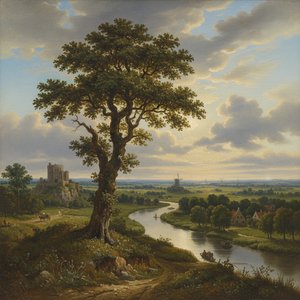
Jacob van Ruisdael: Master of Dutch Landscape & the Evocation of National Identity
Explore the life & work of Jacob van Ruisdael, the preeminent Dutch landscape painter. Discover his technical brilliance, symbolic depth, and lasting influence on art history. Learn about collecting Ruisdael's masterpieces.

Jan van Goyen: Master of Dutch Landscape & Atmospheric Perspective
Discover Jan van Goyen, the master of Dutch landscape painting. Explore his subtle technique, atmospheric realism & lasting influence on art history. Learn about this 17th-century pioneer at OriginalUniqueArt.
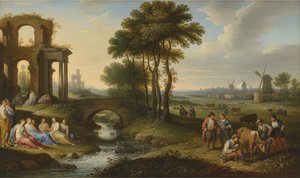
Cornelis van Poelenburch: Bridging Mannerism & the Dutch Baroque Landscape
Discover Cornelis van Poelenburch, a pivotal Dutch Baroque landscape painter bridging Mannerism & Italianate styles. Explore his life, key works, and lasting influence on 17th-century art with OriginalUniqueArt.

Nederländsk Barock: Topp 10 Mästerverk som Definierade Epoken – Konst & Inredning
Upptäck de 10 ikoniska mästerverken som definierade nederländsk barock! Lär känna Rembrandt, Vermeer och andra stora konstnärer. Hitta inspiration & museumkvalitativa reproduktioner på OriginalUniqueArt.com – för ditt hem eller din samling.

Rembrandts 25 Mästerverk: En Konsthistorisk Resa för Hemmet
Utforska Rembrandts 25 mest ikoniska målningar! Lär känna historien bakom mästerverken, hans unika teknik och barockens ljusspel. Köp exklusiva konsttryck & tavlor online på OriginalUniqueArt.com – för en tidlös inredning.