

 Förhandsvisa
 Skicka
 Dela
Dela
 Visa detaljer
 Guide
Guide

 Ladda ner
 Liknande objekt
 Röntgen
 Bildspel
 Statistik
Inspiration
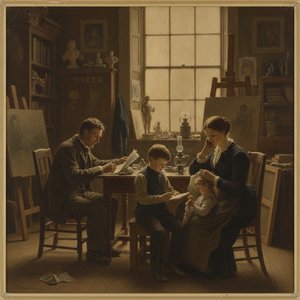
 Academic Realism
 88.0 x 69.0 cm
 Visa mer
Konstverket som visas på denna sida skyddas av upphovsrättslagen, vilket innebär att vi inte lagligt kan skapa eller sälja en identisk reproduktion. Detta skydd upprätthålls genom internationella avtal såsom den Bernkonventionen och genom nationella lagar, inklusive de som fastställs av Amerikansk upphovsrättslag – Titel 17. Alla rättigheter förbehållna. Återgivning av konstverk är förbjuden utan skriftligt tillstånd från WahooArt.
Denna metod följer fullt ut upphovsrättsliga regler eftersom den inte innebär kopiering eller duplicering av det skyddade konstverket. Istället är det en kreativ nytolkning – en ny målning som är influerad av originalet men inte identisk med det.
Giclée / Konsttryck
Giclée- eller canvasprint av museumskvalitet med snabb produktion och flexibla ytbehandlingsalternativ. ( Beställ handmålad reproduktion Byt till digital bild)




































Välj bland våra förinställda storlekar som motsvarar konstverkets ursprungliga proportioner.

Ange den bredd och höjd du behöver för att passa din ram eller vägg. Ett tryck kan endast beskäras, aldrig göras större än originalbilden, vilket innebär att ett format med en annan proportion leder till att en del av bilden går förlorad. Vi skickar en digital mockup för godkännande innan vi påbörjar tryckningen. Bilden som visas på denna sida visar inte den faktiska beskärningen — det är endast mockuppen som gör det.
Leverans över hela världen () på 2 veckor istället för standard 4/5 veckor. (27 oktober)

Fri expressfrakt över hela världen

Högkvalitativ linnecanvas

Fullständig fraktförsäkring

Garantier för återbetalning av tullavgifter

Garantier för exakt färgåtergivning

100 dagars returrätt (endast vid fel)

100% pengarna tillbaka-garanti

Mängdrabatt erbjuds
 Glasalternativet är endast tillgängligt i storlekar under 110 cm.

Inspiration
Giclée / Konsttryck
Storlek på reproduktion
-


Slutgiltigt pris
Skr 797
Konstnärsbiografi
A Life Etched in Realism: The Story of David Shanks Ewart
David Shanks Ewart, a name perhaps less celebrated than some of his contemporaries, nevertheless occupies a fascinating and important niche within the landscape of 20th-century Scottish art. Born in 1901, Ewart’s life was one dedicated to meticulous observation and the pursuit of representational accuracy – a commitment that led him from the bustling streets of Glasgow to the artistic heart of Florence, Italy. While initially known under his birth name, he later adopted the pseudonym Ernest Wedderburn, adding an intriguing layer to his already complex artistic persona. His story is not one of flamboyant innovation but rather of quiet dedication and a profound respect for the traditions of Renaissance masters.From Glasgow Beginnings to Florentine Studies
Ewart’s early life in Glasgow undoubtedly shaped his aesthetic sensibilities. The city, with its industrial grit and vibrant social tapestry, provided ample subject matter for an aspiring artist. He received formal training at the Glasgow School of Art, a renowned institution that fostered a strong sense of craftsmanship and encouraged students to engage with both historical and contemporary artistic practices. However, it was Ewart’s decision to relocate to Florence in the 1920s that proved pivotal. Immersing himself in the Italian Renaissance, he studied directly from the Old Masters, absorbing their techniques and principles of composition. This period marked a turning point in his work, shifting his focus towards portraiture and scenes imbued with a remarkable sense of realism. He wasn’t merely copying; he was striving to understand the underlying structure and emotional depth that characterized the art of Michelangelo, Raphael, and Leonardo da Vinci.The Pursuit of Anatomical Precision
Ewart's artistic philosophy centered on an unwavering commitment to anatomical accuracy. This dedication wasn’t simply about technical skill; it was driven by a belief that true representation could unlock deeper emotional resonance in his subjects. He meticulously studied human form, often creating detailed preparatory drawings before embarking on larger compositions. His portraits are not idealized representations but rather honest and unflinching depictions of the individuals he painted – capturing their character, vulnerabilities, and inner lives. This pursuit led him to become a highly sought-after portraitist among both Italian and international clientele. He wasn’t interested in fleeting impressions or abstract interpretations; his goal was to create enduring images that reflected the essence of his sitters.Exhibition Success & Lasting Legacy
Ewart's work gained recognition through numerous exhibitions, most notably at Florence’s prestigious Galleria dell’Accademia – a testament to his mastery of Renaissance techniques and his ability to connect with audiences on an emotional level. His paintings often featured scenes reminiscent of the Italian masters, but infused with a distinctly modern sensibility. He skillfully blended classical principles with contemporary subject matter, creating works that were both timeless and relevant. While he didn’t actively seek widespread fame, his talent was undeniable, attracting the attention of collectors and critics alike. His ability to capture the human spirit through precise rendering and subtle emotional nuance set him apart from many of his contemporaries. Although not a prolific artist in terms of sheer volume, the quality and depth of his work have ensured his place within the annals of Scottish art history.Historical Significance & Enduring Appeal
David Shanks Ewart’s significance lies in his unwavering dedication to realism at a time when abstract expressionism was gaining prominence. He represented a counter-current – a steadfast belief in the power of representational art and the importance of traditional techniques. His work serves as a reminder that artistic innovation doesn't always necessitate radical departures from established norms. Ewart’s paintings offer a glimpse into a bygone era, capturing the essence of his subjects with remarkable clarity and emotional depth. His legacy continues to inspire artists who value craftsmanship, anatomical accuracy, and the enduring power of representational art. He died in 1965, leaving behind a body of work that stands as a testament to his skill, dedication, and profound respect for the traditions of the Renaissance masters.
David Shanks Ewart
1901 - 1965
Kortfakta
- Full Name: David Shanks Ewart
- Nationality: Scottish
- Date Of Birth: 1901
- Date Of Death: 1965
- Place Of Birth: Glasgow, Scotland
- Notable Artworks:
- The Emigrants
- Inspiration
- Artistic Movement Or Style: Realist Painting
- Artists Who Influenced This Artist: ['Michelangelo David']
- Artists Or Movements Influenced By This Artist: ['Renaissance Art']
Relaterade artiklar

Olja på duk: En tidlös teknik – Historik, process och konstnärliga möjligheter
Utforska oljemålningskonsten! Lär dig om flamländsk teknik, materialval och historisk utveckling. Expertguider för både nybörjare och erfarna konstnärer – bevara dina målningar med bästa praxis.

The Gaze of a Changing World: Victorian Realism & Modern Life
Explore the captivating world of Victorian Realism! Discover genre painting's rise, social commentary in art, & masters like Fedotov and Wilkie. Expert analysis & high-quality reproductions at OriginalUniqueArt.
Victorian Realism: Capturing the Soul and Intricate Detail of a Golden Era
Explore the exquisite world of Victorian Realism. Discover how 19th-century masters captured unparalleled detail and emotion through oil painting, and learn to curate these timeless masterpieces for your luxury interior collection.

Victorian Realism: The Raw, High-Definition Drama and Unflinching Truth of 19th-Century Masterpieces
Experience the raw, high-definition drama of Victorian Realism. Explore 19th-century masterpieces through our premium, hand-painted oil reproductions. Discover how the unflinching truth of historical art meets modern luxury to transform your space with timeless, museum-quality detail.

Romantic Realism's Finest: 10 Masterpieces for Your Home | OriginalUniqueArt
Explore 10 defining masterpieces of Romantic Realism! Discover Courbet, Millet & Daumier's powerful paintings—capturing emotion and social realities. Find museum-quality reproductions for your home at OriginalUniqueArt.com.