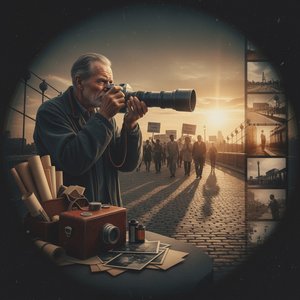
David Bailey Self-Portrait
Handgjord oljereproduktion
Handmålad olja på duk i din valda storlek och ram, tillverkad efter beställning av våra konstnärer.
P118B $10
P118H $10
P118W $10
P438Z $10
P508JH $12
P508YH $12
P805H $10
P805Z $10
P919BZ $10
P919G $10
P919XJ $10
P959ZH $10
P968JZ $12
W106C $8
W218G $10
W218JH $8
W218Y $10
W307PJ $10
W316G $10
W316PJ $8
W316Y $10
W398PJ $8
W4111J $10
W500HY $15
W500JH $15
W692G $12
W849H $8
W940BG $15
W953PJ $8
Välj bland våra förinställda storlekar som motsvarar konstverkets ursprungliga proportioner.
Du kan ange egna mått för att passa en specifik ram eller yta. Om den valda storleken inte matchar originalbildens proportioner kommer vi antingen att beskära konstverket eller utöka målningen med ytterligare handmålade element. En digital skiss skickas till dig för godkännande innan produktionen påbörjas.

Observera att förhandsvisningen på skärmen inte återspeglar den faktiska beskärningen eller utökningen. Endast skissen visar den slutgiltiga kompositionen korrekt.
Även om anpassade storlekar är möjliga, rekommenderar vi att du väljer en dimension från den fördefinierade listan för att bevara originalproportionerna.
Efter beställning kommer OriginalUniqueArt.com team att mejla kunden för instruktioner och tillhandahålla en skissförhandsvisning
Leverans över hela världen () på 3–4 veckor istället för standard 5 veckor. (22 juli). Inga kompromisser med kvaliteten.
Fri expressfrakt över hela världen
Högkvalitativ linnecanvas
Fullständig fraktförsäkring
Garantier för återbetalning av tullavgifter
Garantier för exakt färgåtergivning
60 dagars returrätt (endast vid fabrikationsfel)
100% pengarna tillbaka-garanti
Mängdrabatt erbjuds
David Bailey Self-Portrait
Teknik för reproduktion
Storlek på reproduktion
-
Slutgiltigt pris
-
Beskrivning av konstverket
David Bailey Self Portrait
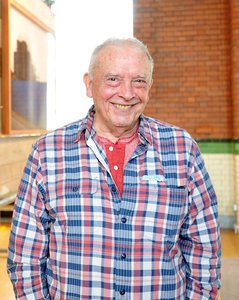
David Royston Bailey (b. 1938) is an English photographer, regarded as one of the nation’s best. He became a photographic assistant at the John French studio, then photographer for John Cole’s Studio Five before being contracted as a fashion photographer for British Vogue magazine in 1960. He also undertook a large amount of freelance work. Along with Terence Donovan and Brian Duffy, Bailey captured and helped create the ‘Swinging London’ of the 1960s: a culture of fashion and celebrity chic. The three photographers socialised with actors, musicians and royalty, and found themselves elevated to celebrity status. Together, they were the first real celebrity photographers, named by Norman Parkinson “the Black Trinity”. Bailey's rise began amidst the post-war optimism of London, a city rapidly transforming under the influence of new music, art, and social movements. Unlike many of his contemporaries who favored polished studio settings, Bailey embraced spontaneity and immediacy. He famously eschewed elaborate backdrops, often utiliz- Early Life & Education: Born in Leytonstone, East London, to Herbert Bailey, a tailor’s cutter, and Gladys, later a machinist. From the age of three he lived in East Ham. Bailey developed a love of natural history, and this led him into photography. Suffering from undiagnosed dyslexia, he experienced problems at school. He attended a private school, Clark’s College in Ilford, where he says they taught him less than the more basic council school. As well as dyslexia he also has the motor skill disorder developmental coordination disorder.
- Career Beginnings: Bailey joined local side Feyenoord's youth system at the age of 13, playing mainly as a winger during his junior years. After disciplinary issues during a trip to Switzerland with the B-side, coach Marcel Bout wanted him to leave the club, but the issues were resolved after the intervention of Rob Baan, the club’s director of football.
- The Swinging London Era: Bailey's collaboration with Terence Donovan and Brian Duffy defined the aesthetic of the 1960s, capturing the energy and glamour of a generation obsessed with fashion and celebrity culture. Their work cemented their place in photographic history.
- Composition: Bailey's photographs utilize geometric lines juxtaposed with organic forms, reflecting the architectural environment and capturing the human figure in motion.
- Lighting: Natural or diffused artificial light creates soft shadows that illuminate subjects’ features, enhancing visual drama and conveying mood.
- Material: Primarily black-and-white film photography was employed, utilizing photographic emulsion and darkroom chemicals for developing and printing.
- The Mirror Image: Bailey’s self-portrait serves as a reflection of his artistic vision and personal convictions—a statement of confidence and conviction amidst an uncertain world.
- Authenticity & Emotion: The photograph's grainy texture and subdued lighting convey a palpable emotional resonance, capturing the quiet contemplation of a solitary artist at work.
Konstnärsbiografi
David Royston Bailey: Capturing the Pulse of a Generation
David Royston Bailey, born in London in 1938, isn’t merely a photographer; he's a chronicler of an era. Often referred to as David Bailey or simply “Bailey,” his work transcends simple documentation, offering instead a vibrant and often provocative glimpse into the heart of the Swinging Sixties – a period defined by youthful exuberance, social upheaval, and a burgeoning cultural revolution. His early career with Vogue magazine established him as a pivotal figure in shaping the visual language of fashion and celebrity culture, while his subsequent work continues to resonate with its raw energy and undeniable style.
Bailey’s rise began amidst the post-war optimism of London, a city rapidly transforming under the influence of new music, art, and social movements. Unlike many of his contemporaries who favored polished studio settings, Bailey embraced spontaneity and immediacy. He famously eschewed elaborate backdrops, often utilizing stark white walls or simply the urban landscape as a backdrop for his subjects. This approach, coupled with his signature cropped perspectives and direct eye contact, created portraits that felt remarkably intimate and authentic – capturing not just appearances but also the personalities of those he photographed. His early collaborations with Jean Shrimpton, particularly the iconic “Jump” photograph, cemented his reputation for capturing a sense of movement and dynamism rarely seen in portraiture at the time.
The Swinging Sixties: A Visual Revolution
Bailey’s work during the 1960s is inextricably linked to the cultural phenomenon known as the ‘Swinging Sixties.’ He documented the rise of British pop music, the emergence of a new youth culture, and the changing social landscape with an unparalleled eye. His photographs of The Beatles – particularly their early, raw energy – became synonymous with the decade’s rebellious spirit. Beyond music, Bailey captured the glamour and intrigue of celebrities like Mick Jagger, showcasing their charisma and confidence in a way that redefined celebrity photography. He wasn't just taking pictures; he was actively participating in shaping the image of London as a global center for fashion and culture.
His influence extended beyond individual portraits. Bailey’s innovative use of location shooting – capturing models in unexpected places like telephone boxes or on bustling city streets – challenged traditional notions of fashion photography. He collaborated with *Ritz Newspaper*, pioneering the paparazzi style, which would later become a cornerstone of glossy magazines. This shift reflected a broader cultural change—a desire to capture candid moments and break down the barriers between celebrity and everyday life.
Technique and Style: A Distinctive Vision
Bailey’s photographic style is instantly recognizable. His use of black and white photography, often with starkly contrasting tones, creates a powerful visual impact. The cropped perspectives, frequently emphasizing the subjects' eyes and creating a sense of intimacy, are hallmarks of his work. He was a master of capturing fleeting moments – a glance, a gesture, a smile – that conveyed volumes about his subjects’ personalities. Bailey’s approach wasn’t simply about technical skill; it was about an intuitive understanding of how to capture the essence of a person or scene.
He famously stated that he didn't want to make models look like "stuffed shop mannequins." Instead, he sought to reveal their individuality and personality. This philosophy is evident in his portraits of figures like Kate Moss, who embodies a similar spirit of effortless cool and understated confidence. Bailey’s influence on subsequent generations of photographers is undeniable; his techniques and aesthetic continue to be studied and emulated today.
Beyond the Sixties: A Continuing Legacy
While his work during the 1960s remains his most celebrated period, Bailey's career has spanned decades. He’s continued to photograph a diverse range of subjects – from fashion icons to political figures – always maintaining his distinctive style and approach. His documentary film *Warhol by Bailey* (1973), exploring Andy Warhol’s creative process, demonstrated his versatility as a filmmaker and further cemented his reputation for challenging conventions.
Bailey's legacy extends beyond the realm of photography. He played a significant role in shaping London’s image during a transformative era, capturing its energy, dynamism, and cultural vibrancy. His photographs are not merely images; they are windows into a pivotal moment in history – a testament to his artistic vision and enduring influence.
david royston bailey
1938 - , United Kingdom
Kortfattad information
- Artistic Movement Or Style: Fashion photography, Portraiture
- Artists Or Movements Influenced By This Artist:
- Pop Art
- Swinging Sixties
- Artists Who Influenced This Artist:
- Richard Avedon
- Cecil Beaton
- Date Of Birth: 1938-07-24
- Full Name: David Royston Bailey
- Nationality: British
- Notable Artworks:
- Jean Shrimpton, New York
- The Beatles
- Mick Jagger
- Place Of Birth: London, UK


Glasalternativet är endast tillgängligt i storlekar under 110 cm.