

 Visa i rummet
 Skicka
 Dela
Dela
 Detaljer
 Guide
Guide

 Ladda ner
 Liknande objekt
 Röntgen
 Bildspel
 Besökstatistik
Sketch for the play
 Acrylic On Canvas
- WallArt
- Expressionism
 1947
1947 30.0 x 30.0 cm
 Art Palace of Georgia - Museum of Cultural History
 Läs mer
Handgjord oljereproduktion
Handmålad olja på duk i din valda storlek och ram, tillverkad efter beställning av våra konstnärer. ( Byt till tryckta exemplar Byt till digital bildförsäljning)




P118B $10

P118H $10

P118W $10

P438Z $10

P508JH $12

P508YH $12

P805H $10

P805Z $10

P919BZ $10

P919G $10

P919XJ $10

P959ZH $10

P968JZ $12

W106C $8

W218G $10

W218JH $8

W218Y $10

W307PJ $10

W316G $10

W316PJ $8

W316Y $10

W398PJ $8

W4111J $10

W500HY $15

W500JH $15

W692G $12

W849H $8

W940BG $15

W953PJ $8




Välj bland våra förinställda storlekar som motsvarar konstverkets ursprungliga proportioner.

Du kan ange egna mått för att passa en specifik ram eller yta. Om den valda storleken inte matchar originalbildens proportioner kommer vi antingen att beskära konstverket eller utöka målningen med ytterligare handmålade element. En digital skiss skickas till dig för godkännande innan produktionen påbörjas.
Observera att förhandsvisningen på skärmen inte återspeglar den faktiska beskärningen eller utökningen. Endast skissen visar den slutgiltiga kompositionen korrekt.
Även om anpassade storlekar är möjliga, rekommenderar vi att du väljer en dimension från den fördefinierade listan för att bevara originalproportionerna.
Efter beställning kommer OriginalUniqueArt.com team att mejla kunden för instruktioner och tillhandahålla en skissförhandsvisning
Leverans över hela världen () på 3–4 veckor istället för standard 5 veckor. (21 september). Inga kompromisser med kvaliteten.

Fri expressfrakt över hela världen

Högkvalitativ linnecanvas

Fullständig fraktförsäkring

Garantier för återbetalning av tullavgifter

Garantier för exakt färgåtergivning

100 dagars returrätt vid fabrikationsfel

100% pengarna tillbaka-garanti

Mängdrabatt erbjuds
 Glasalternativet är endast tillgängligt i storlekar under 110 cm.

Sketch for the play
Tryckteknik
Reproduktionsstorlek
-


Totalpris
$ 300
A Storm Within: David Kakabadze’s ‘Sketch for the Play’
David Kakabadze's “Sketch for the Play,” painted in 1947, isn’t merely a depiction of a landscape; it’s an immersion into a turbulent emotional state. This arresting work, measuring a modest 30x30 cm, immediately commands attention with its dramatic interplay of color and texture – a visual representation of internal conflict rendered on canvas with bold, expressive strokes. The piece transcends the simple act of portraying a storm; it embodies the anxieties and uncertainties simmering beneath the surface of Georgian society during a period of profound change.
At first glance, the composition presents two distinct panels. The upper portion explodes with a furious sky – jagged mountain peaks clawing at a bruised, grey-blue expanse. Thick impasto brushstrokes build up layers of color, creating a palpable sense of movement and raw energy. Rain streaks across the canvas, mirroring the chaotic nature of the scene. Below this tempestuous realm lies an interior space, a cluttered studio or workshop dominated by a colossal mechanical device – likely a printing press – its intricate gears and levers hinting at industry and perhaps even a touch of oppressive machinery. Walls are painted in stark whites punctuated by patches of darker grey, suggesting age, wear, and the weight of accumulated labor.
The Expressionist Palette and Georgian Roots
Kakabadze’s stylistic choices firmly situate “Sketch for the Play” within the realm of Expressionism, a movement characterized by its emphasis on subjective experience and emotional intensity. He abandons realistic representation in favor of conveying feeling – the anxiety of the storm, the claustrophobia of the confined space. Yet, despite this embrace of modern techniques, the painting remains deeply rooted in Georgian tradition. Kakabadze’s heritage is evident in his use of color, particularly the cool blues and grays that evoke the rugged landscapes of his native region, the mountainous Caucasus. The deliberate simplification of forms, a hallmark of Expressionism, also echoes the folk art traditions prevalent in Georgia.
Born in 1889 in the village of Kukhi near Khoni, Kakabadze’s early life instilled within him a deep connection to his land and its artistic heritage. His formal training at St. Petersburg University provided exposure to European avant-garde movements, but he skillfully integrated these influences with his own unique vision, forging a distinctly Georgian modernism. His multifaceted career – encompassing painting, graphic design, scenic design for theatre, and even cinematic innovation – speaks to a restless intellect and an unwavering commitment to artistic exploration.
Symbolic Layers: Chaos and Creation
The imagery within “Sketch for the Play” is rich with symbolic potential. The storm itself can be interpreted as representing chaos, disruption, or perhaps the challenges facing Georgia during this period of political and social upheaval. Conversely, the mechanical device in the lower panel suggests order, industry, and the relentless drive to create – a potentially conflicting force within the larger composition. The juxtaposition of these elements invites contemplation on the relationship between nature and technology, tradition and modernity, and perhaps even the individual’s struggle against external forces.
The subtle use of warmer tones—hints of orange and yellow—within the mechanical device offer a glimmer of hope or resilience amidst the prevailing gloom. These touches suggest that even within the most oppressive circumstances, creativity and human ingenuity can endure. Kakabadze's masterful manipulation of impasto creates a tactile surface, drawing the viewer into the painting’s emotional core and inviting a deeply personal response.
A Legacy in Texture and Emotion
“Sketch for the Play” is more than just a visually striking artwork; it’s a poignant reflection on the complexities of the human experience. David Kakabadze's ability to capture raw emotion through bold brushstrokes, evocative color palettes, and carefully considered symbolism ensures its enduring appeal. Reproductions of this powerful piece offer an opportunity to bring this captivating vision into any space, serving as a reminder of the beauty and turbulence inherent in both nature and the human spirit. It stands as a testament to Kakabadze’s pioneering role in Georgian modernism and his profound understanding of how art can illuminate the deepest recesses of our souls.
Om konstnären
A Pioneer of Georgian Modernism: The Life and Art of David Kakabadze
David Kakabadze, born in the village of Kukhi near Khoni, Georgia, in 1889, stands as a pivotal figure in the development of twentieth-century Georgian art. His career was one of remarkable innovation, seamlessly blending the burgeoning currents of European avant-garde movements with a deep reverence for his native Georgian traditions. Kakabadze wasn’t merely an artist; he was a polymath – a painter, graphic artist, scenic designer, art scholar, cinematic innovator, and even an amateur photographer. This multifaceted approach to creativity defined his artistic journey and cemented his legacy as one of Georgia's most important modernist masters. His early life, though rooted in the simplicity of a peasant family, was marked by intellectual curiosity fostered through sponsorship that allowed him to pursue studies at St. Petersburg University, graduating with a degree in natural sciences in 1916. Simultaneously, he honed his artistic skills under Dmitroyev-Kavkazsky and immersed himself in the study of Georgia’s rich artistic heritage. This dual education – scientific rigor combined with artistic sensitivity – would become a hallmark of his work.Parisian Encounters and Artistic Transformation
Following a brief period teaching and painting in Tbilisi, Kakabadze embarked on a transformative chapter of his life in Paris from 1919 to 1927. This sojourn placed him at the epicenter of the European avant-garde, exposing him to Cubism, Futurism, and other radical artistic experiments. He actively participated in exhibitions with the Société des Artistes Indépendants, forging connections with fellow Georgian artists Lado Gudiashvili and Shalva Kikodze. It was during this period that Kakabadze’s style underwent a dramatic evolution. Initially captivated by the landscapes of his native Imereti province – particularly the ethereal beauty of misty mountains bathed in sunlight – he began to explore “subjectless painting,” experimenting with unconventional materials like metal, mirror glass, and stained glass in place of traditional paints. This exploration wasn't merely about technical innovation; it was a quest to redefine the very essence of pictorial representation. He delved deeply into Cubism, absorbing its fragmented forms and analytical approach, yet always maintaining a distinct artistic voice that prevented his work from becoming mere imitation. Critics noted how Kakabadze’s canvases seemed to defy gravity, capturing fleeting moments of light and atmosphere with astonishing precision. His theoretical writings during this time, published in Parisian art journals, demonstrate a profound engagement with the intellectual underpinnings of modern art, establishing him as a thought leader within the modernist community. He meticulously documented his observations about color theory and visual perception, anticipating developments in psychoanalysis and furthering the dialogue between science and art.Innovation Beyond the Canvas: Cinema and Stage Design
Kakabadze’s inventive spirit extended far beyond painting. Recognizing the potential of new technologies, he began experimenting with cinema in the early 1920s, driven by a desire to overcome what he perceived as film's inherent limitations. He envisioned a cinematic experience that would transport audiences into another realm—a world where images moved seamlessly and created an illusion of three dimensions without the need for glasses – a remarkable feat of engineering and artistic vision that positioned him as a pioneer of 3D cinema decades before it became mainstream. This inventive streak also manifested in his stage designs, particularly during his collaboration with the renowned Georgian theatre director Kote Marjanishvili after returning to Georgia in 1927. His sets were not merely backdrops but immersive environments incorporating innovative techniques like projections, light effects, and collage-like constructions, transforming the theatrical experience into a dynamic interplay of space and illusion. He created impressive set designs for films by Noutsa Gogoberidze and Michail Kalatosov. These productions showcased Kakabadze’s ability to synthesize visual artistry with dramatic storytelling—a testament to his multifaceted talent.Return to Georgia and Enduring Legacy
Kakabadze’s return to Georgia in 1927 coincided with the rise of Soviet power and the imposition of Socialist Realism as the dominant artistic style. This presented a significant challenge for an artist whose work was deeply rooted in abstraction and experimentation. While he continued to contribute to Georgian art through stage design, documentary filmmaking focused on preserving cultural heritage, and teaching at the Tbilisi State Academy of Arts, his modernist inclinations increasingly clashed with the prevailing ideological demands. Despite facing pressure and eventual marginalization, Kakabadze remained committed to his artistic principles. His later landscapes, while reflecting a shift in style, still retained a unique sensibility informed by his earlier explorations—a subtle echo of Imereti’s misty mountains and the ethereal beauty he had initially sought to capture on canvas. David Kakabadze passed away in 1952, leaving behind a body of work that was largely overlooked for decades. However, in recent years, there has been a growing recognition of his importance as a key figure in Georgian modernism and a significant contributor to the broader European avant-garde movement. His innovative spirit, intellectual depth, and unwavering commitment to artistic exploration continue to inspire artists today, ensuring his enduring legacy as a true visionary.
David Kakabadze
1889 - 1952 , Georgien
Snabbfakta
- Artistic Movement Or Style: Avantgarde, Kubism
- Artists Or Movements Influenced By This Artist: ['Numerous artists']
- Date Of Birth: August 20, 1889
- Date Of Death: 1952
- Full Name: David Kakabadze
- Nationality: Georgisk
- Notable Artworks:
- Sailboats
- Bretagne
- Sketch for getting Various Grades of Light in a Single Electric Bulb
- Place Of Birth: Kutaisi, Georgia
Relaterade artiklar

The Enduring Legacy of Oil on Canvas: Technique, History & Aesthetic Impact
Explore the rich history & techniques of oil painting – from Renaissance masters to Impressionism. Discover pigments, layering methods, and why this timeless medium endures. Expert insights for artists & art enthusiasts.

Olja på duk: En tidlös teknik – Historik, process och konstnärliga möjligheter
Utforska oljemålningskonsten! Lär dig om flamländsk teknik, materialval och historisk utveckling. Expertguider för både nybörjare och erfarna konstnärer – bevara dina målningar med bästa praxis.

The Soul of Impressionism: Why Oil on Canvas Captures Eternal Light and Timeless Emotion
Discover the enchanting alchemy of Impressionism. Explore how the mastery of oil on canvas, through glazing and impasto, captures eternal light and emotion. Perfect for lovers of Monet and Van Gogh seeking the profound depth of hand-painted fine art.

Olja på dukens bestående arv: Teknik, historia och samtida praktik
Utforska oljemåleriets rika historia och tekniker – från renässansens mästare till dagens konstnärer. Lär dig om material, metoder och konservering för att bevara konsten.
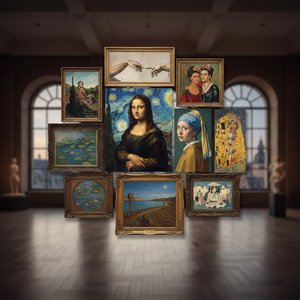
Topp 10 ikoniska oljemålningar som förändrade konsthistorien – OriginalUniqueArt.com
Utforska de 10 mest ikoniska oljemålningarna som revolutionerade konsthistorien! Lär känna Monet, Van Gogh och Da Vinci. Hitta inspiration & köp museumkvalitativa reproduktioner på OriginalUniqueArt.com – för en tidlös inredning.
