

 Visa i rummet
 Skicka
 Dela
Dela
 Detaljer
 Studentguide för konstverk

 Ladda ner
 Liknande objekt
 Röntgen
 Bildspel
 Besökstatistik
Three Trees near Thixendale

 Läs mer
Konstverket som visas på denna sida skyddas av upphovsrättslagen, vilket innebär att vi inte lagligt kan skapa eller sälja en identisk reproduktion. Detta skydd upprätthålls genom internationella avtal såsom den Bernkonventionen och genom nationella lagar, inklusive de som fastställs av Amerikansk upphovsrättslag – Titel 17. Alla rättigheter förbehållna. Återgivning av konstverk är förbjuden utan skriftligt tillstånd från WahooArt.
Som ett respektfullt och lagligt alternativ erbjuder vi skräddarsydda, handmålade konstverk inspirerade av originalet. Våra skickliga och professionella konstnärer studerar noggrant originalets stil, stämning och konstnärliga essens för att skapa ett nytt, unikt verk som väcker samma känsla – samtidigt som det förblir en originell skapelse i egen rätt.
Denna metod följer fullt ut upphovsrättsliga regler eftersom den inte innebär kopiering eller duplicering av det skyddade konstverket. Istället är det en kreativ nytolkning – en ny målning som är influerad av originalet men inte identisk med det.
Handgjord oljereproduktion
Handmålad olja på duk i din valda storlek och ram, tillverkad efter beställning av våra konstnärer. ( Byt till tryckta exemplar Byt till digital bildförsäljning)




P118B Skr10

P118H Skr10

P118W Skr10

P438Z Skr10

P508JH Skr12

P508YH Skr12

P805H Skr10

P805Z Skr10

P919BZ Skr10

P919G Skr10

P919XJ Skr10

P959ZH Skr10

P968JZ Skr12

W106C Skr8

W218G Skr10

W218JH Skr8

W218Y Skr10

W307PJ Skr10

W316G Skr10

W316PJ Skr8

W316Y Skr10

W398PJ Skr8

W4111J Skr10

W500HY Skr15

W500JH Skr15

W692G Skr12

W849H Skr8

W940BG Skr15

W953PJ Skr8




Välj bland våra förinställda storlekar som motsvarar konstverkets ursprungliga proportioner.

Du kan ange egna mått för att passa en specifik ram eller yta. Om den valda storleken inte matchar originalbildens proportioner kommer vi antingen att beskära konstverket eller utöka målningen med ytterligare handmålade element. En digital skiss skickas till dig för godkännande innan produktionen påbörjas.
Observera att förhandsvisningen på skärmen inte återspeglar den faktiska beskärningen eller utökningen. Endast skissen visar den slutgiltiga kompositionen korrekt.
Även om anpassade storlekar är möjliga, rekommenderar vi att du väljer en dimension från den fördefinierade listan för att bevara originalproportionerna.
Efter beställning kommer OriginalUniqueArt.com team att mejla kunden för instruktioner och tillhandahålla en skissförhandsvisning
Leverans över hela världen () på 3–4 veckor istället för standard 5 veckor. (11 oktober). Inga kompromisser med kvaliteten.

Fri expressfrakt över hela världen

Högkvalitativ linnecanvas

Fullständig fraktförsäkring

Garantier för återbetalning av tullavgifter

Garantier för exakt färgåtergivning

100 dagars returrätt vid fabrikationsfel

100% pengarna tillbaka-garanti

Mängdrabatt erbjuds
 Glasalternativet är endast tillgängligt i storlekar under 110 cm.

Three Trees near Thixendale
Tryckteknik
Reproduktionsstorlek
-


Totalpris
Skr 2909
David Hockney’s “Three Trees near Thixendale”: A Celebration of Light and Landscape
The Yorkshire countryside holds a particular fascination for British artist David Hockney, whose seminal painting "Three Trees near Thixendale" embodies this enduring connection to place. Completed in 1983, the artwork isn't merely a depiction of trees; it’s an immersive experience rendered in Hockney’s signature style—a bold departure from traditional landscape painting that prioritizes luminosity and simplification.Style and Technique: Embracing Optical Illusion
Hockney’s approach distinguishes itself through his masterful manipulation of optical illusion, a technique he honed throughout his prolific career. Rather than striving for photographic realism, he employs a vibrant palette dominated by yellows and oranges—colors chosen deliberately to capture the fleeting effects of sunlight filtering through the branches. The trees themselves are rendered in broad, gestural strokes, reducing their complexity to essential forms while retaining an undeniable sense of dynamism. This simplification isn’t about diminishing beauty; it's about distilling it down to its purest essence, allowing viewers to perceive the underlying structure and rhythm of the scene. Hockney famously described his method as “painting with light,” a statement that encapsulates the core philosophy guiding this remarkable piece.Historical Context: Postmodern Reflections on Tradition
“Three Trees near Thixendale” emerged during a pivotal moment in British art history—the rise of postmodernism. Rejecting the grand narratives and stylistic conventions of Modernism, Hockney embraced experimentation and challenged established artistic hierarchies. The painting’s influence can be seen in subsequent landscape artists who sought to capture atmospheric conditions with comparable boldness and expressive freedom. It stands as a testament to Hockney's unwavering commitment to pushing boundaries while simultaneously honoring the legacy of Romantic landscape painters like Turner—a dialogue between past and present that underscores the enduring power of observation and artistic intuition.Symbolism: The Trees as Vessels of Memory
Beyond its aesthetic qualities, “Three Trees near Thixendale” resonates with deeper symbolic meanings. Trees have long been associated with resilience, growth, and connection to the natural world—themes central to Hockney’s broader artistic vision. In this specific instance, the three trees may represent interconnectedness and harmony within the landscape, mirroring Hockney's own belief in capturing fleeting moments of beauty before they vanish. Furthermore, the painting evokes memories of Yorkshire summers—a nostalgic yearning for simpler times and a celebration of the enduring spirit of place.Emotional Impact: A Moment Frozen in Time
Ultimately, “Three Trees near Thixendale” succeeds in transporting viewers to the Yorkshire countryside, capturing not just what is seen but also how it feels. The radiant colors evoke warmth and optimism, while the expressive brushstrokes convey a sense of immediacy and spontaneity. It’s a painting that invites contemplation—a reminder that true beauty lies in embracing imperfection and appreciating the transformative power of light. This artwork continues to inspire collectors and interior designers alike who seek to infuse their spaces with a touch of Hockney's distinctive vision, ensuring that “Three Trees near Thixendale” remains a cherished emblem of British landscape art for generations to come.Frågor och svar
Var kan jag köpa en handmålad reproduktion av "Three Trees near Thixendale" av David Hockney?
Handmålade kopior av "Three Trees near Thixendale" av David Hockney säljs på denna webbplats: en handmålad oljereproduktion på linneväv, beställ via denna sida.
Vilken storlek bör jag välja för tryck av "Three Trees near Thixendale" till mitt rum?
I ett Living Room rekommenderas "Three Trees near Thixendale" i tryckstorleken Large.
Vilken ton lutar "Three Trees near Thixendale" åt?
Den dominerande nyansen i "Three Trees near Thixendale" av David Hockney är Green to Violet Spectrum. Nyansen utgör den underliggande tonen i färgpaletten.
I vilken rörelse och i vilken epok kan "Three Trees near Thixendale" av David Hockney placeras?
"Three Trees near Thixendale" av David Hockney placeras inom Contemporary Realism-rörelsen, under sin skapares Modernismen-era.
Använder "Three Trees near Thixendale" av David Hockney starka kontraster eller mjuka harmonier?
Färganalysen av "Three Trees near Thixendale" av David Hockney uppvisar en Balanced kontrast och en Strong Color Unity harmoni.
Vem har skapat "Three Trees near Thixendale"?
Konstnären bakom "Three Trees near Thixendale" är David Hockney. Verket är katalogiserat under David Hockneys namn.
Finns "Three Trees near Thixendale" tillgänglig som ett konsttryck?
För att beställa ett tryck av "Three Trees near Thixendale" av David Hockney, gör helt enkelt din beställning på denna sida: ett konsttryck på bomullscanvas eller arkivbeständigt canvaspapper.
Om konstnären
A Life Painted in Light: The World of David Hockney
David Hockney, born July 9, 1937, in Bradford, England, is more than simply a painter; he’s a visual polymath whose career has spanned painting, drawing, printmaking, stage design, and photography. His story begins amidst the grit and determination of Bradford, a landscape that instilled within him a keen observational eye, even as his father, Kenneth Hockney, fostered a spirit of independent thought through conscientious objection during World War II. This early environment shaped a young artist who would consistently challenge conventions and forge his own path. Formal education at Wellington Primary School and Bradford Grammar School laid the foundation for a career that would redefine British art in the 20th and 21st centuries, culminating in studies at Bradford College of Art and later, the prestigious Royal College of Art in London. It was during these formative years that Hockney began to articulate a unique artistic voice, one that blended Pop sensibilities with a distinctly British perspective.The Rise of a Pop Icon and Beyond
The 1960s witnessed Hockney’s ascent as a pivotal figure within the burgeoning Pop Art movement. However, unlike some contemporaries who wholeheartedly embraced American commercial culture, Hockney brought a uniquely British sensibility to the genre. His work exploded with vibrant color and bold lines, depicting scenes that were both familiar and subtly subversive. A Bigger Splash (1966), perhaps his most iconic early piece, encapsulates this perfectly – a seemingly simple depiction of a swimming pool becomes a meditation on Californian leisure, artifice, and the very act of seeing. This wasn’t merely representation; it was an exploration of how we perceive reality. Critics noted Hockney's masterful use of color theory and perspective—techniques borrowed from Cubism—to create images that defied traditional artistic conventions. His double portraits, like American Collectors (Fred and Marcia Weisman), demonstrate his remarkable ability to capture not just likeness but also the essence of personality and relationship. He skillfully blended photographic realism with stylized elements, mirroring the stylistic trends of the time. Hockney’s work challenged societal expectations regarding homosexuality during a period when it was largely stigmatized—a courageous stance that cemented his reputation as an innovator and trailblazer.Experimentation, Innovation, and The Rescue Of Painting
Hockney's artistic curiosity has never been confined to a single medium. Throughout his career, he relentlessly experimented with new technologies and approaches. From his early embrace of lithography and etching to his later explorations of photography – particularly his use of Polaroid composites in the 1980s – Hockney consistently pushed the boundaries of what art could be. He famously declared painting wasn’t dead but needed “rescuing” from its own conventions, leading him to develop innovative techniques like perspective distortions and fragmented viewpoints. This desire to revitalize painting led to ambitious projects such as Pearblossom Hwy., 11–18th April 1986, a complex photomontage that challenged traditional notions of space and representation—a bold departure from conventional landscape painting. Hockney’s stage designs for opera, including sets for Mozart's The Magic Flute and Stravinsky's The Rake’s Progress, further demonstrated his versatility and ability to translate his visual language into a different artistic realm. He skillfully combined theatrical illusion with meticulous detail—a hallmark of his distinctive style.Recognition, Legacy, and Enduring Influence
David Hockney’s contributions to the art world have been widely recognized throughout his illustrious career. He was appointed Order of the Companion of Honour (CH) in 2018, a testament to his profound impact on British culture—a prestigious honor bestowed upon him for his lifetime achievements. Prior to that, he was elected a Fellow of the Royal Society (FRS) in 2003 and received the Laureate of the Praemium Imperiale for Painting in 2000—acknowledging his exceptional artistic talent and intellectual rigor. His works are held in major museum collections worldwide, ensuring his art continues to inspire new generations. Hockney’s influence extends beyond the visual arts; he has become a cultural icon, celebrated for his wit, intelligence, and unwavering commitment to artistic exploration. He remains an active force in the art world, continually challenging expectations and inspiring artists across disciplines—a legacy that secures his place as one of Britain's most important artists of the 20th century. ## Further Explorations- Place Furstenberg, Paris: A captivating example of Hockney’s interior scenes, showcasing his mastery of color and composition.
- Oona Zlamany: A poignant portrait that blends realism with Pop Art influences, revealing the sitter's contemplative nature.
- Lawn Sprinkled: A vibrant depiction of suburban life, characterized by geometric forms and a playful use of color.
- Discover more about fellow British Pop artist Pauline Boty.
- Explore the works of Frank Lisle, a painter who influenced Hockney’s early development.
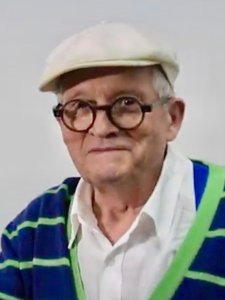
David Hockney
1937 - , Storbritannien
Snabbfakta
- Artistic Movement Or Style: Pop Art
- Artists Or Movements Influenced By This Artist: ['Pauline Boty']
- Artists Who Influenced This Artist: ['Frank Bacon']
- Date Of Birth: 9 juli 1937
- Full Name: David Hockney
- Nationality: Brittisk
- Notable Artworks:
- En större kast
- Portrait of an Artist
- We Two Boys Together
- Place Of Birth: Bradford, UK
Relaterade artiklar

Arboreal Echoes: A Historical & Artistic Exploration of Trees in Painting
Explore the rich history of trees in painting! Discover symbolism, Romantic masterpieces by Caspar David Friedrich & beyond. A curated journey for art enthusiasts.
David Hockney: A Retrospective on Pop Art's Chronicler of Light, Space, and the Everyday
Explore the life & work of David Hockney, Pop Art's master chronicler. Discover his iconic paintings, Californian landscapes, and lasting influence on modern art. Expert analysis for collectors.

Romantiska landskap: Topp 10 mästerverk som definierade en epok – OriginalUniqueArt.se
Utforska de 10 mest ikoniska mästerverken inom romantisk landskapsmålning! Lär känna Caspar David Friedrich, Turner & andra. Hitta inspiration och köp museumkvalitativa konsttryck på OriginalUniqueArt.com.

Paul Cézannes 25 Mästerverk: En Konsthistorisk Resa för Hemmet
Utforska Paul Cézannes 25 mest ikoniska målningar! Fördjupa dig i impressionismens värld, från Mont Sainte-Victoire till stillsben. Hitta inspiration & museumkvalitativa konsttryck på OriginalUniqueArt.com.

Evocations of Place: A Historical Journey Through Landscape Art
Explore the rich history of landscape art with OriginalUniqueArt. Discover renowned artists, movements like Impressionism & Romanticism, and expert guidance for collecting timeless pieces. Find your perfect serene escape today!


