
 Förhandsvisa
 Skicka
 Dela
Dela
 Visa detaljer
 Guide
Guide

 Ladda ner
 Liknande objekt
 Röntgen
 Bildspel
 Q&A
Q&A Statistik
Roads and Cornfields, East Yorkshire

 Visa mer
Få en utskriftsfärdig fil som vida överträffar webbförhandsvisningen. Varje digital bild vi säljer kommer från en högupplöst master i vår bilddatabas – vanligtvis mellan 5 000 och 15 000 pixlar bred – så att du med trygghet kan göra stora utskrifter, beskära tätt eller återge fina detaljer.
Ingen fil lämnar vår studio utan att ha bearbetats. En digital expert kontrollerar färgerna mot originalmålningen och korrigerar dem vid behov, för att sedan förbättra skärpa och detaljrikedom med professionella retuscheringsverktyg — alltid med full respekt för konstnärens penseldrag och stil. Resultatet är en bild som ser ut som målningen, inte som en filtrerad skanning.
Du godkänner innan arbetet slutförs: vår expert skickar bilden via e-post inom 72 timmar för din granskning. Inte nöjd? Be om förbättringar eller korrigeringar, eller begär återbetalning om kvaliteten inte lever upp till förväntningarna.
Detta är den kvalitet som förlag, designstudior, gallerier och tryckerier litar på.
Digital bild
Ladda ner en högupplöst fil för personlig visning, utskrift och kreativa projekt. ( Byt till tryck Beställ handmålad reproduktion)
Ingår i varje beställning av digital bild
Professionell digital leverans, garanterad
När du väljer OriginalUniqueArt.com får du inte bara en bild – du får ett professionellt förädlat digitalt konstverk, skapat med precision och med en garanterad tillfredsställelse. Här är allt som ingår i din beställning, automatiskt:

Snabb leverans via e-post
Din högupplösta digitala bild skickas till dig via e-post inom 72 timmar efter beställning – redo för omedelbar användning.

AI-förbättrad digital fil
Ditt konstverk optimeras professionellt med hjälp av avancerade AI-verktyg och manuell redigering, vilket garanterar maximal detaljrikedom, skärpa och färgnoggrannhet.

Fri livstidsåterleverans
Har du råkat radera eller tappa bort din fil? Ingen oro – vi skickar den kostnadsfritt till dig när som helst.

Inga importavgifter – någonsin
Njut av ditt konstverk omedelbart utan tull, importavgifter eller leveranskostnader – digitala nedladdningar är alltid skattefria.

Garanterad färgåtergivning
Vi säkerställer att din digitala bild återger de ursprungliga färgerna så exakt som möjligt med hjälp av professionella verktyg och färghantering.

100 dagars nöjdhetsgaranti
Om du inte är nöjd med din digitala bild kommer vi att revidera den eller återbetala 100% inom 100 dagar – utan frågor.

100% pengarna-tillbaka-garanti
Inte nöjd? Få full återbetalning inom 100 dagar efter att du mottagit din digitala fil – utan frågor.

Rabatt vid storköp
Köp 3 bilder, spara 10% – Köp 5, spara 15% – Köp 10+, spara 20%. Perfekt för kreativa projekt, gallerier och byråer.
A Celebration of Yorkshire Landscape
David Hockney’s “Roads and Cornfields,” painted in East Yorkshire during his prolific summer visits to the region, stands as a testament to both artistic innovation and a profound connection with place. Completed in 1973, this canvas embodies Hockney's signature style—a vibrant simplification of observation that prioritizes color and light over meticulous detail.
The Style of Observation
Unlike traditional landscape paintings striving for photographic realism, Hockney employs a technique he termed “joiners’ eye.” He deliberately compresses the visual field, capturing not just what is seen but also how it feels. This approach isn't about accurately representing every blade of grass or furrow in the cornfield; rather, it’s about conveying an impression of depth and atmosphere—a distillation of experience into a luminous rectangle.
Technique: Acrylic Paint on Canvas
- Hockney utilizes acrylic paint on canvas, known for its durability and ability to retain color intensity over time. The pigment is applied in broad strokes, layering colors to create rich hues and subtle tonal variations.
- He employs a glazing technique—applying thin washes of translucent color over previous layers—to build up depth and luminosity. This method allows him to capture the shimmering quality of sunlight reflecting off water and foliage.
Historical Context: Hockney's Yorkshire Series
"Roads and Cornfields" is part of Hockney’s celebrated Yorkshire series, begun in 1970 and continuing intermittently throughout his life. This ongoing project reflects Hockney’s fascination with the changing seasons and landscapes of his birthplace—a deliberate counterpoint to the burgeoning urban sprawl of London.
Symbolism: Light and Memory
The painting's dominant color palette—dominated by yellows, oranges, and blues—evokes feelings of warmth, optimism, and tranquility. The road itself symbolizes journey and connection, while the cornfields represent fertility and abundance. More importantly, Hockney’s work captures the essence of memory—the way landscapes can evoke powerful emotions and transport us back to formative experiences.
Emotional Impact: Tranquility and Nostalgia
"Roads and Cornfields" resonates with viewers on a visceral level, conveying a sense of serenity and nostalgia. It invites contemplation of beauty, simplicity, and the enduring power of place—themes that remain central to Hockney’s artistic vision.
Frågor och svar
Vilken färg dominerar kompositionen i "Roads and Cornfields, East Yorkshire" av David Hockney?
Sap Green (#44611b) är den dominerande färgen i "Roads and Cornfields, East Yorkshire" av David Hockney.
Vid vilket tillfälle rekommenderas "Roads and Cornfields, East Yorkshire" av David Hockney som present?
"Roads and Cornfields, East Yorkshire" av David Hockney rekommenderas som en gåva till Wedding. En reproduktion av konstverket är ett utmärkt presentalternativ.
Finns det en guide för "Roads and Cornfields, East Yorkshire" av David Hockney?
En Faktablad för elever-sida finns tillgänglig för "Roads and Cornfields, East Yorkshire" av David Hockney: ett utskrivbart faktablad om konstverket, utformat för studenter och undervisning i klassrummet.
Konstnärsbiografi
A Life Painted in Light: The World of David Hockney
David Hockney, born July 9, 1937, in Bradford, England, is more than simply a painter; he’s a visual polymath whose career has spanned painting, drawing, printmaking, stage design, and photography. His story begins amidst the grit and determination of Bradford, a landscape that instilled within him a keen observational eye, even as his father, Kenneth Hockney, fostered a spirit of independent thought through conscientious objection during World War II. This early environment shaped a young artist who would consistently challenge conventions and forge his own path. Formal education at Wellington Primary School and Bradford Grammar School laid the foundation for a career that would redefine British art in the 20th and 21st centuries, culminating in studies at Bradford College of Art and later, the prestigious Royal College of Art in London. It was during these formative years that Hockney began to articulate a unique artistic voice, one that blended Pop sensibilities with a distinctly British perspective.The Rise of a Pop Icon and Beyond
The 1960s witnessed Hockney’s ascent as a pivotal figure within the burgeoning Pop Art movement. However, unlike some contemporaries who wholeheartedly embraced American commercial culture, Hockney brought a uniquely British sensibility to the genre. His work exploded with vibrant color and bold lines, depicting scenes that were both familiar and subtly subversive. A Bigger Splash (1966), perhaps his most iconic early piece, encapsulates this perfectly – a seemingly simple depiction of a swimming pool becomes a meditation on Californian leisure, artifice, and the very act of seeing. This wasn’t merely representation; it was an exploration of how we perceive reality. Critics noted Hockney's masterful use of color theory and perspective—techniques borrowed from Cubism—to create images that defied traditional artistic conventions. His double portraits, like American Collectors (Fred and Marcia Weisman), demonstrate his remarkable ability to capture not just likeness but also the essence of personality and relationship. He skillfully blended photographic realism with stylized elements, mirroring the stylistic trends of the time. Hockney’s work challenged societal expectations regarding homosexuality during a period when it was largely stigmatized—a courageous stance that cemented his reputation as an innovator and trailblazer.Experimentation, Innovation, and The Rescue Of Painting
Hockney's artistic curiosity has never been confined to a single medium. Throughout his career, he relentlessly experimented with new technologies and approaches. From his early embrace of lithography and etching to his later explorations of photography – particularly his use of Polaroid composites in the 1980s – Hockney consistently pushed the boundaries of what art could be. He famously declared painting wasn’t dead but needed “rescuing” from its own conventions, leading him to develop innovative techniques like perspective distortions and fragmented viewpoints. This desire to revitalize painting led to ambitious projects such as Pearblossom Hwy., 11–18th April 1986, a complex photomontage that challenged traditional notions of space and representation—a bold departure from conventional landscape painting. Hockney’s stage designs for opera, including sets for Mozart's The Magic Flute and Stravinsky's The Rake’s Progress, further demonstrated his versatility and ability to translate his visual language into a different artistic realm. He skillfully combined theatrical illusion with meticulous detail—a hallmark of his distinctive style.Recognition, Legacy, and Enduring Influence
David Hockney’s contributions to the art world have been widely recognized throughout his illustrious career. He was appointed Order of the Companion of Honour (CH) in 2018, a testament to his profound impact on British culture—a prestigious honor bestowed upon him for his lifetime achievements. Prior to that, he was elected a Fellow of the Royal Society (FRS) in 2003 and received the Laureate of the Praemium Imperiale for Painting in 2000—acknowledging his exceptional artistic talent and intellectual rigor. His works are held in major museum collections worldwide, ensuring his art continues to inspire new generations. Hockney’s influence extends beyond the visual arts; he has become a cultural icon, celebrated for his wit, intelligence, and unwavering commitment to artistic exploration. He remains an active force in the art world, continually challenging expectations and inspiring artists across disciplines—a legacy that secures his place as one of Britain's most important artists of the 20th century. ## Further Explorations- Place Furstenberg, Paris: A captivating example of Hockney’s interior scenes, showcasing his mastery of color and composition.
- Oona Zlamany: A poignant portrait that blends realism with Pop Art influences, revealing the sitter's contemplative nature.
- Lawn Sprinkled: A vibrant depiction of suburban life, characterized by geometric forms and a playful use of color.
- Discover more about fellow British Pop artist Pauline Boty.
- Explore the works of Frank Lisle, a painter who influenced Hockney’s early development.
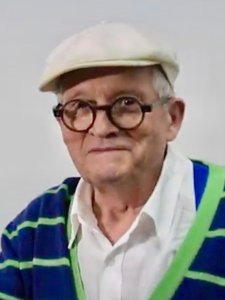
David Hockney
1937 - , Storbritannien
Kort om konstnären
- Artistic Movement Or Style: Pop Art
- Artists Or Movements Influenced By This Artist: ['Pauline Boty']
- Artists Who Influenced This Artist: ['Frank Bacon']
- Date Of Birth: 9 juli 1937
- Full Name: David Hockney
- Nationality: Brittisk
- Notable Artworks:
- En större kast
- Portrait of an Artist
- We Two Boys Together
- Place Of Birth: Bradford, UK