

 Visa i rummet
 Skicka
 Dela
Dela
 Detaljer
 Studentguide för konstverk

 Ladda ner
 Liknande objekt
 Röntgen
 Bildspel
 Besökstatistik
My parents

 Läs mer
Konstverket som visas på denna sida skyddas av upphovsrättslagen, vilket innebär att vi inte lagligt kan skapa eller sälja en identisk reproduktion. Detta skydd upprätthålls genom internationella avtal såsom den Bernkonventionen och genom nationella lagar, inklusive de som fastställs av Amerikansk upphovsrättslag – Titel 17. Alla rättigheter förbehållna. Återgivning av konstverk är förbjuden utan skriftligt tillstånd från WahooArt.
Denna metod följer fullt ut upphovsrättsliga regler eftersom den inte innebär kopiering eller duplicering av det skyddade konstverket. Istället är det en kreativ nytolkning – en ny målning som är influerad av originalet men inte identisk med det.
Giclée / Konsttryck
Giclée- eller canvasprint av museumskvalitet med snabb produktion och flexibla ytbehandlingsalternativ. ( Köp handmålat konstverk Byt till digital bildförsäljning)




P118B Skr10

P118H Skr10

P118W Skr10

P438Z Skr10

P508JH Skr12

P508YH Skr12

P805H Skr10

P805Z Skr10

P919BZ Skr10

P919G Skr10

P919XJ Skr10

P959ZH Skr10

P968JZ Skr12

W106C Skr8

W218G Skr10

W218JH Skr8

W218Y Skr10

W307PJ Skr10

W316G Skr10

W316PJ Skr8

W316Y Skr10

W398PJ Skr8

W4111J Skr10

W500HY Skr15

W500JH Skr15

W692G Skr12

W849H Skr8

W940BG Skr15

W953PJ Skr8




Välj bland våra förinställda storlekar som motsvarar konstverkets ursprungliga proportioner.

Ange den bredd och höjd du behöver, för att passa din ram eller din vägg. Ett tryck kan endast beskäras, aldrig göras större än bilden, vilket innebär att ett format med en annan formform leder till att en del av bilden går förlorad. Vi skickar en digital mockup för godkännande innan vi trycker något. Bilden som visas på denna sida visar inte den faktiska beskärningen — det är endast mockuppen som gör det.
Leverans över hela världen () på 2 veckor istället för standard 4/5 veckor. (23 oktober)

Fri expressfrakt över hela världen

Högkvalitativ linnecanvas

Fullständig fraktförsäkring

Garantier för återbetalning av tullavgifter

Garantier för exakt färgåtergivning

100 dagars returrätt vid fabrikationsfel

100% pengarna tillbaka-garanti

Mängdrabatt erbjuds
 Glasalternativet är endast tillgängligt i storlekar under 110 cm.

My parents
Giclée / Konsttryck
Reproduktionsstorlek
-


Totalpris
Skr 793
A Window Into Yorkshire Light: Exploring Hockney’s ‘My Parents’
David Hockney's “My Parents,” painted in 1977, isn’t merely a portrait; it’s an exquisitely rendered distillation of memory and place—a cornerstone of Hockney’s oeuvre and a testament to his unwavering fascination with capturing the ephemeral beauty of everyday life. Situated firmly within Yorkshire’s landscape, this canvas embodies Hockney's signature approach: employing bold color palettes and simplified forms to convey profound emotional resonance.
- Subject Matter & Composition: The painting depicts Hockney’s parents seated at a table adorned with vases of flowers—a deliberate choice reflecting the artist’s deep connection to his familial roots. The arrangement is carefully considered, guiding the viewer's gaze across the canvas and emphasizing the intimacy of the scene.
- Style & Technique: Hockney’s distinctive style leans heavily on Impressionistic principles, prioritizing light and color over meticulous detail. He utilizes thick impasto—a technique involving applying paint in textured layers—to imbue the surface with palpable warmth and vibrancy. This textural richness contributes significantly to the painting's emotive power.
Historically, “My Parents” emerged during Hockney’s prolific period of experimentation following his studies at Chelsea School of Art and Royal College of Art. It represents a pivotal moment in Hockney’s artistic evolution—a conscious move away from representational realism toward a more subjective exploration of perception.
- Symbolism: The vases of flowers serve as potent symbols of domestic tranquility and affection, mirroring the idealized vision of family life that permeated British culture during the 1970s. Hockney’s masterful use of color—particularly yellows and greens—further amplifies these symbolic associations.
- Emotional Impact: Viewing “My Parents” evokes a sense of nostalgia and tenderness, prompting contemplation on themes of parental love, familial bonds, and the passage of time. The painting's luminous quality captures not only the visual splendor of Yorkshire light but also the intangible essence of human connection.
Ultimately, Hockney’s “My Parents” transcends its formal elements—its technique and composition—to deliver a deeply felt meditation on memory and identity. It remains an enduring emblem of Hockney's artistic vision and a captivating exemplar of how art can illuminate the complexities of human experience.
Frågor och svar
Var i hemmet passar en reproduktion av "My parents" bra?
Det rekommenderade utrymmet för "My parents" av David Hockney är ett Living Room. Förslaget kan naturligtvis anpassas efter din inredning.
Vilket stämningsläge och vilken känsla förenas i "My parents"?
I "My parents" ackompanjeras en Serene stämning av en Reflective känsla.
Vilken atmosfär skulle en reproduktion av "My parents" av David Hockney tillföra ett rum?
Med sin Serene stämning rekommenderas "My parents" för ett Living Room.
Om konstnären
A Life Painted in Light: The World of David Hockney
David Hockney, born July 9, 1937, in Bradford, England, is more than simply a painter; he’s a visual polymath whose career has spanned painting, drawing, printmaking, stage design, and photography. His story begins amidst the grit and determination of Bradford, a landscape that instilled within him a keen observational eye, even as his father, Kenneth Hockney, fostered a spirit of independent thought through conscientious objection during World War II. This early environment shaped a young artist who would consistently challenge conventions and forge his own path. Formal education at Wellington Primary School and Bradford Grammar School laid the foundation for a career that would redefine British art in the 20th and 21st centuries, culminating in studies at Bradford College of Art and later, the prestigious Royal College of Art in London. It was during these formative years that Hockney began to articulate a unique artistic voice, one that blended Pop sensibilities with a distinctly British perspective.The Rise of a Pop Icon and Beyond
The 1960s witnessed Hockney’s ascent as a pivotal figure within the burgeoning Pop Art movement. However, unlike some contemporaries who wholeheartedly embraced American commercial culture, Hockney brought a uniquely British sensibility to the genre. His work exploded with vibrant color and bold lines, depicting scenes that were both familiar and subtly subversive. A Bigger Splash (1966), perhaps his most iconic early piece, encapsulates this perfectly – a seemingly simple depiction of a swimming pool becomes a meditation on Californian leisure, artifice, and the very act of seeing. This wasn’t merely representation; it was an exploration of how we perceive reality. Critics noted Hockney's masterful use of color theory and perspective—techniques borrowed from Cubism—to create images that defied traditional artistic conventions. His double portraits, like American Collectors (Fred and Marcia Weisman), demonstrate his remarkable ability to capture not just likeness but also the essence of personality and relationship. He skillfully blended photographic realism with stylized elements, mirroring the stylistic trends of the time. Hockney’s work challenged societal expectations regarding homosexuality during a period when it was largely stigmatized—a courageous stance that cemented his reputation as an innovator and trailblazer.Experimentation, Innovation, and The Rescue Of Painting
Hockney's artistic curiosity has never been confined to a single medium. Throughout his career, he relentlessly experimented with new technologies and approaches. From his early embrace of lithography and etching to his later explorations of photography – particularly his use of Polaroid composites in the 1980s – Hockney consistently pushed the boundaries of what art could be. He famously declared painting wasn’t dead but needed “rescuing” from its own conventions, leading him to develop innovative techniques like perspective distortions and fragmented viewpoints. This desire to revitalize painting led to ambitious projects such as Pearblossom Hwy., 11–18th April 1986, a complex photomontage that challenged traditional notions of space and representation—a bold departure from conventional landscape painting. Hockney’s stage designs for opera, including sets for Mozart's The Magic Flute and Stravinsky's The Rake’s Progress, further demonstrated his versatility and ability to translate his visual language into a different artistic realm. He skillfully combined theatrical illusion with meticulous detail—a hallmark of his distinctive style.Recognition, Legacy, and Enduring Influence
David Hockney’s contributions to the art world have been widely recognized throughout his illustrious career. He was appointed Order of the Companion of Honour (CH) in 2018, a testament to his profound impact on British culture—a prestigious honor bestowed upon him for his lifetime achievements. Prior to that, he was elected a Fellow of the Royal Society (FRS) in 2003 and received the Laureate of the Praemium Imperiale for Painting in 2000—acknowledging his exceptional artistic talent and intellectual rigor. His works are held in major museum collections worldwide, ensuring his art continues to inspire new generations. Hockney’s influence extends beyond the visual arts; he has become a cultural icon, celebrated for his wit, intelligence, and unwavering commitment to artistic exploration. He remains an active force in the art world, continually challenging expectations and inspiring artists across disciplines—a legacy that secures his place as one of Britain's most important artists of the 20th century. ## Further Explorations- Place Furstenberg, Paris: A captivating example of Hockney’s interior scenes, showcasing his mastery of color and composition.
- Oona Zlamany: A poignant portrait that blends realism with Pop Art influences, revealing the sitter's contemplative nature.
- Lawn Sprinkled: A vibrant depiction of suburban life, characterized by geometric forms and a playful use of color.
- Discover more about fellow British Pop artist Pauline Boty.
- Explore the works of Frank Lisle, a painter who influenced Hockney’s early development.
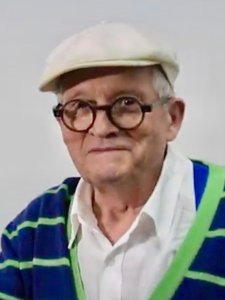
David Hockney
1937 - , Storbritannien
Snabbfakta
- Artistic Movement Or Style: Pop Art
- Artists Or Movements Influenced By This Artist: ['Pauline Boty']
- Artists Who Influenced This Artist: ['Frank Bacon']
- Date Of Birth: 9 juli 1937
- Full Name: David Hockney
- Nationality: Brittisk
- Notable Artworks:
- En större kast
- Portrait of an Artist
- We Two Boys Together
- Place Of Birth: Bradford, UK
Relaterade artiklar

Romantiska landskap: Topp 10 mästerverk som definierade en epok – OriginalUniqueArt.se
Utforska de 10 mest ikoniska mästerverken inom romantisk landskapsmålning! Lär känna Caspar David Friedrich, Turner & andra. Hitta inspiration och köp museumkvalitativa konsttryck på OriginalUniqueArt.com.

Evocations of Place: A Historical Journey Through Landscape Art
Explore the rich history of landscape art with OriginalUniqueArt. Discover renowned artists, movements like Impressionism & Romanticism, and expert guidance for collecting timeless pieces. Find your perfect serene escape today!
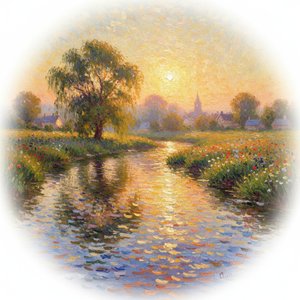
Capturing Light: A Masterclass in the Ethereal Beauty of Impressionistic Landscapes
Explore the ethereal beauty of Impressionist landscapes. Discover how masters like Monet captured fleeting light through color and texture, and learn to curate these timeless, luminous masterpieces for your home collection.

Impressionismens Mästerverk: Topp 10 Landskap som Förändrade Konsten | OriginalUniqueArt
Upptäck de 10 mästerverk som definierade impressionistiska landskap! Monet, Renoir & Cézanne – lär känna historien bakom ikoniska oljemålningar. Hitta inspiration och museumskvalitativa konsttryck på OriginalUniqueArt.com.

Topp 10 Impressionistiska Mästerverk – Landskap som Förändrade Konsten | OriginalUniqueArt.se
Upptäck de 10 mest ikoniska impressionistiska landskapsmålningarna av Monet, Renoir & Van Gogh. Lär känna historien bakom mästerverken och hitta inspiration för din inredning på OriginalUniqueArt.se – museumkvalitet hem till dig!


