

 Visa i rummet
 Skicka
 Dela
Dela
 Detaljer
 Studentguide för konstverk

 Ladda ner
 Liknande objekt
 Röntgen
 Bildspel
 Besökstatistik
Study for Ghetto Theatre I


 Läs mer
Konstverket som visas på denna sida skyddas av upphovsrättslagen, vilket innebär att vi inte lagligt kan skapa eller sälja en identisk reproduktion. Detta skydd upprätthålls genom internationella avtal såsom den Bernkonventionen och genom nationella lagar, inklusive de som fastställs av Amerikansk upphovsrättslag – Titel 17. Alla rättigheter förbehållna. Återgivning av konstverk är förbjuden utan skriftligt tillstånd från WahooArt.
Denna metod följer fullt ut upphovsrättsliga regler eftersom den inte innebär kopiering eller duplicering av det skyddade konstverket. Istället är det en kreativ nytolkning – en ny målning som är influerad av originalet men inte identisk med det.
Giclée / Konsttryck
Giclée- eller canvasprint av museumskvalitet med snabb produktion och flexibla ytbehandlingsalternativ. ( Köp handmålat konstverk Byt till digital bildförsäljning)




P118B Skr10

P118H Skr10

P118W Skr10

P438Z Skr10

P508JH Skr12

P508YH Skr12

P805H Skr10

P805Z Skr10

P919BZ Skr10

P919G Skr10

P919XJ Skr10

P959ZH Skr10

P968JZ Skr12

W106C Skr8

W218G Skr10

W218JH Skr8

W218Y Skr10

W307PJ Skr10

W316G Skr10

W316PJ Skr8

W316Y Skr10

W398PJ Skr8

W4111J Skr10

W500HY Skr15

W500JH Skr15

W692G Skr12

W849H Skr8

W940BG Skr15

W953PJ Skr8




Välj bland våra förinställda storlekar som motsvarar konstverkets ursprungliga proportioner.

Ange den bredd och höjd du behöver, för att passa din ram eller din vägg. Ett tryck kan endast beskäras, aldrig göras större än bilden, vilket innebär att ett format med en annan formform leder till att en del av bilden går förlorad. Vi skickar en digital mockup för godkännande innan vi trycker något. Bilden som visas på denna sida visar inte den faktiska beskärningen — det är endast mockuppen som gör det.
Leverans över hela världen () på 2 veckor istället för standard 4/5 veckor. (24 oktober)

Fri expressfrakt över hela världen

Högkvalitativ linnecanvas

Fullständig fraktförsäkring

Garantier för återbetalning av tullavgifter

Garantier för exakt färgåtergivning

100 dagars returrätt vid fabrikationsfel

100% pengarna tillbaka-garanti

Mängdrabatt erbjuds
 Glasalternativet är endast tillgängligt i storlekar under 110 cm.

Study for Ghetto Theatre I
Giclée / Konsttryck
Reproduktionsstorlek
-


Totalpris
Skr 793
A Fragmented Vision: David Bomberg's "Study for Ghetto Theatre I"
David Bomberg’s “Study for Ghetto Theatre I,” created in 1921, isn't merely a sketch; it is an intensely felt exploration of urban space and the human condition. This work, born from a period of profound personal and artistic transformation for Bomberg, offers a glimpse into his evolving style and his engagement with the social realities of post-war London. The piece exists as a study related to his larger series on the "Ghetto Theatre," specifically referencing the Pavilion Theatre in Whitechapel – a vibrant, albeit often overlooked, hub of working-class entertainment.
The Language of Line and Shadow
What immediately strikes the viewer is the artwork’s stark simplicity. Bomberg eschews color almost entirely, relying instead on a monochromatic palette of greys, blacks, and whites to convey depth and emotion. This deliberate limitation amplifies the power of line – the dominant element in this composition. Bold, thick lines crisscross the canvas, not defining forms with precision but rather suggesting them through overlapping planes and angular shapes. These aren't neat, predictable lines; they are jagged, broken, almost frantic, conveying a sense of urgency and instability. The technique employed suggests rapid execution, likely charcoal or ink on paper, capturing a fleeting impression rather than meticulous detail. This gestural quality imbues the work with an immediacy, as if we’re witnessing the raw process of Bomberg's creative thought unfolding before our eyes. The varying density of these lines creates implied lighting and shadow, adding another layer of complexity to the fragmented space.
Echoes of Modernism and Social Commentary
“Study for Ghetto Theatre I” firmly resides within the currents of early 20th-century modern art. Influenced by Cubism and Futurism – movements that sought to break from traditional representational forms – Bomberg’s work shares their interest in geometric abstraction and dynamic composition. However, he transcends mere stylistic imitation. While echoes of Cézanne's exploration of form and Sickert's focus on urban life are evident, Bomberg infuses his work with a uniquely personal expression. The fragmented nature of the composition, the distorted perspective, and the overall sense of unease speak to a deeper social commentary. The "Ghetto Theatre" itself was a symbol of working-class culture, a place of escape and entertainment amidst poverty and hardship. Bomberg’s study doesn't depict a picturesque scene; it captures the raw energy, the confined space, and perhaps even the underlying tension inherent in such an environment.
A Legacy of Expression
Bomberg’s artistic journey was marked by periods of both recognition and obscurity. After experiencing the trauma of World War I, he moved away from abstraction towards a more figurative style, but this early work demonstrates his remarkable ability to convey complex emotions through seemingly simple means. “Study for Ghetto Theatre I” stands as a testament to Bomberg’s pioneering spirit – a bold exploration of form and expression that anticipates later developments in British art. The piece invites viewers not just to observe a scene, but to feel the weight of its atmosphere, to sense the pulse of urban life, and to contemplate the complexities of human experience within a rapidly changing world. It is a powerful reminder of Bomberg’s enduring legacy as one of Britain's most innovative and influential artists.
Frågor och svar
Hur gammal var David Bomberg när "Study for Ghetto Theatre I" skapades år 1921?
David Bomberg var 31 år gammal när hen skapade "Study for Ghetto Theatre I" år 1921. Åldern är beräknad utifrån konstnärens födelseår, 1890.
Är "Study for Ghetto Theatre I" av David Bomberg ett porträtt, landskap eller en kvadratisk komposition?
Formatet för "Study for Ghetto Theatre I" är Portrait. Detta är användbart när du planerar var en reproduktion ska placeras.
Vilken ton lutar "Study for Ghetto Theatre I" åt?
Den dominerande nyansen i "Study for Ghetto Theatre I" av David Bomberg är Green to Violet Spectrum. Nyansen utgör den underliggande tonen i färgpaletten.
Om konstnären
Tidigt liv och konstnärlig utbildning
- Född: Birmingham, Storbritannien (5 december 1890)
- Död: London, Storbritannien (19 augusti 1957)
- En av de så kallade 'Whitechapel Boys' – en grupp konstnärer från East End som framträdde i början av 1900-talet.
Bomberg föddes i Birmingham som son till de polsk-judiska immigrantföräldrarna Abraham och Rebecca Bomberg. Hans konstnärliga resa tog sin början vid City and Guilds Technical Art School, innan han vidareutbildade sig till litograf i Birmingham.
Under åren 1908–1910 studerade han för Walter Sickert vid Westminster School of Art, där han påverkades djupt av Sickers fokus på form och det urbana livet. Ett avgörande möte med Paul Cézanne skedde genom Roger Fryts utställning "Manet and the Post-Impressionists" år 1910. Vid Slade School of Art (1911) belönades han med Tonks Prize för sin teckning av medstudenten Isaac Rosenberg.
Avantgardets år: Kubism, futurism och kontroverser
- Vid Slade var Bomberg en del av en anmärkningsvärd generation som inkluderade Mark Gertler, Stanley Spencer, C.R.W. Nevinson och Dora Carrington.
- Han inspirerades av de italienska futuristernas utställningar i London 1912 samt Frys andra postimpressionistiska utställning (med konstnärer som Picasso, Matisse, fauvister och Wyndham Lewis).
- Han utvecklade en särpräglad stil som förenade kubism och futurism – kännetecknad av geometriska kompositioner, begränsade färgpaletter, kantiga figurer och rutnätsliknande strukturer.
- Hans radikala ansats ledde till att han uteslöts från Slade School of Art 1913, då hans metoder ansågs vara för vågade för institutionens konventionella traditioner.
- Han var under en kort period knuten till Bloomsbury-gruppens Omega Workshops och ställde ut med Camden Town Group. Han visade en närhet till Wyndham Lewis vorticistiska rörelse men valde att förbli oberoende och vägrade fullt engagemang.
Från krig till landskap: Ett stilskifte
Erfarenheterna som menig soldat under första världskriget fick en genomgripande inverkan på hans konstnärliga vision och ledde till en rörelse bort från abstraktionen.
Under 1920-talet antog Bomberg en mer figurativ stil, med fokus på porträtt och landskap hämtade direkt från naturen. Han utvecklade en alltmer expressionistisk teknik, präglad av texturerad impasto och emotionell intensitet.
Omfattande resor genom Mellanöstern (särsk vare sig Palestina) och Europa influerade hans senare verk i betydande grad. Hans skildringar av Jerusalem är särskilt anmärkningsvärda.
Sena år och arv
- Från 1945 till 1953 undervisade han vid Borough Polytechnic (numera London South Bank University), där han påverkade en hel generation konstnärer, däribland Frank Auerbach, Leon Kossoff, Philip Holmes, Cliff Holden, Edna Mann, Dorothy Mead, Gustav Metzger, Dennis Creffield, Cecil Bailey och Miles Richmond.
- Han var gift med landskapsmålaren Lilian Holt.
- Trots perioder av relativ glömska under sin livstid har Bombergs verk under de senaste decennierna vunnit allt större erkännande som ett betydelsefullt bidrag till brittisk modern konst.
- David Bomberg House vid London South Bank University är uppkallat efter honom för att hedra hans minne.
- Hans arv ligger i den unika syntesen av europeiska avantgarderörelser och hans senare utveckling av en kraftfull, expressiv landskapsstil som lyckades fånga essensen av plats och mänsklig erfarenhet.

David Bomberg
1890 - 1957 , Storbritannien
Relaterade artiklar
Ernst Ludwig Kirchner: Expressionism's Urban Anxiety & the Fragmentation of Modern Identity
Explore the powerful world of Ernst Ludwig Kirchner and German Expressionism. Discover his iconic paintings, Die Brücke group, and the movement's exploration of urban anxiety & modern identity. Expert analysis for collectors & enthusiasts.
Basquiat and Raw Pop: The High-Energy Rebellion of Neo-Expressionism and the Legacy of Urban Street Art
Explore the raw energy of Jean-Michel Basquiat and the Neo-Expressionist movement. Discover how urban rebellion and SAMO© transformed 1980s New York art history through deep academic insight and visual analysis.
Concrete Narratives: Exploring Urban Life in Modern & Contemporary Art
Explore the evolution of cityscape painting with OriginalUniqueArt. Discover key artists from Realism to contemporary movements & invest in timeless urban visions. Expert guidance, museum-quality reproductions.
David Bomberg: Reassessing the Pioneering Spirit of Early British Abstraction
Explore the groundbreaking work of David Bomberg, a pivotal figure in British abstraction. Discover his artistic evolution, influences, and lasting legacy through insightful analysis & expert commentary.
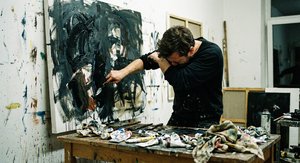
The Raw Emotion of Expressionism: A Deep Dive into its History, Characteristics & Enduring Influence
Explore the raw emotion of Expressionism with OriginalUniqueArt. Discover its history, key artists like Kirchner & Munch, and lasting influence on modern art. Expert insights for collectors & enthusiasts.


