

 Förhandsvisa
 Skicka
 Dela
Dela
 Visa detaljer
 Guide
Guide

 Ladda ner
 Liknande objekt
 Röntgen
 Bildspel
 Statistik
Ju Jitsu
 Oil On Board
- Cubism
 1913
1913- Late Medieval
 62.0 x 62.0 cm
 Tate Liverpool
 Visa mer
Konstverket som visas på denna sida skyddas av upphovsrättslagen, vilket innebär att vi inte lagligt kan skapa eller sälja en identisk reproduktion. Detta skydd upprätthålls genom internationella avtal såsom den Bernkonventionen och genom nationella lagar, inklusive de som fastställs av Amerikansk upphovsrättslag – Titel 17. Alla rättigheter förbehållna. Återgivning av konstverk är förbjuden utan skriftligt tillstånd från WahooArt.
Denna metod följer fullt ut upphovsrättsliga regler eftersom den inte innebär kopiering eller duplicering av det skyddade konstverket. Istället är det en kreativ nytolkning – en ny målning som är influerad av originalet men inte identisk med det.
Giclée / Konsttryck
Giclée- eller canvasprint av museumskvalitet med snabb produktion och flexibla ytbehandlingsalternativ. ( Beställ handmålad reproduktion Byt till digital bild)




P118B Skr10

P118H Skr10

P118W Skr10

P438Z Skr10

P508JH Skr12

P508YH Skr12

P805H Skr10

P805Z Skr10

P919BZ Skr10

P919G Skr10

P919XJ Skr10

P959ZH Skr10

P968JZ Skr12

W106C Skr8

W218G Skr10

W218JH Skr8

W218Y Skr10

W307PJ Skr10

W316G Skr10

W316PJ Skr8

W316Y Skr10

W398PJ Skr8

W4111J Skr10

W500HY Skr15

W500JH Skr15

W692G Skr12

W849H Skr8

W940BG Skr15

W953PJ Skr8




Välj bland våra förinställda storlekar som motsvarar konstverkets ursprungliga proportioner.

Ange den bredd och höjd du behöver för att passa din ram eller vägg. Ett tryck kan endast beskäras, aldrig göras större än originalbilden, vilket innebär att ett format med en annan proportion leder till att en del av bilden går förlorad. Vi skickar en digital mockup för godkännande innan vi påbörjar tryckningen. Bilden som visas på denna sida visar inte den faktiska beskärningen — det är endast mockuppen som gör det.
Leverans över hela världen () på 2 veckor istället för standard 4/5 veckor. (26 oktober)

Fri expressfrakt över hela världen

Högkvalitativ linnecanvas

Fullständig fraktförsäkring

Garantier för återbetalning av tullavgifter

Garantier för exakt färgåtergivning

100 dagars returrätt (endast vid fel)

100% pengarna tillbaka-garanti

Mängdrabatt erbjuds
 Glasalternativet är endast tillgängligt i storlekar under 110 cm.

Ju Jitsu
Giclée / Konsttryck
Storlek på reproduktion
-


Slutgiltigt pris
Skr 793
David Bomberg’s ‘Ju Jitsu’: A Fragmented Dance of Energy
David Bomberg's 1913 painting, “Ju Jitsu,” is not merely a depiction of a martial art; it’s a dynamic exploration of form, movement, and the very essence of human interaction. Captured on a relatively small board – measuring just 62 x 62 cm – the work explodes with an arresting energy that belies its modest scale. Bomberg, a key figure within the ‘Whitechapel Boys,’ a group of East End artists pushing against established artistic conventions, presents us with a collage-like composition featuring four figures engaged in what appears to be a grappling match. However, this isn’t a straightforward representation; instead, Bomberg employs a fractured, almost Cubist approach, layering torso and arm fragments against each other, creating an illusion of simultaneous action and spatial ambiguity.
The muted color palette – dominated by ochres, browns, and greys – contributes significantly to the painting’s subdued yet powerful atmosphere. This deliberate restraint allows the geometric forms and the implied movement to take center stage. The checkered backdrop, a subtle but effective element, adds depth and reinforces the sense of fragmented space, mirroring the disjointed nature of the figures themselves. Bomberg's use of line is particularly striking; bold, angular strokes define the contours of the bodies, conveying both strength and vulnerability. The painting’s roots lie in the burgeoning avant-garde movements of the early 20th century – Cubism, Futurism, and Constructivism – all of which sought to break down traditional representation and explore new ways of perceiving and depicting reality.
Influences and Artistic Context
Bomberg’s artistic journey was shaped by a diverse range of influences. His early training at the City and Guilds Technical Art School provided a foundational understanding of technique, while his time under Walter Sickert at Westminster School of Art instilled in him an appreciation for form and urban life – elements that would later inform his own distinctive style. Crucially, Bomberg’s exposure to Paul Cézanne through the 1910 Roger Fry exhibition “Manet and the Post-Impressionists” proved transformative, introducing him to Cézanne's emphasis on geometric simplification and the exploration of underlying structure. This influence is evident in Bomberg’s own use of fragmented forms and his focus on capturing essential shapes rather than detailed representations.
Furthermore, Bomberg was deeply engaged with the radical artistic currents circulating at the Slade School of Art during this period. Alongside contemporaries like Mark Gertler and Stanley Spencer, he experimented with abstract geometric compositions, drawing inspiration from the Futurists’ celebration of dynamism and movement. The painting “Ju Jitsu” stands as a testament to this experimental spirit, embodying Bomberg's willingness to challenge conventional artistic norms and explore new visual languages.
Decoding the Symbolism
While ostensibly depicting a scene of physical combat, "Ju Jitsu" transcends a simple representation of martial arts. The fragmented figures can be interpreted as symbols of human interaction – the struggle for dominance, the interplay of power and vulnerability, and the inherent tension between individuals. The act of grappling itself represents a negotiation, a yielding and resisting, mirroring the broader themes of conflict and resolution that permeate human experience. Considering Bomberg’s background as a Jewish immigrant in London's East End, one might also read the painting as an exploration of identity and resilience within a rapidly changing urban landscape.
The painting’s abstraction further enhances its symbolic resonance. By stripping away extraneous details and focusing on essential forms, Bomberg invites viewers to engage with the underlying dynamics of the scene – to contemplate the forces at play and to project their own interpretations onto the composition. The lack of a clear narrative or resolution encourages active participation from the viewer, transforming the painting into a dynamic meditation on human interaction.
A Legacy of Innovation
“Ju Jitsu” is more than just a striking visual work; it’s a pivotal example of David Bomberg's artistic evolution. It represents a crucial stage in his development as an abstract painter, bridging the gap between his early training and his later explorations of landscape and portraiture. The painting’s bold geometric forms, dynamic composition, and muted color palette established Bomberg as a leading figure within the British avant-garde, paving the way for future generations of artists to push the boundaries of artistic expression. Reproductions of this captivating work offer a unique opportunity to experience the energy and innovation of one of Britain's most important 20th-century painters.
Frågor och svar
Var rekommenderas det att visa "Ju Jitsu" i Square-formatet?
Med sin Square-form rekommenderas en reproduktion av "Ju Jitsu" för ett Living Room.
Vilken känsla förmedlar "Ju Jitsu" av David Bomberg?
I "Ju Jitsu" möts man av en Dramatic stämning och en Mysterious känsla.
Vilken färg dominerar kompositionen i "Ju Jitsu" av David Bomberg?
Den dominerande färgen i "Ju Jitsu" av David Bomberg är Phthalo Green (#262f40).
Konstnärsbiografi
Tidigt liv och konstnärlig utbildning
- Född: Birmingham, Storbritannien (5 december 1890)
- Död: London, Storbritannien (19 augusti 1957)
- En av de så kallade 'Whitechapel Boys' – en grupp konstnärer från East End som framträdde i början av 1900-talet.
Bomberg föddes i Birmingham som son till de polsk-judiska immigrantföräldrarna Abraham och Rebecca Bomberg. Hans konstnärliga resa tog sin början vid City and Guilds Technical Art School, innan han vidareutbildade sig till litograf i Birmingham.
Under åren 1908–1910 studerade han för Walter Sickert vid Westminster School of Art, där han påverkades djupt av Sickers fokus på form och det urbana livet. Ett avgörande möte med Paul Cézanne skedde genom Roger Fryts utställning "Manet and the Post-Impressionists" år 1910. Vid Slade School of Art (1911) belönades han med Tonks Prize för sin teckning av medstudenten Isaac Rosenberg.
Avantgardets år: Kubism, futurism och kontroverser
- Vid Slade var Bomberg en del av en anmärkningsvärd generation som inkluderade Mark Gertler, Stanley Spencer, C.R.W. Nevinson och Dora Carrington.
- Han inspirerades av de italienska futuristernas utställningar i London 1912 samt Frys andra postimpressionistiska utställning (med konstnärer som Picasso, Matisse, fauvister och Wyndham Lewis).
- Han utvecklade en särpräglad stil som förenade kubism och futurism – kännetecknad av geometriska kompositioner, begränsade färgpaletter, kantiga figurer och rutnätsliknande strukturer.
- Hans radikala ansats ledde till att han uteslöts från Slade School of Art 1913, då hans metoder ansågs vara för vågade för institutionens konventionella traditioner.
- Han var under en kort period knuten till Bloomsbury-gruppens Omega Workshops och ställde ut med Camden Town Group. Han visade en närhet till Wyndham Lewis vorticistiska rörelse men valde att förbli oberoende och vägrade fullt engagemang.
Från krig till landskap: Ett stilskifte
Erfarenheterna som menig soldat under första världskriget fick en genomgripande inverkan på hans konstnärliga vision och ledde till en rörelse bort från abstraktionen.
Under 1920-talet antog Bomberg en mer figurativ stil, med fokus på porträtt och landskap hämtade direkt från naturen. Han utvecklade en alltmer expressionistisk teknik, präglad av texturerad impasto och emotionell intensitet.
Omfattande resor genom Mellanöstern (särsk vare sig Palestina) och Europa influerade hans senare verk i betydande grad. Hans skildringar av Jerusalem är särskilt anmärkningsvärda.
Sena år och arv
- Från 1945 till 1953 undervisade han vid Borough Polytechnic (numera London South Bank University), där han påverkade en hel generation konstnärer, däribland Frank Auerbach, Leon Kossoff, Philip Holmes, Cliff Holden, Edna Mann, Dorothy Mead, Gustav Metzger, Dennis Creffield, Cecil Bailey och Miles Richmond.
- Han var gift med landskapsmålaren Lilian Holt.
- Trots perioder av relativ glömska under sin livstid har Bombergs verk under de senaste decennierna vunnit allt större erkännande som ett betydelsefullt bidrag till brittisk modern konst.
- David Bomberg House vid London South Bank University är uppkallat efter honom för att hedra hans minne.
- Hans arv ligger i den unika syntesen av europeiska avantgarderörelser och hans senare utveckling av en kraftfull, expressiv landskapsstil som lyckades fånga essensen av plats och mänsklig erfarenhet.

David Bomberg
1890 - 1957 , Storbritannien
Relaterade artiklar
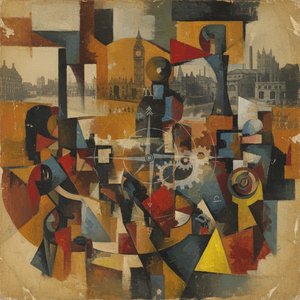
David Bomberg: Reassessing the Pioneering Spirit of Early British Abstraction
Explore the groundbreaking work of David Bomberg, a pivotal figure in British abstraction. Discover his artistic evolution, influences, and lasting legacy through insightful analysis & expert commentary.
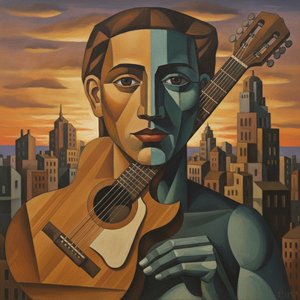
Cubism Unveiled: How Picasso and Braque Redefined Reality Through Geometric Abstraction
Explore the revolutionary world of Cubism. Discover how masters Pablo Picasso and Georges Braque dismantled reality through geometric abstraction to redefine modern art history.

Deconstructing Reality: Cubism's Evolution, Impact & Enduring Legacy
Explore the revolutionary world of Cubism with expert insights from OriginalUniqueArt. Discover Picasso & Braque's groundbreaking techniques, its philosophical roots, and lasting impact on modern art. Expert appraisal & custom reproductions available.
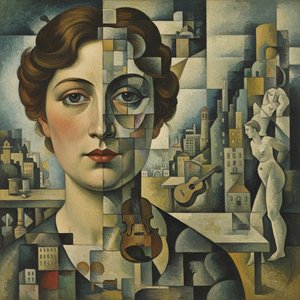
Deconstructing Reality: Cubism's Revolutionary Impact on 20th-Century Art
Explore the revolutionary world of Cubism with OriginalUniqueArt. Discover Picasso & Braque's groundbreaking techniques, its philosophical roots, and lasting impact on modern art. Expert insights for collectors.
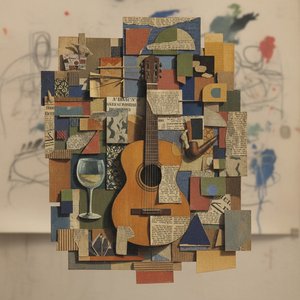
Deconstructing Reality: A Comprehensive Exploration of Synthetic Cubism's Evolution & Impact
Explore the revolutionary world of Synthetic Cubism! Discover its origins, key artists like Picasso & Braque, techniques, and lasting impact on modern art. A comprehensive guide for enthusiasts.


