
 Förhandsvisa
 Skicka
 Dela
Dela
 Visa detaljer
 Guide
Guide

 Ladda ner
 Liknande objekt
 Röntgen
 Bildspel
 Q&A
Q&A Statistik
The World (89 degrees)

- 220.0 x 189.0 cm


 Visa mer
Konstverket som visas på denna sida skyddas av upphovsrättslagen, vilket innebär att vi inte lagligt kan skapa eller sälja en identisk reproduktion. Detta skydd upprätthålls genom internationella avtal såsom den Bernkonventionen och genom nationella lagar, inklusive de som fastställs av Amerikansk upphovsrättslag – Titel 17. Alla rättigheter förbehållna. Återgivning av konstverk är förbjuden utan skriftligt tillstånd från WahooArt.
Denna metod följer fullt ut upphovsrättsliga regler eftersom den inte innebär kopiering eller duplicering av det skyddade konstverket. Istället är det en kreativ nytolkning – en ny målning som är influerad av originalet men inte identisk med det.
Giclée / Konsttryck
Giclée- eller canvasprint av museumskvalitet med snabb produktion och flexibla ytbehandlingsalternativ. ( Beställ handmålad reproduktion Byt till digital bild)




P118B Skr10

P118H Skr10

P118W Skr10

P438Z Skr10

P508JH Skr12

P508YH Skr12

P805H Skr10

P805Z Skr10

P919BZ Skr10

P919G Skr10

P919XJ Skr10

P959ZH Skr10

P968JZ Skr12

W106C Skr8

W218G Skr10

W218JH Skr8

W218Y Skr10

W307PJ Skr10

W316G Skr10

W316PJ Skr8

W316Y Skr10

W398PJ Skr8

W4111J Skr10

W500HY Skr15

W500JH Skr15

W692G Skr12

W849H Skr8

W940BG Skr15

W953PJ Skr8




Välj bland våra förinställda storlekar som motsvarar konstverkets ursprungliga proportioner.

Ange den bredd och höjd du behöver för att passa din ram eller vägg. Ett tryck kan endast beskäras, aldrig göras större än originalbilden, vilket innebär att ett format med en annan proportion leder till att en del av bilden går förlorad. Vi skickar en digital mockup för godkännande innan vi påbörjar tryckningen. Bilden som visas på denna sida visar inte den faktiska beskärningen — det är endast mockuppen som gör det.
Leverans över hela världen () på 2 veckor istället för standard 4/5 veckor. (2 november)

Fri expressfrakt över hela världen

Högkvalitativ linnecanvas

Fullständig fraktförsäkring

Garantier för återbetalning av tullavgifter

Garantier för exakt färgåtergivning

100 dagars returrätt (endast vid fel)

100% pengarna tillbaka-garanti

Mängdrabatt erbjuds
 Glasalternativet är endast tillgängligt i storlekar under 110 cm.

The World (89 degrees)
Giclée / Konsttryck
Storlek på reproduktion
-


Slutgiltigt pris
Skr 804
A Fractured Vision: Unpacking Zaha Hadid’s ‘The World (89 Degrees)’
Zaha Hadid’s “The World (89 degrees),” painted in 1983, isn't merely a cityscape; it’s a meticulously constructed projection of an architectural future, a fever dream rendered in acrylic and imbued with the restless energy that defined her groundbreaking career. Born from a student thesis at the Architectural Association School of Architecture in London, this painting represents a pivotal moment – Hadid’s deliberate rejection of conventional representation and embrace of abstraction as a tool for exploring spatial possibilities. It's a visual manifesto, a declaration that architecture could be more than just static structures; it could be dynamic, fluid, and profoundly expressive.
The image presents a fragmented London, not as a familiar map but as a series of interlocking geometries – the iconic towers of the Shard, the curves of the Thames, and the angular forms of Hadid’s own nascent designs. Notice how she deliberately eschews right angles, replacing them with sweeping curves and distorted perspectives. This wasn't simply an aesthetic choice; it reflected her belief that architecture should challenge our perceptions of space and movement. The painting is a deliberate disruption of established norms, mirroring the radical ideas she would later bring to bear on some of the world’s most recognizable buildings.
Technique and Materiality: A Hybrid Approach
Hadid's technique was remarkably innovative for her time. She didn’t simply paint a cityscape; she layered multiple perspectives, creating an illusion of depth and movement through a complex interplay of lines and colors. The painting is built upon a foundation of acrylic paint, but Hadid incorporated elements of collage – fragments of maps, architectural drawings, and even sections of her own designs were integrated into the composition. This hybrid approach speaks to her desire to synthesize different disciplines—architecture, art, and engineering—into a single, unified vision.
The color palette is equally significant. Dominated by cool blues and greens, punctuated by flashes of vibrant red and yellow, it evokes both the dynamism of urban life and the underlying tension within Hadid’s architectural explorations. The use of layering creates an almost three-dimensional effect, inviting the viewer to step into the painting and become immersed in its fractured world.
Symbolism and a Prophetic Vision
“The World (89 degrees)” is rich with symbolic meaning. The title itself – “89 degrees” – refers to the angle of the horizon, suggesting an attempt to capture a fleeting moment of equilibrium within a constantly shifting environment. The fragmented nature of the cityscape can be interpreted as a reflection of the complexities and uncertainties of modern urban life. Furthermore, the inclusion of elements like airplanes hints at the increasing role of technology and transportation in shaping our world.
Crucially, the painting anticipates Hadid’s later work – her signature use of sweeping curves, dynamic forms, and a rejection of traditional architectural representation. It's a visual blueprint for the fluid, almost sculptural buildings she would go on to design, including the Heydar Aliyev Center in Baku and the Guangzhou Opera House. It represents a bold assertion that architecture could be both functional and profoundly expressive, capable of transforming our experience of space.
Legacy and Reproduction: Bringing Hadid’s Vision to Life
Zaha Hadid's influence on contemporary architecture is undeniable. “The World (89 degrees)” stands as a testament to her visionary thinking and her willingness to challenge established conventions. Today, high-quality reproductions of this iconic painting are available through platforms like OriginalUniqueArt.com, offering art lovers the opportunity to experience Hadid’s groundbreaking work in their own homes or offices.
More than just a beautiful image, “The World (89 degrees)” is a window into the mind of one of the 20th and 21st centuries' most influential architects. It invites us to reconsider our relationship with space, movement, and the built environment – a truly timeless piece that continues to inspire awe and wonder.
Frågor och svar
Hur förhåller sig motivet i "The World (89 degrees)" till Zaha Hadids vanliga teman?
Zaha Hadids återkommande teman inkluderar malevich, suprematism, abstraction, modernism, architectural vision, spatial design, experimentation, fluid forms; "The World (89 degrees)" fokuserar på cityscape, architecture, futuristic, urban, painting, hadid, 89 degrees.
Var kan jag se originalet av "The World (89 degrees)" av Zaha Hadid?
"The World (89 degrees)" av Zaha Hadid visas på Serpentine Galleries, London, Storbritannien. Museilistan avser originalverket, inte reproduktioner.
Vilken teknik har använts för "The World (89 degrees)" och vad är dess mått?
"The World (89 degrees)" av Zaha Hadid är utförd i Acrylic On Canvas och har måtten 220 x 189 cm.
Konstnärsbiografi
Zaha Hadid (1950–2016): A Revolutionary Vision
Zaha Mohammad Hadid (زها حديد, Zahā Ḥadīd), född 31 oktober 1950 i Bagdad, Irak och död 31 mars 2016 i Miami, var en irakisk-brittisk arkitekt och formgivare. Hon är erkänd som en nyckelperson inom arkitekturen av senare delen av det 20:e århundrade och tidigt 21:a århundrade. Hadid föddes i Bagdad, Irak där hennes föräldrar arbetade inom offentlig tjänst och utbildning.
Hennes resa började inte inom arkitekturens traditionella utbildningsmiljö utan i en stimulerande akademisk omgivning; hennes far, Muhammad al-Hajj Husayn Hadid, var en framgångsrik industrimagnat och politiker, medan hennes mor, Wajiha al-Sabunji, främjade ett intresse för konst. Detta unika samspel mellan pragmatism och kreativitet skulle djupgående påverka Zahas ungdomlig världsbild.
Initialt studerade hon matematik vid det amerikanska universitetet i Beirut innan hon återvände till London 1972 och började studera arkitektur vid Architectural Association School of Architecture där hon fick sitt examensbevis år 1977. Efter examen arbetade Hadid tillsammans med sin lärare från arkitektskolan, Rem Koolhaas.
Early Life and Education
Hadid var inspirerad av sina föräldrar och deras utbildning vilket gav henne ett starkt grundläggande intresse för både konst och vetenskap. Efter gymnasiet studerade hon matematik vid det amerikanska universitetet i Beirut där hon fick sitt examensbevis år 1971.
Style and Influences
Zaha Hadid var inte bara arkitekt utan också en konstnär vars arbete präglades av ett djupgående engagemang för abstrakta principer och innovativa tekniker. Hon hämtade inspiration från samtida konstnärer och arkitekter som Rem Koolhaas och Elia Zenghelis.
Landmark Creations: A Global Impact
Hadid grundade sitt eget arkitektkontor i London 1979 och fick snart erkännande för sina vågade experiment inom byggnadsdesign. Bland hennes mest ikoniska projekt finns Hong Kong Peak Club, Broad Art Museum i Michigan och MAXXI – National Museum of 21st Century Arts i Rom.
Recognition and Enduring Influence
Hadid mottog många pris för sitt arbete och blev år 2004 den första kvinnan att få Pritzker Arkitekturpris vilket är världens högsta pris inom arkitektur. Detta pris hyllade hennes innovativa stil och hennes förmåga att skapa byggnader som inspirerar till rörelse och atletik.
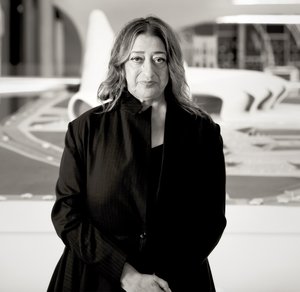
Zaha Hadid
1950 - 2016 , Irak
Kortfakta
- Artistic Movement Or Style: Dekonstruktivism
- Artists Or Movements Influenced By This Artist: ['Suprematism']
- Artists Who Influenced This Artist:
- Kazimir Malevich
- Rem Koolhaas
- Date Of Birth: 1950-10-31
- Full Name: Zaha Mohammad Hadid
- Nationality: Irak och Brittannien
- Notable Artworks:
- Tatlin Tower and Tectonic
- Broad Art Museum
- Place Of Birth: Bagdad, Irak
Relaterade artiklar

Topp 10 mästerverk inom abstrakt expressionism – konst för ditt hem | OriginalUniqueArt.com
Utforska de 10 mest inflytelserika verken inom abstrakt expressionism – från Rothkos färgfält till Pollocks action painting. Lär känna konstnärerna och deras teknik. Hitta museumskvalitativa tryck på OriginalUniqueArt.com och förvandla ditt hem med tidlös konst!

Kandinskys 25 Mästerverk: En Färgstark Resa i Abstrakt Konst | OriginalUniqueArt
Utforska Wassily Kandinskys 25 mest ikoniska verk – från expressionism till abstrakt konst. Lär känna historien bakom mästerverken och hitta inspiration för din heminredning med OriginalUniqueArt.com. Upptäck hela samlingen online!
The Soul of Color: A Journey into the Emotional Resonance of Lyrical Abstraction
Embark on a cultural journey through Lyrical Abstraction. Explore how masters like Kandinsky used color and motion to translate emotion into visual poetry. Discover the profound beauty of abstract expressionism and learn to curate emotional resonance in your own art collection.
Beyond the Lines: Mastering the High-Impact World of Contemporary Abstraction
Master the high-impact world of contemporary abstraction. Discover how bold colors, textures, and modern movements like Abstract Expressionism can transform your space with premium, high-energy art curated for the design-conscious professional.

Geometrisk Abstraktion: Topp 10 Mästverk som Formade Konsten | OriginalUniqueArt.com
Utforska de 10 mästerverk som definierade geometrisk abstraktion! Lär känna Mondrian, Kandinsky & Malevich. Hitta inspiration och museumskvalitativa konsttryck för ditt hem på OriginalUniqueArt.com. Upptäck hela samlingen online!