

 Visa i rummet
 Skicka
 Dela
Dela
 Detaljer
 Studentguide för konstverk

 Ladda ner
 Liknande objekt
 Röntgen
 Bildspel
 Besökstatistik
Roman Ruins
 Oil
Oil- WallArt
- Dutch Golden Age
 1620
1620- Early Modern
 23.0 x 31.0 cm
 Läs mer
Giclée / Konsttryck
Giclée- eller canvasprint av museumskvalitet med snabb produktion och flexibla ytbehandlingsalternativ. ( Köp handmålat konstverk Byt till digital bildförsäljning)




P118B Skr10

P118H Skr10

P118W Skr10

P438Z Skr10

P508JH Skr12

P508YH Skr12

P805H Skr10

P805Z Skr10

P919BZ Skr10

P919G Skr10

P919XJ Skr10

P959ZH Skr10

P968JZ Skr12

W106C Skr8

W218G Skr10

W218JH Skr8

W218Y Skr10

W307PJ Skr10

W316G Skr10

W316PJ Skr8

W316Y Skr10

W398PJ Skr8

W4111J Skr10

W500HY Skr15

W500JH Skr15

W692G Skr12

W849H Skr8

W940BG Skr15

W953PJ Skr8




Välj bland våra förinställda storlekar som motsvarar konstverkets ursprungliga proportioner.

Ange den bredd och höjd du behöver, för att passa din ram eller din vägg. Ett tryck kan endast beskäras, aldrig göras större än bilden, vilket innebär att ett format med en annan formform leder till att en del av bilden går förlorad. Vi skickar en digital mockup för godkännande innan vi trycker något. Bilden som visas på denna sida visar inte den faktiska beskärningen — det är endast mockuppen som gör det.
Leverans över hela världen () på 2 veckor istället för standard 4/5 veckor. (24 oktober)

Fri expressfrakt över hela världen

Högkvalitativ linnecanvas

Fullständig fraktförsäkring

Garantier för återbetalning av tullavgifter

Garantier för exakt färgåtergivning

100 dagars returrätt vid fabrikationsfel

100% pengarna tillbaka-garanti

Mängdrabatt erbjuds
 Glasalternativet är endast tillgängligt i storlekar under 110 cm.

Roman Ruins
Giclée / Konsttryck
Reproduktionsstorlek
-


Totalpris
Skr 793
A Window into Antiquity: The Timeless Allure of Roman Ruins
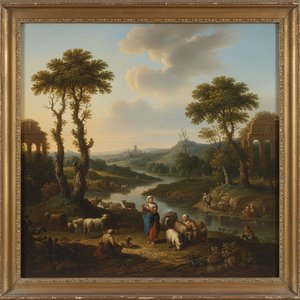
In the delicate, circular embrace of this exquisite tondo, Cornelis van Poelenburgh invites us to step through a portal into a bygone era. Painted around 1620, Roman Ruins is far more than a mere depiction of architectural decay; it is a profound meditation on the passage of time and the enduring relationship between humanity and the remnants of greatness. The composition, framed by its characteristic round format, focuses our gaze upon a landscape where the grandeur of the Roman Empire has softened into a pastoral sanctuary. Within this intimate space, the heavy stone arches and crumbling pillars serve as silent witnesses to history, now providing a backdrop for the quiet, rhythmic pulse of rural life.
The scene unfolds with a masterful use of light and shadow, reminiscent of the Dutch Golden Age's obsession with atmospheric truth. As we gaze upon the foreground, we encounter a world in gentle motion: a shepherd tending his flock, a laborer with his oxen, and figures caught in quiet contemplation. These small-scale inhabitants of the landscape bring a sense of warmth and vitality to the otherwise somber ruins. The artist employs a subtle, earthy palette—rich ochres, muted greens, and soft umbers—to weave a tapestry of textures that feels both tactile and ethereal. The hazy, overcast sky suggests the fleeting light of dawn or dusk, casting a melancholic yet peaceful glow over the entire vista, evoking a sense of nostalgia for a lost civilization.
The Mastery of the Italianate Style
Cornelis van Poelenburgh was a pivotal figure in the first generation of Dutch landscape painters who found profound inspiration in Italy. His travels to Rome allowed him to infuse his Northern training with the classical elegance of the Mediterranean. In Roman Ruins, we see this synthesis perfected. The technique is characterized by an incredible attention to detail; every crack in the ancient masonry and every distant bird in flight is rendered with a precision that draws the viewer deeper into the frame. This meticulousness does not feel clinical, however, but rather serves to enhance the three-dimensional depth of the scene, making the archway feel like a real threshold through which one might walk.
For the discerning collector or interior designer, this piece offers a unique emotional resonance. It possesses a "Caravaggesque" drama tempered by a serene, pastoral tranquility. The symbolism of the ruins—representing the inevitable cycle of rise and fall—is balanced by the resilience of the natural world and the simplicity of the human spirit. Such a work is an ideal centerpiece for a sophisticated interior, providing a conversational focal point that inspires reflection. Whether placed in a sunlit study or a grand gallery, this reproduction captures a moment of eternal stillness, offering any space it inhabits a touch of historical majesty and poetic grace.
Frågor och svar
Vem skapade "Roman Ruins" och under vilket år?
"Roman Ruins" skapades av Cornelis Van Poelenburch år 1620.
Vad föreställer "Roman Ruins" av Cornelis Van Poelenburch?
Teman som återfinns i "Roman Ruins" av Cornelis Van Poelenburch inkluderar figures, sheep, cow, archway, ruins, trees, birds, earth tones. Tillsammans sammanfattar de verkets motiv.
Hur starka är färgerna i "Roman Ruins"?
Färgerna i "Roman Ruins" av Cornelis Van Poelenburch uppvisar en Muted mättnad med en Balanced intensitet.
Om konstnären
tidigt liv och utbildning
Cornelis van Poelenburgh, en framstående nederländsk landskapsmålare, föddes i Utrecht i Nederländerna år 1594. Hans konstnärliga resa tog sin början under ledning av Abraham Bloemaert, en vid tiden mycket berömd mästare. Denna grundläggande utbildning lade den fasta fundamentet för van Poelenburghs framtida framgångar och formade hans konstnärliga blick.konstnärlig karriär och influenser
Van Poelenburghs resor till Rom under det tidiga 1600-talet kom att prägla hans verk på ett genomgripande sätt, vilket gjorde honom till en ledande representant för den första generationen nederländska landskapsmålare verksamma i Italien. Hans småskaliga målningar, som ofta skildrar italienskt inspirerade landskap där små figurer gestaltar bibliska eller mytologiska scener, uppvisade en helt unik och förtrollande stil. noterbara verk:- Satyrs som spionerar på nymfer (efter 1627), ett karaktäristiskt exempel på van Poelenburghs måleri, med arkaiska landskap och badande gestalter. (se på OriginalUniqueArt)
- Gudarnas råd (ca 1630), en målning som visar van Poelenburghs idealiserade kullandskap och romerskt inspirerade gudinnor, numera bevarad i Mauritshuis (Haag, Nederländerna). (se på OriginalUniqueArt)
eftermäle och senare liv
Van Poelenburghs konstnärskap åtnjöt stor uppskattning bland hans samtida, däribland storfursten av Toscana och den nederländska stadhållaren. Han återvände senare till Utrecht, där han gick bort år 1667, endast några år efter sin gamla lärare Abraham Bloemaert. viktiga punkter:- född i Utrecht, Nederländerna 1594
- utbildad av Abraham Bloemaert
- djupt påverkad av sin tid i Rom
- känd för sina småskaliga italienska landskap med figurer
- avled i Utrecht 1667 se Cornelis van Poelenburghs konstverk på OriginalUniqueArt lär dig mer om Cornelis van Poelenburgh på Wikipedia

Cornelis Van Poelenburch
1594 - 1667 , Nederländerna
Snabbfakta
- Artistic Movement Or Style: Nederländskt landskap, Romanat
- Artists Or Movements Influenced By This Artist: ['Claude Lorraine']
- Artists Who Influenced This Artist: ['Abraham Bloemaert']
- Date Of Birth: 1594, Utrecht, Nederländerna
- Date Of Death: 1667, Utrecht, Nederländerna
- Full Name: Cornelis van Poelenburgh
- Nationality: Nederländsk
- Notable Artworks:
- Satyrer som spionerar på nymfer
- Gudarnas råd
- Place Of Birth: Utrecht, Nederländerna
Relaterade artiklar

Golden Light & Dutch Skies: The Timeless Magic of Dutch Golden Age Landscapes
Discover the breathtaking beauty of Dutch Golden Age landscapes. Explore the mastery of light, chiaroscuro, and 17th-century realism through an expert art history lens, celebrating the enduring legacy of the Dutch Masters for discerning collectors and art lovers.

Golden Age Reflections: Dutch Baroque Painting & Cultural Innovation
Explore the Dutch Golden Age of painting! Discover key artists like Vermeer & ter Borch, their innovative techniques, and the rich cultural context behind these Baroque masterpieces. Learn about collecting & appreciating this iconic art period.

Mastering Light & Shadow: A Journey Through the Dutch Golden Age's Luminous Legacy
Embark on a cultural journey through the Dutch Golden Age. Explore the masterful interplay of light and shadow in 17th-century masterpieces, from Rembrandt to Vermeer, and discover how this era of profound realism continues to inspire fine art collectors today.

Nederländsk Guldålder: Topp 10 mästerverk som definierade epoken – konst & heminredning
Utforska de 10 ikoniska mästerverken från den nederländska guldåldern! Lär känna Rembrandt, Vermeer och Hals – deras teknik & berättelser. Hitta konsttryck och inspiration för din heminredning på OriginalUniqueArt.com. Upptäck hela samlingen online!
Nicolaes Berchem: Dutch Golden Age Pastoralism & the Evolution of Landscape Painting
Explore the captivating world of Nicolaes Berchem, a leading Dutch Golden Age painter. Discover his idyllic landscapes, masterful technique & lasting influence on art history. Learn more at OriginalUniqueArt.