
 Förhandsvisa
 Skicka
 Dela
Dela
 Visa detaljer
 Guide
Guide

 Ladda ner
 Liknande objekt
 Röntgen
 Bildspel
 Q&A
Q&A Statistik
Charles Willson Peale Self-Portrait

- 72.0 x 84.0 cm


 Visa mer
Giclée / Konsttryck
Giclée- eller canvasprint av museumskvalitet med snabb produktion och flexibla ytbehandlingsalternativ. ( Beställ handmålad reproduktion Byt till digital bild)




P118B Skr10

P118H Skr10

P118W Skr10

P438Z Skr10

P508JH Skr12

P508YH Skr12

P805H Skr10

P805Z Skr10

P919BZ Skr10

P919G Skr10

P919XJ Skr10

P959ZH Skr10

P968JZ Skr12

W106C Skr8

W218G Skr10

W218JH Skr8

W218Y Skr10

W307PJ Skr10

W316G Skr10

W316PJ Skr8

W316Y Skr10

W398PJ Skr8

W4111J Skr10

W500HY Skr15

W500JH Skr15

W692G Skr12

W849H Skr8

W940BG Skr15

W953PJ Skr8




Välj bland våra förinställda storlekar som motsvarar konstverkets ursprungliga proportioner.

Ange den bredd och höjd du behöver för att passa din ram eller vägg. Ett tryck kan endast beskäras, aldrig göras större än originalbilden, vilket innebär att ett format med en annan proportion leder till att en del av bilden går förlorad. Vi skickar en digital mockup för godkännande innan vi påbörjar tryckningen. Bilden som visas på denna sida visar inte den faktiska beskärningen — det är endast mockuppen som gör det.
Leverans över hela världen () på 2 veckor istället för standard 4/5 veckor. (1 november)

Fri expressfrakt över hela världen

Högkvalitativ linnecanvas

Fullständig fraktförsäkring

Garantier för återbetalning av tullavgifter

Garantier för exakt färgåtergivning

100 dagars returrätt (endast vid fel)

100% pengarna tillbaka-garanti

Mängdrabatt erbjuds
 Glasalternativet är endast tillgängligt i storlekar under 110 cm.

Charles Willson Peale Self-Portrait
Giclée / Konsttryck
Storlek på reproduktion
-


Slutgiltigt pris
Skr 803
A Window into a Revolutionary Mind: Charles Willson Peale’s Self-Portrait
Charles Willson Peale's 1791 self-portrait offers far more than a simple likeness; it’s a meticulously crafted window into the mind of a man profoundly shaped by the burgeoning ideals and scientific fervor of the late American Republic. Painted during a pivotal period of his life – just seven years before he established the Philadelphia Museum, a groundbreaking institution dedicated to both art and natural history – this work reveals Peale as a complex figure: an artist deeply invested in capturing beauty and form, yet equally driven by a desire to understand and document the world around him. The portrait isn’t merely about presenting himself; it's a carefully constructed statement of his identity as a painter, a scientist, and a patriot.
The composition itself is remarkably restrained, favoring a dignified stillness over overt theatricality. Peale sits in a simple, dark green chair, his gaze direct and unwavering – an invitation to the viewer to engage with his thoughts. His attire, a tailored suit and tie, speaks to his status as a respected member of Philadelphia society, yet there’s a subtle informality about him that hints at his intellectual pursuits. The lighting is soft and diffused, highlighting the planes of his face and emphasizing the thoughtful lines etched by time and experience. Notice how Peale subtly incorporates elements of scientific observation into the portrait; the careful rendering of his hands, for instance, suggests an appreciation for anatomical detail – a skill honed through years of studying human form.
The Palette of Progress: Technique and Style
Peale’s technique is characterized by a remarkable blend of realism and neoclassical influence. He was deeply affected by the artistic trends emerging from Europe, particularly the works of Benjamin West, with whom he studied in London. However, Peale skillfully adapted these influences to create a distinctly American style – one that prioritized clarity, precision, and an engagement with contemporary life. The brushwork is smooth and controlled, creating a sense of depth and solidity. He employs subtle gradations of tone to model the forms, lending them a remarkable three-dimensionality. The use of dark greens and browns in the background provides a rich contrast to Peale’s lighter complexion, drawing attention to his face and features.
Crucially, Peale wasn't simply replicating reality; he was actively shaping it. The portrait is imbued with a sense of intellectual curiosity – a desire to capture not just what *is*, but also what *could be*. This ambition is reflected in the meticulous detail with which he renders his clothing and accessories, as well as the subtle hints of scientific instrumentation visible in the background (though obscured by the dark tones). The painting’s overall effect is one of quiet confidence and intellectual engagement – a testament to Peale's multifaceted talents.
A Reflection of an Era: Historical Context
To fully appreciate this self-portrait, it’s essential to understand the historical context in which it was created. The late 18th century was a period of profound transformation in America – a time of revolution, nation-building, and burgeoning scientific inquiry. Peale's work embodies these changes perfectly. As a painter, he played a vital role in shaping American visual culture, capturing the likenesses of prominent figures and documenting key moments in the nation’s history. As a scientist, he was instrumental in establishing the Philadelphia Museum, which became one of the first museums in America – a pioneering institution dedicated to both art and natural history.
The portrait itself can be seen as a reflection of this era's emphasis on reason, progress, and civic virtue. Peale’s self-portrait is not simply an image of himself; it’s a declaration of his commitment to these ideals. He was deeply involved in the intellectual and cultural life of Philadelphia, serving as a patron of the arts and sciences, and actively promoting the development of American institutions.
The Enduring Legacy: Symbolism and Emotional Impact
Beyond its technical merits, Peale’s self-portrait is rich in symbolism. The direct gaze of the subject conveys a sense of dignity and self-assurance – qualities that were highly valued during this period. The dark background suggests introspection and contemplation, while the muted colors evoke a sense of seriousness and gravitas. Peale's posture, upright and composed, reflects his commitment to civic duty and intellectual pursuits.
Ultimately, Peale’s self-portrait is a powerful testament to the enduring legacy of an extraordinary man. It offers a glimpse into the mind of a revolutionary artist, scientist, and patriot – a figure who played a vital role in shaping American culture and laying the foundation for the nation's future. Reproductions of this work continue to resonate today, inviting viewers to contemplate the complexities of human identity and the enduring power of art to capture both the individual and the era.
Frågor och svar
Vilket format och vilken orientering rekommenderas för tryck av "Charles Willson Peale Self-Portrait"?
För "Charles Willson Peale Self-Portrait" är den rekommenderade tryckinställningen storleken Medium med Portrait orientering.
Vilket nationellt ursprung ligger bakom Neoclassical i "Charles Willson Peale Self-Portrait"?
Det Neoclassical-inspirerade verket "Charles Willson Peale Self-Portrait" skapades av en konstnär född i Storbritannien.
Vilken placering passar bäst för formatet på "Charles Willson Peale Self-Portrait" av Charles Willson Peale?
Format (Portrait) och rekommenderat utrymme (Living Room) är de två placeringsfakta som finns registrerade för "Charles Willson Peale Self-Portrait" av Charles Willson Peale.
Konstnärsbiografi
Charles Willson Peale: Ett liv av konst, vetenskap och patriotism
- Född: 15 april 1741, Chester, Queen Anne's County, Maryland
- Död: 22 februari 1827, Philadelphia, Pennsylvania
Tidigt liv och konstnärlig skolning
- Peales tidiga år präglades av ekonomisk osäkerhet efter faderns bortgång. Han arbetade först som lärling hos en sadelmakare innan han upptäckte sin djupa passion för konsten.
- Hans första konstnärliga steg togs under ledning av John Hesselius och genom ett kort samarbete med John Singleton Copley, vilket tidigt visade hans naturliga talang för porträttmåleri.
- En avgörande vändpunkt i hans utveckling var tiden i London (1767–1770) under Benjamin Wests mentorskap. Denna exponering för europeiska konstnärliga strömningar kom att forma hans stil på ett genomgripande sätt.
Konstnärlig karriär och betydande verk
- Porträttkonst: Peale är främst känd för sina porträtt av framstående gestalter från den amerikanska revolutionen, däribland ett otaliga antal avbildningar av George Washington (nästan sextio stycken totalt). Dessa porträtt fungerar både som ovärderliga historiska dokument och som konstnärliga mästerverk.
- Stil: Hans stil genomgick en ständig förvandling; från att initialt ha varit influerad av Wests nyklassiska estetik, rörde han sig mot en ökad realism med en strävan efter att fånga personers sanna karaktär och likhet.
- Framstående verk:
- George Washington (1772): Markerade början på hans långvariga och nära relation med Washington.
- The Staircase Group (ca 1795): Ett slående exempel på trompe l'oeil, där han avbildar sina söner Raphael och Titian som om de vore en integrerad del av den arkitektoniska miljön.
Vetenskapliga strävanden och Peales amerikanska museum
- Peale var en passionerad naturalist och vetenskapsman som organiserade expeditioner för att utforska naturhistorien.
- Han grundade Peale's American Museum i Philadelphia (1784), ett av de första museerna i USA, som rymde botaniska, biologiska och arkeologiska fynd.
- Museet spelade en central roll i att sprida vetenskap och utbildning i Amerika. Han blev särskilt känd för sina utställningar av mastodontänder, som han förvärvat genom en expedition år 11801.
- För att kunna bevara de fynd han gjorde lärde han sig själv konsten att preparera djur (taxidermi), vilket vittnar om hans mångsidiga begåvning.
Arv och historisk betydelse
- Peales livsverk överbryggar klyftan mellan konst och vetenskap, och speglar de upplysningstida ideal som präglade hans tid.
- Hans porträtt utgör ovärderliga visuella skildringar av nyckelpersoner i den amerikanska historien.
- Grundandet av Peale's American Museum var ett pionjärarbete som hjälpte till att etablera museet som en viktig institution för utbildning och vetenskaplig utforskning.
- Han utövade ett stort inflytande över efterföljande generationer av både konstnärer och vetenskapsmän, och bidrog därmed väsentligt till den amerikanska kulturens utveckling.
- Hans familjearv levde vidare genom hans söner, däribland James Peale och Rubens Peale, som också blev framstående konstnärer och bidrog till museets samlingar.

Charles Willson Peale
1741 - 1827 , Storbritannien
Kortfakta
- Artistic Movement Or Style: Neoclassical painting
- Artists Who Influenced This Artist:
- John Hesselius
- John Singleton Copley
- Benjamin West
- Date Of Birth: April 15, 1741
- Date Of Death: February 22, 1827
- Full Name: Charles Willson Peale
- Nationality: American
- Notable Artworks:
- George Washington portraits
- The Staircase Group
- Place Of Birth: Chester, United Kingdom
Relaterade artiklar
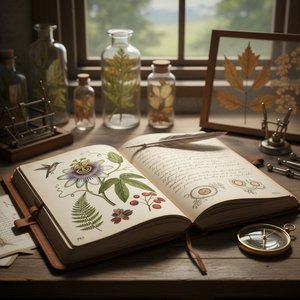
Titian Ramsay Peale II: A Legacy of Botanical Precision & Artistic Innovation
Explore the life & art of Titian Ramsay Peale II, a master of botanical precision and wildlife painting. Discover his legacy bridging art & natural history at OriginalUniqueArt.
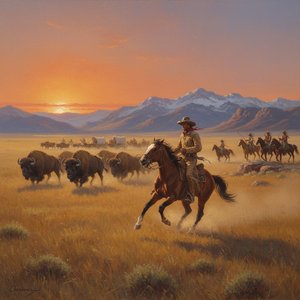
Charles Marion Russell: Capturing the American West Through a Romantic Lens
Explore the captivating world of Charles Marion Russell, 'the cowboy artist.' Discover his life, iconic paintings, advocacy for Native Americans, and investment potential. A guide for discerning art collectors.

Charles Bird King: Capturing Native American Dignity Through Portraiture & Cultural Exchange
Explore the captivating portraits of Charles Bird King, renowned for his depictions of Native American leaders. Discover the historical context, artistic techniques, and collecting value of these significant 19th-century artworks.

Charles Willson Peale: Portraiture, Enlightenment Ideals & Shaping American Identity
Explore the life & art of Charles Willson Peale – Revolutionary portraitist, scientist, and founder of America’s first museum. Discover his iconic paintings of Washington & the Enlightenment ideals that shaped a nation.

Benjamin West: Transatlantic Ambition & Shaping American Art
Explore the life & legacy of Benjamin West, pioneering American artist and Royal Academy president. Discover his Neoclassical masterpieces, transatlantic influence, and lasting impact on art history. Learn more at OriginalUniqueArt.

