

 Förhandsvisa
 Skicka
 Dela
Dela
 Visa detaljer
 Guide
Guide

 Ladda ner
 Liknande objekt
 Röntgen
 Bildspel
 Statistik
Daedalus and Icarus
 Painting
- French Baroque Classicism
 1645
1645 190.0 x 124.0 cm
 Ermitaget
 Visa mer
Giclée / Konsttryck
Giclée- eller canvasprint av museumskvalitet med snabb produktion och flexibla ytbehandlingsalternativ. ( Beställ handmålad reproduktion Byt till digital bild)




P118B Skr10

P118H Skr10

P118W Skr10

P438Z Skr10

P508JH Skr12

P508YH Skr12

P805H Skr10

P805Z Skr10

P919BZ Skr10

P919G Skr10

P919XJ Skr10

P959ZH Skr10

P968JZ Skr12

W106C Skr8

W218G Skr10

W218JH Skr8

W218Y Skr10

W307PJ Skr10

W316G Skr10

W316PJ Skr8

W316Y Skr10

W398PJ Skr8

W4111J Skr10

W500HY Skr15

W500JH Skr15

W692G Skr12

W849H Skr8

W940BG Skr15

W953PJ Skr8




Välj bland våra förinställda storlekar som motsvarar konstverkets ursprungliga proportioner.

Ange den bredd och höjd du behöver för att passa din ram eller vägg. Ett tryck kan endast beskäras, aldrig göras större än originalbilden, vilket innebär att ett format med en annan proportion leder till att en del av bilden går förlorad. Vi skickar en digital mockup för godkännande innan vi påbörjar tryckningen. Bilden som visas på denna sida visar inte den faktiska beskärningen — det är endast mockuppen som gör det.
Leverans över hela världen () på 2 veckor istället för standard 4/5 veckor. (27 oktober)

Fri expressfrakt över hela världen

Högkvalitativ linnecanvas

Fullständig fraktförsäkring

Garantier för återbetalning av tullavgifter

Garantier för exakt färgåtergivning

100 dagars returrätt (endast vid fel)

100% pengarna tillbaka-garanti

Mängdrabatt erbjuds
 Glasalternativet är endast tillgängligt i storlekar under 110 cm.

Daedalus and Icarus
Giclée / Konsttryck
Storlek på reproduktion
-


Slutgiltigt pris
Skr 797
Daedalus and Icarus by LE BRUN, Charles
Charles Le Brun’s “Daedalus and Icarus,” painted in 1645 during his formative years in Rome, stands as a testament to the burgeoning influence of Caravaggio on French Baroque art. This dramatic depiction captures a pivotal moment from Greek mythology – the perilous flight of Daedalus and his son Icarus after escaping Crete, attempting to reach Sicily with wings crafted from feathers and wax.
- Subject Matter: The painting portrays Daedalus tirelessly supporting Icarus as he descends from the heavens, a poignant image symbolizing ambition, folly, and the consequences of disregarding divine warnings.
- Style & Technique: Le Brun’s masterful execution exemplifies Baroque dynamism and theatricality. Employing chiaroscuro—the dramatic interplay of light and shadow—he achieves an unparalleled sense of realism and emotional intensity. The meticulous detail in depicting Icarus's falling form underscores the artist’s commitment to capturing human vulnerability against a monumental backdrop.
- Historical Context: Created during Le Brun’s Roman apprenticeship, “Daedalus and Icarus” reflects the artistic fervor of the era, mirroring the stylistic innovations championed by Nicolas Poussin and absorbing lessons from Raphael’s classical ideals. It aligns with the broader trend toward portraying mythological narratives with psychological depth and moral contemplation—a hallmark of Baroque art’s ambition to engage viewers on an emotional level.
- Symbolism: The wax wings represent human aspiration, albeit tragically flawed. Their disintegration symbolizes hubris – excessive pride – and the inevitable downfall that accompanies disregard for prudence. The angel hovering in the upper left corner serves as a visual reminder of divine judgment and underscores the narrative’s moral dimension.
Beyond its artistic merits, “Daedalus and Icarus” resonates with timeless themes of human ambition versus responsibility. Le Brun's masterful rendering elevates this mythological tale into an enduring symbol of cautionary wisdom—a captivating subject for collectors seeking to adorn their homes with a piece of Baroque grandeur.
Frågor och svar
Hur mättad är färgpaletten i "Daedalus and Icarus"?
"Daedalus and Icarus" av Charles Le Brun är återgiven med en Subtle Color mättnad.
Hur förhåller sig "Daedalus and Icarus" till Charles Le Bruns samlade konstnärskap?
Inom Charles Le Bruns produktion är "Daedalus and Icarus" skapad i French Baroque Classicism-stil, med de återkommande temana classical antiquity, italian masters, religious symbolism, royal patronage, versailles influence.
Är "Daedalus and Icarus" typisk för vad Charles Le Brun vanligtvis skapade?
Charles Le Bruns återkommande teman inkluderar classical antiquity, italian masters, religious symbolism, royal patronage, versailles influence; "Daedalus and Icarus" fokuserar på mythology, greek mythology, daedalus, icarus, flight, sunlight, angel.
Konstnärsbiografi
Early Life and Artistic Beginnings
Charles Le Brun’s story begins in the vibrant heart of Paris, a city brimming with artistic ambition and royal patronage. Born in 1619, he wasn't simply born into an artistic family; it was as if the creative spirit flowed through his very veins from the start. Even at just eleven years old, young Charles displayed a remarkable talent for drawing, quickly catching the eye of Simon Vouet, one of the most celebrated painters of his time and a leading figure in the burgeoning French art scene. Vouet, himself a master of the emerging Baroque style, took Le Brun under his wing, providing him with invaluable training and introducing him to the influential circles of Parisian society. This early mentorship was crucial, laying the foundation for Le Brun’s future success.
However, Le Brun's artistic journey didn’t stop there. He continued his studies under François Perrier, another respected artist in Paris, further honing his skills and expanding his knowledge. But it was a pivotal four-year sojourn to Rome between 1642 and 1646 that truly shaped his artistic development. This period marked a profound turning point, exposing him to the grandeur of ancient Roman sculpture and the innovative techniques of contemporary Italian masters like Raphael. He immersed himself in the classical world, meticulously studying its forms and principles, absorbing influences from both antiquity and the vibrant artistic landscape of Renaissance Italy. It was during this time that Le Brun began to develop his distinctive style – a harmonious blend of Baroque dynamism and classical restraint.
A Style Forged in Rome and Paris
Returning to Paris in 1646, Charles Le Brun swiftly established himself as a rising star within the artistic community. His early works reflected the stylistic influences he’d absorbed in Rome – the elegance of Vouet and the intellectual depth of Poussin. Yet, he wasn't merely a mimic; he began to forge his own unique voice, gradually moving away from strict adherence to classical models towards a more dynamic and expressive Baroque style. This evolution was marked by an increasing emphasis on dramatic composition, rich color palettes, and meticulous detail – hallmarks that would become synonymous with his name.
Le Brun’s artistic development wasn't confined solely to technical skill; it also involved a growing understanding of the theoretical underpinnings of art. He meticulously studied the works of Raphael, absorbing his compositional techniques and striving to emulate his mastery of perspective and form. This dedication to both technique and theory would later inform his role as a leading art theorist in France.
Royal Patronage and Architectural Grandeur
The mid-17th century witnessed a dramatic shift in Le Brun’s career, propelled by the ascendancy of Louis XIV – the “Sun King” – to the throne. Recognizing Le Brun's exceptional talent and organizational abilities, the king appointed him as First Painter to the King in 1664, a position that granted him unparalleled influence over French art. This appointment wasn’t merely a title; it was a testament to his artistic merit and a symbol of royal favor.
Le Brun's role extended far beyond simply painting portraits. He became deeply involved in the decoration of some of France’s most iconic landmarks, including the Palace of Versailles. His contributions were breathtakingly ambitious – he oversaw the creation of the magnificent Ambassadors’ Staircase (1674-78), the opulent Hall of Mirrors (1678-86), and the serene Peace and War Rooms, transforming these spaces into symbols of royal power and artistic splendor. These projects weren't just decorative; they were carefully orchestrated statements about Louis XIV’s reign and the glory of France.
Beyond Versailles, Le Brun’s influence extended to other significant structures, including Vaux-le-Vicomte, a lavish chateau he designed and decorated, showcasing his versatility as an architect and designer. His work at these locations demonstrated not only artistic skill but also masterful planning and organizational capabilities.
The Shaping of French Artistic Orthodoxy
Le Brun’s influence extended beyond the creation of individual artworks; he played a crucial role in shaping the very standards of French art during the reign of Louis XIV. He established the Académie Royale de Peinture et de Sculpture in 1648, transforming it into a powerful institution that served as both a training ground for young artists and a gatekeeper of artistic orthodoxy. The Academy’s curriculum, heavily influenced by Le Brun's theories on classical composition, dictated what was considered acceptable – and unacceptable – in French art.
Le Brun’s theoretical writings, particularly his *Méthode pour apprendre à dessiner les passions* (Method for Learning to Draw Passions), became a standard textbook for artists throughout Europe. His emphasis on the intellectual basis of artistic expression—the idea that painting should evoke emotion and thought rather than simply delight the eye—had a lasting impact on art education and artistic practice. His approach, rooted in classical principles, helped solidify a distinct French style characterized by elegance, restraint, and grandeur.
Legacy and Historical Significance
Charles Le Brun’s legacy is one of profound influence and enduring importance. He wasn't merely a painter; he was a pivotal figure in the cultural landscape of 17th-century France. His work helped define the Baroque style in France, establishing him as one of the most significant artists of his era. His role as a theorist and administrator cemented his position as a central force in shaping French artistic identity.
Even today, Le Brun’s contributions are celebrated. The meticulous detail and dramatic compositions of his works continue to captivate viewers, while his influence on subsequent generations of artists is undeniable. He remains a testament to the power of artistic vision, technical skill, and intellectual rigor—a true master of his craft who left an indelible mark on the history of art.

Charles Le Brun
1619 - 1690 , Frankrike
Kortfakta
- Artistic Movement Or Style: Barock
- Artists Or Movements Influenced By This Artist: ['Fransk konst']
- Artists Who Influenced This Artist:
- Simon Vouet
- Nicolas Poussin
- Date Of Birth: 24 feb 1619
- Date Of Death: 12 feb 1690
- Full Name: Charles Le Brun
- Nationality: Fransk
- Notable Artworks:
- Ambassadörs trappan
- Spegelhallen
- Fred och krigrummen
- Place Of Birth: Paris, Frankrike
Relaterade artiklar

The Enduring Legacy of Fine Art Prints: Technique, History & Aesthetic Impact
Explore the rich history & techniques of fine art prints. Discover investment potential, assess authenticity, and learn how to preserve your collection with expert guidance. Trusted insights for discerning collectors.

Barockens dramatik: Att föra prakt och känsla in i samtida interiörer
Upptäck barockens dramatik och lyx! Lär dig hur du integrerar denna klassiska stil i ditt hem med våra experttips och inspirerande exempel. Skapa en palatskänsla idag!

Echoes of Time: Exploring the Enduring Appeal & Historical Context of Vintage Art Prints
Explore the captivating world of vintage art prints! Discover their history, collecting tips & enduring appeal. Expert insights on chromolithography and building a legacy collection with OriginalUniqueArt.

Giclée Prints: Archival Quality & Aesthetic Nuances for the Discerning Collector
Explore the world of giclée prints with OriginalUniqueArt. Learn about archival quality, aesthetic nuances & investment potential. Expert guidance for discerning art collectors seeking museum-quality reproductions and lasting value.
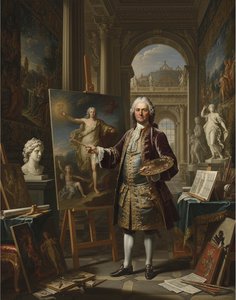
Charles Le Brun: Master of French Baroque Classicism & His Enduring Legacy
Explore the life & art of Charles Le Brun, master of French Baroque Classicism. Discover his royal commissions, influence on Versailles, and enduring legacy through detailed analysis & stunning artworks.