Visa i rummet
 Skicka
 Dela
Dela
 Detaljer
 Studentguide för konstverk

 Ladda ner
 Liknande objekt
 Röntgen
 Bildspel
 Besökstatistik
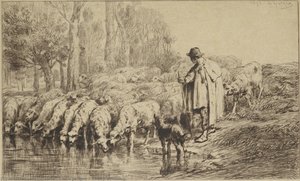
The Sheepfold
 Barbizon School
 1857
1857 46.0 x 92.0 cm
 Läs mer
Handgjord oljereproduktion
Handmålad olja på duk i din valda storlek och ram, tillverkad efter beställning av våra konstnärer. ( Byt till tryckta exemplar Byt till digital bildförsäljning)




































Välj bland våra förinställda storlekar som motsvarar konstverkets ursprungliga proportioner.

Ange den bredd och höjd du behöver för att passa din ram eller din vägg. Eftersom detta är handmålat kan konstnären vid en annan form måla lite mer runt bilden eller beskära den något – du väljer själv. Vi skickar en digital mockup för godkännande innan målningen påbörjas. Bilden som visas på denna sida representerar inte det slutgiltiga resultatet — det är endast mockuppen som visar det.
Efter beställning kommer OriginalUniqueArt.com team att mejla kunden för instruktioner och tillhandahålla en skissförhandsvisning
Leverans över hela världen () på 3–4 veckor istället för standard 5 veckor. (24 oktober). Inga kompromisser med kvaliteten.

Fri expressfrakt över hela världen

Högkvalitativ linnecanvas

Fullständig fraktförsäkring

Garantier för återbetalning av tullavgifter

Garantier för exakt färgåtergivning

100 dagars returrätt vid fabrikationsfel

100% pengarna tillbaka-garanti

Mängdrabatt erbjuds
 Glasalternativet är endast tillgängligt i storlekar under 110 cm.

The Sheepfold
Tryckteknik
Reproduktionsstorlek
-


Totalpris
Skr 2973
Frågor och svar
Är färgerna i "The Sheepfold" av Charles-Émile Jacque mättade eller dämpade?
"The Sheepfold" av Charles-Émile Jacque är återgiven med en Subtle Color mättnad.
Vilken är den färgmässiga identiteten hos "The Sheepfold" av Charles-Émile Jacque?
Färgidentiteten i "The Sheepfold" av Charles-Émile Jacque: en Earthy-palett, dominerad av Espresso (#583b1c).
Hur förhåller sig färgerna i "The Sheepfold" till varandra?
Färgharmonin i "The Sheepfold" beskrivs som Unified Palette.
Om konstnären
Ett liv rotat i den franska landsbygden
Charles-Émile Jacque, född i Paris 1813, var inte ödesbestämd att följa en konventionell konstnärlig bana. Hans tidiga liv tog en oväntad vändning genom sju års tjänstgöring i den franska armén. Ändå fann hans medfödda talang uttryck även inom den militära tillvarons strikta strukturer – inte genom måleri till en början, utan genom den noggranna skickligheten i kartgravyr. Denna grundläggande träning, som krävde precision och observation, skulle visa sig vara förvånansvärt avgörande för hans senare konstnärliga strävanden, då den ingöt en hängivenhet till detaljer som kom att bli ett kännetecken för hans verk. Det var en osannolik början för en målare som senare skulle bli synonym med den idylliska skönheten i det lantliga Frankrike, men det säger mycket om Jacques anpassningsförmåga och inneboende konstnärlighet. Efter att ha lämnat armén ägnade han sig kortvarigt åt illustration och karikatyr, där han bidrog till parisiska tidskrifter innan han fann sin sanna kallelse inom etsning och måleri.Mötet med Barbizon och en pastoral vision
Under mitten av 1800-talet drogs Jacque mot Barbizon, en liten by som skulle komma att bli epicentrum för en revolutionerande konstnärlig rörelse. I flykten från de koleraepidemier som härjade i Paris, anslöt han sig till Jean-François Millet och andra likasinnade konstnärer i sökandet efter inspiration direkt från naturen. Detta markerade ett avgörande skifte bort från akademiska konventioner mot en mer ärlig och realistisk skildring av livet. Jacque omfamnade denna nya ansats med hela sitt hjärta och ägnade sig åt att fånga essensen av den lantliga tillvaron – herdetes tysta värdighet när de vaktade sina hjordar, jordbruksarbetets mjuka rytm och den enkla skönheten hos boskap på solfläckade fält. Hans målningar var inte enbart avbildningar av scener; de var genomströmmade av en djup känsla av frid och harmoni, vilket speglade en vördnad för den naturliga världen. Han *målade* inte bara får eller lador; han förmedlade en känsla, en atmosfär – en vördnad för det pastorala livet som resonerade djupt hos betraktaren.Mästare av olika uttryck: Måleri och grafik
Jacques konstnärliga förmåga sträckte sig långt bortom måleriet. Han blev berömd som en mästare inom etsning och gravyr, där han återupplivade 1600-talets tekniker och tänjde på grafikens gränser. Hans etsningar hyllades för sin kraftfullhet och sitt väl genomtänkade motivval, vilket gav honom erkännande från kritiker som Charles Baudelaire. Henri Béraldi skilde mellan två distinkta perioder i Jacques grafiska arbete: en tidig fas inspirerad av holländska vignettes, präglad av spontanitet, och en senare period kännetecknad av större, mer detaljerade plåtar som uppvisade ett minutiöst hantverk. Denna dubbla mästerskap – av både pensel och burin – gjorde det möjligt för honom att nå en bredare publik och befästa sitt rykte som en betydelsefull gestalt i konstvärlden. Han betraktade inte måleri och grafik som separata discipliner, utan snarare som komplementära vägar för att uttrycka sin konstnärliga vision. Hans illustrationer till litterära klassiker, däribland utgåvor av Goldsmiths *The Vicar of Wakefield* och Wordsworths *Picturesque Greece*, visade ytterligare på hans mångsidighet och skicklighet.Arv och bestående inflytande
Charles-Émile Jacque gick bort 1894 och lämnade efter sig ett rikt konstnärligt arv som fortsätter att fängsla betraktare än idag. Han spelade en avgörande roll i formandet av realismens utveckling inom fransk konst och banade väg för framtida generationer av konstnärer som strävade efter att skildra livet med ärlighet och känslighet. Hans hängivenhet till att porträttera landsbygdslivet lyfte genremåleriet – scener ur vardagligt liv – till en framstående position inom det konstnärliga landskapet.- En pionjär inom etsningsrenässansen: Jacques återupplivande av 1600-talets etsningstekniker fick en betydande inverkan på grafiken.
- Inflytande på Millet: Hans tidiga verk och etsningar utövade ett djupt inflytande på hans vän och medkonstnär från Barbizon-skolan, Jean-François Millet.
- <Förespråkare för landsbygdslivet: Han förevigade skönheten och värdigheten i det franska bondelivet och skapade ett bestående visuellt register över ett sätt att leva som höll på att försvinna.

Charles-Émile Jacque
1813 - 1894 , Frankrike
Snabbfakta
- Artistic Movement Or Style: Barbizonskolan
- Artists Or Movements Influenced By This Artist: ['Realism']
- Artists Who Influenced This Artist: ['Adriaen van Ostade']
- Date Of Birth: 1813
- Date Of Death: 1894
- Full Name: Charles-Émile Jacque
- Nationality: Fransk
- Notable Artworks:
- Lilla blå pojken
- Fårhuset
- Herdinna
- Place Of Birth: Paris, Frankrike
Relaterade artiklar
The Barbizon School: A Professional Guide to Naturalism and Landscape Mastery for Interior Designers
Explore the Barbizon School's mastery of naturalism. An expert guide for hotel designers and procurement managers on sourcing high-quality landscape reproductions to elevate hospitality and corporate interiors with authentic, large-scale fine art solutions.
The Barbizon School: Pioneering Realism & the Pastoral Vision in 19th-Century French Painting
Explore the Barbizon School's pivotal role in 19th-century French painting. Discover how these artists revolutionized landscape art with their commitment to Realism and a profound connection to nature. Learn about key figures like Rousseau, Millet & Corot.

The Hague School: Realism, Atmosphere & the Dawn of Dutch Impressionism
Explore the Hague School's pivotal role in Dutch art history. Discover realism, atmospheric landscapes & its influence on Impressionism. Learn about key artists like Mauve & Maris with OriginalUniqueArt.
Charles-François Daubigny: Pioneering Atmospheric Light & Barbizon Realism
Explore the life & art of Charles-François Daubigny, a pivotal Barbizon School painter. Discover his innovative landscapes, mastery of light, and influence on Impressionism. High-quality reproductions available.
The Barbizon School: The Soulful Origins of Impressionism's Natural Light and Atmospheric Mastery
Discover the profound influence of the Barbizon School on Impressionism. Explore how these masters captured natural light and atmospheric beauty through plein air painting, paving the way for Monet and Renoir. A journey into the soulful origins of landscape art history.