

 Visa i rummet
 Skicka
 Dela
Dela
 Detaljer
 Studentguide för konstverk

 Ladda ner
 Liknande objekt
 Röntgen
 Bildspel
 Besökstatistik
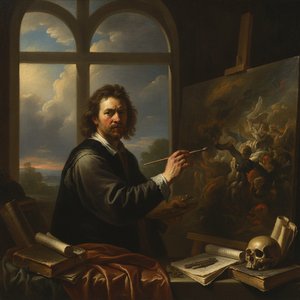
Self-Portrait
 Oil On Panel
- Baroque Painting
 1645
1645 65.0 x 49.0 cm
 Museum Boijmans Van Beuningen
 Läs mer
Giclée / Konsttryck
Giclée- eller canvasprint av museumskvalitet med snabb produktion och flexibla ytbehandlingsalternativ. ( Köp handmålat konstverk Byt till digital bildförsäljning)




P118B Skr10

P118H Skr10

P118W Skr10

P438Z Skr10

P508JH Skr12

P508YH Skr12

P805H Skr10

P805Z Skr10

P919BZ Skr10

P919G Skr10

P919XJ Skr10

P959ZH Skr10

P968JZ Skr12

W106C Skr8

W218G Skr10

W218JH Skr8

W218Y Skr10

W307PJ Skr10

W316G Skr10

W316PJ Skr8

W316Y Skr10

W398PJ Skr8

W4111J Skr10

W500HY Skr15

W500JH Skr15

W692G Skr12

W849H Skr8

W940BG Skr15

W953PJ Skr8




Välj bland våra förinställda storlekar som motsvarar konstverkets ursprungliga proportioner.

Ange den bredd och höjd du behöver, för att passa din ram eller din vägg. Ett tryck kan endast beskäras, aldrig göras större än bilden, vilket innebär att ett format med en annan formform leder till att en del av bilden går förlorad. Vi skickar en digital mockup för godkännande innan vi trycker något. Bilden som visas på denna sida visar inte den faktiska beskärningen — det är endast mockuppen som gör det.
Leverans över hela världen () på 2 veckor istället för standard 4/5 veckor. (22 oktober)

Fri expressfrakt över hela världen

Högkvalitativ linnecanvas

Fullständig fraktförsäkring

Garantier för återbetalning av tullavgifter

Garantier för exakt färgåtergivning

100 dagars returrätt vid fabrikationsfel

100% pengarna tillbaka-garanti

Mängdrabatt erbjuds
 Glasalternativet är endast tillgängligt i storlekar under 110 cm.

Self-Portrait
Giclée / Konsttryck
Reproduktionsstorlek
-


Totalpris
Skr 793
A Window Into the Soul: Carel Fabritius’s “Self-Portrait”
The year is 1645. Within the bustling studio of Rembrandt in Amsterdam, a young artist named Carel Fabritius was meticulously crafting a portrait unlike any seen before. This wasn't merely a likeness; it was an intimate unveiling – the "Self-Portrait," a remarkably candid and profoundly moving depiction of the artist himself. More than just paint on panel, this work offers a rare glimpse into the mind of a man grappling with his craft, his identity, and perhaps, the anxieties inherent in artistic creation. The painting, now housed within the Museum Boijmans Van Beuningen in Rotterdam, is a testament to Fabritius’s burgeoning talent and his willingness to experiment with light, shadow, and the very nature of self-representation.
Fabritius's early work was deeply influenced by Rembrandt, inheriting his masterful use of chiaroscuro – the dramatic interplay of light and dark. However, this self-portrait marks a decisive shift. While retaining Rembrandt’s foundational techniques, Fabritius develops a distinctly personal style, prioritizing color and an almost palpable sense of immediacy. The painting isn't about formal perfection; it’s about capturing a fleeting moment, a particular mood. The loose brushstrokes and slightly asymmetrical composition contribute to this feeling of raw authenticity, as if the artist is offering us not just a portrait, but a fragment of his inner world.
Deconstructing the Image: Technique and Detail
Examining the details reveals Fabritius’s meticulous approach. The painting is executed in oil on panel, a medium that allowed for rich color saturation and subtle gradations of tone – crucial to achieving the dramatic lighting effects characteristic of his style. Notice how he renders the texture of his clothing: the folds of the open-necked shirt, the rough weave of the fabric, all rendered with remarkable precision. The artist’s hands, resting casually on his lap, are particularly noteworthy; they possess a delicate sensitivity and an evident awareness of their own form. The long, curly hair, falling across his shoulders, adds to the sense of relaxed contemplation, while the slightly off-center gaze invites the viewer into a silent conversation.
The background is deliberately dark and indistinct, serving not as a mere backdrop but as a powerful tool for emphasizing the subject’s face. This technique draws our attention directly to Fabritius's features – his thoughtful expression, the subtle lines around his eyes hinting at both intelligence and weariness. The careful modeling of light and shadow creates a three-dimensional effect, giving depth and volume to the image, as if we are truly observing him in person.
A Reflection on Identity and Art
Beyond its technical brilliance, the "Self-Portrait" is imbued with a profound sense of introspection. Fabritius’s contemplative gaze suggests a moment of quiet reflection – perhaps a consideration of his own artistic journey, or simply a pause in the creative process. The painting speaks to the universal human desire for self-understanding and the challenges inherent in defining one's identity. It is a remarkably vulnerable work, offering an unprecedented level of intimacy with its creator.
The historical context further enriches our understanding of this compelling image. Fabritius’s brief but impactful career coincided with the flourishing of Dutch Golden Age painting – a period marked by artistic innovation and a celebration of realism. His association with Rembrandt, coupled with his membership in the Delft School, positioned him within a vibrant artistic community that valued both technical skill and emotional expression. The tragic circumstances surrounding his death—caught in the devastating explosion of the Delft gunpowder magazine—only amplify the poignant beauty of this self-portrait, transforming it into a powerful meditation on life, loss, and the enduring legacy of art.
Bringing Fabritius Home: Reproductions and Legacy
Today, reproductions of “Self-Portrait” are available through OriginalUniqueArt.com, offering art lovers the opportunity to own a piece of this remarkable artistic achievement. These meticulously crafted hand-painted reproductions capture not only the visual details of the original but also its emotional depth and atmospheric quality. Whether displayed in a private residence or a corporate space, this iconic image will undoubtedly serve as a source of inspiration and contemplation for years to come.
For those seeking to delve deeper into the life and work of Carel Fabritius, we encourage you to visit https://en.wikipedia.org/wiki/Carel_Fabritius for further information. And don’t miss the Google Arts & Culture page: https://artsandculture.google.com/asset/self-portrait/JwGBKHEZH4veSA?hl=en, where you can explore high-resolution images and learn more about this extraordinary artist.
Frågor och svar
Vilka är de faktiska måtten på "Self-Portrait" av Carel Fabritius?
"Self-Portrait" mäter 65 x 49 cm i sin originalform. Originalmåtten är en bra referens när du väljer storlek på en reproduktion.
Vilken fas av Carel Fabritiuss utveckling representerar "Self-Portrait"?
"Self-Portrait" representerar Carel Fabritiuss Mature Period.
Vilken typ av verk är "Self-Portrait"?
"Self-Portrait" är ett verk av typen wall art.
Om konstnären
Ett kort liv i ljusets tjänst: Den gåtfulla världen av Carel Fabritius
Carel Fabritius, ett namn som viskas med vördnad bland kännare av den holländska guldåldern, förblir en svårfångad gestalt trots den djupgående inverkan hans korta karriär hade på måleriets utveckling. Född i Middenbeemster 1622 och tragiskt förlorad i Delft-krigspulverexplosionen 1654, blott trettiotvå år gammal, lämnade Fabritius efter sig ett anmärkningsvärt litet men intensivt kraftfullt oeuvre som fortsätter att fängsla och inspirera. Hans målningar är inte bara representationer av verkligheten; de är undersökningar av ljus, perception och själva essensen av visuell upplevelse.
Fabritius konstnärliga resa började i den omhändertagande miljön i hans familjehem. Hans far, Pieter Carelsz Fabritius, var själv en målare – en skollärare som också utövade sitt hantverk och inställde hos unge Carel en tidig uppskattning för konsten. Denna grund ledde honom till Amsterdam omkring 1641, där han inträdde i Rembrandt van Rijns ateljé. Medan den exakta längden på hans lärlingskap är omtvistad, är mästarens inflytande obestridligt. Fabritius var dock ingen simpel efterliknare. Han började snabbt smida sin egen väg, avvikande från Rembrandts karakteristiska tenebrism och utvecklade en unik stil som prioriterade klarhet, svala harmonier och ett nästan vetenskapligt observerande av ljusets effekter.
Delftskolan och en distinkt vision
Efter sin tid med Rembrandt bosatte sig Fabritius i Delft och blev medlem i den lokala målarguilden 1652. Det var här, inom det spirande konstnärssamhället känt som Delftskolan, som hans mogna stil verkligen blomstrade. Till skillnad från många av sina samtida som fokuserade på storslagna historiska berättelser eller livliga genrescener, graviterade Fabritius mot intima heminteriörer och noggrant observerade studier av vardagliga föremål. Hans målningar besitter en anmärkningsvärd stillhet, en tyst intensitet som drar betraktaren in i en värld suspenderad i tiden.
Det som särskiljer Fabritius är hans mästerliga manipulation av ljus. Han nöjde sig inte med att skildra illumination; han analyserade den, fångande dess subtila nyanser och dess förmåga att definiera form och skapa atmosfär. Denna fascination för optik ledde honom till att experimentera med perspektiv – ofta använda ovanliga synvinklar som förstärker realismkänslan och drar betraktaren in i scenen. Guldfinken, kanske hans mest kända verk, exemplifierar detta perfekt. Den till synes enkla skildringen av en kedjad guldfink mot en sträv vit vägg är i själva verket ett mästerverk av trompe-l'oeil-teknik och rymdillusion. Fågeln tycks sväva strax utanför bildplanet, dess fjädrar återgivna med häpnadsväckande detaljrikedom, medan ljusets och skuggans samspel skapar en nästan påtaglig djupkänsla.
Huvudverk och bestående arv
Utöver Guldfinken inkluderar Fabritius oeuvre andra övertygande verk som visar hans distinkta vision. Vy av Delft (1652) är ett fängslande stadslandskap, anmärkningsvärt för sitt unika perspektiv och atmosfäriska återgivning av stadens arkitektur. Målningen är inte bara en topografisk registrering; det är en framkallande av platsen, genomsyrad av en känsla av lugn och poetisk skönhet. Vakten, målad kort före hans död, är kanske hans mest gåtfulla verk – ett hjärtskärande porträtt av en ensam soldat som inbjuder till kontemplation över teman som plikt, isolering och den mänskliga existensen.
Fabritius tragiskt korta karriär innebar att han bara producerade cirka tolv bevarade målningar. Ändå hade dessa få verk en oproportionerlig inverkan på efterföljande generationer av konstnärer. Hans innovativa användning av ljus och perspektiv tros ha påverkat Johannes Vermeer djupt, som delade en liknande fascination för optiska effekter och heminteriörer. De svala tonerna, den precisa återgivningen och den tysta intimiteten som kännetecknar Vermeers mästerverk kan spåras tillbaka till Fabritius banbrytande arbete.
En målare före sin tid
Explosionen i Delft avbröt inte bara Fabritius liv utan också en potentiellt revolutionerande konstnärlig bana. Hans målningar erbjuder en glimt in i sinnet hos en artist som tänjde på representationens gränser och utforskade själva synens natur. Medan hans samtida ofta var upptagna av narrativ eller symbolism, fokuserade Fabritius på måleriets grundläggande element – ljus, färg, form – och skapade verk som är både visuellt slående och intellektuellt stimulerande.
Idag erkänns Carel Fabritius som en nyckelfigur i den holländska guldåldern, en målare vars korta men lysande karriär lämnade ett outplånligt märke på konsthistorien. Hans målningar fortsätter att resonera med betraktare och erbjuder ett tidlöst vittnesbörd om observationens kraft, innovationen och den bestående skönheten i ljuset.

Carel Fabritius
1622 - 1654 , Nederländerna
Snabbfakta
- Artistic Movement Or Style: Barockkonst
- Artists Or Movements Influenced By This Artist: ['Johannes Vermeer']
- Artists Who Influenced This Artist: ['Rembrandt van Rijn']
- Date Of Birth: 27 februari 1622
- Date Of Death: 12 oktober 1654
- Full Name: Carel Pietersz Fabritius
- Nationality: Nederländsk
- Notable Artworks:
- The Raising of Lazarus
- A View of Delft
- The Goldfinch
- Place Of Birth: Muiden, Nederländerna
Relaterade artiklar

Barockens Mästerverk: Topp 10 konstverk som definierade en epok – OriginalUniqueArt.se
Upptäck barockens 10 största mästerverk! Caravaggio, Rembrandt, Bernini och fler. Lär känna historien bakom ikoniska målningar & skulpturer. Köp reproduktioner av hög kvalitet på OriginalUniqueArt.com – för en lyxig heminredning.

Rembrandt van Rijn: A Life Illuminated – Innovation, Emotion, and the Dutch Golden Age
Explore the life & art of Rembrandt van Rijn, a Dutch Golden Age master. Discover his innovative techniques, iconic paintings like 'The Night Watch', and enduring legacy. Expert insights for collectors & enthusiasts.

Rembrandts 25 Mästerverk: En Konsthistorisk Resa för Hemmet
Utforska Rembrandts 25 mest ikoniska målningar! Lär känna historien bakom mästerverken, hans unika teknik och barockens ljusspel. Köp exklusiva konsttryck & tavlor online på OriginalUniqueArt.com – för en tidlös inredning.
Dutch Baroque Unlocked: Mastering Chiaroscuro, Epic Drama, and the High-Impact Legacy of Rembrandt
Explore the dramatic power of Dutch Baroque art. Master the secrets of Rembrandt’s chiaroscuro, discover the epic scale of the Golden Age, and learn how to bring high-impact, hand-painted historical masterpieces into your modern collection with expert precision.

Nederländsk Barock: Topp 10 Mästerverk som Definierade Epoken – Konst & Inredning
Upptäck de 10 ikoniska mästerverken som definierade nederländsk barock! Lär känna Rembrandt, Vermeer och andra stora konstnärer. Hitta inspiration & museumkvalitativa reproduktioner på OriginalUniqueArt.com – för ditt hem eller din samling.