

 Visa i rummet
 Skicka
 Dela
Dela
 Detaljer
 Studentguide för konstverk

 Ladda ner
 Liknande objekt
 Röntgen
 Bildspel
 Besökstatistik
The Magdalen
 Oil On Panel
- Italian Renaissance
 1520
1520- Renaissance
 59.0 x 48.0 cm
 National Gallery of Art
 Läs mer
Giclée / Konsttryck
Giclée- eller canvasprint av museumskvalitet med snabb produktion och flexibla ytbehandlingsalternativ. ( Köp handmålat konstverk Byt till digital bildförsäljning)




P118B Skr10

P118H Skr10

P118W Skr10

P438Z Skr10

P508JH Skr12

P508YH Skr12

P805H Skr10

P805Z Skr10

P919BZ Skr10

P919G Skr10

P919XJ Skr10

P959ZH Skr10

P968JZ Skr12

W106C Skr8

W218G Skr10

W218JH Skr8

W218Y Skr10

W307PJ Skr10

W316G Skr10

W316PJ Skr8

W316Y Skr10

W398PJ Skr8

W4111J Skr10

W500HY Skr15

W500JH Skr15

W692G Skr12

W849H Skr8

W940BG Skr15

W953PJ Skr8




Välj bland våra förinställda storlekar som motsvarar konstverkets ursprungliga proportioner.

Du kan ange egna mått för att passa en specifik ram eller yta. Om det valda måttet inte överensstämmer med originalbildens proportioner kommer vi antingen att beskära konstverket eller utöka bilden med en speglad eller enfärgad kant. En digital mockup skickas för ditt godkännande innan produktionen påbörjas.
Vänligen notera att förhandsvisningen på skärmen inte återspeglar den faktiska beskärningen eller utökningen. Endast mockuppen visar den slutgiltiga kompositionen korrekt.
Även om anpassade storlekar är möjliga, rekommenderar vi att du väljer ett mått från den fördefinierade listan för att bevara de ursprungliga proportionerna.
Leverans över hela världen () på 2 veckor istället för standard 4/5 veckor. (7 oktober)

Fri expressfrakt över hela världen

Högkvalitativ linnecanvas

Fullständig fraktförsäkring

Garantier för återbetalning av tullavgifter

Garantier för exakt färgåtergivning

100 dagars returrätt vid fabrikationsfel

100% pengarna tillbaka-garanti

Mängdrabatt erbjuds
 Glasalternativet är endast tillgängligt i storlekar under 110 cm.

The Magdalen
Giclée / Konsttryck
Reproduktionsstorlek
-


Totalpris
Skr 767
The Magdalen by Bernardino Luini
Bernardino Luini, a name resonating softly within the annals of Italian Renaissance painting, emerged from the picturesque region surrounding Lake Maggiore around 1480. Born in Runo, a small *frazione* near Dumenza, his early life remains shrouded in some mystery, yet it’s clear that destiny propelled him towards Milan, the vibrant artistic heartland of northern Italy. By 1500, he had relocated with his father, poised to absorb the burgeoning creative energy of the city. While accounts vary regarding his initial training—some credit Giovan Stefano Scotto, others Ambrogio Bergognone—a more profound influence was undoubtedly on the horizon: Leonardo da Vinci. The precise nature of their relationship remains debated, but it’s widely believed Luini worked directly under the master, a formative experience that would indelibly shape his artistic trajectory. This apprenticeship wasn't merely technical; it was an immersion into a world steeped in observation and anatomical precision—a cornerstone of Leonardo’s revolutionary approach to portraying human form.- Subject Matter: The painting depicts Mary Magdalene, portrayed with serene dignity amidst the aftermath of Christ’s crucifixion. Luini meticulously captures her sorrowful gaze and posture, conveying a profound sense of grief and contemplation.
- Style: Luini's style is characterized by its graceful figures—known as “Luinesque”—characterized by elongated eyes and delicately rendered drapery. This aesthetic aligns seamlessly with the prevailing humanist ideals of the Renaissance, prioritizing human emotion and beauty above rigid formalism.
- Technique: Employing oil paint on panel, Luini skillfully utilized *sfumato*, Leonardo’s technique of blurring contours to create atmospheric depth and soften edges. This masterful blending of colors contributes significantly to the painting's ethereal quality and enhances its expressive power.
Historical Context
Painted circa 1520, “The Magdalen” emerged during a period of intense artistic innovation in Milan—a city under the patronage of Federico Borromeo, Bishop of Pavia and ardent supporter of humanist scholarship. Luini’s work reflects the broader cultural currents of the time, mirroring the Renaissance fascination with biblical narratives and exploring themes of faith, compassion, and spiritual redemption. The painting stands as a testament to Luini's ability to distill complex emotions into visually arresting compositions—a hallmark of his artistic legacy.Symbolism
The composition itself is laden with symbolic significance. Mary Magdalene’s posture embodies humility and penitence, reflecting her role as a repentant sinner forgiven by Christ. The muted palette—dominated by greens and browns—evokes the desolate landscape surrounding Jerusalem at the crucifixion, underscoring the painting's solemn atmosphere. Furthermore, Luini’s meticulous attention to detail—particularly in rendering Magdalene’s facial expression—demonstrates his commitment to conveying psychological realism—a departure from earlier artistic conventions.Emotional Impact
“The Magdalen” transcends mere visual representation; it evokes a powerful emotional response in the viewer. The painting's serene beauty juxtaposed with its poignant depiction of sorrow creates a compelling tension that invites contemplation and introspection. Luini’s masterful execution captures the essence of human suffering—transforming grief into an enduring symbol of compassion and spiritual grace. It remains a timeless masterpiece, resonating across centuries with its profound artistic merit and emotional depth.Frågor och svar
Kan jag beställa en oljereproduktion av "The Magdalen"?
Du kan beställa en handmålad reproduktion av "The Magdalen" av Bernardino Luini direkt på denna sida: en handmålad oljereproduktion på linneväv, tillverkad efter beställning.
Hur gammal var Bernardino Luini när "The Magdalen" skapades?
Bernardino Luini skapade "The Magdalen" vid 40 års ålder. Konstnären föddes 1480 och verket är daterat 1520.
När skapades "The Magdalen"?
Skapandet av "The Magdalen" av Bernardino Luini dateras till 1520.
Vilken är den dominerande färgen i "The Magdalen" av Bernardino Luini?
Den dominerande färgen i "The Magdalen" av Bernardino Luini är Black (#0c0c0a).
Vem är konstnären bakom "The Magdalen"?
"The Magdalen" skapades av Bernardino Luini. Informationen på denna sida beskriver Bernardino Luinis originalverk.
Var i hemmet passar en reproduktion av "The Magdalen" bra?
"The Magdalen" av Bernardino Luini rekommenderas för ett Living Room. Detta förslag baseras på verkets motiv, färger och stämning.
Hur kan "The Magdalen" av Bernardino Luini användas i heminredningen?
Användning (Accent) och utrymme (Living Room) är de två rekommendationerna för "The Magdalen" av Bernardino Luini.
Om konstnären
A Lombard Luminary: The Life and Art of Bernardino Luini
Bernardino Luini, a name that echoes softly within the halls of Italian Renaissance painting, emerged from the tranquil beauty of Lake Maggiore’s surroundings around 1480. Born in Runo, a small village nestled near Dumenza in Lombardy, his early life remains shrouded in a gentle mist of mystery – details scarce and often debated by art historians. Yet, it is clear that fate guided him towards Milan, the vibrant heart of artistic innovation during this period, where he would spend most of his career absorbing the creative energy of the city. By 1500, he had settled there with his father, poised to immerse himself in the burgeoning artistic landscape and hone his skills under the tutelage of some of Italy’s greatest masters. While precise accounts of his initial training remain elusive – some attribute it to Giovan Stefano Scotto, others to Ambrogio Bergognone – a far more profound influence was undoubtedly on the horizon: Leonardo da Vinci. The exact nature of their relationship is a subject of ongoing scholarly debate, but it's widely accepted that Luini worked directly under the master’s guidance, an apprenticeship that profoundly shaped his artistic trajectory and instilled within him a deep appreciation for observation, innovative composition, and the elusive quality known as *sfumato* – a technique he would skillfully integrate into his own unique style.The Shadow of Leonardo: Influence and Artistic Development
Luini's artistic development wasn’t simply a matter of imitation; it was a remarkably sensitive assimilation of Leonardo’s techniques, filtered through the lens of his own distinctly Lombard sensibility. He didn’t strive to replicate Da Vinci’s intellectual rigor or anatomical precision with the same meticulous detail – rather, he embraced the softer, more lyrical aspects of Leonardo's style, prioritizing atmosphere and emotional resonance over rigid realism. This is particularly evident in his depictions of women – figures rendered with an ethereal grace, often described by Vladimir Nabokov as “Luinesque.” These captivating gazes possess a subtle melancholy, an inwardness that invites contemplation and draws the viewer into a world of quiet beauty. Early works, such as the *Adoration of the Magi* (c. 1505) in San Pietro, Luino, already hint at this emerging style, showcasing a delicate handling of light and shadow, a masterful use of perspective, and a growing mastery of composition. The frescoes he created for the presbytery of Monza Cathedral further solidified his distinctive approach, demonstrating an ability to balance technical skill with a profound understanding of human emotion. It’s important to note that Luini's artistic journey wasn’t a straightforward progression; he absorbed influences from various sources – including Bernardino Zenale – and developed a style that was uniquely his own, blending elements of the High Renaissance with the more intimate and expressive tendencies of Mannerism.Frescoes for Churches and Palaces: A Flourishing Career
The period between 1509 and 1514 witnessed a remarkable surge in Luini’s artistic activity. He wasn't confined to religious subjects; his talents were sought after for secular commissions as well, reflecting the breadth of his skill and the esteem in which he was held by patrons throughout Milanese society. The frescoes he created for Villa Pelucca in Sesto San Giovanni stand as a particularly compelling testament to his versatility, depicting mythological scenes with an elegance that graced the walls of this aristocratic residence – these works are now housed in Milan’s Pinacoteca di Brera. He continued to receive prestigious commissions, adorning churches and palaces throughout Lombardy with his distinctive style, demonstrating an ability to adapt his approach to suit the specific needs and tastes of each patron. His work during this period is characterized by a remarkable sense of serenity and harmony, reflecting the prevailing mood of the era. The influence of Bernardino Zenale’s *Cantù Polyptych* is also visible in works like *St. Anthony of Padua* (1510s), showcasing Luini's ability to synthesize diverse influences into a cohesive artistic vision.The “Luinesque” Style: A Legacy of Graceful Figures
Perhaps the most enduring aspect of Luini’s artistic legacy is his distinctive style, often referred to as "Luinesque." This style is immediately recognizable by its elongated figures, particularly in depictions of women – their eyes are large and expressive, their gazes imbued with a subtle melancholy. These figures possess an ethereal quality, seeming to float within the confines of the painted space. The use of *sfumato*, Leonardo’s technique of blurring outlines and softening edges, is also central to the “Luinesque” style, creating a sense of atmospheric depth and contributing to the overall feeling of intimacy and emotional resonance. Works such as *Salome with the Head of John the Baptist* exemplify this distinctive approach, capturing a moment of intense emotion with remarkable sensitivity and detail. The influence of this style extended beyond Luini’s own work, inspiring subsequent generations of artists in Lombardy and contributing to the broader development of Italian Renaissance painting.A Final Resting Place: Death and Historical Significance
Bernardino Luini passed away in Milan in June 1532, leaving behind a legacy that transcended his own lifetime. His son, Aurelio, continued the family’s artistic tradition, carrying on the Luini name and style. However, it is Bernardino who remains the more celebrated figure – remembered for his graceful figures, delicate *sfumato*, and the uniquely captivating quality of his “Luinesque” women. His paintings continue to enchant viewers with their beauty, grace, and enduring emotional power, offering a poignant glimpse into the artistic sensibilities of a bygone era. Today, Luini’s masterpieces can be found in museums and churches throughout Italy – the Pinacoteca di Brera being a particularly rich repository of his works. His ability to imbue even grand-scale frescoes with an air of intimacy and emotional resonance cemented his position as one of the most sought-after artists of his time, leaving behind a body of work that continues to inspire and move audiences centuries later.
Bernardino Luini
1480 - 1532 , Italien
Snabbfakta
- Artistic Movement Or Style: Renaissance, Mannerism
- Artists Or Movements Influenced By This Artist: ['Luinesque stil']
- Artists Who Influenced This Artist: ['Leonardo da Vinci']
- Date Of Birth: c. 1480
- Date Of Death: 1532
- Full Name: Bernardino Luini
- Nationality: Italienare
- Notable Artworks:
- Adoration Magi
- St Anthony
- Villa Pelucca
- Place Of Birth: Reno, Italien
Relaterade artiklar

The Enduring Power of Painting: A Historical & Contemporary Exploration of Form and Emotion
Explore the rich history & enduring techniques of oil painting with OriginalUniqueArt. Discover masterpieces, learn about art collecting, and find authentic handmade reproductions crafted by skilled artists.
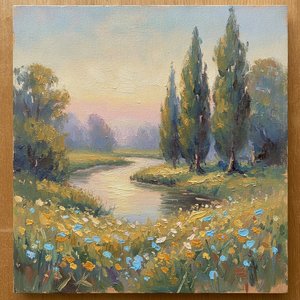
The Timeless Charm of Oil on Board: Reimagining Texture and Light through the Impressionist Lens
Discover the profound intimacy of oil on panel. Explore how Impressionist masters used rigid supports to capture light, texture, and impasto depth through exquisite, handmade oil reproductions for discerning collectors.

Olja på dukens bestående arv: Teknik, historia och samtida praktik
Utforska oljemåleriets rika historia och tekniker – från renässansens mästare till dagens konstnärer. Lär dig om material, metoder och konservering för att bevara konsten.

Olja på duk: En tidlös teknik – Historik, process och konstnärliga möjligheter
Utforska oljemålningskonsten! Lär dig om flamländsk teknik, materialval och historisk utveckling. Expertguider för både nybörjare och erfarna konstnärer – bevara dina målningar med bästa praxis.

The Enduring Legacy of Oil on Canvas: Technique, History & Aesthetic Impact
Explore the rich history & techniques of oil painting – from Renaissance masters to Impressionism. Discover pigments, layering methods, and why this timeless medium endures. Expert insights for artists & art enthusiasts.

