

 Förhandsvisa
 Skicka
 Dela
Dela
 Visa detaljer
 Guide
Guide

 Ladda ner
 Liknande objekt
 Röntgen
 Bildspel
 Statistik
Virgin And Child

 Visa mer
Handgjord oljereproduktion
Handmålad olja på duk i din valda storlek och ram, tillverkad efter beställning av våra konstnärer. ( Byt till tryck Byt till digital bild)




P118B Skr10

P118H Skr10

P118W Skr10

P438Z Skr10

P508JH Skr12

P508YH Skr12

P805H Skr10

P805Z Skr10

P919BZ Skr10

P919G Skr10

P919XJ Skr10

P959ZH Skr10

P968JZ Skr12

W106C Skr8

W218G Skr10

W218JH Skr8

W218Y Skr10

W307PJ Skr10

W316G Skr10

W316PJ Skr8

W316Y Skr10

W398PJ Skr8

W4111J Skr10

W500HY Skr15

W500JH Skr15

W692G Skr12

W849H Skr8

W940BG Skr15

W953PJ Skr8




Välj bland våra förinställda storlekar som motsvarar konstverkets ursprungliga proportioner.

Ange den bredd och höjd du behöver för att passa din ram eller din vägg. Eftersom detta är handmålat kan konstnären, vid ett annat format, måla lite mer runt bilden eller beskära den något – det är du som väljer. Vi skickar en digital mockup för godkännande innan målningen påbörjas. Bilden som visas på denna sida representerar inte det slutgiltiga resultatet — det är endast mockuppen som visar det.
Efter beställning kommer OriginalUniqueArt.com team att mejla kunden för instruktioner och tillhandahålla en skissförhandsvisning
Leverans över hela världen () på 3–4 veckor istället för standard 5 veckor. (25 oktober). Inga kompromisser med kvaliteten.

Fri expressfrakt över hela världen

Högkvalitativ linnecanvas

Fullständig fraktförsäkring

Garantier för återbetalning av tullavgifter

Garantier för exakt färgåtergivning

100 dagars returrätt (endast vid fel)

100% pengarna tillbaka-garanti

Mängdrabatt erbjuds
 Glasalternativet är endast tillgängligt i storlekar under 110 cm.

Virgin And Child
Reproduktionsmetod
Storlek på reproduktion
-


Slutgiltigt pris
Skr 2973
Konstnärsbiografi
The Shadow and the Light: The Life of Bartolomeo Cavarozzi
In the dramatic, sun-drenched corridors of the Italian Baroque, few names evoke the visceral tension of light and shadow quite like Bartolomeo Cavarozzi. Born in Viterbo in 1587, Cavarozzi emerged as a vital pulse within the Caravaggisti movement, a group of painters who sought to capture the raw, unvarnished truth of human existence through the revolutionary lens of Caravaggio. While history often casts him in the shadow of his mentors, Cavarozzi possessed a singular, luminous voice that allowed him to transcend mere imitation, carving out a legacy defined by both spiritual depth and an almost scientific precision in his observation of the natural world.
His artistic journey was deeply intertwined with the influence of Giovanni Battista Crescenzi, a Roman nobleman and mentor who provided Cavarozzi with more than just technical instruction. Under Crescenzi’s guidance, the young artist mastered the art of chiaroscary—the profound interplay between deep, enveloping darkness and piercing, sudden light. This training was not merely about technique; it was an education in emotion. Through this mastery, Cavarozzi learned to transform a canvas into a stage where divine grace and earthly reality collided, creating works that felt less like static images and more like captured breaths of time.
A Journey Across Borders: From Rome to Spain
Cavarozzi’s career was marked by a significant geographical and cultural expansion that helped spread the fervor of Caravaggism far beyond the borders of Italy. Alongside his master, Crescenzi, Cavarozzi participated in ambitious large-scale commissions, most notably the monumental work at the Escorial palace in Spain. This period of travel was transformative; as he moved through the Spanish courts, his ability to execute complex, high-pressure projects solidified his reputation as a formidable craftsman. His presence in Spain was instrumental in seeding the dramatic, tenebrist style into the Iberian Peninsula, leaving an indelible mark on the evolution of Spanish Baroque art.
This era of his life demonstrated a remarkable versatility. While he was capable of handling the grand scale of religious narratives, he also found profound beauty in the minute and the mundane. His development saw him moving between the epic and the intimate, a duality that defines much of his surviving oeuvre. Whether painting the celestial heights of a saint or the delicate dew on a piece of fruit, Cavarozzi maintained an unwavering commitment to tenebrism—the use of extreme contrasts to heighten the emotional stakes of his subjects.
The Art of Observation: Still Life and Sacred Narrative
One of the most enchanting aspects of Cavarozzi’s artistry lies in his ability to bridge the gap between the sacred and the scientific. In his celebrated still lifes, such as Grape Vines and Fruit, with Three Wagtails, we see an artist captivated by the intersection of art and natural science. These works are not merely decorative; they are exercises in intense, direct observation. He captured the textures of ripening fruit and the delicate plumage of birds with such startling realism that contemporary viewers might have felt the urge to reach out and touch them, much like the legendary Greek painter Zeuxis.
This meticulous attention to detail served a higher purpose when integrated into his religious compositions. In masterpieces like St Ursula and Her Companions with Pope Ciriacus and St Catherine of Alexandria, the physical reality of the world—the weight of fabric, the glow of skin, the ripeness of fruit—serves to anchor the divine within the human experience. His work often features:
- Divine Radiance: The use of a central, luminous light source to signify spiritual presence and grace.
- Emotional Realism: A focus on capturing fleeting, authentic human expressions that resonate with the viewer's own empathy.
- Naturalistic Detail: An integration of botanical and zoological accuracy that lends credibility to biblical scenes.
Though his life was tragically short, ending in 1625, Bartolomeo Cavarozzi left behind a body of work that continues to fascinate. He remains a vital link in the Baroque chain, an artist who took the revolutionary fire of Caravaggio and refined it into a sophisticated language of light, shadow, and profound, quiet beauty.

Bartolomeo Cavarozzi
1587 - 1625 , Italy
Kortfakta
- Full Name: Bartolomeo Cavarozzi
- Nationality: Italian
- Date Of Birth: 1587
- Date Of Death: 1625
- Place Of Birth: Viterbo, Italy
- Notable Artworks:
- St Ursula and Her Companions with Pope Ciriacus and St Catherine of Alexandria
- Grape Vines and Fruit, with Three Wagtails
- Basket of Fruit
- Saint Isidore
- St Philip Apostle
- St Benedict
- Presentation at the Temple
- Chapel of Calabresi Family
- Artistic Movement Or Style: Baroque
- Artists Who Influenced This Artist:
- Giovanni Battista Crescenzi
- Cristofano Roncalli
- Guercino
- Artists Or Movements Influenced By This Artist: ['Dutch Golden Age']
Relaterade artiklar

The Enduring Legacy of Oil on Canvas: Technique, History & Aesthetic Impact
Explore the rich history & techniques of oil painting – from Renaissance masters to Impressionism. Discover pigments, layering methods, and why this timeless medium endures. Expert insights for artists & art enthusiasts.

Olja på dukens bestående arv: Teknik, historia och samtida praktik
Utforska oljemåleriets rika historia och tekniker – från renässansens mästare till dagens konstnärer. Lär dig om material, metoder och konservering för att bevara konsten.
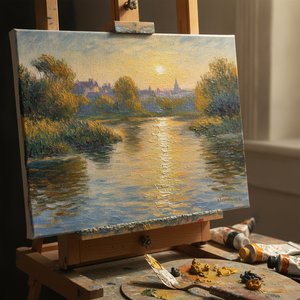
The Soul of Impressionism: Why Oil on Canvas Captures Eternal Light and Timeless Emotion
Discover the enchanting alchemy of Impressionism. Explore how the mastery of oil on canvas, through glazing and impasto, captures eternal light and emotion. Perfect for lovers of Monet and Van Gogh seeking the profound depth of hand-painted fine art.

Olja på duk: En tidlös teknik – Historik, process och konstnärliga möjligheter
Utforska oljemålningskonsten! Lär dig om flamländsk teknik, materialval och historisk utveckling. Expertguider för både nybörjare och erfarna konstnärer – bevara dina målningar med bästa praxis.
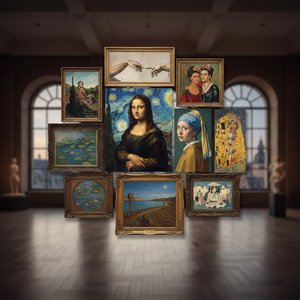
Topp 10 ikoniska oljemålningar som förändrade konsthistorien – OriginalUniqueArt.com
Utforska de 10 mest ikoniska oljemålningarna som revolutionerade konsthistorien! Lär känna Monet, Van Gogh och Da Vinci. Hitta inspiration & köp museumkvalitativa reproduktioner på OriginalUniqueArt.com – för en tidlös inredning.