

 Visa i rummet
 Skicka
 Dela
Dela
 Detaljer
 Studentguide för konstverk

 Ladda ner
 Liknande objekt
 Röntgen
 Bildspel
 Besökstatistik
Turning Forms


 Läs mer
Konstverket som visas på denna sida skyddas av upphovsrättslagen, vilket innebär att vi inte lagligt kan skapa eller sälja en identisk reproduktion. Detta skydd upprätthålls genom internationella avtal såsom den Bernkonventionen och genom nationella lagar, inklusive de som fastställs av Amerikansk upphovsrättslag – Titel 17. Alla rättigheter förbehållna. Återgivning av konstverk är förbjuden utan skriftligt tillstånd från WahooArt.
Denna metod följer fullt ut upphovsrättsliga regler eftersom den inte innebär kopiering eller duplicering av det skyddade konstverket. Istället är det en kreativ nytolkning – en ny målning som är influerad av originalet men inte identisk med det.
Giclée / Konsttryck
Giclée- eller canvasprint av museumskvalitet med snabb produktion och flexibla ytbehandlingsalternativ. ( Köp handmålat konstverk Byt till digital bildförsäljning)




P118B Skr10

P118H Skr10

P118W Skr10

P438Z Skr10

P508JH Skr12

P508YH Skr12

P805H Skr10

P805Z Skr10

P919BZ Skr10

P919G Skr10

P919XJ Skr10

P959ZH Skr10

P968JZ Skr12

W106C Skr8

W218G Skr10

W218JH Skr8

W218Y Skr10

W307PJ Skr10

W316G Skr10

W316PJ Skr8

W316Y Skr10

W398PJ Skr8

W4111J Skr10

W500HY Skr15

W500JH Skr15

W692G Skr12

W849H Skr8

W940BG Skr15

W953PJ Skr8




Välj bland våra förinställda storlekar som motsvarar konstverkets ursprungliga proportioner.

Ange den bredd och höjd du behöver, för att passa din ram eller din vägg. Ett tryck kan endast beskäras, aldrig göras större än bilden, vilket innebär att ett format med en annan formform leder till att en del av bilden går förlorad. Vi skickar en digital mockup för godkännande innan vi trycker något. Bilden som visas på denna sida visar inte den faktiska beskärningen — det är endast mockuppen som gör det.
Leverans över hela världen () på 2 veckor istället för standard 4/5 veckor. (21 oktober)

Fri expressfrakt över hela världen

Högkvalitativ linnecanvas

Fullständig fraktförsäkring

Garantier för återbetalning av tullavgifter

Garantier för exakt färgåtergivning

100 dagars returrätt vid fabrikationsfel

100% pengarna tillbaka-garanti

Mängdrabatt erbjuds
 Glasalternativet är endast tillgängligt i storlekar under 110 cm.

Turning Forms
Giclée / Konsttryck
Reproduktionsstorlek
-


Totalpris
Skr 787
Turning Form: A Meditation on Geometry and Emotion
Barbara Hepworth’s *Turning Form*, created in 1946 during her formative years in St Ives, represents more than just a sculptural exploration of geometric principles; it embodies a profound engagement with the natural world and a deeply felt response to its rhythms. This piece, housed within The Hepworth Wakefield's permanent collection, exemplifies Hepworth’s signature style—characterized by monumental forms that simultaneously convey stability and dynamism—a stylistic hallmark that cemented her place as one of Britain’s foremost modernist sculptors. The sculpture itself is deceptively simple: a circle bisected by a central yellow hue, enveloped in meticulously crafted white lines. These lines aren't merely decorative; they are integral to Hepworth’s technique – a method she termed “direct carving,” prioritizing the tactile experience of shaping raw material rather than relying on preparatory models. Hepworth painstakingly worked with Galway limestone, employing chisels and hammers to coax out the form from the stone itself, demonstrating an unwavering commitment to honoring the inherent qualities of the medium. The resulting surface is subtly textured, reflecting the artist’s deliberate manipulation of the stone's grain structure. Historically, *Turning Form* emerged during a period of significant artistic experimentation following World War II. Hepworth and her fellow artists in St Ives were grappling with new ideas about abstraction and how it could communicate complex emotions—a reaction to the trauma of conflict and a desire to express the beauty and vitality of the surrounding landscape. The circle, often interpreted as symbolizing wholeness and unity, juxtaposed against the radiating lines speaks to Hepworth’s fascination with movement and transformation – mirroring the ceaseless flux of nature itself. Beyond its formal considerations, *Turning Form* possesses an undeniable emotional resonance. Viewing it evokes a sense of contemplative stillness, punctuated by flashes of visual energy—a testament to Hepworth's ability to translate psychological states into sculptural form. The yellow hue at the center isn’t merely color; it represents warmth and luminosity, suggesting an inner radiance that contrasts with the coolness of the white lines. This interplay of hues underscores Hepworth’s belief in art’s capacity to convey intangible feelings—a conviction that continues to inspire artists and collectors alike.- Material: Galway Limestone
- Technique: Direct Carving
- Dimensions: Approximately 183 cm diameter
Frågor och svar
Vilket museum har originalet till "Turning Forms"?
Du kan se originalet av "Turning Forms" på The Hepworth Wakefield, Wakefield, Storbritannien.
Vilket format har "Turning Forms"?
"Turning Forms" av Barbara Hepworth har ett Porträttformat-format. Formatet beskriver kompositionens proportioner.
Vilken teknik användes för "Turning Forms" av Barbara Hepworth?
Mediet i "Turning Forms" av Barbara Hepworth är Akryl på duk. Reproduktionerna strävar efter att återge utseendet av denna teknik.
Om konstnären
Barbara Hepworth: Pioneer of Abstract Sculpture
Barbara Hepworth (1903–1975) stands as one of the most influential figures in twentieth-century British art, recognized for her groundbreaking contributions to modern sculpture and her unwavering dedication to exploring the relationship between form and space. Born Jocelyn Barbara Hepworth in Wakefield, Yorkshire, she possessed an innate fascination with natural forms—particularly pebbles and seashells—which would profoundly shape her artistic vision throughout her prolific career. Her formative years were marked by a deep connection to the rugged landscape of West Yorkshire, fostering a sensitivity for texture and materiality that would become central to her sculptural practice.- Early Influences: Hepworth’s artistic journey began with studies at Leeds School of Art in 1920, where she encountered Henry Moore, establishing a collaborative spirit that would endure throughout their lives. This formative period instilled in her an appreciation for geometric abstraction and the exploration of fundamental visual principles.
- Royal College of Art & Surrealism: Continuing her education at the Royal College of Art from 1921 until she graduated in 1924, Hepworth embraced the burgeoning avant-garde movement of Surrealism, collaborating with Ben Nicholson and Paul Nash. This exposure to surrealist ideas fueled her experimentation with unconventional materials and techniques.
The Unit One Movement & Early Sculptural Innovations
Hepworth’s artistic breakthrough arrived in 1933 with the formation of Unit One, alongside Nicholson, Nash, and others—a collective dedicated to uniting Surrealism and abstraction. This movement championed a radical departure from representational art, prioritizing pure form and exploring its inherent dynamism. Hepworth's early sculptures – notably *Oval Form* (Trezion) – exemplify this aesthetic ethos, characterized by smooth surfaces and subtly curving shapes that defy easy categorization.- Material Exploration: Hepworth’s mastery lay in her ability to transform raw materials—primarily stone and bronze—into evocative forms. She meticulously honed her craft, mastering techniques of carving and casting to achieve unparalleled precision and expressive power.
- Influence of Moore & Nicholson: Hepworth's artistic dialogue with Henry Moore and Ben Nicholson proved invaluable in shaping her aesthetic sensibilities. Their shared commitment to exploring the interplay between organic and geometric forms propelled her creative endeavors forward.
Mature Style & Monumental Commissions
Throughout the 1940s and 1950s, Hepworth’s sculptural output intensified, reflecting a deepening engagement with both landscape and human figure. Her distinctive style—characterized by concentric circles and voids—became synonymous with modern sculpture.- Landscape as Inspiration: Hepworth drew inspiration from the Yorkshire countryside, translating its contours and textures into monumental sculptures that captured the essence of natural forms. Pieces like *Two Forms* and *Totem* stand as testament to her ability to convey profound emotional resonance.
- Public Recognition & Legacy: Hepworth’s work garnered international acclaim, securing prestigious commissions—including Winged Figure for John Lewis—and cementing her place among the foremost sculptors of her time. Her enduring influence continues to inspire artists today.
The Hepworth Wakefield & Continuing Artistic Exploration
Today, Barbara Hepworth’s legacy resides prominently at The Hepworth Wakefield, where a comprehensive collection showcases her oeuvre—spanning from early explorations of abstraction to monumental sculptures that redefine the boundaries of artistic expression.- A Singular Vision: Hepworth's unwavering dedication to exploring form and space—coupled with her profound sensitivity for materials—established her as an unparalleled innovator in modern sculpture. Her work remains a beacon of creativity, inviting viewers to contemplate the fundamental questions of art and existence.

Barbara Hepworth
1903 - 1975 , Storbritannien
Snabbfakta
- Artistic Movement Or Style: Modernism
- Artists Or Movements Influenced By This Artist: ['Abstraction']
- Artists Who Influenced This Artist: ['Henry Moore']
- Date Of Birth: 10 januari 1903
- Full Name: Barbara Hepworth
- Nationality: Brittisk
- Notable Artworks:
- Oval Form
- Two Forms
- Totem
- Place Of Birth: Wakefield, England
Relaterade artiklar
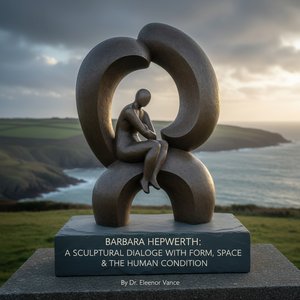
Barbara Hepworth: A Sculptural Dialogue with Form, Space & the Human Condition
Explore the profound world of Barbara Hepworth's sculpture. Discover her artistic evolution, iconic forms, and lasting influence on modern art. A guide for collectors & enthusiasts.

Kandinskys 25 Mästerverk: En Färgstark Resa i Abstrakt Konst | OriginalUniqueArt
Utforska Wassily Kandinskys 25 mest ikoniska verk – från expressionism till abstrakt konst. Lär känna historien bakom mästerverken och hitta inspiration för din heminredning med OriginalUniqueArt.com. Upptäck hela samlingen online!
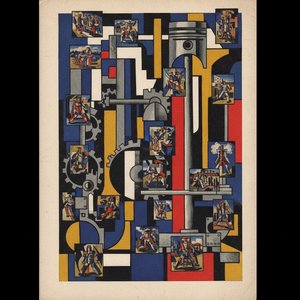
Fernand Léger: Topp 25 mästerverk – Modernismens färgstarka visionärer | OriginalUniqueArt
Utforska Fernand Légers 25 mest ikoniska målningar! Fördjupa dig i kubismens värld, maskinålderns färgstarka estetik och tidlösa konstverk. Köp reproduktioner av högsta kvalitet på OriginalUniqueArt.com – för din inredning.

Geometrisk Abstraktion: Topp 10 Mästverk som Formade Konsten | OriginalUniqueArt.com
Utforska de 10 mästerverk som definierade geometrisk abstraktion! Lär känna Mondrian, Kandinsky & Malevich. Hitta inspiration och museumskvalitativa konsttryck för ditt hem på OriginalUniqueArt.com. Upptäck hela samlingen online!

Beyond Form & Color: Geometric Abstraction's Evolution in 20th/21st Century Art
Explore the evolution of geometric abstraction from Cubism to contemporary art. Discover key artists like Malevich & Mondrian, investment insights, and expert collecting advice at OriginalUniqueArt.


