

 Skicka
 Dela
Dela
 Detaljer
 Studentguide för konstverk

 Ladda ner
 Liknande objekt
 Bildspel
 Besökstatistik
Pierced Hemisphere I
 Marble
- Sculpture
- Modernism
 1937
1937 35.0 x 38.0 cm
 The Hepworth Wakefield
 Läs mer
Konstverket som visas på denna sida skyddas av upphovsrättslagen, vilket innebär att vi inte lagligt kan skapa eller sälja en identisk reproduktion. Detta skydd upprätthålls genom internationella avtal såsom den Bernkonventionen och genom nationella lagar, inklusive de som fastställs av Amerikansk upphovsrättslag – Titel 17. Alla rättigheter förbehållna. Återgivning av konstverk är förbjuden utan skriftligt tillstånd från WahooArt.
Denna metod följer fullt ut upphovsrättsliga regler eftersom den inte innebär kopiering eller duplicering av det skyddade konstverket. Istället är det en kreativ nytolkning – en ny målning som är influerad av originalet men inte identisk med det.
Giclée / Konsttryck
Giclée- eller canvasprint av museumskvalitet med snabb produktion och flexibla ytbehandlingsalternativ. ( Köp handmålat konstverk Byt till digital bildförsäljning)




































Välj bland våra förinställda storlekar som motsvarar konstverkets ursprungliga proportioner.

Ange den bredd och höjd du behöver, för att passa din ram eller din vägg. Ett tryck kan endast beskäras, aldrig göras större än bilden, vilket innebär att ett format med en annan formform leder till att en del av bilden går förlorad. Vi skickar en digital mockup för godkännande innan vi trycker något. Bilden som visas på denna sida visar inte den faktiska beskärningen — det är endast mockuppen som gör det.
Leverans över hela världen () på 2 veckor istället för standard 4/5 veckor. (23 oktober)

Fri expressfrakt över hela världen

Högkvalitativ linnecanvas

Fullständig fraktförsäkring

Garantier för återbetalning av tullavgifter

Garantier för exakt färgåtergivning

100 dagars returrätt vid fabrikationsfel

100% pengarna tillbaka-garanti

Mängdrabatt erbjuds
 Glasalternativet är endast tillgängligt i storlekar under 110 cm.

Pierced Hemisphere I
Giclée / Konsttryck
Reproduktionsstorlek
-


Totalpris
Skr 793
A Fragmented Sphere: Barbara Hepworth’s Pierced Hemisphere I
Barbara Hepworth's "Pierced Hemisphere I," crafted in 1937 from pristine white marble, isn’t merely a sculpture; it’s an invitation to contemplate the delicate balance between wholeness and disruption. This arresting piece, currently housed at The Hepworth Wakefield, embodies the core tenets of Hepworth’s modernist approach – a profound exploration of form, texture, and the inherent dynamism within static materials. It speaks to a world grappling with change, mirroring both the beauty of natural processes and the unsettling implications of fragmentation.
The sculpture itself presents as a subtly distorted hemisphere, its surface punctuated by a decisive, almost violent, incision. This ‘piercing’ isn't destructive in the traditional sense; rather, it reveals an inner structure, suggesting a hidden geometry beneath the apparent solidity of the stone. The curve is not perfectly smooth – instead, it possesses a gentle undulation, hinting at movement and echoing the rhythms found in nature. The choice of white marble is crucial, lending an ethereal quality to the work. Marble’s inherent translucence allows light to penetrate and play across its surface, creating a shifting interplay of shadows that further emphasize the sculpture's three-dimensional form.
The Context of Modernism and Abstraction
To fully appreciate "Pierced Hemisphere I," it’s essential to situate it within the broader context of early 20th-century art. Hepworth, along with figures like Ben Nicholson and Paul Nash, was a pivotal member of the Unit One group – an avant-garde collective dedicated to forging a distinctly British approach to modernism. Unit One sought to move beyond representational art, embracing abstraction and exploring new ways of expressing form and space. This period witnessed a significant shift away from traditional sculptural techniques, with artists experimenting with materials like wood, metal, and, crucially for Hepworth, stone.
Hepworth’s work during this time was deeply influenced by the principles of Cubism and Constructivism – movements that emphasized geometric forms and explored the relationship between two-dimensional and three-dimensional space. However, she resisted rigid adherence to these styles, developing a uniquely personal language characterized by flowing lines, subtle curves, and an intuitive understanding of material properties. The influence of Surrealism is also evident in her exploration of subconscious imagery and the evocative power of abstract forms.
Symbolic Resonance: Wholeness and Disruption
The symbolism embedded within "Pierced Hemisphere I" is layered and open to interpretation. The hemisphere itself represents wholeness, a complete form – a symbol often associated with the cosmos or the human psyche. Yet, the incision disrupts this perfect unity, suggesting a loss of innocence, a confrontation with reality, or perhaps even an acknowledgement of inherent imperfection. It’s not simply a break; it's a revelation, exposing a new dimension within the original shape.
Some art historians have linked the pierced form to Hepworth’s personal experiences – her divorce and subsequent move to St Ives, where she found inspiration in the rugged Cornish coastline. The sculpture can be seen as a metaphor for navigating life's challenges, embracing both beauty and sorrow, and finding strength in resilience. The subtle variations in tone within the marble further contribute to this sense of complexity, mirroring the nuances of human emotion.
Craftsmanship and Technique
Hepworth’s mastery of her chosen medium – white marble – is undeniable. The sculpture demonstrates a remarkable sensitivity to material properties; she skillfully exploited the stone's natural veining and grain to create a surface that is both smooth and tactile. The precision of the incision itself speaks volumes about Hepworth’s technical skill, requiring immense control and an intimate understanding of how marble responds to tools.
The piece was created using traditional carving techniques, yet with a distinctly modern sensibility. The artist's hand is evident in the subtle imperfections and irregularities that add character and depth to the work. "Pierced Hemisphere I" stands as a testament to Hepworth’s ability to transform raw material into a powerful and enduring statement of artistic vision. It remains a compelling example of how sculpture can engage with fundamental questions about form, space, and the human condition.
Frågor och svar
Vilken kontrastnivå uppvisar "Pierced Hemisphere I" av Barbara Hepworth?
Kontrastnivån i "Pierced Hemisphere I" av Barbara Hepworth är Statement.
Är "Pierced Hemisphere I" av Barbara Hepworth en rekommenderad present, och till vem?
Presentrekommendationen för "Pierced Hemisphere I" av Barbara Hepworth kombinerar Birthday med Reflective.
Vilken färgharmoni uppvisar "Pierced Hemisphere I" av Barbara Hepworth?
Färgerna i "Pierced Hemisphere I" av Barbara Hepworth uppvisar en Balanced Harmony harmoni. Harmoni beskriver hur färgerna förhåller sig till varandra.
Om konstnären
Barbara Hepworth: Pioneer of Abstract Sculpture
Barbara Hepworth (1903–1975) stands as one of the most influential figures in twentieth-century British art, recognized for her groundbreaking contributions to modern sculpture and her unwavering dedication to exploring the relationship between form and space. Born Jocelyn Barbara Hepworth in Wakefield, Yorkshire, she possessed an innate fascination with natural forms—particularly pebbles and seashells—which would profoundly shape her artistic vision throughout her prolific career. Her formative years were marked by a deep connection to the rugged landscape of West Yorkshire, fostering a sensitivity for texture and materiality that would become central to her sculptural practice.- Early Influences: Hepworth’s artistic journey began with studies at Leeds School of Art in 1920, where she encountered Henry Moore, establishing a collaborative spirit that would endure throughout their lives. This formative period instilled in her an appreciation for geometric abstraction and the exploration of fundamental visual principles.
- Royal College of Art & Surrealism: Continuing her education at the Royal College of Art from 1921 until she graduated in 1924, Hepworth embraced the burgeoning avant-garde movement of Surrealism, collaborating with Ben Nicholson and Paul Nash. This exposure to surrealist ideas fueled her experimentation with unconventional materials and techniques.
The Unit One Movement & Early Sculptural Innovations
Hepworth’s artistic breakthrough arrived in 1933 with the formation of Unit One, alongside Nicholson, Nash, and others—a collective dedicated to uniting Surrealism and abstraction. This movement championed a radical departure from representational art, prioritizing pure form and exploring its inherent dynamism. Hepworth's early sculptures – notably *Oval Form* (Trezion) – exemplify this aesthetic ethos, characterized by smooth surfaces and subtly curving shapes that defy easy categorization.- Material Exploration: Hepworth’s mastery lay in her ability to transform raw materials—primarily stone and bronze—into evocative forms. She meticulously honed her craft, mastering techniques of carving and casting to achieve unparalleled precision and expressive power.
- Influence of Moore & Nicholson: Hepworth's artistic dialogue with Henry Moore and Ben Nicholson proved invaluable in shaping her aesthetic sensibilities. Their shared commitment to exploring the interplay between organic and geometric forms propelled her creative endeavors forward.
Mature Style & Monumental Commissions
Throughout the 1940s and 1950s, Hepworth’s sculptural output intensified, reflecting a deepening engagement with both landscape and human figure. Her distinctive style—characterized by concentric circles and voids—became synonymous with modern sculpture.- Landscape as Inspiration: Hepworth drew inspiration from the Yorkshire countryside, translating its contours and textures into monumental sculptures that captured the essence of natural forms. Pieces like *Two Forms* and *Totem* stand as testament to her ability to convey profound emotional resonance.
- Public Recognition & Legacy: Hepworth’s work garnered international acclaim, securing prestigious commissions—including Winged Figure for John Lewis—and cementing her place among the foremost sculptors of her time. Her enduring influence continues to inspire artists today.
The Hepworth Wakefield & Continuing Artistic Exploration
Today, Barbara Hepworth’s legacy resides prominently at The Hepworth Wakefield, where a comprehensive collection showcases her oeuvre—spanning from early explorations of abstraction to monumental sculptures that redefine the boundaries of artistic expression.- A Singular Vision: Hepworth's unwavering dedication to exploring form and space—coupled with her profound sensitivity for materials—established her as an unparalleled innovator in modern sculpture. Her work remains a beacon of creativity, inviting viewers to contemplate the fundamental questions of art and existence.

Barbara Hepworth
1903 - 1975 , Storbritannien
Snabbfakta
- Artistic Movement Or Style: Modernism
- Artists Or Movements Influenced By This Artist: ['Abstraction']
- Artists Who Influenced This Artist: ['Henry Moore']
- Date Of Birth: 10 januari 1903
- Full Name: Barbara Hepworth
- Nationality: Brittisk
- Notable Artworks:
- Oval Form
- Two Forms
- Totem
- Place Of Birth: Wakefield, England
Relaterade artiklar

Bronsålderns Mästerverk: 10 Skulpturer Som Förändrade Konsthistorien | OriginalUniqueArt
Upptäck 10 legendariska brons skulpturer som revolutionerade konsthistorien! Lär känna Rodin, Michelangelo och andra mästare. Köp museumkvalitativa repliker & hitta inspiration för din inredning på OriginalUniqueArt.com.

The Enduring Form: Sculpture Across History, Technique & Emotional Resonance
Explore the rich history of sculpture with OriginalUniqueArt. Discover key techniques, influential artists & investment potential for discerning collectors. Expert insights into valuing and collecting timeless masterpieces.
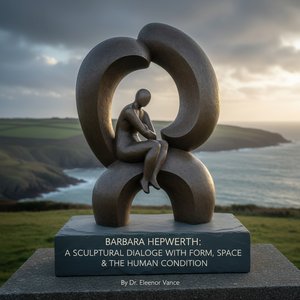
Barbara Hepworth: A Sculptural Dialogue with Form, Space & the Human Condition
Explore the profound world of Barbara Hepworth's sculpture. Discover her artistic evolution, iconic forms, and lasting influence on modern art. A guide for collectors & enthusiasts.

Geometrisk Abstraktion: Topp 10 Mästverk som Formade Konsten | OriginalUniqueArt.com
Utforska de 10 mästerverk som definierade geometrisk abstraktion! Lär känna Mondrian, Kandinsky & Malevich. Hitta inspiration och museumskvalitativa konsttryck för ditt hem på OriginalUniqueArt.com. Upptäck hela samlingen online!

The Enduring Allure of Marble in Art History: From Classical Sculpture to Modern Abstraction
Explore the captivating history of marble sculpture from ancient Greece to modern art. Discover renowned artists like Canova & Michelangelo, carving techniques, and investment insights at OriginalUniqueArt.


