

 Skicka
 Dela
Dela
 Visa detaljer

 Ladda ner
 Liknande objekt
 Bildspel
 Statistik
Mother and Child
 Stone
Stone- Sculpture
- Modern Sculpture
 26.0 x 31.0 cm
 The Hepworth Wakefield
 Visa mer
Handgjord oljereproduktion
Handmålad olja på duk i din valda storlek och ram, tillverkad efter beställning av våra konstnärer. ( Byt till tryck Byt till digital bild)




































Välj bland våra förinställda storlekar som motsvarar konstverkets ursprungliga proportioner.

Du kan ange egna mått för att passa en specifik ram eller yta. Om den valda storleken inte matchar originalbildens proportioner kommer vi antingen att beskära konstverket eller utöka målningen med ytterligare handmålade element. En digital skiss skickas till dig för godkännande innan produktionen påbörjas.
Observera att förhandsvisningen på skärmen inte återspeglar den faktiska beskärningen eller utökningen. Endast skissen visar den slutgiltiga kompositionen korrekt.
Även om anpassade storlekar är möjliga, rekommenderar vi att du väljer en dimension från den fördefinierade listan för att bevara originalproportionerna.
Efter beställning kommer OriginalUniqueArt.com team att mejla kunden för instruktioner och tillhandahålla en skissförhandsvisning
Leverans över hela världen () på 3–4 veckor istället för standard 5 veckor. (13 september). Inga kompromisser med kvaliteten.

Fri expressfrakt över hela världen

Högkvalitativ linnecanvas

Fullständig fraktförsäkring

Garantier för återbetalning av tullavgifter

Garantier för exakt färgåtergivning

100 dagars returrätt (endast vid defekter)

100% pengarna tillbaka-garanti

Mängdrabatt erbjuds
 Glasalternativet är endast tillgängligt i storlekar under 110 cm.

Mother and Child
Reproduktionsmedium
Storlek på reproduktion
-


Slutgiltigt pris
$ 300
Barbara Hepworth’s “Mother and Child”: A Sculptural Embrace of Form and Emotion
Dame Barbara Hepworth's "Mother and Child," crafted in 1934 from delicately veined pink Ancaster stone, transcends the simple depiction of familial connection. It’s a profoundly moving sculpture that embodies Hepworth’s signature approach – a masterful blend of abstraction and deeply felt human experience. This piece, currently residing within The Hepworth Wakefield's collection, offers a captivating glimpse into her artistic evolution and her enduring fascination with the interplay between form, space, and the emotional core of existence.
Hepworth’s decision to separate the child from the mother’s body is central to the sculpture’s power. Rather than presenting a unified whole, she fragments the image, creating two distinct yet inextricably linked forms. The mother figure, subtly implied through the larger, more substantial stone mass, possesses a sense of grounded stability and quiet strength. The child, rendered as a smooth, rounded pebble – almost an embryonic form – emerges from this base, suggesting nascent life and potential. This deliberate division isn’t one of separation but rather of becoming; the child is not simply *apart* from the mother, but actively emerging *from* her, embodying growth and independence within a continuous lineage.
The Language of Stone: Technique and Materiality
Hepworth's skill lay in her intimate understanding of stone. She didn’t merely carve; she coaxed form from the material, employing a subtractive technique that revealed the inherent qualities of the Ancaster stone itself. The surface is remarkably smooth, achieved through meticulous grinding and polishing – a process that emphasizes the tactile nature of the sculpture and invites viewers to trace its contours with their eyes. The subtle variations in color and texture within the stone contribute to the work’s organic quality, suggesting a connection to the earth and the natural world.
Notably, the two forms are created from the same block of stone, highlighting Hepworth's belief that all materials possess inherent potential for artistic expression. The careful consideration given to the selection and preparation of the stone is evident in every curve and plane, underscoring her commitment to a deeply meditative process.
A Reflection of the Artist’s Life and Times
"Mother and Child" was created during a pivotal period in Hepworth's life – shortly before she gave birth to her triplets. This personal experience undoubtedly informed the sculpture’s themes of creation, nurturing, and the complex dynamics of family relationships. It also reflects the broader artistic currents of the time, particularly the influence of Abstraction-Création, a movement that sought to move beyond representational art towards a more purely expressive form.
The sculpture's creation coincided with Hepworth’s relocation to St Ives in Cornwall, a haven for artists seeking inspiration and escape from the turmoil of wartime Britain. The rugged Cornish landscape, with its dramatic cliffs and windswept beaches, profoundly influenced her work, fostering a sense of connection to nature and a fascination with elemental forms.
Symbolism and Emotional Resonance
Beyond its formal qualities, “Mother and Child” resonates deeply on an emotional level. It speaks to the enduring power of maternal love, the promise of new life, and the cyclical nature of existence. The smooth, rounded form of the child evokes a sense of vulnerability and innocence, while the solidity of the mother figure suggests protection and strength. The sculpture’s ambiguity – its refusal to offer a definitive narrative – invites viewers to project their own experiences and emotions onto the work.
Whether viewed as a celebration of family bonds or a meditation on birth and creation, “Mother and Child” remains a testament to Barbara Hepworth's extraordinary artistic vision and her ability to capture the essence of human experience through the timeless medium of stone. It’s a sculpture that continues to move and inspire, offering a profound glimpse into the heart of art and life itself.
Konstnärsbiografi
Barbara Hepworth: Pioneer of Abstract Sculpture
Barbara Hepworth (1903–1975) stands as one of the most influential figures in twentieth-century British art, recognized for her groundbreaking contributions to modern sculpture and her unwavering dedication to exploring the relationship between form and space. Born Jocelyn Barbara Hepworth in Wakefield, Yorkshire, she possessed an innate fascination with natural forms—particularly pebbles and seashells—which would profoundly shape her artistic vision throughout her prolific career. Her formative years were marked by a deep connection to the rugged landscape of West Yorkshire, fostering a sensitivity for texture and materiality that would become central to her sculptural practice.- Early Influences: Hepworth’s artistic journey began with studies at Leeds School of Art in 1920, where she encountered Henry Moore, establishing a collaborative spirit that would endure throughout their lives. This formative period instilled in her an appreciation for geometric abstraction and the exploration of fundamental visual principles.
- Royal College of Art & Surrealism: Continuing her education at the Royal College of Art from 1921 until she graduated in 1924, Hepworth embraced the burgeoning avant-garde movement of Surrealism, collaborating with Ben Nicholson and Paul Nash. This exposure to surrealist ideas fueled her experimentation with unconventional materials and techniques.
The Unit One Movement & Early Sculptural Innovations
Hepworth’s artistic breakthrough arrived in 1933 with the formation of Unit One, alongside Nicholson, Nash, and others—a collective dedicated to uniting Surrealism and abstraction. This movement championed a radical departure from representational art, prioritizing pure form and exploring its inherent dynamism. Hepworth's early sculptures – notably *Oval Form* (Trezion) – exemplify this aesthetic ethos, characterized by smooth surfaces and subtly curving shapes that defy easy categorization.- Material Exploration: Hepworth’s mastery lay in her ability to transform raw materials—primarily stone and bronze—into evocative forms. She meticulously honed her craft, mastering techniques of carving and casting to achieve unparalleled precision and expressive power.
- Influence of Moore & Nicholson: Hepworth's artistic dialogue with Henry Moore and Ben Nicholson proved invaluable in shaping her aesthetic sensibilities. Their shared commitment to exploring the interplay between organic and geometric forms propelled her creative endeavors forward.
Mature Style & Monumental Commissions
Throughout the 1940s and 1950s, Hepworth’s sculptural output intensified, reflecting a deepening engagement with both landscape and human figure. Her distinctive style—characterized by concentric circles and voids—became synonymous with modern sculpture.- Landscape as Inspiration: Hepworth drew inspiration from the Yorkshire countryside, translating its contours and textures into monumental sculptures that captured the essence of natural forms. Pieces like *Two Forms* and *Totem* stand as testament to her ability to convey profound emotional resonance.
- Public Recognition & Legacy: Hepworth’s work garnered international acclaim, securing prestigious commissions—including Winged Figure for John Lewis—and cementing her place among the foremost sculptors of her time. Her enduring influence continues to inspire artists today.
The Hepworth Wakefield & Continuing Artistic Exploration
Today, Barbara Hepworth’s legacy resides prominently at The Hepworth Wakefield, where a comprehensive collection showcases her oeuvre—spanning from early explorations of abstraction to monumental sculptures that redefine the boundaries of artistic expression.- A Singular Vision: Hepworth's unwavering dedication to exploring form and space—coupled with her profound sensitivity for materials—established her as an unparalleled innovator in modern sculpture. Her work remains a beacon of creativity, inviting viewers to contemplate the fundamental questions of art and existence.

Barbara Hepworth
1903 - 1975 , Storbritannien
Kortfakta
- Artistic Movement Or Style: Modernism
- Artists Or Movements Influenced By This Artist: ['Abstraction']
- Artists Who Influenced This Artist: ['Henry Moore']
- Date Of Birth: 10 januari 1903
- Full Name: Barbara Hepworth
- Nationality: Brittisk
- Notable Artworks:
- Oval Form
- Two Forms
- Totem
- Place Of Birth: Wakefield, England
Relaterade artiklar

The Enduring Form: Exploring Themes & Techniques in Sculpture Across Historical Periods
Explore the rich history of sculpture from ancient masterpieces to contemporary innovations. Discover key techniques, influential artists & investment potential for discerning art collectors.
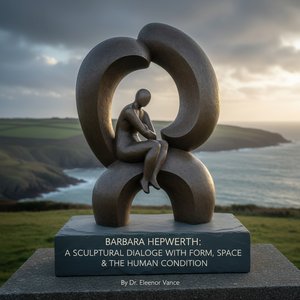
Barbara Hepworth: A Sculptural Dialogue with Form, Space & the Human Condition
Explore the profound world of Barbara Hepworth's sculpture. Discover her artistic evolution, iconic forms, and lasting influence on modern art. A guide for collectors & enthusiasts.

Bronsålderns Mästerverk: 10 Skulpturer Som Förändrade Konsthistorien | OriginalUniqueArt
Upptäck 10 legendariska brons skulpturer som revolutionerade konsthistorien! Lär känna Rodin, Michelangelo och andra mästare. Köp museumkvalitativa repliker & hitta inspiration för din inredning på OriginalUniqueArt.com.

10 Bronsskulpturer Som Förändrade Konsthistorien – Upptäck Mästerverken
Utforska 10 legendariska bronsmästerverk som revolutionerade konsten! Lär känna Michelangelo, Rodin och andra ikoniska skulptörer. Hitta inspiration & museumskvalitativa konsttryck på OriginalUniqueArt.com – för en tidlös inredning.

The Enduring Form: Sculpture Across History, Technique & Emotional Resonance
Explore the rich history of sculpture with OriginalUniqueArt. Discover key techniques, influential artists & investment potential for discerning collectors. Expert insights into valuing and collecting timeless masterpieces.


