

 Visa i rummet
 Skicka
 Dela
Dela
 Detaljer
 Studentguide för konstverk

 Ladda ner
 Liknande objekt
 Röntgen
 Bildspel
 Besökstatistik
Critic I
 Oil On Panel
- Expressionism
 1910
1910- 19th Century
 31.0 x 45.0 cm
 Arnold Schönberg Center
 Läs mer
Giclée / Konsttryck
Giclée- eller canvasprint av museumskvalitet med snabb produktion och flexibla ytbehandlingsalternativ. ( Köp handmålat konstverk Byt till digital bildförsäljning)




P118B Skr10

P118H Skr10

P118W Skr10

P438Z Skr10

P508JH Skr12

P508YH Skr12

P805H Skr10

P805Z Skr10

P919BZ Skr10

P919G Skr10

P919XJ Skr10

P959ZH Skr10

P968JZ Skr12

W106C Skr8

W218G Skr10

W218JH Skr8

W218Y Skr10

W307PJ Skr10

W316G Skr10

W316PJ Skr8

W316Y Skr10

W398PJ Skr8

W4111J Skr10

W500HY Skr15

W500JH Skr15

W692G Skr12

W849H Skr8

W940BG Skr15

W953PJ Skr8




Välj bland våra förinställda storlekar som motsvarar konstverkets ursprungliga proportioner.

Ange den bredd och höjd du behöver, för att passa din ram eller din vägg. Ett tryck kan endast beskäras, aldrig göras större än bilden, vilket innebär att ett format med en annan formform leder till att en del av bilden går förlorad. Vi skickar en digital mockup för godkännande innan vi trycker något. Bilden som visas på denna sida visar inte den faktiska beskärningen — det är endast mockuppen som gör det.
Leverans över hela världen () på 2 veckor istället för standard 4/5 veckor. (21 oktober)

Fri expressfrakt över hela världen

Högkvalitativ linnecanvas

Fullständig fraktförsäkring

Garantier för återbetalning av tullavgifter

Garantier för exakt färgåtergivning

100 dagars returrätt vid fabrikationsfel

100% pengarna tillbaka-garanti

Mängdrabatt erbjuds
 Glasalternativet är endast tillgängligt i storlekar under 110 cm.

Critic I
Giclée / Konsttryck
Reproduktionsstorlek
-


Totalpris
Skr 787
A Portrait of Disquiet: Examining Schoenberg’s “Critic I”
Arnold Schoenberg's "Critic I," painted in 1910, is not merely a portrait; it’s a visceral embodiment of the anxieties and intellectual rigor that defined one of music’s most revolutionary figures. Measuring a modest 31 x 45 cm on oil panel, this arresting image – often dubbed “Critic I” due to its unsettling depiction – transcends simple representation, offering a glimpse into the mind grappling with the very nature of artistic interpretation and judgment. The painting depicts a strikingly rendered face, dominated by a dense beard and an expression that oscillates between contemplation and something akin to demonic intensity. This deliberate distortion, far from being a stylistic flourish, speaks directly to Schönberg’s own philosophical concerns articulated in his essay, “About Music Criticism,” where he argues that artistic perception is fundamentally subjective, shaped by the listener's unconscious biases and imaginative capacity.
- The Artist’s Intention: Schoenberg, a pivotal figure in the development of atonality and serialism, was deeply invested in questioning established aesthetic norms. “Critic I” can be interpreted as a self-portrait reflecting this intellectual struggle – a confrontation with the limitations of conventional judgment and the inherent subjectivity of artistic experience.
- Technical Mastery: Executed in oil on panel, the painting demonstrates Schoenberg’s meticulous attention to detail and his command of chiaroscuro. The dramatic lighting emphasizes the contours of the face, intensifying the sense of unease and highlighting the subject's perceived scrutiny.
A Window into Viennese Modernism
"Critic I" was created during a period of immense artistic ferment in Vienna – the early 20th century. Schoenberg’s work aligned with the broader currents of Expressionism and Cubism, movements that challenged traditional representational forms and sought to convey inner emotional states through fragmented imagery and distorted perspectives. The painting's unsettling quality reflects the intellectual turbulence of the time, a period marked by rapid scientific advancements, social upheaval, and a growing questioning of established values. The work’s creation coincided with Schoenberg’s pivotal compositional achievements – including “Verklärte Nacht” and “Erwartung” – solidifying his position as a leading voice in the Second Viennese School alongside Alban Berg and Anton Webern.
Symbolism and Emotional Resonance
The painting's symbolism is deliberately ambiguous, contributing to its enduring power. The beard, often associated with wisdom and authority, here seems to mask rather than reveal. The intense gaze suggests a critical eye, perhaps reflecting Schoenberg’s own rigorous self-examination of musical theory and composition. Schönberg himself described the artwork as “dispensing warmth,” suggesting an attempt to imbue his work with emotional resonance despite its challenging nature. The overall effect is one of profound introspection – a portrait not just of a man, but of a mind wrestling with complex ideas about art, perception, and judgment.
Provenance and Significance
"Critic I" currently resides at the Arnold Schönberg Center in Vienna, Austria, a testament to its historical significance. Its creation in 1910, just as Schoenberg was establishing his revolutionary musical theories, underscores its importance within the trajectory of modern music. This hand-painted reproduction offers an unparalleled opportunity to own a piece of art history – a tangible connection to one of the most influential composers of the 20th century and a powerful meditation on the very nature of artistic interpretation.
Frågor och svar
Vilken användning och vilken yta rekommenderas för "Critic I" av Arnold Schönberg?
Användning (Statement) och utrymme (Office) är de två rekommendationerna för "Critic I" av Arnold Schönberg.
Vilken teknik användes för "Critic I" och när skapades den?
"Critic I" skapades år 1910 med tekniken Oil On Panel. Material och datum beskriver hur och när originalet tillverkades.
Vilken storlek och orientering rekommenderas för ett tryck av "Critic I" av Arnold Schönberg?
För "Critic I" är den rekommenderade tryckinställningen storleken Large med Portrait orientering.
Om konstnären
tidigt liv och musikaliska början
arnold schoenberg, en österrikisk-amerikansk kompositör, föddes den 13 september 1874 i Wien, Österrike. Hans tidiga liv präglades av enkla förhållanden, med en far som var skomakare. Trots detta ledde schoenbergs inneboende passion för musiken till att han i hög grad blev självlärd inom området.musikalisk utveckling och betydande verk
Schoenbergs tidiga verk, såsom verklärte nacht (1899), uppvisade en syntes av brahmsianska och wagnerianska element. Allt eftersom han utvecklades blev han den centrala gestalten inom den andra wienska skolan, tillsammans med anton webern och alban berg. Hans kompositioner, däribland stråkkvartett nr 2 (1907–1908), erwartung (1909) och pierrot lunaire (1912), exemplifierade hans innovativa ansats till atonalitet.undervisning, emigration och senare liv
Schoenberg lämnade den preussiska konstakademin 1933 på grund av nazisternas maktövertagande, som stämplade hans musik som "urartad". Han undervisade därefter i USA, bland annat vid University of California, Los Angeles (1936–1944), där lokaler är uppkallade efter honom till hans ära. [https://OriginalUniqueArt.com/@/arnold-scherichia](upptäck mer om schoenbergs liv och verk på OriginalUniqueArt).- Schoenberg utforskade filmmusik och skrev mer tonal musik, vilket kulminerade i hans kammarsymfoni nr 2 år 1939.
- Han satiriserade fascistiska tyranner i ode till napoleon (1942), inspirerad av Byron.
- Efterkrigstidens Wien erbjöd honom hedersmedborgarskap, men han var sjuk, vilket skildras i hans stråktrio (1946).
arv och inflytande
När världen fick veta om förintelsen, minnesförgjorde schoenberg dess offer i en överlevande från warszawa (1947). Israel Conservatory and Academy of Music valde honom till hederspresident 1951. [https://OriginalUniqueArt.com/@@/a@d3bqc7-the-museum-destroyed-by-fire-(united-states)](lär dig mer om hans verks betydelse på OriginalUniqueArt). viktiga punkter:- Schoenbergs innovativa musik var bland de mest inflytelserika och kontroversiella inom 1900-talets klassiska musik.
- Minst tre generationer av kompositörer har vidareutvecklat dess formella principer.
- Hans estetiska och musikhistoriska vyer påverkade musikologerna Theodor W. Adorno och Carl Dahlhaus.

Arnold Schönberg
1874 - 1951 , Österrike
Snabbfakta
- Artistic Movement Or Style: Tolvtonsteknik; Expressionism
- Artists Or Movements Influenced By This Artist:
- Anton Webern
- Alban Berg
- Artists Who Influenced This Artist:
- Johannes Brahms
- Richard Wagner
- Date Of Birth: 13 september 1874
- Date Of Death: 1951
- Full Name: Arnold Schoenberg
- Nationality: Österrikisk-amerikan
- Notable Artworks:
- Suite, op. 29
- Music Typewriter
- Staffliner
- Place Of Birth: Wien, Österrike
Relaterade artiklar
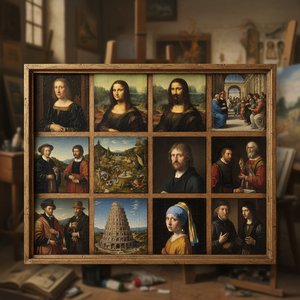
Topp 10 legendariska oljemålningar på panel som förändrade konsten – OriginalUniqueArt.com
Utforska de 10 mest legendariska oljemålningarna på panel som revolutionerade konsten! Lär känna mästerverk från renässans till impressionism. Hitta inspiration & köp museumkvalitets konsttryck hos OriginalUniqueArt.com – din källa för tidlös skönhet.

Mastering the Surface: The Timeless Elegance and Technical Brilliance of Oil on Panel Painting
Discover the enduring allure of oil on panel painting. Explore the technical mastery, historical significance, and luminous depth that define this prestigious medium, from Renaissance masters to modern fine art reproductions for discerning collectors.
Mastering the Surface: A Historical and Technical Guide to the Art of Oil on Panel Painting
Explore the profound history and technical brilliance of oil on panel painting. From Renaissance masters to modern techniques, discover why this rigid support offers unparalleled precision and permanence for fine art lovers and collectors.
Oil on Panel: A Historical Survey of Technique, Support & Aesthetic Evolution
Explore the rich history of oil on panel painting! Discover Renaissance techniques, support structures & aesthetic evolution. Expert insights for art collectors and enthusiasts.
Oil on Panel: A Historical Survey of Technique, Support, and Aesthetic Impact
Explore the rich history of oil on panel painting! Discover Renaissance techniques, support construction, & the enduring legacy of this masterful art form. Expert insights for collectors and enthusiasts.


