- Hem

- Reproduktion av oljemålning
- Antonio Begarelli
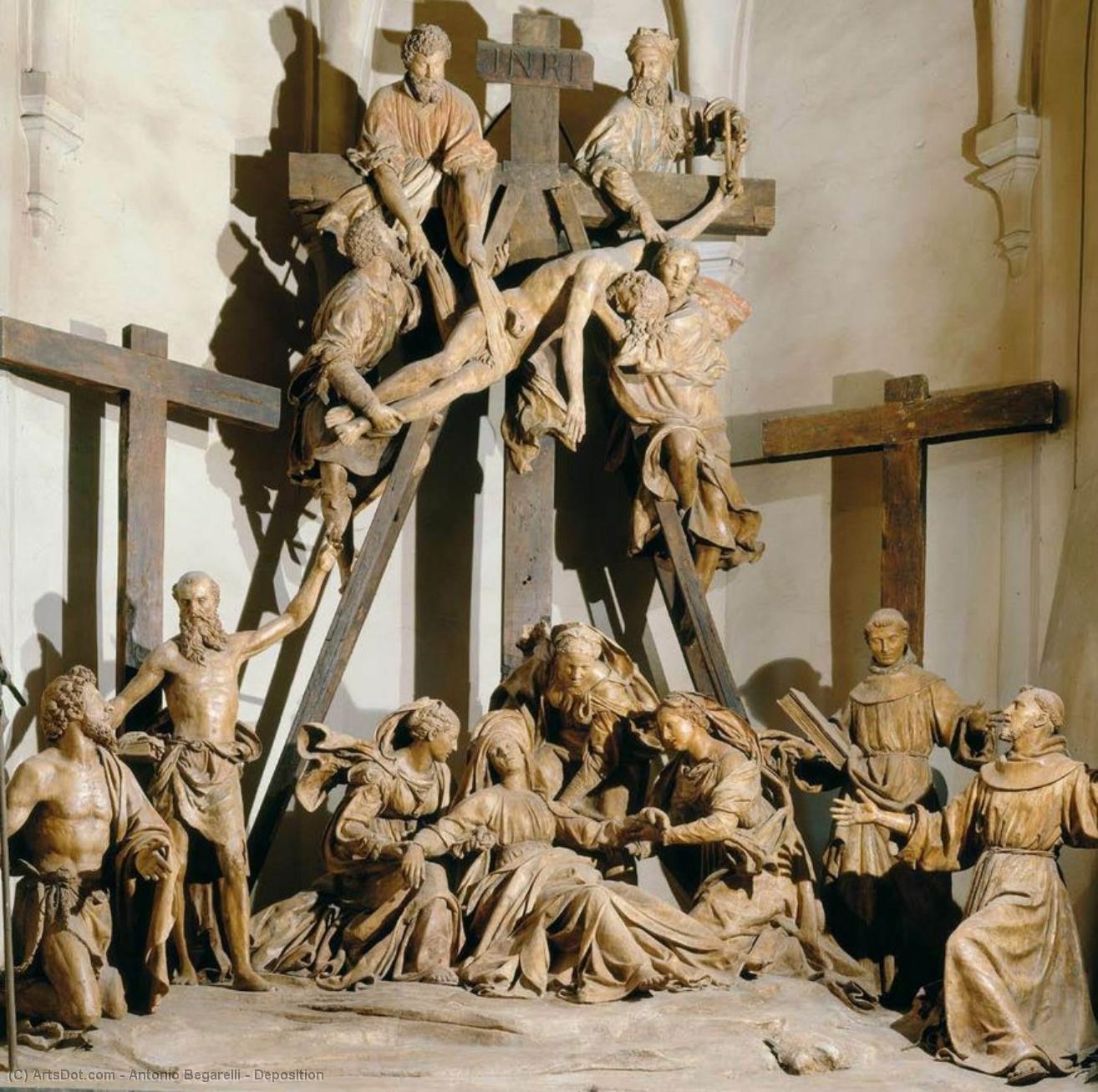
- Deposition
 Köp tryck Köp högupplöst digital bild
 Skicka
 Dela
Dela
 Visa detaljer
 Lägg till i favoriter

 Ladda ner
 Liknande objekt
 Röntgen
 Bildspel
Deposition


 Visa mer
Handgjord oljereproduktion
Handmålad olja på duk i din valda storlek och ram, tillverkad efter beställning av våra konstnärer.




































Välj bland våra förinställda storlekar som motsvarar konstverkets ursprungliga proportioner.

Du kan ange egna mått för att passa en specifik ram eller yta. Om den valda storleken inte matchar originalbildens proportioner kommer vi antingen att beskära konstverket eller utöka målningen med ytterligare handmålade element. En digital skiss skickas till dig för godkännande innan produktionen påbörjas.
Observera att förhandsvisningen på skärmen inte återspeglar den faktiska beskärningen eller utökningen. Endast skissen visar den slutgiltiga kompositionen korrekt.
Även om anpassade storlekar är möjliga, rekommenderar vi att du väljer en dimension från den fördefinierade listan för att bevara originalproportionerna.
Efter beställning kommer OriginalUniqueArt.com team att mejla kunden för instruktioner och tillhandahålla en skissförhandsvisning
Leverans över hela världen () på 3–4 veckor istället för standard 5 veckor. (22 juli). Inga kompromisser med kvaliteten.

Fri expressfrakt över hela världen

Högkvalitativ linnecanvas

Fullständig fraktförsäkring

Garantier för återbetalning av tullavgifter

Garantier för exakt färgåtergivning

60 dagars returrätt (endast vid fabrikationsfel)

100% pengarna tillbaka-garanti

Mängdrabatt erbjuds
 Glasalternativet är endast tillgängligt i storlekar under 110 cm.

Deposition
Teknik för reproduktion
Storlek på reproduktion
-


Slutgiltigt pris
-
Konstnärsbiografi
Antonio Begarelli: The Sculptor Who Replaced Paint
Antonio Begarelli (c. 1499 – 1565) stands as a singular figure in the artistic landscape of Renaissance Italy, particularly renowned for his pioneering approach to sculptural decoration—a deliberate substitution of painted panels with terracotta reliefs that fundamentally altered the aesthetic sensibilities of his time. Born in Modena, he emerged from the workshop of Giovanni dell’Abbate, Niccolò’s father, absorbing influences from the burgeoning realism championed by artists like Guido Mazzoni II Modanino. This stylistic shift marked a decisive break from prevailing conventions and cemented Begarelli's place as an innovator.- Early Life & Training: Begarelli’s formative years were spent honing his craft under Giovanni dell’Abbate, immersing himself in the artistic currents of Modena during a period characterized by fervent religious fervor.
- Modena Workshops: He established himself as a dominant sculptor in Modena, collaborating extensively with Mazzoni II Modanino and transforming churches throughout the region into spaces adorned with terracotta sculptures—a revolutionary technique that prioritized textural richness and sculptural presence over illusionistic color.
- Parma Patronage & Correggio Connection: Begarelli’s reputation extended beyond Modena when he secured commissions from Parma’s aristocratic elite, furthering his artistic explorations. While speculation persists regarding a connection between Begarelli and Raphael (Correggio), scholarly consensus suggests their stylistic differences—Begarelli favoring earthy tones and monumental scale—demonstrate distinct artistic trajectories.
A Unique Sculptural Style: Terra Cotta & Marble Illusion
Begarelli’s distinctive style distinguished him from his contemporaries, notably Correggio. Unlike Correggio's ethereal frescoes employing sfumato techniques to create atmospheric depth and illusionistic perspective, Begarelli opted for terracotta—a readily available material—to achieve a strikingly realistic effect. He skillfully employed white pigment to mimic the appearance of marble, elevating the sculptural reliefs to levels of grandeur and sophistication previously unattainable through painting alone. Giorgio Vasari famously remarked that Michelangelo considered Begarelli’s terracotta sculptures “most excellent productions,” highlighting their impact on artistic discourse.- Material Choice: The deliberate use of terracotta contrasted sharply with Correggio's mastery of fresco, emphasizing sculptural form and texture over optical illusion.
- Color Palette: Begarelli favored a monochrome palette—primarily white—creating an impression of marble luminosity that captivated viewers and established a new standard for decorative sculpture.
Influences & Legacy
Begarelli’s artistic sensibilities were profoundly shaped by Benvenuto Tisi da Caravaggio, whose dramatic chiaroscuro style mirrored Begarelli's commitment to conveying emotion through sculptural form. Vasari noted that Michelangelo admired Begarelli’s sculptures for their ability to evoke profound feelings—a testament to the sculptor’s mastery of expressive technique. His pupils included Alberto Fontana and Niccolò dell’Abbate, ensuring the continuation of his innovative approach to terracotta sculpture.- Caravaggio Influence: Begarelli's style reflects Caravaggio's emphasis on dramatic lighting and emotional intensity—a stylistic convergence that underscores the shared artistic vision of their era.
Notable Works & Recognition
Begarelli’s enduring legacy resides in his monumental terracotta sculptures adorning churches throughout Modena and Parma, particularly “Deposition” (1530) and “Altar Group,” which exemplify the pinnacle of Renaissance sculptural achievement. His contribution to artistic history is undeniable—he ushered in a transformative era where sculpture supplanted painting as the dominant medium for religious decoration, forever altering the visual culture of his time.
Antonio Begarelli
1490 - 1565 , Italy
Kortfattad information
- Artistic Movement Or Style: Late Renaissance
- Artists Or Movements Influenced By This Artist: ['Benvenuto Tisi']
- Artists Who Influenced This Artist: ['Guido Mazzoni']
- Date Of Birth: ca. 1499
- Date Of Death: 1565
- Full Name: Antonio Begarelli
- Nationality: Italian
- Notable Artworks:
- Deposition
- Altar Group
- Madonna del Latte
- Place Of Birth: Modena, Italy
Relaterade artiklar

The Renaissance Reimagined: Art, Humanism & Cultural Transformation (14th–16th Centuries)
Explore the Renaissance! Discover key artists like Leonardo & Michelangelo, the rise of Humanism, and groundbreaking techniques such as chiaroscuro. A comprehensive guide for art enthusiasts.

The Enduring Allure of Marble in Art History: From Classical Sculpture to Modern Abstraction
Explore the captivating history of marble sculpture from ancient Greece to modern art. Discover renowned artists like Canova & Michelangelo, carving techniques, and investment insights at OriginalUniqueArt.

Antonio Canova: Neoclassical Sculpture & the Pursuit of Emotional Perfection
Explore the life & art of Antonio Canova, the greatest Neoclassical sculptor. Discover his masterpieces, innovative techniques, and lasting influence on fine art collecting. Expert insights for discerning investors.
Renässansens Mänsklighet: 10 Mästerverk som Formade Konsten – OriginalUniqueArt
Utforska 10 renässansmästerverk som definierade humanismen! Lär känna Leonardo da Vinci, Michelangelo och Botticelli. Köp museumkvalitativa konsttryck & inred med klassisk italiensk renässanskonst på OriginalUniqueArt.com – din källa till tidlös skönhet.
Portrayals of Power: Aristocratic Status & Visual Representation in European Art (16th-19th Centuries)
Explore the fascinating history of aristocratic status depicted through European art (16th-19th centuries). Discover how artists reflected—and shaped—societal hierarchies. Expert insights for discerning collectors.

