
 Förhandsvisa
 Skicka
 Dela
Dela
 Visa detaljer
 Guide
Guide

 Ladda ner
 Liknande objekt
 Röntgen
 Bildspel
 Q&A
Q&A Statistik
Untitled (163)

 Visa mer
Konstverket som visas på denna sida skyddas av upphovsrättslagen, vilket innebär att vi inte lagligt kan skapa eller sälja en identisk reproduktion. Detta skydd upprätthålls genom internationella avtal såsom den Bernkonventionen och genom nationella lagar, inklusive de som fastställs av Amerikansk upphovsrättslag – Titel 17. Alla rättigheter förbehållna. Återgivning av konstverk är förbjuden utan skriftligt tillstånd från WahooArt.
Denna metod följer fullt ut upphovsrättsliga regler eftersom den inte innebär kopiering eller duplicering av det skyddade konstverket. Istället är det en kreativ nytolkning – en ny målning som är influerad av originalet men inte identisk med det.
Giclée / Konsttryck
Giclée- eller canvasprint av museumskvalitet med snabb produktion och flexibla ytbehandlingsalternativ. ( Beställ handmålad reproduktion Byt till digital bild)




P118B Skr10

P118H Skr10

P118W Skr10

P438Z Skr10

P508JH Skr12

P508YH Skr12

P805H Skr10

P805Z Skr10

P919BZ Skr10

P919G Skr10

P919XJ Skr10

P959ZH Skr10

P968JZ Skr12

W106C Skr8

W218G Skr10

W218JH Skr8

W218Y Skr10

W307PJ Skr10

W316G Skr10

W316PJ Skr8

W316Y Skr10

W398PJ Skr8

W4111J Skr10

W500HY Skr15

W500JH Skr15

W692G Skr12

W849H Skr8

W940BG Skr15

W953PJ Skr8




Välj bland våra förinställda storlekar som motsvarar konstverkets ursprungliga proportioner.

Ange den bredd och höjd du behöver för att passa din ram eller vägg. Ett tryck kan endast beskäras, aldrig göras större än originalbilden, vilket innebär att ett format med en annan proportion leder till att en del av bilden går förlorad. Vi skickar en digital mockup för godkännande innan vi påbörjar tryckningen. Bilden som visas på denna sida visar inte den faktiska beskärningen — det är endast mockuppen som gör det.
Leverans över hela världen () på 2 veckor istället för standard 4/5 veckor. (31 oktober)

Fri expressfrakt över hela världen

Högkvalitativ linnecanvas

Fullständig fraktförsäkring

Garantier för återbetalning av tullavgifter

Garantier för exakt färgåtergivning

100 dagars returrätt (endast vid fel)

100% pengarna tillbaka-garanti

Mängdrabatt erbjuds
 Glasalternativet är endast tillgängligt i storlekar under 110 cm.

Untitled (163)
Giclée / Konsttryck
Storlek på reproduktion
-


Slutgiltigt pris
Skr 803
Konstnärsbiografi
A Lithuanian Soul Forged in Roman Light
Antonietta Raphaël, a name resonating with the vibrant spirit of the *Scuola Romana*, was an artist whose life journey mirrored the tumultuous currents of the 20th century. Born in Kaunas, Lithuania, in 1895 – a land then part of the Russian Empire – she arrived into a large family, the youngest of fifteen children born to Rabbi Simon Raphaël and Katia Horowitz. This early immersion within a deeply religious and culturally rich household would profoundly shape her artistic vision, even as fate propelled her towards unexpected horizons. The shadow of rising anti-Semitism loomed over their lives, prompting a pivotal relocation to London in 1905. It was in England that young Antonietta’s path began to diverge, embracing musical training at the Royal Academy of Music while simultaneously nurturing a burgeoning fascination with art through evening classes and frequent visits to the British Museum. The ancient sculptures she encountered there ignited a spark, hinting at the sculptural inclinations that would later define her mature style. Though music initially held sway – she supported herself by teaching piano and solfège – the seeds of visual expression had been sown.The Birth of a Roman School
A decisive move to Rome in 1924 marked a turning point. Enrolling at the Accademia di Belle Arti, Raphaël found not only formal training but also an intellectual and artistic kindred spirit in Mario Mafai. Their connection blossomed into both a lifelong personal relationship – they married in 1935 – and a powerful creative partnership. Together with Gino Bonichi, known as Scipione, they established what would become the *Scuola di via Cavour*, later celebrated as the *Scuola Romana*. This wasn’t merely a collective of artists; it was a defiant assertion of artistic independence, a lyrical response to the prevailing academic constraints. The group's aesthetic embraced vibrant color and expressive forms, drawing inspiration from diverse sources – Byzantine art, Oriental cultures, and the works of masters like Marc Chagall. Raphaël’s early paintings, imbued with a distinctive visionary quality, reflected this eclectic blend of influences. However, her artistic exploration wasn’t confined to canvas; a growing fascination with sculpture began to emerge, particularly after a period spent in Paris.Sculpting the Human Condition
Following World War II, Raphaël increasingly devoted herself to sculpture, and it was within this medium that she truly found her voice. Her sculptures are not merely representations of form; they are profound explorations of the human condition, often centered around themes of femininity, motherhood, and Jewish heritage. Works like *Miriam Dormiente* (Sleeping Miriam) and *Nemesis* stand as testaments to her ability to imbue stone with both tenderness and power. These pieces aren’t cold or aloof; they possess a palpable emotional resonance, inviting viewers into intimate dialogues with the figures she created. Her artistic conviction was deeply anti-academic, challenging traditional norms and forging a path that prioritized expressive authenticity over conventional beauty. This commitment earned her widespread recognition in the post-war period, with exhibitions at prestigious venues like the Venice Biennale and Galleria dello Zodiaco in Rome.Legacy of an Independent Spirit
Antonietta Raphaël’s significance extends beyond her individual artistic achievements. As a co-founder of the *Scuola Romana*, she played a vital role in shaping a vibrant and influential art movement within Italy, one that challenged established hierarchies and championed artistic freedom. Her Jewish heritage became increasingly central to her work in later years, informing her exploration of religious themes and adding another layer of depth to her already complex artistic vision. Throughout her career, she remained steadfastly independent, refusing to compromise her artistic principles or succumb to external pressures. She was influenced early on by artists like Chagall, Soutine, and Kisling, and during her time in London, she encountered the work of sculptors Jacob Epstein and Ossip Zadkine, all of whom left their mark on her evolving style. The art historian Roberto Longhi recognized her talent and coined the term “Scuola Romana”, solidifying her place within Italian art history. Antonietta Raphaël died in Rome in 1975, leaving behind a legacy as a pioneering sculptor and painter who fearlessly blended diverse cultural influences into a uniquely compelling artistic expression. Her work continues to resonate today, reminding us of the power of art to transcend boundaries and illuminate the complexities of the human experience.
Antonietta Raphaël
1895 - 1975 , Lithuania
Kortfakta
- Artistic Movement Or Style: Scuola Romana, Expressionism
- Artists Or Movements Influenced By This Artist: ['Scuola Romana']
- Artists Who Influenced This Artist:
- Chagall
- Soutine
- Epstein
- Zadkine
- Date Of Birth: 1895
- Date Of Death: 1975
- Full Name: Antonietta Raphaël
- Nationality: Lithuanian-Italian
- Notable Artworks:
- Miriam Dormiente
- Nemesis
- Untitled (163)
- Place Of Birth: Kaunas, Lithuania
Relaterade artiklar
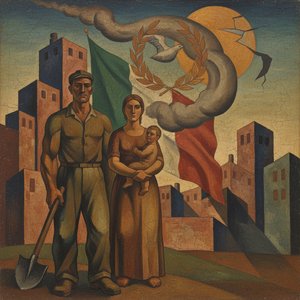
Mario Sironi: A Poetic of Modern Italian Identity Through Symbolism & Social Commentary
Explore the profound works of Mario Sironi, a key figure in Italian Modernism. Discover his evolution from Futurism to Metaphysical painting and his powerful social commentary. Learn about his legacy at OriginalUniqueArt.
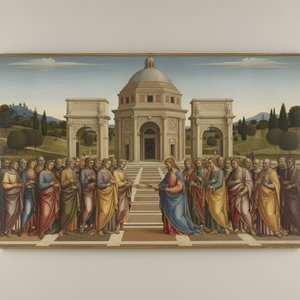
Pietro Perugino: Umbrian Master of Serenity & Precursor to Raphael's High Renaissance
Explore the life & art of Pietro Perugino, a pivotal Renaissance master and Raphael’s influential teacher. Discover his serene compositions, Sistine Chapel frescoes, and lasting legacy with OriginalUniqueArt.

Raphaels 25 Mästerverk: Konsthistoriens Höjdpunkter för Ditt Hem
Utforska Raphaels 25 mest ikoniska mästerverk – en resa genom renässanskonstens guldålder. Lär känna historien, tekniken och skönheten bakom varje tavla. Hitta konsttryck & inspiration för ditt hem på OriginalUniqueArt.com.

Drama and Light: A Definitive Guide to the Italian Baroque Masterpieces and the Revolution of Chiaroscuro
Explore the dramatic world of Italian Baroque art. Discover how masters like Caravaggio used chiaroscuro and tenebrism to revolutionize painting through light, shadow, and profound realism. A definitive guide for history lovers and art collectors.

The Renaissance Trinity: A Comparative Study of Leonardo, Michelangelo, and Raphael
Explore the profound genius of the Renaissance Trinity. Delve into a comparative study of Leonardo da Vinci, Michelangelo, and Raphael, uncovering their unique contributions to art history, technique, and the enduring legacy of Italian High Renaissance mastery.