Förhandsvisa
 Skicka
 Dela
Dela
 Visa detaljer
 Guide
Guide

 Ladda ner
 Liknande objekt
 Röntgen
 Bildspel
 Statistik
Self-Portrait
 Oil On Canvas
- WallArt
- Neoclassical Style
 1775
1775 102.0 x 77.0 cm
 Ermitaget
 Visa mer
Giclée / Konsttryck
Giclée- eller canvasprint av museumskvalitet med snabb produktion och flexibla ytbehandlingsalternativ. ( Beställ handmålad reproduktion Byt till digital bild)




P118B Skr10

P118H Skr10

P118W Skr10

P438Z Skr10

P508JH Skr12

P508YH Skr12

P805H Skr10

P805Z Skr10

P919BZ Skr10

P919G Skr10

P919XJ Skr10

P959ZH Skr10

P968JZ Skr12

W106C Skr8

W218G Skr10

W218JH Skr8

W218Y Skr10

W307PJ Skr10

W316G Skr10

W316PJ Skr8

W316Y Skr10

W398PJ Skr8

W4111J Skr10

W500HY Skr15

W500JH Skr15

W692G Skr12

W849H Skr8

W940BG Skr15

W953PJ Skr8




Välj bland våra förinställda storlekar som motsvarar konstverkets ursprungliga proportioner.

Ange den bredd och höjd du behöver för att passa din ram eller vägg. Ett tryck kan endast beskäras, aldrig göras större än originalbilden, vilket innebär att ett format med en annan proportion leder till att en del av bilden går förlorad. Vi skickar en digital mockup för godkännande innan vi påbörjar tryckningen. Bilden som visas på denna sida visar inte den faktiska beskärningen — det är endast mockuppen som gör det.
Leverans över hela världen () på 2 veckor istället för standard 4/5 veckor. (28 oktober)

Fri expressfrakt över hela världen

Högkvalitativ linnecanvas

Fullständig fraktförsäkring

Garantier för återbetalning av tullavgifter

Garantier för exakt färgåtergivning

100 dagars returrätt (endast vid fel)

100% pengarna tillbaka-garanti

Mängdrabatt erbjuds
 Glasalternativet är endast tillgängligt i storlekar under 110 cm.

Self-Portrait
Giclée / Konsttryck
Storlek på reproduktion
-


Slutgiltigt pris
Skr 797
A Window into Baroque Reflection: Examining Mengs’ “Self Portrait”
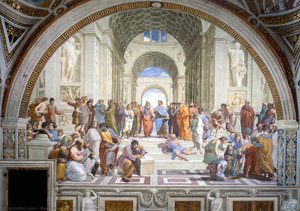
Anton Raphael Mengs' "Self Portrait," completed in 1775, stands as a pivotal emblem of the burgeoning Neoclassical movement while simultaneously retaining the dramatic chiaroscuro characteristic of Baroque artistry. Executed during a period marked by intellectual ferment – the Enlightenment – this painting transcends mere likeness; it embodies a profound meditation on artistic identity and the pursuit of classical ideals amidst stylistic upheaval. The artwork resides within the esteemed Hermitage Museum in St. Petersburg, Russia, ensuring its preservation for generations to come.- Subject Matter: The portrait depicts Mengs himself seated three-quarters to right on a chair draped with opulent damask fabric—a deliberate choice reflecting the grandeur of aristocratic patronage prevalent at the time. His gaze is directed intently outwards, suggesting contemplation or perhaps focused engagement in scholarly pursuits.
- Style & Technique: Mengs skillfully employs Baroque techniques blended with Neoclassical principles. The dramatic lighting – a hallmark of chiaroscuro – sculpts the figure’s form and emphasizes his facial features, creating an atmosphere of solemn seriousness. Brushstrokes are visible, demonstrating meticulous attention to detail and conveying textural richness.
- Historical Context: Mengs' oeuvre emerged during a crucial juncture in European art history. The Baroque era was waning, superseded by the ascendance of Neoclassicism championed by figures like Jacques-Louis David. This painting represents a conscious effort to reconcile stylistic traditions—the expressive dynamism of Baroque with the rational clarity and idealized beauty associated with antiquity.
- Symbolism: Beyond its visual representation, “Self Portrait” carries symbolic weight. The chair symbolizes stability and authority, mirroring Mengs’ position as a respected artist within European intellectual circles. The portfolio held by Mengs signifies his dedication to artistic scholarship and the dissemination of classical knowledge—a core tenet of Enlightenment thought.
- Emotional Impact: The painting evokes a sense of introspection and quiet dignity. Mengs' gaze conveys both confidence and vulnerability, inviting viewers to contemplate themes of self-awareness and artistic ambition. Its subdued palette contributes to an overall feeling of contemplative solemnity.
Further Exploration & Artistic Inspiration
Mengs’ “Self Portrait” serves as a compelling reminder that artistic innovation often arises from honoring the legacies of past masters. Consider how artists today can draw inspiration from classical ideals—particularly the emphasis on proportion, balance, and harmonious composition—while simultaneously experimenting with contemporary techniques to achieve expressive depth. The Hermitage Museum's masterful reproduction offers an unparalleled opportunity to experience this iconic artwork firsthand.Resources for Collectors & Interior Designers
Interested in acquiring a high-quality replica of Mengs’ “Self Portrait”? Explore OriginalUniqueArt.com for exceptional prints and canvases crafted with archival pigments—guaranteeing enduring beauty and authenticity. Furthermore, consider incorporating elements reminiscent of the painting's palette and textural qualities into interior design schemes to create spaces imbued with serenity and intellectual curiosity.Frågor och svar
Upplevs färgerna i "Self-Portrait" som starka eller mjuka?
Färgintensiteten i "Self-Portrait" är Balanced. Intensitet beskriver hur starka färgerna upplevs.
Vilken känsla förmedlar "Self-Portrait" av Anton Raphael Mengs?
Stämningen i "Self-Portrait" av Anton Raphael Mengs är Classic, och dess emotionella ton är Reflective.
Hur kan jag se "Self-Portrait" av Anton Raphael Mengs som ett bildspel?
Se diaporamat för "Self-Portrait" på konstverkets sida Bildspel.
Konstnärsbiografi
En bro mellan världar: Anton Raphael Mengs liv och konst
Anton Raphael Mengs framträdde under en fascinerande period i den europeiska konsten, en tid då rokokons utsmyckade detaljer började ge vika för en förnyad uppskattning av klassiska ideal. Han föddes 1728 i Ústí nad Labem, Böhmen – en region som idag är en del av Tjeckien – och hans konstnärliga resa formades djupt av både hans härkomst och upplysningens intellektuella strömningar. Hans far, Ismael Mengs, en dansk målare som fann beskydd vid hovet i Dresden, kände tidigt igen den unge Antons exceptionella talang. Denna insikt ledde till en avgörande vändpunkt 1741: en flytt till Rom, där den spirande konstnären sänktes ner i studierna av antika mästerverk och verken från renässansens stora mästare som Rafael. Det var denna exponering som för alltid skulle prägla hans estetiska sinne och ingjuta en djup vördnad för klassisk form, klarhet och komposition – egenskaper som skulle bli kännetecken för hans mogna stil. De tidiga åren ägnades åt noggrann kopiering, inte bara som en teknisk övning utan som en djup konstnärlig pilgrimsfärd för att absorbera essensen av Rafaels geni.Från Dresden till Madrid: En karriär genom europeiska hov
Mengs karriär utspelade sig vid flera framstående europeiska hov, där varje plats satte sitt unika avtryck på hans konstnärliga utveckling. År 1749 säkrade han en prestigefylld position som hovmålare åt Fredrik August, kurfurste av Sachsen, en roll som gav både ekonomisk stabilitet och friheten att behålla sin bas i Rom – epicentrum för hans konstnärliga inspiration. Det var dock hans fresker som verkligen etablerade hans rykte. Parnassus i Villa Albani i Rom, färdigställd omkring ng 1761, blev en omedelbar sensation och hyllades för sin harmoniska komposition, sina eleganta figurer och sin subtila men kraftfulla frammaning av klassisk mytologi. Detta verk var inte bara en dekorativ utsmyckning; det var ett manifest – ett medvetet försök att förena barockens storslagenhet med de framväxande neoklassiska principerna. Fler uppdrag följde, inklusive den fantastiska fresken i kupolen på kyrkan Sant'Eusebio i Rom, som visade hans mästerskap inom monumental dekoration och rumsillusioner. Kanske var hans mest ambitiösa projekt en inbjudan från det spanska hovet 1761. Han reste till Madrid, där han fick i uppdrag att dekorera flera kungliga palats, vilket kulminerade i det magnifika taket i festsalen i det kungliga palatset – ett verk som anses vara bland hans främsta prestationer och som demonstrerar en anmärkningsvärd förmåga att sammanväva italiensk elegans med spanska sinnesstämningar.Kopplingen till Winckelmann: Formandet av neoklassiskt tänkande
Mengs konstnärliga evolution drevs inte enbart av visuella studier; den var djupt sammanflätad med det intellektuella samtalet. En avgörande vändpunkt kom genom hans nära vänskap och samarbete med Johann Joachim Winckelmann, den banbrytande konsthistorikern vars skrifter skulle bli grundläggande för den neoklassiska rörelsen. Winckelmann förespråkade en återgång till den uppfattade renheten och enkelheten i den antika grekiska konsten, och förespråkade en estetik baserad på förnuft, ordning och idealiserade former. Mengs illustrerade inte bara Winckelmanns teorier; han var aktivt involverad i att forma dem genom att översätta abstrakta koncept till påtagliga konstnärliga uttryck. Tillsammans trodde de att sann skönhet inte låg i ytlig ornamentik utan i de underliggande principerna om harmoni och proportion som återfinns i antiken. Detta partnerskap sträckte sig bortom teoretiska diskussioner; det manifesterades i själva Mengs målningar, som alltmer speglade Winckelmanns betoning på ädel enkelhet och återhållsam emotion. Inflytandet var ömsesidigt: Winckelmanns skrifter gav en filosofisk ram för Mengs konstnärliga strävanden, medan Mengs konst fungerade som ett visuellt bevis på de neoklassiska idealens livskraft och skönhet.Arv och inflytande: En pionjär i sin tid
Anton Raphael Mengs dog i Rom 1779 och lämnade efter sig ett arv som sträckte sig långt bortom hans imponerande produktion. Han var mer än bara en målare; han var en nyckelfigur i övergången från en konstnärlig era till en annan. Trots att han var rotad i barocktraditionen – vilket märks i hans dramatiska användning av ljus och skugga samt hans mästerliga teknik med illusioner – omfamnade Mengs modigt de framväxande neoklassiska principerna och banade väg för konstnärer som Jacques-Louis David och Antonio Canova. Hans betoning på klassiska ideal, kombinerat med hans tekniska virtuositet, etablerade honom som en ledande kraft i formandet av 1700-talets konst. Skolan i Aten, målad för hertigen av Northumberland, står som ett bevis på hans förmåga att förena historiska förebilder med samtida konstnärliga sinnen. Utöver sina målningar och fresker sträckte sig Mengs inflytande även till utbildningsväsendet; han tjänstgjorde som direktör för Vatikanens målarskola, där han odlade en ny generation konstnärer djupt rotade i klassiska principer. Han var en komplex gestalt – en hängiven katolik som även engagerade sig i upplysningens tankevärld, en konstnär som balanserade tradition med innovation. Hans liv och verk representerar en fascinerande skärningspunkt mellan konstnärlig skicklighet, intellektuell nyfikenhet och historiska omständigheter, vilket befäster hans plats som en sann pionjär inom den neoklassiska konsten. Hans inflytande ekar än idag och påminner oss om de klassiska idealens bestående kraft att inspirera och transformera det konstnärliga uttrycket.
Anton Raphael Mengs
1728 - 1779 , Tyskland
Kortfakta
- Artistic Movement Or Style: Neoclassicism
- Artists Or Movements Influenced By This Artist:
- David
- Canova
- Artists Who Influenced This Artist:
- Raphael
- Winckelmann
- Date Of Birth: 12 mars 1728
- Full Name: Anton Raphael Mengs
- Nationality: Tysk
- Notable Artworks:
- Parnassus
- The Dream of Joseph
- Place Of Birth: Ústí nad Labem, Böhmen
Relaterade artiklar

The Enduring Legacy of Fine Art Prints: Technique, History & Aesthetic Impact
Explore the rich history & techniques of fine art prints. Discover investment potential, assess authenticity, and learn how to preserve your collection with expert guidance. Trusted insights for discerning collectors.

Giclée Prints: Archival Quality & Aesthetic Nuances for the Discerning Collector
Explore the world of giclée prints with OriginalUniqueArt. Learn about archival quality, aesthetic nuances & investment potential. Expert guidance for discerning art collectors seeking museum-quality reproductions and lasting value.

The Dramatic Flourish: Exploring the Baroque Movement's Enduring Legacy in Art History
Explore the dramatic world of Baroque art! Discover iconic artists like Caravaggio & Rubens, defining techniques, and its lasting impact on art history. Expert insights for collectors & enthusiasts at OriginalUniqueArt.

Barockens Mästerverk: Topp 10 konstverk som definierade en epok – OriginalUniqueArt.se
Upptäck barockens 10 största mästerverk! Caravaggio, Rembrandt, Bernini och fler. Lär känna historien bakom ikoniska målningar & skulpturer. Köp reproduktioner av hög kvalitet på OriginalUniqueArt.com – för en lyxig heminredning.

The Visceral Stage: Exploring Dramatic Narratives & Emotional Intensity in Baroque Art
Explore the dramatic world of Baroque art! Discover iconic masters like Caravaggio & Rembrandt, their techniques, and the movement's lasting impact. Expert insights for collectors & enthusiasts at OriginalUniqueArt.