

 Förhandsvisa
 Skicka
 Dela
Dela
 Visa detaljer

 Ladda ner
 Liknande objekt
 Röntgen
 Bildspel
Untitled (D2X6N7)
 Acrylic On Canvas
- WallArt
- Dutch Realism
 50.0 x 86.0 cm
 Metropolitan Museum of Art
 Visa mer
Handgjord oljereproduktion
Handmålad olja på duk i din valda storlek och ram, tillverkad efter beställning av våra konstnärer. ( Beställ tryck Köp högupplöst bild)




P118B $10

P118H $10

P118W $10

P438Z $10

P508JH $12

P508YH $12

P805H $10

P805Z $10

P919BZ $10

P919G $10

P919XJ $10

P959ZH $10

P968JZ $12

W106C $8

W218G $10

W218JH $8

W218Y $10

W307PJ $10

W316G $10

W316PJ $8

W316Y $10

W398PJ $8

W4111J $10

W500HY $15

W500JH $15

W692G $12

W849H $8

W940BG $15

W953PJ $8




Välj bland våra förinställda storlekar som motsvarar konstverkets ursprungliga proportioner.

Du kan ange egna mått för att passa en specifik ram eller yta. Om den valda storleken inte matchar originalbildens proportioner kommer vi antingen att beskära konstverket eller utöka målningen med ytterligare handmålade element. En digital skiss skickas till dig för godkännande innan produktionen påbörjas.
Observera att förhandsvisningen på skärmen inte återspeglar den faktiska beskärningen eller utökningen. Endast skissen visar den slutgiltiga kompositionen korrekt.
Även om anpassade storlekar är möjliga, rekommenderar vi att du väljer en dimension från den fördefinierade listan för att bevara originalproportionerna.
Efter beställning kommer OriginalUniqueArt.com team att mejla kunden för instruktioner och tillhandahålla en skissförhandsvisning
Leverans över hela världen () på 3–4 veckor istället för standard 5 veckor. (30 augusti). Inga kompromisser med kvaliteten.

Fri expressfrakt över hela världen

Högkvalitativ linnecanvas

Fullständig fraktförsäkring

Garantier för återbetalning av tullavgifter

Garantier för exakt färgåtergivning

60 dagars returrätt (endast vid fabrikationsfel)

100% pengarna tillbaka-garanti

Mängdrabatt erbjuds
 Glasalternativet är endast tillgängligt i storlekar under 110 cm.

Untitled (D2X6N7)
Reproduktionsmedium
Storlek på reproduktion
-


Slutgiltigt pris
$ 300
A Shepherd’s Vigil: Anton Mauve's "Untitled (D2X6N7)"
Anton Mauve’s “Untitled (D2X6N7),” a captivating depiction of a lone shepherd guiding his flock across a windswept field, isn’t merely a landscape; it’s a profound meditation on rural life, the cyclical rhythms of nature, and the quiet dignity of human endeavor. Painted in the late 1870s during Mauve's period of intense observation and experimentation with light and color, this work embodies the core tenets of the Hague School – a commitment to capturing the essence of Dutch reality through direct observation and a nuanced understanding of atmosphere. The painting’s power lies not in dramatic action or grand vistas, but in its subtle details and the palpable sense of solitude and connection it evokes.
Mauve's technique is characterized by an almost hesitant brushwork, a deliberate avoidance of overly smooth surfaces. He employs a palette dominated by muted greys, blues, and browns – colors that perfectly mirror the overcast skies and earthy tones of the Dutch countryside. Notice how he builds up layers of paint to create a sense of depth and texture, particularly in the rough wool of the sheep and the weathered faces of the figures. The artist’s masterful use of light is equally remarkable; it's not bright or dramatic, but rather diffused and atmospheric, casting long shadows across the field and lending an almost melancholic quality to the scene. This deliberate restraint, a hallmark of Mauve’s style, allows the viewer to fully immerse themselves in the painting’s mood.
The Roots of Realism: Contextualizing Mauve's Vision
To understand “Untitled (D2X6N7),” one must consider the artistic landscape of late 19th-century Holland. Following the influence of the Barbizon School in France, a group of Dutch artists sought to break away from the academic traditions of the time and paint directly from nature. Mauve, deeply connected to his rural roots, became a pivotal figure in this movement. He rejected idealized representations of the countryside in favor of portraying the lives of ordinary people – farmers, laborers, and shepherds – with honesty and empathy. This commitment to realism was not simply about accurate depiction; it was an attempt to capture the spirit and character of the Dutch nation.
Mauve’s work is inextricably linked to his personal life. He spent much of his career observing and painting the landscapes surrounding Laren, a small farming village in the Gooi region of Holland. The sheep depicted here are not just livestock; they represent a vital part of the local economy and culture. The shepherd himself embodies a timeless archetype – a solitary figure connected to the land, responsible for its care and sustenance. This painting speaks to a deeper longing for simplicity and connection with nature, values that resonated strongly in 19th-century Europe.
Symbolism of Solitude and Connection
Beyond its straightforward depiction of rural life, “Untitled (D2X6N7)” is rich in symbolic meaning. The lone shepherd, positioned centrally within the composition, represents a figure of quiet authority and responsibility. His posture – upright, attentive, and focused – conveys a sense of determination and resilience. The sheep themselves symbolize not only livestock but also obedience, community, and the cyclical nature of life. Their movement across the field mirrors the passage of time and the enduring rhythms of the natural world.
Furthermore, the painting’s muted color palette and atmospheric lighting evoke a feeling of introspection and solitude. The vastness of the landscape emphasizes the shepherd's isolation, yet it also suggests a profound connection to something larger than himself – to the land, to his community, and to the traditions that have shaped his life. The subtle details—the worn clothing of the shepherd, the rough texture of the sheep’s wool—invite us to contemplate the dignity and quiet beauty of everyday existence.
A Timeless Masterpiece: Reproduction and Beyond
Reproductions of “Untitled (D2X6N7)” capture much of the original's evocative power, offering a window into Mauve’s world. When selecting a reproduction, consider the quality of the print and the accuracy of the color palette. A high-quality print will faithfully reproduce the nuances of Mauve’s brushwork and the subtle shifts in light and shadow. This painting would be an exceptional addition to any home or office space, bringing a touch of rustic charm and contemplative beauty to your surroundings. It's a reminder that even in the simplest scenes, profound truths can be found—truths about our connection to nature, our shared humanity, and the enduring spirit of rural life.
Konstnärsbiografi
A Life Painted in Light: The World of Anton Mauve
Anton Mauve, ett namn synonymt med den ömtåliga skönheten i nederländskt realism och den blomstrande andan hos impressionismen, upptar en nyckelposition i 1900-talets konst. Född Anthonij Rudolf Mauve i Zaandam, Nederländerna, år 1838, var hans resa en evolution av konstnärlig utveckling, djupt förankrad i landskapet och dess folk. Hans tidiga liv utspelades i en kontemplativ atmosfär; hans far tjänstgjorde som en Mennonitisk kaplan, vilket inställde en lugn observationskvalitet som skulle genomsyra hans dukar. Familjens flyttning till Haarlem gav den unga Anton tillgång till formlig konstnärlig utbildning, först under Pieter Frederik van Os och sedan Wouter Verschuur, vilket lade grunden för hans tekniska skicklighet. Men det var hans association med Paul Gabriël vid Oosterbeek – kärleksfullt känd som den “Dutch Barbizon” – som verkligen tände hans passion för att måla direkt från naturen, och formade en väg mot mer frigjorda konstnärliga uttryck. Denna period visade sig vara formativ, uppmuntrande honom att lämna högt färdiga tekniker till förmån för friare penseldrag och en delikat harmonisk palett.The Hague School and Pastoral Visions
År 1872 hade Mauve etablerat sig i Haag, där han blev en central figur inom den blomstrande gruppen av målare som kallas Hague School. Denna sammanslutning, dedikerad till att skildra vardagsliv med skoningslös realism, erbjöd fruktbart fält för hans konstnärliga utveckling. Han var inte bara en deltagare; han var instrumental i att etablera både Hollandsche Teekenmaatschappij (Dutch Drawing Society) år 1876 och spelade en viktig roll i att utveckla Pulchri Studio, Haags mest inflytelserika konstförening. Mauves ämnesval kretsade konsekvent kring människor och djur integrerade i utomhusmiljöer – modekostymade ryttare som njuter av en “Morning Ride”, bönder som arbetar i fälten, och särskilt hans älskade fårflockar. Dessa pastorala scener var inte bara idylliska representationer; de var genomträngda av autenticitet, även om de innehöll detaljer ofta förbises av andra konstnärer – ett testamente till hans engagemang för realism, som att inkludera hästspillning i framplanen i “Morning Ride”, och grundar scenen i konkret verklighet. Hans skildringar av får visade sig vara otroligt populära, särskilt bland amerikanska köpare, vilket skapade en ovanlig prisdifferens mellan målningar som visar dem anlända kontra att de lämnar, kanske återspeglar symbolisk resonans med teman om välstånd och förgänglighet. Han behärsktes att fånga det “silverljus” som kännetecknar den nederländska landskapet, och gav sina scener en unik atmosfärisk kvalitet.A Mentor's Hand: Influencing Vincent van Gogh
Mauves arv sträcker sig bortom hans egna konstnärliga produktion; han tjänade som en nyckelinflytande på Vincent van Goghs tidiga utveckling. Kopplingen var djupt personlig, eftersom Ariëtte (Jet) Sophia Jeannette Carbentus, Mauves fru, var Van Goghs kusin. År 1881 sökte Van Gogh vägledning från Mauve, och tillbringade tre veckor inne i hans välutrustade studio, vilket markerade början på hans allvarliga utforskning av oljemålning under Mauves vägledning. Mauve gav inte bara teknisk instruktion utan också en viktig introduktion till konstvärlden och dess möjligheter. Trots denna smärtsamma separation fortsatte Van Gogh att hålla Mauve i hög akt, ett uttryck som kraftfullt uttrycks genom konst. Efter Mauves plötsliga död år 1888 var hans bidrag till nederländsk realism obestridligt; han exemplifierade principerna för att skildra livet som det var, med ärlighet och känslighet. Hans inflytande sträckte sig bortom hans omedelbara krets, påverkar konstnärer som den skotska målaren Robert McGregor. Men kanske hans mest bestående arv ligger i hans roll som mentor till Vincent van Gogh, vilket visade att en konstnär kan ha ett djupgående inflytande på en annan, och formar inte bara individuella stilar utan också konstens historiska utveckling. Han förblir en nyckelperson i nederländsk konsthistoria och en betydelsefull föregångare till de innovationer som skulle definiera den moderna eran.The Larense School and Lasting Significance
I slutet av sitt liv sökte Mauve skydd i det fridfulla landskapet runt Laren, en pittoresk by mellan Amsterdam och Utrecht, som snabbt blev känt som “Mauve land”, och lockade ett samhälle av konstnärer inklusive Jozef Israëls och Albert Neuhuys, sammanslutna som den Larense skolan. Här fortsatte han att förfina sin delikata stil, fångande de subtila nyanserna av ljus och atmosfär i sina landskap och genre scener. Hans plötsliga död i Arnhem den 5 februari 1888, vid en ålder av fyrtio-nio år, var ett chocker för konstvärlden. Mauves bidrag till nederländsk realism är obestridligt; han exemplifierade principerna för att skildra livet som det var, med ärlighet och känslighet. Hans inflytande sträcker sig bortom hans omedelbara krets, påverkar konstnärer som den skotska målaren Robert McGregor. Men kanske hans mest bestående arv ligger i hans roll som mentor till Vincent van Gogh, vilket visade att en konstnär kan ha ett djupgående inflytande på en annan, och formar inte bara individuella stilar utan också konstens historiska utveckling. Han förblir en nyckelperson i nederländsk konsthistoria och en betydelsefull föregångare till de innovationer som skulle definiera den moderna eran.
Anton Mauve
1838 - 1888 , Nederländerna
Kortfakta
- Artistic Movement Or Style: Hague School, Realism
- Artists Or Movements Influenced By This Artist: ['Van Gogh']
- Artists Who Influenced This Artist: ['Paul Gabriël']
- Date Of Birth: 1838
- Date Of Death: 1888
- Full Name: Anton Rudolf Mauve
- Nationality: Nederländsk
- Notable Artworks:
- Morning Ride
- Sheep paintings
- Place Of Birth: Zaandam, Nederländerna
Relaterade artiklar

Golden Light & Dutch Skies: The Timeless Magic of Dutch Golden Age Landscapes
Discover the breathtaking beauty of Dutch Golden Age landscapes. Explore the mastery of light, chiaroscuro, and 17th-century realism through an expert art history lens, celebrating the enduring legacy of the Dutch Masters for discerning collectors and art lovers.

Jan van Goyen: Master of Dutch Landscape & Atmospheric Perspective
Discover Jan van Goyen, the master of Dutch landscape painting. Explore his subtle technique, atmospheric realism & lasting influence on art history. Learn about this 17th-century pioneer at OriginalUniqueArt.

The Hague School: Realism, Atmosphere & the Dawn of Dutch Impressionism
Explore the Hague School's pivotal role in Dutch art history. Discover realism, atmospheric landscapes & its influence on Impressionism. Learn about key artists like Mauve & Maris with OriginalUniqueArt.
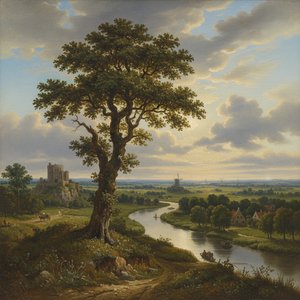
Jacob van Ruisdael: Master of Dutch Landscape & the Evocation of National Identity
Explore the life & work of Jacob van Ruisdael, the preeminent Dutch landscape painter. Discover his technical brilliance, symbolic depth, and lasting influence on art history. Learn about collecting Ruisdael's masterpieces.
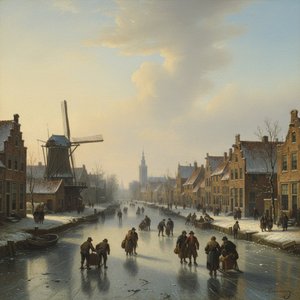
Charles Leickert: Capturing the Dutch Golden Age Light – A Comprehensive Study of Technique, Context, and Legacy
Explore the captivating winter landscapes of Charles Leickert, a master of Dutch Golden Age light & atmosphere. Discover his techniques, symbolism, and lasting legacy – a comprehensive study for art enthusiasts and collectors.

