

 Förhandsvisa
 Skicka
 Dela
Dela
 Visa detaljer
 Guide
Guide

 Ladda ner
 Liknande objekt
 Röntgen
 Bildspel
 Statistik
Job 1


 Visa mer
Giclée / Konsttryck
Giclée- eller canvasprint av museumskvalitet med snabb produktion och flexibla ytbehandlingsalternativ. ( Beställ handmålad reproduktion Byt till digital bild)




P118B Skr10

P118H Skr10

P118W Skr10

P438Z Skr10

P508JH Skr12

P508YH Skr12

P805H Skr10

P805Z Skr10

P919BZ Skr10

P919G Skr10

P919XJ Skr10

P959ZH Skr10

P968JZ Skr12

W106C Skr8

W218G Skr10

W218JH Skr8

W218Y Skr10

W307PJ Skr10

W316G Skr10

W316PJ Skr8

W316Y Skr10

W398PJ Skr8

W4111J Skr10

W500HY Skr15

W500JH Skr15

W692G Skr12

W849H Skr8

W940BG Skr15

W953PJ Skr8




Välj bland våra förinställda storlekar som motsvarar konstverkets ursprungliga proportioner.

Ange den bredd och höjd du behöver för att passa din ram eller vägg. Ett tryck kan endast beskäras, aldrig göras större än originalbilden, vilket innebär att ett format med en annan proportion leder till att en del av bilden går förlorad. Vi skickar en digital mockup för godkännande innan vi påbörjar tryckningen. Bilden som visas på denna sida visar inte den faktiska beskärningen — det är endast mockuppen som gör det.
Leverans över hela världen () på 2 veckor istället för standard 4/5 veckor. (27 oktober)

Fri expressfrakt över hela världen

Högkvalitativ linnecanvas

Fullständig fraktförsäkring

Garantier för återbetalning av tullavgifter

Garantier för exakt färgåtergivning

100 dagars returrätt (endast vid fel)

100% pengarna tillbaka-garanti

Mängdrabatt erbjuds
 Glasalternativet är endast tillgängligt i storlekar under 110 cm.

Job 1
Giclée / Konsttryck
Storlek på reproduktion
-


Slutgiltigt pris
Skr 794
A Vision of Art Nouveau Elegance: The Allure of Mucha’s “Job”
The allure of Art Nouveau persists today, captivating designers and collectors alike with its celebration of organic forms and delicate ornamentation. At the heart of this movement lies a singular aesthetic championed by the Czech master Alphonse Maria Mucha—a style instantly recognizable for its flowing lines, stylized floral motifs, and idealized female figures. His 1896 masterpiece, “Job,” exemplifies this mastery, offering a breathtaking glimpse into both artistic innovation and the burgeoning advertising landscape of the Belle Époque. To behold this work is to step into a world where commercial utility meets high art, creating a visual language that remains as potent in a modern interior as it was in the streets of Paris over a century ago.
The composition centers on a woman of ethereal beauty, her long, dark hair adorned with a vibrant red flower that serves as a focal point of natural vitality. Dressed in an orange gown that contrasts beautifully against the warm, sun-drenched yellow background, she embodies the sinuous grace characteristic of le style Mucha. In her hand, she holds a small bird, a delicate touch of life that enhances the piece's connection to the natural world. Every element is meticulously crafted; from the swirling arabesque smoke emanating from her hand to the intricate border decorations inspired by Byzantine mosaics, the artwork breathes with a rhythmic, undulating pulse.
Symbolism and the Art of the Belle Époque
Beyond its surface beauty, “Job” is a profound exercise in symbolic storytelling. Created as an advertisement for Joseph Bardou Cigarette Papers, the poster utilizes a sophisticated arrangement that blends biblical allusion with Art Nouveau principles. The woman’s pose—leaning back sensamente with her head tilted—is deliberately theatrical, mirroring the grandeur and spiritual weight found in Byzantine churches. This sense of sacredness is further reinforced by the subtle Job monograms adorning the background, which serve as a nod to both the brand's identity and a deeper narrative core.
The technique employed during this era—lithograph printing on wove paper—ensured an exceptional tonal accuracy and textural richness. This allowed Mucha to capture the essence of his vision with a precision that made the colors appear almost luminous. For the discerning collector or interior designer, this piece offers more than just decoration; it provides a window into a period of significant artistic experimentation, where the rejection of academic conventions led to the elevation of commercial advertising into a legitimate and celebrated art form.
A Timeless Addition to the Modern Collection
For those seeking to infuse a space with sophistication and historical depth, a high-quality reproduction of “Job” serves as an incomparable centerpiece. The rich, varied color palette and the dynamic interplay of organic forms make it a versatile choice for various design aesthetics, from classical elegance to contemporary bohemian chic. It possesses the unique ability to anchor a room, providing a sense of warmth and nostalgic luxury.
Owning a piece of Mucha’s legacy is an invitation to experience the enchantment of the Art Nouveau movement. Whether placed in a curated gallery or used to add a touch of romanticism to a living space, this artwork continues to fulfill its original promise: to transform the mundane into the magnificent through the power of decorative symbolism and unparalleled aesthetic grace.
Frågor och svar
Hur kan "Job 1" av Alfons Mucha användas i heminredningen?
"Job 1" rekommenderas för Accent och passar utmärkt i ett Living Room.
Hur förhåller sig motivet i "Job 1" till Alfons Muchas vanliga teman?
Bland Alfons Muchas dokumenterade teman – renoir’s impressionism, symbolism, feminine beauty, advertising heritage, mucha’s artistic legacy – har "Job 1" ett eget fokus på floral motifs, woman figure, decorative art, symbolism, art nouveau style, alphonse mucha, advertising poster.
Hur förhåller sig "Job 1" till resten av Alfons Muchas konstnärskap?
"Job 1" delar med Alfons Muchas övriga verk sin Art Nouveau-stil och de återkommande temana: renoir’s impressionism, symbolism, feminine beauty, advertising heritage, mucha’s artistic legacy.
Konstnärsbiografi
Early Life and Artistic Beginnings
Alphonse Maria Mucha, född den 15 juli 1860 i den lilla byn Ivančice i Mähren – en region som idag tillhör Tjeckien – var redan i ung ålder tydligt markerad av ett konstnärligt talent. Hans förmåga att sjunga lockade honom till en musikskola, men det var dock måleriet som verkligen fängslade hans hjärta och sinne. Han började tidigt experimentera med olika tekniker och stilar, och hans tidiga verk vittnar om en stark fascination för traditionella motiv och den lokala konsttraditionen i Mähren.
Hans utbildning tog honom först till Brno, huvudstaden i Mähren, där han studerade vid den lokala gymnasiet. Där fick han dock inte riktigt briljera och blev avvisad från akademin i Prag – en besvikelse som formade hans syn på konsten och hans strävan efter att skapa sin egen unika stil. Det var under denna tid som han kom i kontakt med Jan Umlauf, en lokal konstnär vars freskar inspirerade honom djupt och ledde till ett tidigt intresse för dekorativa element och berättande genom bild.
Paris och Art Nouveau: En Genombrott
År 1887 flyttade Mucha till Paris, en stad som redan var centrum för konstnärlig innovation och experiment. Han fortsatte sin utbildning vid Académie Julian och Colarossi, men det var i den franska huvudstaden som hans unika stil verkligen började ta form. Han fascinerades av den nya rörelsen Art Nouveau, som präglades av flytande linjer, organiska former och en känsla av rörelse – en stil som skulle bli hans signatur.
Det var i Paris som han fick sitt stora genombrott. Hans poster för skådespelerskan Sarah Bernhardt, särskilt affischen till hennes pjäs Gismonda (1894), blev omedelbart sensationella och etablerade honom som en av de mest framstående konstnärerna inom Art Nouveau. Bernhardts entusiasm över hans arbete ledde till ett långvarigt samarbete, där Mucha designade affischer, kostymer och scenografi för hennes föreställningar.
Universal Exhibitionen och Internationellt Genomslag
År 1900 deltog Mucha i den stora Universal Exhibitionen i Paris, där hans Art Nouveau-stil fick ett enormt internationellt genomslag. Han designade interiörer och affischer för både Bosniens och Hercegovinas paviljong samt samarbetade med Österrikes paviljong. Exhibitionen cementerade hans rykte som en banbrytande konstnär och inspirerade efterföljande generationer av designers och konstnärer.
Under denna tid började han också att utforska andra områden inom design, inklusive inredningsarkitektur, glas och kläder. Hans verk präglades av en elegant och sofistikerad estetik, som ofta innehöll inslag av traditionella tjeckiska motiv och symbolik.
Slav Epicen och ett Nationaldåd
En av Muchas mest monumentala och betydelsefulla projekt var Slav Epic (1912-1930), en serie av 20 historiemålningar som han skapade med stöd från den amerikanska industrimagnaten Charles Richard Crane. Projektet syftade till att illustrera den slaviska folks historia och kultur, och det blev ett symboliskt uttryck för tjeckisk nationalkänsla och identitet.
Slav Epic är inte bara en konstnärlig prestation utan också ett politiskt statement. Mucha använde sin konst för att främja tjeckiska intressen och stärka nationens stolthet, vilket ledde till kontroverser och kritik från vissa håll. Trots detta har Slav Epic blivit en av hans mest kända och älskade verk.
Senare Liv och Arv
Efter första världskriget fick Mucha i uppdrag att designa postfrimärken, sedlar och andra officiella dokument för den nybildade staten Tjeckoslovakien. Hans konst spelade en viktig roll i att forma landets visuella identitet och symbolik.
Alphonse Mucha dog den 14 juli 1939 i Prag, och hans arv lever vidare genom hans fantastiska verk och hans inflytande på konsten och designen. Han är fortfarande en av de mest älskade och respekterade konstnärerna inom Art Nouveau-rörelsen, och hans stil fortsätter att inspirera konstnärer och designers världen över.

Alfons Mucha
1860 - 1939 , Tjeckien
Kortfakta
- Artistic Movement Or Style: Art Nouveau
- Artists Or Movements Influenced By This Artist: ['Prokopcová']
- Artists Who Influenced This Artist:
- Renoir
- Moreau
- Date Of Birth: 1860-07-15
- Date Of Death: 1939-07-14
- Full Name: Alphonse Maria Mucha
- Nationality: Tjekkisk
- Notable Artworks:
- Slav Epic
- Gismonda
- Salon des Cent
- Place Of Birth: Brno, Tjeckien
Relaterade artiklar
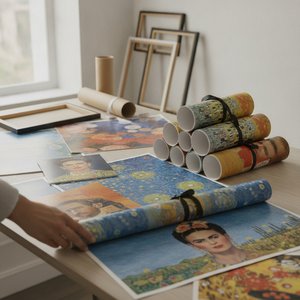
OriginalUniqueArt.com F.A.Q.: Premium Art Poster Prints – Vivid Colors & Versatile Sizing
Discover OriginalUniqueArt.com's premium art poster prints. Featuring 12-color archival pigments for vivid color fidelity and versatile sizing for bespoke decor. Expertly crafted museum-quality reproductions designed for discerning collectors and professional decorators.