

 Visa i rummet
 Skicka
 Dela
Dela
 Detaljer
 Studentguide för konstverk

 Ladda ner
 Liknande objekt
 Röntgen
 Bildspel
 Besökstatistik
Autumn Flowers


 Läs mer
Giclée / Konsttryck
Giclée- eller canvasprint av museumskvalitet med snabb produktion och flexibla ytbehandlingsalternativ. ( Köp handmålat konstverk Byt till digital bildförsäljning)




P118B Skr10

P118H Skr10

P118W Skr10

P438Z Skr10

P508JH Skr12

P508YH Skr12

P805H Skr10

P805Z Skr10

P919BZ Skr10

P919G Skr10

P919XJ Skr10

P959ZH Skr10

P968JZ Skr12

W106C Skr8

W218G Skr10

W218JH Skr8

W218Y Skr10

W307PJ Skr10

W316G Skr10

W316PJ Skr8

W316Y Skr10

W398PJ Skr8

W4111J Skr10

W500HY Skr15

W500JH Skr15

W692G Skr12

W849H Skr8

W940BG Skr15

W953PJ Skr8




Välj bland våra förinställda storlekar som motsvarar konstverkets ursprungliga proportioner.

Du kan ange egna mått för att passa en specifik ram eller yta. Om det valda måttet inte överensstämmer med originalbildens proportioner kommer vi antingen att beskära konstverket eller utöka bilden med en speglad eller enfärgad kant. En digital mockup skickas för ditt godkännande innan produktionen påbörjas.
Vänligen notera att förhandsvisningen på skärmen inte återspeglar den faktiska beskärningen eller utökningen. Endast mockuppen visar den slutgiltiga kompositionen korrekt.
Även om anpassade storlekar är möjliga, rekommenderar vi att du väljer ett mått från den fördefinierade listan för att bevara de ursprungliga proportionerna.
Leverans över hela världen () på 2 veckor istället för standard 4/5 veckor. (3 oktober)

Fri expressfrakt över hela världen

Högkvalitativ linnecanvas

Fullständig fraktförsäkring

Garantier för återbetalning av tullavgifter

Garantier för exakt färgåtergivning

100 dagars returrätt vid fabrikationsfel

100% pengarna tillbaka-garanti

Mängdrabatt erbjuds
 Glasalternativet är endast tillgängligt i storlekar under 110 cm.

Autumn Flowers
Giclée / Konsttryck
Reproduktionsstorlek
-


Totalpris
Skr 765
A Portrait of a Moment: The Enigmatic Beauty of *Autumn Flowers*
Alfred Stevens’s *Autumn Flowers*, painted in 1867, isn't merely a depiction of a woman amidst flowers; it’s an exquisitely crafted meditation on stillness, light, and the subtle poetry of everyday life. At first glance, the painting presents a seemingly simple arrangement: a seated lady, her posture suggesting quiet contemplation, surrounded by a still-life tableau of fabrics, blossoms, and a delicately rendered table. Yet, beneath this surface lies a profound exploration of form, color, and the very essence of observation – a hallmark of Stevens’s unique artistic vision.
Stevens, a pivotal figure in 19th-century Belgian art, deliberately eschewed the prevailing trends of his time. Rejecting the fleeting effects of Impressionism's vibrant light and atmosphere, he instead focused on capturing an immutable quality – the frozen gesture, the fixed expression, the enduring presence of the subject. This deliberate choice is powerfully evident in *Autumn Flowers*. The woman’s hand, poised as if about to touch a flower, isn’t caught in motion; it's suspended, imbued with a sense of timelessness. Her gaze, directed slightly off-canvas, invites us into her private world, suggesting an inner life beyond the immediate scene.
The Language of Color and Texture: Stevens’s Masterful Technique
What immediately draws the eye is Stevens's extraordinary command of color and texture. He employs a remarkably restrained palette – primarily shades of grey, black, and muted browns – punctuated by flashes of pastel pink, chestnut brown, and the glossy sheen of the table cover. This deliberate limitation isn’t a sign of restraint but rather a strategic choice to emphasize form and light. The artist masterfully utilizes chiaroscuro, creating dramatic contrasts between light and shadow that sculpt the figures and objects with remarkable precision. Notice how the highlights on the woman's chignon and the delicate folds of her dress draw our attention while simultaneously deepening the shadows around her face, lending a sense of mystery and depth.
Stevens’s technique is equally noteworthy for its meticulous detail. He employs a smooth, almost polished surface – reminiscent of 17th-century Dutch masters like Rembrandt and Vermeer – achieved through careful layering of paint and the use of a knife to blend colors seamlessly. This creates an illusion of tactile reality, inviting us to reach out and touch the fabrics, feel the texture of the flowers, and appreciate the subtle variations in color and tone. The artist’s attention to detail extends beyond mere representation; it's a deliberate attempt to capture the *essence* of each element within the composition.
Symbolism and the Portrait of Modernity
Beyond its technical brilliance, *Autumn Flowers* is rich in symbolic meaning. The woman herself represents a type of modern femininity – poised, elegant, and seemingly detached from the bustle of Parisian life. Her attire, with its jet frills and flounces, speaks to the fashionable trends of the era while simultaneously conveying a sense of quiet dignity. The surrounding still-life elements—the fabrics, flowers, and table—are not merely decorative; they function as a carefully constructed visual language, hinting at themes of luxury, domesticity, and the fleeting beauty of life.
Stevens’s comparison to Gustave Vanzype – that the painting is a still life composed of the fabrics in which she is dressed and the things around her – reveals a deeper intention. He wasn't simply depicting a woman; he was creating a miniature world, a carefully orchestrated tableau that captures a specific moment in time and reflects the values and aesthetics of his era. The reference to Whistler’s ambition to “use colours to compete with the musician who uses sounds” underscores Stevens’s own desire to elevate color from mere decoration to an expressive element within the painting.
A Legacy of Stillness: Stevens's Enduring Appeal
*Autumn Flowers* stands as a testament to Alfred Stevens’s singular artistic vision. It is a painting that rewards careful observation, inviting us to linger and contemplate its subtle nuances. Its enduring appeal lies not in dramatic gestures or fleeting effects but in its quiet beauty, its masterful technique, and its profound exploration of the human condition. Reproductions of this captivating work offer a window into a bygone era, capturing the elegance and sophistication of 19th-century Parisian life while simultaneously reminding us of the timeless power of stillness and observation.
Frågor och svar
Kan jag se "Autumn Flowers" av Alfred Stevens på min egen vägg innan jag köper den?
"Autumn Flowers" har en förhandsvisning med förstärkt verklighet: konstverkets AR-förhandsvisning-sida visar det i ditt eget utrymme på en kompatibel enhet.
Hur gammal var Alfred Stevens när "Autumn Flowers" skapades år 1867?
Alfred Stevens var 44 år gammal när hen skapade "Autumn Flowers" år 1867. Åldern är beräknad utifrån konstnärens födelseår, 1823.
Hur balanserar "Autumn Flowers" ljus och mörker?
"Autumn Flowers" av Alfred Stevens har registrerats med en ljusstyrka på deep_shadow och en luminans på Dark.
Vem är konstnären bakom "Autumn Flowers"?
Konstnären bakom "Autumn Flowers" är Alfred Stevens. Verket är katalogiserat under Alfred Stevenss namn.
Under vilket år skapades "Autumn Flowers" av Alfred Stevens?
"Autumn Flowers" av Alfred Stevens skapades år 1867.
Är "Autumn Flowers" av Alfred Stevens ett porträtt, landskap eller en kvadratisk komposition?
"Autumn Flowers" av Alfred Stevens är en komposition i Portrait. Det är värt att kontrollera proportionerna innan du väljer tryckstorlek.
Finns det verk som liknar "Autumn Flowers"?
Verk som liknar "Autumn Flowers" finns listade på verkets sida Liknande verk.
Om konstnären
tidigt liv och utbildning
Alfred Émile Léopold Stevens, en berömd belgisk målare, föddes den 11 maj 1823 i Bryssel. Hans familj var djupt rotad inom de visuella konsterna; hans äldre bror Joseph (1816–1892) och son Léopold (1866–1935) var båda konstnärer, medan en annan bror, Arthur (1825–99), verkade som konsthandlare och kritiker.konstnärlig karriär
Stevens påbörjade sin konstnärliga resa vid Académie Royale des Beaux-Arts i Bryssel, där han studerade under ledning av François Navez, en nyklassisk målare. År 1843 flyttade han till Paris för att återförenas med sin bror Joseph och antogs vid École des Beaux-Arts. Även om det råder debatt om huruvida han blev elev till Jean Auguste Dominique Ingres, uppvisar Stevens tidiga verk, såsom The Pardon eller Absolution (Hermitage, Sankt Petersburg), signerad och daterad 1849, hans mästerliga förmåga inom den konventionella naturalistiska stilen, djupt influerad av 1600-talets nederländska genremåleri.vägen till berömmelse
Stevens verk ställdes för första gången ut offentligt 1851 vid Salongen i Bryssel, vilket senare belönades med en bronsmedalj vid Parissalongen 1853 och en silvermedalj vid världsutställningen i Paris 185agens. Hans målning Ce qu'on appelle le vagabondage (Musée d'Orsay, Paris) fångade Napoleon III:s uppmärksamhet, vilket i sin tur ledde till betydande förändringar i behandlingen av de fattiga.framstående verk och arv
- La Dame en Rose eller Kvinnan i rosa (Musées Royaux des Beaux-Arts de Belgique, Bryssel), målad 1866, är ett typexempel på Stevens arbete under denna period, där han förenar en moderiktigt klädd kvinna med en detaljerad undersökning av japanska föremål.
- Stevens tilldelades Hederslegionen (Chevalier) av den franska regeringen 1863 och utnämndes till officer i Hederslegionen 1867.

Alfred Stevens
1823 - 1906 , Belgien
Snabbfakta
- Artistic Movement Or Style: Akademisk realism
- Artists Who Influenced This Artist:
- Jean Auguste Dominique Ingres
- Nederländska mästare
- Date Of Birth: 11 maj 1823
- Date Of Death: 1906
- Full Name: Alfred Émile Léopold Stevens
- Nationality: Belgisk
- Notable Artworks:
- La Dame en Rose
- Besök i ateljén
- Preparativ teckning till 'Århundradets panorama', 'Kejsarinnan Joséphine och hennes hov'
- Place Of Birth: Bryssel, Belgien
Relaterade artiklar

Sir Alfred James Munnings: Topp 25 mästerverk – Konst för hemmet & själen
Utforska Sir Alfred James Munnings 25 mest ikoniska målningar! Upptäck hästkonstens mästare, hans impressionistiska landskap & gripande krigskonst. Köp exklusiva konsttryck på OriginalUniqueArt.com – för en tidlös inredning.

Alfred Stevens: Capturing Parisian Life with Intimate Realism & Symbolist Flair
Explore the captivating world of Alfred Stevens, a pioneer of intimate realism & Symbolist painting. Discover his elegant portraits of Parisian women and learn about his Dutch influences & lasting legacy. Art history insights at OriginalUniqueArt.
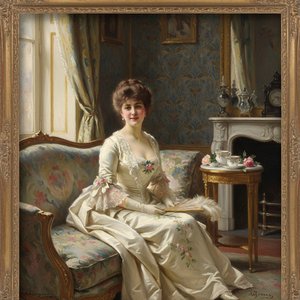
Alfred Stevens: Capturing Parisian Elegance & Fin-de-Siècle Intimacy
Discover the captivating world of Alfred Stevens, master of Parisian elegance & intimate portraiture. Explore his techniques, influences, and legacy – a prized collection for discerning art enthusiasts.

Romantic Realism's Finest: 10 Masterpieces for Your Home | OriginalUniqueArt
Explore 10 defining masterpieces of Romantic Realism! Discover Courbet, Millet & Daumier's powerful paintings—capturing emotion and social realities. Find museum-quality reproductions for your home at OriginalUniqueArt.com.
Realismens Mästare: Topp 10 Konstverk som Fångar Verkligheten – OriginalUniqueArt
Utforska realismens värld med 10 ikoniska konstverk! Lär känna Courbet, Manet och andra mästare. Hitta inspiration & museumkvalitativa konsttryck för ditt hem på OriginalUniqueArt.com – din källan till klassisk och modern målning.