 Förhandsvisa
 Skicka
 Dela
Dela
 Visa detaljer
 Guide
Guide

 Ladda ner
 Liknande objekt
 Röntgen
 Bildspel
 Q&A
Q&A Statistik
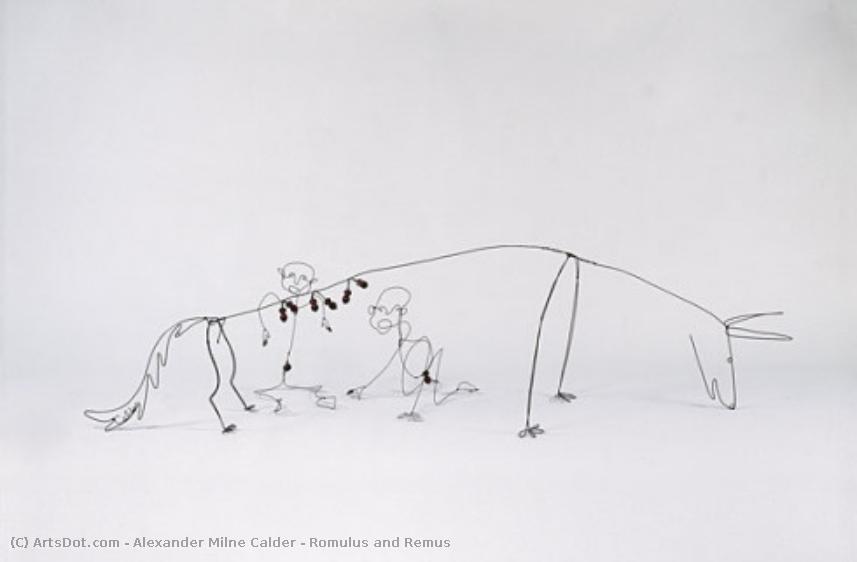
Romulus and Remus


 Visa mer
Få en utskriftsfärdig fil som vida överträffar webbförhandsvisningen. Varje digital bild vi säljer kommer från en högupplöst master i vår bilddatabas – vanligtvis mellan 5 000 och 15 000 pixlar bred – så att du med trygghet kan göra stora utskrifter, beskära tätt eller återge fina detaljer.
Ingen fil lämnar vår studio utan att ha bearbetats. En digital expert kontrollerar färgerna mot originalmålningen och korrigerar dem vid behov, för att sedan förbättra skärpa och detaljrikedom med professionella retuscheringsverktyg — alltid med full respekt för konstnärens penseldrag och stil. Resultatet är en bild som ser ut som målningen, inte som en filtrerad skanning.
Du godkänner innan arbetet slutförs: vår expert skickar bilden via e-post inom 72 timmar för din granskning. Inte nöjd? Be om förbättringar eller korrigeringar, eller begär återbetalning om kvaliteten inte lever upp till förväntningarna.
Detta är den kvalitet som förlag, designstudior, gallerier och tryckerier litar på.
Digital bild
Ladda ner en högupplöst fil för personlig visning, utskrift och kreativa projekt. ( Byt till tryck Beställ handmålad reproduktion)
Ingår i varje beställning av digital bild
Professionell digital leverans, garanterad
När du väljer OriginalUniqueArt.com får du inte bara en bild – du får ett professionellt förädlat digitalt konstverk, skapat med precision och med en garanterad tillfredsställelse. Här är allt som ingår i din beställning, automatiskt:

Snabb leverans via e-post
Din högupplösta digitala bild skickas till dig via e-post inom 72 timmar efter beställning – redo för omedelbar användning.

AI-förbättrad digital fil
Ditt konstverk optimeras professionellt med hjälp av avancerade AI-verktyg och manuell redigering, vilket garanterar maximal detaljrikedom, skärpa och färgnoggrannhet.

Fri livstidsåterleverans
Har du råkat radera eller tappa bort din fil? Ingen oro – vi skickar den kostnadsfritt till dig när som helst.

Inga importavgifter – någonsin
Njut av ditt konstverk omedelbart utan tull, importavgifter eller leveranskostnader – digitala nedladdningar är alltid skattefria.

Garanterad färgåtergivning
Vi säkerställer att din digitala bild återger de ursprungliga färgerna så exakt som möjligt med hjälp av professionella verktyg och färghantering.

100 dagars nöjdhetsgaranti
Om du inte är nöjd med din digitala bild kommer vi att revidera den eller återbetala 100% inom 100 dagar – utan frågor.

100% pengarna-tillbaka-garanti
Inte nöjd? Få full återbetalning inom 100 dagar efter att du mottagit din digitala fil – utan frågor.

Rabatt vid storköp
Köp 3 bilder, spara 10% – Köp 5, spara 15% – Köp 10+, spara 20%. Perfekt för kreativa projekt, gallerier och byråer.
A Moment Frozen in Steel: Exploring Calder’s “Romulus and Remus”
Alexander Milne Calder's "Romulus and Remus," crafted in 1928, isn’t merely a sculpture; it’s a distilled essence of myth rendered in delicate wire. This piece, a testament to the artist’s pioneering approach to three-dimensional form, transcends its subject matter – the legendary founders of Rome – to become a profound meditation on beginnings, brotherhood, and the very act of creation itself. Calder, deeply influenced by Constructivism and early Modernism, sought to liberate sculpture from the constraints of traditional materials, embracing the inherent qualities of industrial wire as both medium and metaphor.
The sculpture’s stark simplicity is its most arresting feature. Two figures, rendered with astonishing grace despite their skeletal construction, stand beneath a subtly arching structure that evokes a horizon line or perhaps a stylized landscape. The color palette – a resolute black and white punctuated by subtle grays – amplifies the work's austerity, forcing the viewer to focus entirely on form and movement. The lines themselves are paramount; thin, almost impossibly delicate wires define every contour, creating an illusion of both fragility and strength. This deliberate reductionist approach mirrors Calder’s broader philosophy: to strip away the superfluous and reveal the fundamental elements of a subject.
The Poetics of Chance and Kinetic Form
Calder's work in this period – particularly his “Cirque Calder” series – exemplifies his fascination with chance and spontaneity. He didn’t meticulously plan every curve or angle; instead, he allowed the wire to guide him, embracing the unpredictable nature of the material. This process is vividly captured in "Romulus and Remus," where the figures appear to be caught mid-action, poised on the precipice of a narrative yet undefined. The slight wobble inherent in the sculpture’s construction – a subtle consequence of its wire composition – hints at a kinetic energy, suggesting that even stillness can hold a dynamic potential.
The technique itself is deceptively complex. Calder skillfully bent and assembled hundreds of individual wires, creating a surprisingly robust structure despite its delicate appearance. The varying thicknesses of the wire contribute to the sculpture’s textural richness, offering subtle shifts in sheen as light catches the metal. This careful manipulation of material speaks to Calder's mastery of his chosen medium – a testament to his ability to transform industrial components into objects of profound beauty and intellectual resonance.
Myth, Brotherhood, and the Dawn of Rome
The subject matter—the story of Romulus and Remus—is deeply rooted in Roman mythology. The legend of the twins suckled by a she-wolf is an enduring symbol of resilience, survival, and the founding of civilization. Calder’s sculpture doesn't simply depict this narrative; it captures its essence – the primal struggle for existence, the bond between brothers, and the birth of a new order. The wire itself can be interpreted as representing the threads that connect us to our past, shaping our present and influencing our future.
Created in 1928, “Romulus and Remus” stands as a pivotal work in Calder’s oeuvre, marking a significant shift towards abstraction while retaining a powerful connection to his artistic roots. It's a sculpture that invites contemplation, prompting viewers to consider the interplay of form, material, and narrative – a timeless meditation on the foundations of human experience.
Frågor och svar
Förvaras "Romulus and Remus" av Alexander Milne Calder i konstnärens hemland?
Nej – konstverket förvaras utomlands. Alexander Milne Calder föddes i Storbritannien, och museet som förvarar originalet av "Romulus and Remus" ligger i USA.
Vem är upphovspersonen till "Romulus and Remus" och vilket år skapades verket?
"Romulus and Remus" är skapad av Alexander Milne Calder och daterad till 1928.
Var kan jag hitta statistik för "Romulus and Remus" av Alexander Milne Calder?
Sidan Besöksstatistik för "Romulus and Remus" av Alexander Milne Calder presenterar statistik över publika besök: månatliga besök för detta konstverk, en jämförelse med konstnärens mest sedda verk samt varifrån besökarna kommer.
Konstnärsbiografi
Introduction to Alexander Milne Calder
Alexander Milne Calder (MILL-nee) was a Scottish American sculptor born in Aberdeen, Scotland on August 23, 1846. He is best known for his architectural sculpture of Philadelphia City Hall and both his son, Alexander Stirling Calder, and grandson, Alexander ‘sandy’ Calder, became significant sculptors in the 20th century.Early Life and Education
Calder was born into a family steeped in artistic tradition. His father, Alexander Stirling Calder, was also a sculptor, and his grandfather, Alexander Milne Calder, had immigrated to Philadelphia in 1868 and is renowned for the colossal statue of William Penn atop Philadelphia City Hall’s tower. Calder attended the Royal Academy in Edinburgh and studied with John Rhind, honing his skills in stone carving from a young age. He traveled extensively, immersing himself in Parisian artistic circles and gaining inspiration from Impressionism and Symbolism. His formal education included studies at South Kensington School and the Pennsylvania Academy of Fine Arts where he learned alongside Thomas Eakins, absorbing techniques and perspectives that would inform his later work.Career Highlights
Calder’s breakthrough came with his commission for Philadelphia City Hall in 1872. Recognizing the immense challenge posed by creating over 250 pieces of marble and bronze—a project spanning two decades—he assembled a dedicated team to realize his vision. This monumental undertaking cemented his reputation as an architectural sculptor, demonstrating unparalleled precision and artistic ambition. He continued to sculpt for many years after City Hall, producing works that celebrated both grandeur and subtlety. Calder’s son, Alexander Stirling Calder, followed in his father's footsteps, becoming a prominent sculptor himself, and his grandson, Alexander ‘sandy’ Calder, further expanded the family legacy within the realm of modern art.Legacy and Influence
Calder’s sculptures stand as testaments to his unwavering commitment to artistic innovation. His mobiles—kinetic sculptures incorporating suspended metal discs—revolutionized sculpture in the mid-20th century, introducing a dynamic element previously absent from traditional forms. Calder's work profoundly impacted subsequent generations of artists, establishing him as a pivotal figure in the history of abstraction and influencing movements like Surrealism. Today, his creations reside in museums worldwide, ensuring that his artistic vision continues to inspire awe and contemplation.Notable Works
Some of Alexander Milne Calder’s most celebrated pieces include:- Philadelphia City Hall: A commission that demanded meticulous planning and execution, resulting in a breathtaking architectural sculpture featuring 250 bronze and marble elements.
- William Penn Statue: Standing atop Philadelphia City Hall's tower, this monumental statue embodies the spirit of American idealism and commemorates Pennsylvania’s founding father.
- Indian Figure: Calder’s sculptural exploration of indigenous culture reflects his fascination with natural forms and geometric abstraction.
- South Portal and West Portal: Illuminated with colored lights, these portals within City Hall showcase Calder's masterful attention to detail and his ability to transform architectural spaces into immersive artistic experiences.

Alexander Milne Calder
1898 - 1976 , Storbritannien
Kort om konstnären
- Artistic Movement Or Style: Architectural sculpture
- Artists Who Influenced This Artist: ['John Rhind']
- Date Of Birth: August 23, 1846
- Date Of Death: June 14, 1923
- Full Name: Alexander Milne Calder
- Nationality: Scottish-American
- Notable Artworks:
- Philadelphia City Hall
- William Penn statue
- Place Of Birth: Aberdeen, Scotland