

 Visa i rummet
 Skicka
 Dela
Dela
 Detaljer
 Studentguide för konstverk

 Ladda ner
 Liknande objekt
 Röntgen
 Bildspel
 Besökstatistik
Nemo


 Läs mer
Konstverket som visas på denna sida skyddas av upphovsrättslagen, vilket innebär att vi inte lagligt kan skapa eller sälja en identisk reproduktion. Detta skydd upprätthålls genom internationella avtal såsom den Bernkonventionen och genom nationella lagar, inklusive de som fastställs av Amerikansk upphovsrättslag – Titel 17. Alla rättigheter förbehållna. Återgivning av konstverk är förbjuden utan skriftligt tillstånd från WahooArt.
Som ett respektfullt och lagligt alternativ erbjuder vi skräddarsydda, handmålade konstverk inspirerade av originalet. Våra skickliga och professionella konstnärer studerar noggrant originalets stil, stämning och konstnärliga essens för att skapa ett nytt, unikt verk som väcker samma känsla – samtidigt som det förblir en originell skapelse i egen rätt.
Denna metod följer fullt ut upphovsrättsliga regler eftersom den inte innebär kopiering eller duplicering av det skyddade konstverket. Istället är det en kreativ nytolkning – en ny målning som är influerad av originalet men inte identisk med det.
Handgjord oljereproduktion
Handmålad olja på duk i din valda storlek och ram, tillverkad efter beställning av våra konstnärer. ( Byt till tryckta exemplar Byt till digital bildförsäljning)




P118B Skr10

P118H Skr10

P118W Skr10

P438Z Skr10

P508JH Skr12

P508YH Skr12

P805H Skr10

P805Z Skr10

P919BZ Skr10

P919G Skr10

P919XJ Skr10

P959ZH Skr10

P968JZ Skr12

W106C Skr8

W218G Skr10

W218JH Skr8

W218Y Skr10

W307PJ Skr10

W316G Skr10

W316PJ Skr8

W316Y Skr10

W398PJ Skr8

W4111J Skr10

W500HY Skr15

W500JH Skr15

W692G Skr12

W849H Skr8

W940BG Skr15

W953PJ Skr8




Välj bland våra förinställda storlekar som motsvarar konstverkets ursprungliga proportioner.

Ange den bredd och höjd du behöver för att passa din ram eller din vägg. Eftersom detta är handmålat kan konstnären vid en annan form måla lite mer runt bilden eller beskära den något – du väljer själv. Vi skickar en digital mockup för godkännande innan målningen påbörjas. Bilden som visas på denna sida representerar inte det slutgiltiga resultatet — det är endast mockuppen som visar det.
Efter beställning kommer OriginalUniqueArt.com team att mejla kunden för instruktioner och tillhandahålla en skissförhandsvisning
Leverans över hela världen () på 3–4 veckor istället för standard 5 veckor. (23 oktober). Inga kompromisser med kvaliteten.

Fri expressfrakt över hela världen

Högkvalitativ linnecanvas

Fullständig fraktförsäkring

Garantier för återbetalning av tullavgifter

Garantier för exakt färgåtergivning

100 dagars returrätt vid fabrikationsfel

100% pengarna tillbaka-garanti

Mängdrabatt erbjuds
 Glasalternativet är endast tillgängligt i storlekar under 110 cm.

Nemo
Tryckteknik
Reproduktionsstorlek
-


Totalpris
Skr 2972
Nemo – A Symphony of Geometric Form and Chance
Alexander Milne Calder’s “Nemo” stands as a testament to the enduring fascination with abstraction—a captivating exploration of color, shape, and movement that transcends mere visual representation. Created in 1947, this striking piece embodies Calder's signature approach: eschewing realism for a deliberate embrace of spontaneity and serendipity, mirroring the very essence of his celebrated mobiles.
The Visual Language of Equilibrium
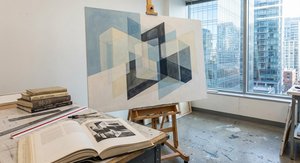
Dominating the canvas is an intricate composition featuring overlapping circles and squares—a bold declaration of geometric principles. The palette bursts with vibrant hues—primarily reds, yellows, and blues—that harmonize to create a dynamic visual experience. Calder meticulously crafted these shapes using a flat painting technique, prioritizing form over texture; there’s no visible brushwork, reflecting his unwavering commitment to precision and control despite the illusion of movement.
A Reflection of Constructivism's Legacy
“Nemo” firmly roots itself within the influential Constructivist movement of the early 20th century. Like its contemporaries—artists who sought to liberate art from traditional conventions—Calder aimed to convey emotion and ideas through simplified geometric forms, rejecting decorative embellishments in favor of intellectual rigor. This stylistic choice underscores Calder’s belief that art should communicate directly with the viewer's intellect as well as their senses.
Symbolism Embedded in Motionless Form
Despite its apparent stillness, “Nemo” pulsates with an underlying sense of dynamism—a subtle suggestion of movement achieved through the careful arrangement of shapes and colors. Calder’s genius lies in transforming static form into a conduit for conveying emotion; the overlapping circles and squares evoke feelings of balance, harmony, and perhaps even controlled chaos. The artist deliberately avoided explicit symbolism, allowing viewers to interpret the artwork's impact on their own emotional landscape.
A Monumental Contribution to Modern Art
Alexander Milne Calder’s “Nemo” represents more than just a beautiful painting—it embodies a pivotal moment in artistic history. His pioneering exploration of kinetic sculpture and his unwavering dedication to geometric abstraction paved the way for subsequent generations of artists, establishing him as one of the most influential sculptors of the 20th century. This artwork continues to inspire admiration for its elegance, innovation, and profound engagement with fundamental principles of visual art.
Frågor och svar
I vilken rörelse och i vilken epok kan "Nemo" av Alexander Milne Calder placeras?
I "Nemo" av Alexander Milne Calder möter Modernism-rörelsen Modernismen-eran.
Hur stark är kontrasten i "Nemo" av Alexander Milne Calder?
Kontrastnivån i "Nemo" av Alexander Milne Calder är Statement.
Vilket museum har originalet till "Nemo"?
Du kan se originalet av "Nemo" på Biennale Internazionale dell'Antiquariato di Firenze, Florens, Italien.
Om konstnären
Introduction to Alexander Milne Calder
Alexander Milne Calder (MILL-nee) was a Scottish American sculptor born in Aberdeen, Scotland on August 23, 1846. He is best known for his architectural sculpture of Philadelphia City Hall and both his son, Alexander Stirling Calder, and grandson, Alexander ‘sandy’ Calder, became significant sculptors in the 20th century.Early Life and Education
Calder was born into a family steeped in artistic tradition. His father, Alexander Stirling Calder, was also a sculptor, and his grandfather, Alexander Milne Calder, had immigrated to Philadelphia in 1868 and is renowned for the colossal statue of William Penn atop Philadelphia City Hall’s tower. Calder attended the Royal Academy in Edinburgh and studied with John Rhind, honing his skills in stone carving from a young age. He traveled extensively, immersing himself in Parisian artistic circles and gaining inspiration from Impressionism and Symbolism. His formal education included studies at South Kensington School and the Pennsylvania Academy of Fine Arts where he learned alongside Thomas Eakins, absorbing techniques and perspectives that would inform his later work.Career Highlights
Calder’s breakthrough came with his commission for Philadelphia City Hall in 1872. Recognizing the immense challenge posed by creating over 250 pieces of marble and bronze—a project spanning two decades—he assembled a dedicated team to realize his vision. This monumental undertaking cemented his reputation as an architectural sculptor, demonstrating unparalleled precision and artistic ambition. He continued to sculpt for many years after City Hall, producing works that celebrated both grandeur and subtlety. Calder’s son, Alexander Stirling Calder, followed in his father's footsteps, becoming a prominent sculptor himself, and his grandson, Alexander ‘sandy’ Calder, further expanded the family legacy within the realm of modern art.Legacy and Influence
Calder’s sculptures stand as testaments to his unwavering commitment to artistic innovation. His mobiles—kinetic sculptures incorporating suspended metal discs—revolutionized sculpture in the mid-20th century, introducing a dynamic element previously absent from traditional forms. Calder's work profoundly impacted subsequent generations of artists, establishing him as a pivotal figure in the history of abstraction and influencing movements like Surrealism. Today, his creations reside in museums worldwide, ensuring that his artistic vision continues to inspire awe and contemplation.Notable Works
Some of Alexander Milne Calder’s most celebrated pieces include:- Philadelphia City Hall: A commission that demanded meticulous planning and execution, resulting in a breathtaking architectural sculpture featuring 250 bronze and marble elements.
- William Penn Statue: Standing atop Philadelphia City Hall's tower, this monumental statue embodies the spirit of American idealism and commemorates Pennsylvania’s founding father.
- Indian Figure: Calder’s sculptural exploration of indigenous culture reflects his fascination with natural forms and geometric abstraction.
- South Portal and West Portal: Illuminated with colored lights, these portals within City Hall showcase Calder's masterful attention to detail and his ability to transform architectural spaces into immersive artistic experiences.

Alexander Milne Calder
1898 - 1976 , Storbritannien
Snabbfakta
- Artistic Movement Or Style: Architectural sculpture
- Artists Who Influenced This Artist: ['John Rhind']
- Date Of Birth: August 23, 1846
- Date Of Death: June 14, 1923
- Full Name: Alexander Milne Calder
- Nationality: Scottish-American
- Notable Artworks:
- Philadelphia City Hall
- William Penn statue
- Place Of Birth: Aberdeen, Scotland
Relaterade artiklar

Beyond Form & Color: Geometric Abstraction's Evolution in 20th/21st Century Art
Explore the evolution of geometric abstraction from Cubism to contemporary art. Discover key artists like Malevich & Mondrian, investment insights, and expert collecting advice at OriginalUniqueArt.

Neo-Abstract Art: The High-Impact Evolution of Modern Visual Energy and Geometric Sophistication
Discover the power of Neo-Abstract art. Explore how bold geometric forms and high-impact visual energy are redefining modern design. Learn to curate sophisticated, high-energy spaces with the latest trends in contemporary abstraction and structural color.
Beyond Form & Color: Geometric Abstraction's Enduring Legacy in Art History
Explore the captivating world of geometric abstraction! Discover its origins, key artists like Malevich & Mondrian, and why this movement remains highly valued by art collectors today. Expert insights at OriginalUniqueArt.

Kandinskys 25 Mästerverk: En Färgstark Resa i Abstrakt Konst | OriginalUniqueArt
Utforska Wassily Kandinskys 25 mest ikoniska verk – från expressionism till abstrakt konst. Lär känna historien bakom mästerverken och hitta inspiration för din heminredning med OriginalUniqueArt.com. Upptäck hela samlingen online!

Geometrisk Abstraktion: Topp 10 Mästverk som Formade Konsten | OriginalUniqueArt.com
Utforska de 10 mästerverk som definierade geometrisk abstraktion! Lär känna Mondrian, Kandinsky & Malevich. Hitta inspiration och museumskvalitativa konsttryck för ditt hem på OriginalUniqueArt.com. Upptäck hela samlingen online!
