

 Förhandsvisa
 Skicka
 Dela
Dela
 Visa detaljer
 Guide
Guide

 Ladda ner
 Liknande objekt
 Röntgen
 Bildspel
 Statistik
Calder's Circus


 Visa mer
Konstverket som visas på denna sida skyddas av upphovsrättslagen, vilket innebär att vi inte lagligt kan skapa eller sälja en identisk reproduktion. Detta skydd upprätthålls genom internationella avtal såsom den Bernkonventionen och genom nationella lagar, inklusive de som fastställs av Amerikansk upphovsrättslag – Titel 17. Alla rättigheter förbehållna. Återgivning av konstverk är förbjuden utan skriftligt tillstånd från WahooArt.
Som ett respektfullt och lagligt alternativ erbjuder vi skräddarsydda, handmålade konstverk inspirerade av originalet. Våra skickliga och professionella konstnärer studerar noggrant originalets stil, stämning och konstnärliga essens för att skapa ett nytt, unikt verk som väcker samma känsla – samtidigt som det förblir en originell skapelse i egen rätt.
Denna metod följer fullt ut upphovsrättsliga regler eftersom den inte innebär kopiering eller duplicering av det skyddade konstverket. Istället är det en kreativ nytolkning – en ny målning som är influerad av originalet men inte identisk med det.
Handgjord oljereproduktion
Handmålad olja på duk i din valda storlek och ram, tillverkad efter beställning av våra konstnärer. ( Byt till tryck Byt till digital bild)




P118B Skr10

P118H Skr10

P118W Skr10

P438Z Skr10

P508JH Skr12

P508YH Skr12

P805H Skr10

P805Z Skr10

P919BZ Skr10

P919G Skr10

P919XJ Skr10

P959ZH Skr10

P968JZ Skr12

W106C Skr8

W218G Skr10

W218JH Skr8

W218Y Skr10

W307PJ Skr10

W316G Skr10

W316PJ Skr8

W316Y Skr10

W398PJ Skr8

W4111J Skr10

W500HY Skr15

W500JH Skr15

W692G Skr12

W849H Skr8

W940BG Skr15

W953PJ Skr8




Välj bland våra förinställda storlekar som motsvarar konstverkets ursprungliga proportioner.

Ange den bredd och höjd du behöver för att passa din ram eller din vägg. Eftersom detta är handmålat kan konstnären, vid ett annat format, måla lite mer runt bilden eller beskära den något – det är du som väljer. Vi skickar en digital mockup för godkännande innan målningen påbörjas. Bilden som visas på denna sida representerar inte det slutgiltiga resultatet — det är endast mockuppen som visar det.
Efter beställning kommer OriginalUniqueArt.com team att mejla kunden för instruktioner och tillhandahålla en skissförhandsvisning
Leverans över hela världen () på 3–4 veckor istället för standard 5 veckor. (26 oktober). Inga kompromisser med kvaliteten.

Fri expressfrakt över hela världen

Högkvalitativ linnecanvas

Fullständig fraktförsäkring

Garantier för återbetalning av tullavgifter

Garantier för exakt färgåtergivning

100 dagars returrätt (endast vid fel)

100% pengarna tillbaka-garanti

Mängdrabatt erbjuds
 Glasalternativet är endast tillgängligt i storlekar under 110 cm.

Calder's Circus
Reproduktionsmetod
Storlek på reproduktion
-


Slutgiltigt pris
Skr 2973
Alexander Milne Calder's Miniature Circus: A Testament to Precision and Play
Alexander Milne Calder’s “Calder’s Circus,” created in 1931, is more than just a charming miniature scene; it’s a meticulously crafted meditation on movement, spectacle, and the enduring allure of childhood dreams. Born in Aberdeen, Scotland, in 1898, Calder’s journey from architectural sculpture to the creation of these intricate tabletop worlds reveals a lifelong fascination with balance, form, and the expressive potential of space. This particular piece, a testament to his burgeoning skill and artistic vision, captures the vibrant energy of a circus performance within a remarkably compact scale.
The photograph itself presents a world meticulously rendered in miniature. The central circus ring, a three-tiered stage for fantastical acts, immediately draws the eye. Each performer – acrobats poised on ropes, a figure balancing with breathtaking poise, and perhaps even a clown amidst the organized chaos – is imbued with a sense of dynamic action frozen in time. Calder’s genius lies not just in depicting these figures but in conveying their movement through subtle shifts in posture and the carefully considered placement of each element. The dark background serves to amplify the richness of the colors employed, creating a dramatic contrast that enhances the visual impact.
Technique and Materials: A Masterclass in Miniature
Calder’s technique is characterized by an almost obsessive attention to detail. The craftsmanship displayed here is extraordinary, utilizing a variety of materials and textures to achieve remarkable depth within the miniature world. Notice the varied patterns and colors of the performers' costumes – each suggesting a distinct character or act, inviting the viewer to imagine the unfolding spectacle. The flooring, rendered in a realistic wooden texture, contrasts beautifully with the smooth finish of the ropes and banners, further emphasizing the tactile quality of the piece. This careful manipulation of materials speaks to Calder’s dedication to realism within his abstract forms.
The use of bold lettering – “CIRCUS” emblazoned across the flags – adds a layer of theatricality, reinforcing the theme of performance and spectacle. The placement of these banners, along with the surrounding poles, contributes to the overall sense of organized chaos that defines a circus environment. It’s clear Calder wasn't simply replicating a scene; he was constructing an illusion, a carefully orchestrated representation of a beloved tradition.
Symbolism and Historical Context
"Calder’s Circus" reflects the broader artistic trends of the early 20th century, particularly the rise of Surrealism and Dadaism. While Calder wouldn't be formally associated with these movements, his work shares their emphasis on playful distortion, dreamlike imagery, and a rejection of traditional representational norms. The circus itself has long been a potent symbol – representing escape, illusion, and the triumph of imagination over reality. Created in 1931, during the Great Depression, this piece may also be interpreted as a nostalgic yearning for simpler times and a celebration of human ingenuity and entertainment.
This miniature circus is a captivating example of Alexander Milne Calder’s artistic talent and his ability to transform everyday subjects into extraordinary works of art. A hand-painted reproduction offers an unparalleled opportunity to bring this intricate scene into your home, adding a touch of whimsy, elegance, and historical significance to any interior space.
Frågor och svar
Var placerar sig "Calder's Circus" av Alexander Milne Calder i konsthistorien?
Den konsthistoriska klassificeringen av "Calder's Circus" av Alexander Milne Calder är Kinetic Sculpture, under perioden 19th Century.
Vilken känsla förmedlar "Calder's Circus" som present?
Den Joyful tonen i "Calder's Circus" av Alexander Milne Calder passar perfekt för det rekommenderade tillfället: Birthday.
Vem är upphovspersonen till "Calder's Circus" och vilket år skapades verket?
"Calder's Circus" är skapad av Alexander Milne Calder och daterad till 1931.
Konstnärsbiografi
Introduction to Alexander Milne Calder
Alexander Milne Calder (MILL-nee) was a Scottish American sculptor born in Aberdeen, Scotland on August 23, 1846. He is best known for his architectural sculpture of Philadelphia City Hall and both his son, Alexander Stirling Calder, and grandson, Alexander ‘sandy’ Calder, became significant sculptors in the 20th century.Early Life and Education
Calder was born into a family steeped in artistic tradition. His father, Alexander Stirling Calder, was also a sculptor, and his grandfather, Alexander Milne Calder, had immigrated to Philadelphia in 1868 and is renowned for the colossal statue of William Penn atop Philadelphia City Hall’s tower. Calder attended the Royal Academy in Edinburgh and studied with John Rhind, honing his skills in stone carving from a young age. He traveled extensively, immersing himself in Parisian artistic circles and gaining inspiration from Impressionism and Symbolism. His formal education included studies at South Kensington School and the Pennsylvania Academy of Fine Arts where he learned alongside Thomas Eakins, absorbing techniques and perspectives that would inform his later work.Career Highlights
Calder’s breakthrough came with his commission for Philadelphia City Hall in 1872. Recognizing the immense challenge posed by creating over 250 pieces of marble and bronze—a project spanning two decades—he assembled a dedicated team to realize his vision. This monumental undertaking cemented his reputation as an architectural sculptor, demonstrating unparalleled precision and artistic ambition. He continued to sculpt for many years after City Hall, producing works that celebrated both grandeur and subtlety. Calder’s son, Alexander Stirling Calder, followed in his father's footsteps, becoming a prominent sculptor himself, and his grandson, Alexander ‘sandy’ Calder, further expanded the family legacy within the realm of modern art.Legacy and Influence
Calder’s sculptures stand as testaments to his unwavering commitment to artistic innovation. His mobiles—kinetic sculptures incorporating suspended metal discs—revolutionized sculpture in the mid-20th century, introducing a dynamic element previously absent from traditional forms. Calder's work profoundly impacted subsequent generations of artists, establishing him as a pivotal figure in the history of abstraction and influencing movements like Surrealism. Today, his creations reside in museums worldwide, ensuring that his artistic vision continues to inspire awe and contemplation.Notable Works
Some of Alexander Milne Calder’s most celebrated pieces include:- Philadelphia City Hall: A commission that demanded meticulous planning and execution, resulting in a breathtaking architectural sculpture featuring 250 bronze and marble elements.
- William Penn Statue: Standing atop Philadelphia City Hall's tower, this monumental statue embodies the spirit of American idealism and commemorates Pennsylvania’s founding father.
- Indian Figure: Calder’s sculptural exploration of indigenous culture reflects his fascination with natural forms and geometric abstraction.
- South Portal and West Portal: Illuminated with colored lights, these portals within City Hall showcase Calder's masterful attention to detail and his ability to transform architectural spaces into immersive artistic experiences.

Alexander Milne Calder
1898 - 1976 , Storbritannien
Kortfakta
- Artistic Movement Or Style: Architectural sculpture
- Artists Who Influenced This Artist: ['John Rhind']
- Date Of Birth: August 23, 1846
- Date Of Death: June 14, 1923
- Full Name: Alexander Milne Calder
- Nationality: Scottish-American
- Notable Artworks:
- Philadelphia City Hall
- William Penn statue
- Place Of Birth: Aberdeen, Scotland
Relaterade artiklar

Bronsålderns Mästerverk: 10 Skulpturer Som Förändrade Konsthistorien | OriginalUniqueArt
Upptäck 10 legendariska brons skulpturer som revolutionerade konsthistorien! Lär känna Rodin, Michelangelo och andra mästare. Köp museumkvalitativa repliker & hitta inspiration för din inredning på OriginalUniqueArt.com.
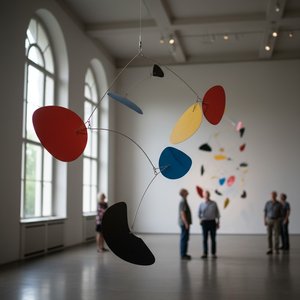
Alexander Calder: Kinetic Sculpture, Mobile Art & the Poetics of Chance
Explore the revolutionary world of Alexander Calder's kinetic sculptures & mobiles. Discover insights for collectors, acquisition advice, and the enduring legacy of this modern master. Expert analysis & art valuation.

The Enduring Form: Sculpture Across History, Technique & Emotional Resonance
Explore the rich history of sculpture with OriginalUniqueArt. Discover key techniques, influential artists & investment potential for discerning collectors. Expert insights into valuing and collecting timeless masterpieces.

The Enduring Form: Exploring Themes & Techniques in Sculpture Across Historical Periods
Explore the rich history of sculpture from ancient masterpieces to contemporary innovations. Discover key techniques, influential artists & investment potential for discerning art collectors.

10 Bronsskulpturer Som Förändrade Konsthistorien – Upptäck Mästerverken
Utforska 10 legendariska bronsmästerverk som revolutionerade konsten! Lär känna Michelangelo, Rodin och andra ikoniska skulptörer. Hitta inspiration & museumskvalitativa konsttryck på OriginalUniqueArt.com – för en tidlös inredning.
