

 Förhandsvisa
 Skicka
 Dela
Dela
 Visa detaljer
 Guide
Guide

 Ladda ner
 Liknande objekt
 Röntgen
 Bildspel
 Statistik
St Jerome


 Visa mer
Giclée / Konsttryck
Giclée- eller canvasprint av museumskvalitet med snabb produktion och flexibla ytbehandlingsalternativ. ( Beställ handmålad reproduktion Byt till digital bild)




P118B Skr10

P118H Skr10

P118W Skr10

P438Z Skr10

P508JH Skr12

P508YH Skr12

P805H Skr10

P805Z Skr10

P919BZ Skr10

P919G Skr10

P919XJ Skr10

P959ZH Skr10

P968JZ Skr12

W106C Skr8

W218G Skr10

W218JH Skr8

W218Y Skr10

W307PJ Skr10

W316G Skr10

W316PJ Skr8

W316Y Skr10

W398PJ Skr8

W4111J Skr10

W500HY Skr15

W500JH Skr15

W692G Skr12

W849H Skr8

W940BG Skr15

W953PJ Skr8




Välj bland våra förinställda storlekar som motsvarar konstverkets ursprungliga proportioner.

Ange den bredd och höjd du behöver för att passa din ram eller vägg. Ett tryck kan endast beskäras, aldrig göras större än originalbilden, vilket innebär att ett format med en annan proportion leder till att en del av bilden går förlorad. Vi skickar en digital mockup för godkännande innan vi påbörjar tryckningen. Bilden som visas på denna sida visar inte den faktiska beskärningen — det är endast mockuppen som gör det.
Leverans över hela världen () på 2 veckor istället för standard 4/5 veckor. (25 oktober)

Fri expressfrakt över hela världen

Högkvalitativ linnecanvas

Fullständig fraktförsäkring

Garantier för återbetalning av tullavgifter

Garantier för exakt färgåtergivning

100 dagars returrätt (endast vid fel)

100% pengarna tillbaka-garanti

Mängdrabatt erbjuds
 Glasalternativet är endast tillgängligt i storlekar under 110 cm.

St Jerome
Giclée / Konsttryck
Storlek på reproduktion
-


Slutgiltigt pris
Skr 793
Alessandro Vittoria’s St. Jerome: A Study in Contemplation
Alessandro Vittoria's "St. Jerome," crafted around 1565, offers a profoundly intimate glimpse into the heart of Renaissance spirituality. This sculpture, meticulously realized in weathered marble, transcends mere portraiture; it embodies the very essence of St. Jerome’s life as a scholar, hermit, and devout figure. The work's power resides not just in its technical brilliance but also in the palpable sense of contemplation that emanates from the seated saint. Vittoria, a key figure within the artistic landscape of Trento – his birthplace and the setting for this piece – demonstrates a mastery of form and texture rarely seen outside the workshops of the great masters.
- Subject Matter: The sculpture depicts St. Jerome in his characteristic pose, seated at a desk with a book and a skull. This arrangement immediately anchors the viewer to the saint’s dual identity – as a devoted scholar immersed in scripture and as a penitent confronting mortality.
- Technique: Vittoria's skill is evident in the incredibly detailed rendering of the marble. The folds of Jerome’s robes are sculpted with remarkable precision, conveying both weight and movement. The texture of the book and the skull is equally convincing, adding to the sculpture’s realism and tactile quality.
- Historical Context: Created during a period of intense religious reform and artistic innovation, "St. Jerome" reflects the broader trends of the late Renaissance. The influence of artists like Michelangelo and Raphael can be discerned in Vittoria's approach to anatomy and composition, albeit filtered through his own distinct style.
The Setting: A Painted Narrative
What elevates “St. Jerome” beyond a simple sculptural portrait is the inclusion of a painted backdrop – a scene depicting figures engaged in an interaction. This juxtaposition immediately introduces layers of interpretation. The painting, likely executed in a style reminiscent of the Renaissance or early Baroque period, serves not merely as decoration but as a narrative element that deepens our understanding of St. Jerome’s life and spiritual journey. The dramatic use of light and shadow within the painted scene – a hallmark of the era – further enhances its visual impact, creating a sense of depth and dynamism.
- Composition: The placement of the sculpture in the foreground, with the painting serving as a backdrop, creates a powerful visual dialogue. It invites the viewer to consider the relationship between the tangible world of the statue and the more ethereal realm represented by the painted scene.
- Symbolism (Painting): While the precise meaning of the figures within the painting remains open to interpretation, they likely represent allegorical representations of virtues or events from St. Jerome’s life – perhaps his struggles with temptation, his conversion, or his dedication to prayer.
Alessandro Vittoria: The Architect of the Renaissance
Alessandro Vittoria (1525-1608), born in Trento, was a pivotal figure in the artistic landscape of Northern Italy. His work exemplifies the transition between Mannerism and the burgeoning Baroque style, demonstrating a remarkable ability to synthesize classical ideals with contemporary sensibilities. Often overshadowed by his more famous contemporaries, Vittoria’s influence extended across multiple disciplines – sculpture, painting, and architecture – reflecting a truly Renaissance polymath. His meticulous attention to detail, combined with a profound understanding of human anatomy and spatial relationships, cemented his reputation as one of the most accomplished artists of his time.
Biography Snippet: "Albrecht Dürer: The Architect of the Renaissance" – This evocative phrase captures Vittoria's ambition to emulate the achievements of the great German artist, demonstrating a desire for innovation and mastery within the established artistic traditions.Emotional Impact & Artistic Value
“St. Jerome” is more than just a beautiful sculpture; it’s an invitation to contemplate profound questions about faith, knowledge, and mortality. The weathered appearance of the marble adds a sense of age and solemnity, suggesting that this work has witnessed centuries of reflection. Its enduring appeal lies in its ability to connect us with the timeless themes explored by St. Jerome himself. A hand-painted reproduction offers an unparalleled opportunity to experience the full impact of Vittoria’s vision – a testament to his skill and a window into the spiritual heart of the Renaissance.
Frågor och svar
Har "St Jerome" starka ljus-mörkerkontraster?
Kontrastnivån i "St Jerome" av Alessandro Vittoria är Statement.
Hur kan jag få en digital fil av "St Jerome" av Alessandro Vittoria?
För att få en digital fil av "St Jerome" av Alessandro Vittoria, beställ en högupplöst digital bildnedladdning på dess Digital bild i hög upplösning-sida.
Är "St Jerome" typisk för vad Alessandro Vittoria vanligtvis skapade?
"St Jerome" skildrar st jerome, sculpture, renaissance, contemplation, skull, marble, italy, medan Alessandro Vittorias dokumenterade teman är dürer’s renaissance ideals, religious contemplation, jerome”, “baroque influence, italy”, sculptural representation, legacy. En jämförelse mellan dessa visar hur verket förhåller sig till konstnärens vanliga motiv.
Konstnärsbiografi
Albrecht Dürer: Renässansens arkitekt
Albrecht Dürer, ett namn synonymt med den tyska renässanskonsten, står som en av de mest inflytelserika gestalterna inom europeiskt måleri och grafik under 1500-talet. Född i Nürnberg 1471, var hans liv ett vittnesbörd om konstnärlig ambition, intellektuell nyfikenhet och en outtröttlig strävan efter perfektion. Mer än bara en målare var Dürer en noggrann observatör, en matematisk tänkare och en pionjär som överbryggade klyftan mellan nordeuropeisk realism och de framväxande idealen inom den italienska högrenässansens konst. Hans arv sträcker sig långt bortom hans enskilda mästerverk; han formade i grunden utvecklingen av konstnärlig teknik och teori, och lämnade ett outplånligt avtryck på kommande generationer av konstnärer.
Dürers tidiga liv var djupt rotat i den livliga handelsmetropolen Nürnberg, en stad känd för sin blomstrande handel och växande borgarklass. Hans far, Albrecht Dürer den äldre, var guldsmed och mästertryckare, vilket gav unge Albrecht en ovärderlig grund inom hantverk och konstnärlig produktion. Han fick sin första utbildning under Adam Kraft, en lokal målare, innan han som lärling arbetade hos den tyska mästertryckaren Hans Holbein den ästare i Augsburg omkring 1493. Denna formativa period exponerade honom för de sofistikerade teknikerna inom gravyr och etsning, färdigheter som han senare skulle bemästra med oöverträffad precision. Tiden hos Holbein ingöt i honom en djup uppskattning för detaljrikedom, klarhet och linjens uttrycksfulla kraft – egenskaper som skulle bli kännetecken för hans särpräglade stil.
Ett geni blomstrar: Stora verk och konstnärlig utveckling
Dürers konstnärliga produktion spände över ett anmärkningsvärt spektrum av motiv och medier. Hans tidiga verk, såsom Sankta Anna (1498) och De tre kungars tillbedjan (1503–1505), uppvisar en mästerlig kontroll över perspektiv och färg, vilket speglar inflytandet från italienska renässansmästare som Andrea Mantegna. Det var dock genom hans träsnittsserier – särskilt Apokalypsen (1498) och Den stora passionshistorien (1507–1508) – som han verkligen etablerade sig som en betydande konstnärlig kraft. Dessa intrikata tryck visade upp hans extraordinära tekniska skicklighet, hans förmåga att förmedla komplexa berättelser genom noggrant återgivna figurer, samt hans innovativa användning av linjer och skuggning.
Mitten av 1500-talet markerade höjdpunkten för Dürers kreativa produktion. Denna period bevittnade skapandet av några av hans mest hyllade verk: Melencolia I (1514), ett hjemsökande självporträtt som utforskar teman om konstnärlig frustration och existentiell förtvivlan; Riddaren, döden och djävulen (1518), en komplex allegorisk komposition som brottas med dödlighet och mänsklig ambition; samt serien av gravyrer kända som Bönerna, vilka skildrar scener ur Kristi liv. Noterbart är även Dürers engagemang för geometri och proportion under denna tid, vilket framgår i verk som De fyra böckerna om mätning (1525), en banbrytande avhandling som förenade konstnärliga principer med matematisk teori och demonstrerade hans övertygelse om att konsten bör vila på en rationell grund.
En bro mellan traditioner: Inflytanden och innovationer
Dürers konstnärliga utveckling formades av ett komplext samspel av influenser. Han absorberade de stilistiska innovationerna från italienska renässansmästare som Leonardo da Vinci och Rafael, särskilt deras betoning på naturalism, perspektiv och mänsklig anatomi. Samtidigt förblev han djupt rotad i den nordeuropeiska konsttraditionen, där han hämtade inspiration från tyska altartavlor och den noggranna detaljrikedom som kännetecknar flamländskt måleri. Hans arbete representerar en unik syntes av dessa olika influenser och skapar en stil som är både slående modern och djupt klassisk.
Dürers innovationer sträckte sig bortom hans tekniska färdighet. Han var en pionjär med nya tekniker inom grafiken, särskilt användningen av korsskuggning för att skapa subtila tonala variationer. Hans noggranna öga för detaljer, hans rigorösa inställning till komposition och hans utforskande av komplexa allegoriska teman satte en ny standard för konstnärlig excellens. Vidare demonstrerade Dürers teoretiska skrifter – inklusive Underweysung der Messung mit dem Zirckel und Richtscheyt – hans engagemang för att lyfta konsten bortom ren imitation och mot en mer intellektuell och rationell disciplin.
Arv och historisk betydelse
Albrecht Dürer avled i Nürnberg 1528 och lämnade efter sig en omfattande och inflytelserik produktion. Hans målningar, tryck och teoretiska skrifter fortsätter att studeras och beundras av både konstnärer och forskare. Han betraktas som en av de viktigaste gestalterna i den västerländska konsthistorien, inte bara för sina enskilda mästerverk utan också för sin djupgående inverkan på konstnärlig teknik, teori och representation. Dürers arv sträcker sig långt bortom renässansen; han hjälpte till att lägga grunden för det moderna grafikkonstverket och påverkade generationer av konstnärer som följde i hans fotspår. Hans outtröttliga strävan efter perfektion, hans intellektuella nyfikenhet och hans orubbliga hängivenhet till konstnärlig excellens tjänar som en evig inspiration för alla som söker förstå konstens kraft och potential.

Alessandro Vittoria
1525 - 1608 , Italien
Kortfakta
- Artistic Movement Or Style: Flandernmåleri
- Artists Or Movements Influenced By This Artist: ['Hans söner, Jan & Pieter Bruegel II']
- Artists Who Influenced This Artist: ['Pieter Coecke van Aelst']
- Date Of Birth: 1525
- Date Of Death: 1569
- Full Name: Pieter Bruegel den äldre
- Nationality: Flamländsk
- Notable Artworks:
- Bondbröllop
- Jägare i snön
- Guldsmeden
- De oskyldigas martyr
- Place Of Birth: Breda, Brabant
Relaterade artiklar

Bronsålderns Mästerverk: 10 Skulpturer Som Förändrade Konsthistorien | OriginalUniqueArt
Upptäck 10 legendariska brons skulpturer som revolutionerade konsthistorien! Lär känna Rodin, Michelangelo och andra mästare. Köp museumkvalitativa repliker & hitta inspiration för din inredning på OriginalUniqueArt.com.

The Enduring Allure of Marble in Art History: From Classical Sculpture to Modern Abstraction
Explore the captivating history of marble sculpture from ancient Greece to modern art. Discover renowned artists like Canova & Michelangelo, carving techniques, and investment insights at OriginalUniqueArt.
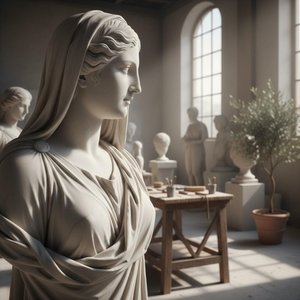
Timeless Elegance: A Complete Guide to the Sublime Beauty and Artistry of Marble Sculpture
Discover the sublime beauty of marble art through an expert exploration of Renaissance and Neoclassical masterpieces. From the delicate textures of Carpeaux to the grandeur of Sansovino, immerse yourself in a guide to timeless elegance and sculptural perfection.

The Enduring Form: Exploring Themes & Techniques in Sculpture Across Historical Periods
Explore the rich history of sculpture from ancient masterpieces to contemporary innovations. Discover key techniques, influential artists & investment potential for discerning art collectors.

The Enduring Form: Sculpture Across History, Technique & Emotional Resonance
Explore the rich history of sculpture with OriginalUniqueArt. Discover key techniques, influential artists & investment potential for discerning collectors. Expert insights into valuing and collecting timeless masterpieces.