

 Visa i rummet
 Skicka
 Dela
Dela
 Detaljer
 Studentguide för konstverk

 Ladda ner
 Liknande objekt
 Röntgen
 Bildspel
 Besökstatistik
Untitled (286)
 Läs mer
Konstverket som visas på denna sida skyddas av upphovsrättslagen, vilket innebär att vi inte lagligt kan skapa eller sälja en identisk reproduktion. Detta skydd upprätthålls genom internationella avtal såsom den Bernkonventionen och genom nationella lagar, inklusive de som fastställs av Amerikansk upphovsrättslag – Titel 17. Alla rättigheter förbehållna. Återgivning av konstverk är förbjuden utan skriftligt tillstånd från WahooArt.
Denna metod följer fullt ut upphovsrättsliga regler eftersom den inte innebär kopiering eller duplicering av det skyddade konstverket. Istället är det en kreativ nytolkning – en ny målning som är influerad av originalet men inte identisk med det.
Giclée / Konsttryck
Giclée- eller canvasprint av museumskvalitet med snabb produktion och flexibla ytbehandlingsalternativ. ( Köp handmålat konstverk Byt till digital bildförsäljning)




































Välj bland våra förinställda storlekar som motsvarar konstverkets ursprungliga proportioner.

Ange den bredd och höjd du behöver, för att passa din ram eller din vägg. Ett tryck kan endast beskäras, aldrig göras större än bilden, vilket innebär att ett format med en annan formform leder till att en del av bilden går förlorad. Vi skickar en digital mockup för godkännande innan vi trycker något. Bilden som visas på denna sida visar inte den faktiska beskärningen — det är endast mockuppen som gör det.
Leverans över hela världen () på 2 veckor istället för standard 4/5 veckor. (24 oktober)

Fri expressfrakt över hela världen

Högkvalitativ linnecanvas

Fullständig fraktförsäkring

Garantier för återbetalning av tullavgifter

Garantier för exakt färgåtergivning

100 dagars returrätt vid fabrikationsfel

100% pengarna tillbaka-garanti

Mängdrabatt erbjuds
 Glasalternativet är endast tillgängligt i storlekar under 110 cm.

Untitled (286)
Giclée / Konsttryck
Reproduktionsstorlek
-


Totalpris
Skr 793
Om konstnären
A Catalan Renaissance Man: The Life and Art of Albert Ràfols-Casamada
Albert Ràfols-Casamada, born in Barcelona in 1923 and passing away in 2009, was more than just a painter; he embodied a true renaissance spirit within the vibrant Catalan art scene. Coming from an artistic lineage – his father, Albert Ràfols i Cullerés, was also a respected painter – young Albert initially pursued a path in architecture at the University of Barcelona beginning in 1942. However, the allure of pure creative expression proved too strong, and by 1948 he had fully dedicated himself to painting. This decision marked not an abandonment of structure, but rather a shift towards constructing worlds through color, form, and texture. His early work resonated with post-expressionist and figurative styles, laying a crucial foundation for the abstract explorations that would define his mature artistic voice. Even in these initial phases, a poetic sensibility was evident, hinting at the deeper emotional currents that would consistently flow beneath the surface of his art. The formation of “Els Vuit” (“The Eight”) in 1946 – a collective uniting poets, sculptors, musicians, and painters – provided an essential platform for Ràfols-Casamada to exhibit alongside kindred spirits and establish himself within Barcelona’s burgeoning artistic community.Parisian Influences and the Path to Abstraction
A pivotal moment in Ràfols-Casamada's development arrived with a scholarship that allowed him to study art in Paris from 1950 to 1954. This period, shared with his future wife Maria Girona and fellow Catalan artists like Josep Guinovart and Antoni Tàpies, proved transformative. Immersed in the European artistic landscape, he absorbed new ideas and techniques, witnessing firsthand the currents shaping modern art. Paris served as a crucible where his nascent talent was refined and directed towards abstraction. The influence of Henri Matisse is palpable in Ràfols-Casamada’s later use of color and composition, while North American abstract expressionism contributed to his exploration of gesture and emotional intensity. Yet, he never fully surrendered to external trends; instead, he synthesized these influences with a distinctly Mediterranean sensibility rooted in the *noucentisme* movement – a Catalan aesthetic that sought to blend classical ideals with modern innovation. This unique fusion resulted in an abstract style characterized by poetic renderings of everyday reality, where seemingly simple forms and colors held layers of meaning and emotional resonance.Beyond the Canvas: Education, Poetry, and Public Art
Ràfols-Casamada’s creative energy extended far beyond the confines of painting. He was a multifaceted artist deeply committed to fostering artistic growth in others. In 1967, he co-founded the EINA school of art and design in Barcelona, modeled on the principles of the Bauhaus – emphasizing interdisciplinary learning and practical application. For seventeen years, he served as its director, shaping generations of Catalan artists and designers. This dedication to education underscores his belief in the power of art to transform individuals and society. Simultaneously, Ràfols-Casamada pursued a parallel career as a poet, beginning to write in 1939 and publishing his first volume, *Com una capsa*, in 1972, followed by the critically acclaimed anthology *Signe d'aire* in 1976. His poetry, primarily written in Catalan, often explored themes of everyday life and artistic expression, mirroring the introspective quality found within his paintings. He also extended his artistic vision into public spaces, creating murals – notably “Les Quatre Estacions” in Barcelona and a significant work in Lyon – demonstrating his ability to integrate art seamlessly into the urban environment.A Lasting Legacy: Recognition and Enduring Influence
Albert Ràfols-Casamada’s contributions to Spanish and Catalan art were widely recognized during his lifetime, culminating in numerous accolades including the National Plastic Arts Prize in 1980 and the Catalonia Visual Arts Prize in 2003. A major retrospective of his work held at the Barcelona Museum of Contemporary Art (MACBA) and the Valencian Institute of Modern Art (IVAM) in 2001 solidified his position as a leading figure in Catalan art history. His works now grace prestigious collections worldwide, including the Guggenheim Museum in New York, the Centre Georges Pompidou in Paris, the British Museum in London, and the Museu Nacional d'Art de Catalunya (MNAC) in Barcelona – testaments to his enduring artistic significance. Even after his death in 2009, his legacy continues to inspire. The generous donation of his personal archive to the Library of Catalonia ensures that future generations will have access to a wealth of materials documenting his creative process and intellectual pursuits. Ràfols-Casamada’s art remains a powerful reminder of the transformative potential of abstraction, the importance of artistic education, and the enduring beauty of poetic expression. He stands as a pivotal figure in 20th-century Catalan art, bridging tradition and innovation with grace and profound sensitivity.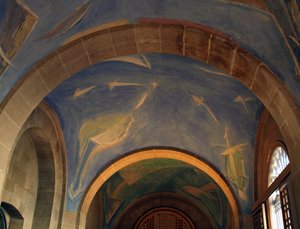
Albert Ràfols-Casamada
1923 - 2009 , Spain
Snabbfakta
- Artistic Movement Or Style: Abstract art, Post-expressionism
- Artists Who Influenced This Artist: ['Henri Matisse']
- Date Of Birth: 1923
- Date Of Death: 2009
- Full Name: Albert Ràfols-Casamada
- Nationality: Spanish
- Notable Artworks:
- Rafols Casamadact
- Rafols Casamada
- Untitled (231)
- Place Of Birth: Barcelona, Spain