

 Förhandsvisa
 Skicka
 Dela
Dela
 Visa detaljer
 Guide
Guide

 Ladda ner
 Liknande objekt
 Röntgen
 Bildspel
 Statistik
Pegasus Departing
 Oil On Canvas
- WallArt
- Romanticism
 1901
1901- 19th Century
 36.0 x 44.0 cm
 Visa mer
Giclée / Konsttryck
Giclée- eller canvasprint av museumskvalitet med snabb produktion och flexibla ytbehandlingsalternativ. ( Beställ handmålad reproduktion Byt till digital bild)




P118B Skr10

P118H Skr10

P118W Skr10

P438Z Skr10

P508JH Skr12

P508YH Skr12

P805H Skr10

P805Z Skr10

P919BZ Skr10

P919G Skr10

P919XJ Skr10

P959ZH Skr10

P968JZ Skr12

W106C Skr8

W218G Skr10

W218JH Skr8

W218Y Skr10

W307PJ Skr10

W316G Skr10

W316PJ Skr8

W316Y Skr10

W398PJ Skr8

W4111J Skr10

W500HY Skr15

W500JH Skr15

W692G Skr12

W849H Skr8

W940BG Skr15

W953PJ Skr8




Välj bland våra förinställda storlekar som motsvarar konstverkets ursprungliga proportioner.

Ange den bredd och höjd du behöver för att passa din ram eller vägg. Ett tryck kan endast beskäras, aldrig göras större än originalbilden, vilket innebär att ett format med en annan proportion leder till att en del av bilden går förlorad. Vi skickar en digital mockup för godkännande innan vi påbörjar tryckningen. Bilden som visas på denna sida visar inte den faktiska beskärningen — det är endast mockuppen som gör det.
Leverans över hela världen () på 2 veckor istället för standard 4/5 veckor. (26 oktober)

Fri expressfrakt över hela världen

Högkvalitativ linnecanvas

Fullständig fraktförsäkring

Garantier för återbetalning av tullavgifter

Garantier för exakt färgåtergivning

100 dagars returrätt (endast vid fel)

100% pengarna tillbaka-garanti

Mängdrabatt erbjuds
 Glasalternativet är endast tillgängligt i storlekar under 110 cm.

Pegasus Departing
Giclée / Konsttryck
Storlek på reproduktion
-


Slutgiltigt pris
Skr 793
A Visionary Flight Through Myth and Shadow
In the hauntingly beautiful oil painting "Pegasus Departing," created in 1901, the enigmatic American master Albert Pinkham Ryder invites us into a realm where the boundaries between reality and myth dissolve. The canvas captures a moment of profound transition, featuring the legendary winged horse, Pegasus, ascending into an atmospheric sky above two grounded human figures. This is not merely a depiction of a mythological event; it is a visceral experience of movement and transcendence. The composition is masterfully dynamic, with the powerful silhouette of Pegasus dominating the upper reaches of the frame, pulling the viewer's gaze upward in a rhythmic, sweeping motion that mimics the very flight it portrays.
Ryder’s unique approach to Romantic Symbolism breathes life into this ancient legend. Rather than adhering to the rigid anatomical precision of classical academic art, Ryder employs a loose, expressive technique that prioritizes emotional truth over literal representation. The sky is not a simple backdrop but a swirling, nebulous expanse of clouds and light, rendered with heavy impasto textures. These thick, tactile layers of paint create a physical presence on the canvas, where every visible brushstroke contributes to the painting's energetic and slightly chaotic atmosphere. This technique allows the light to appear diffused and ethereal, casting a dreamlike glow over the scene that suggests a world caught in the twilight of memory or the dawn of a divine revelation.
The Language of Symbolism and Emotion
Beyond its striking visual impact, "Pegasus Departing" serves as a profound meditation on the themes of freedom, inspiration, and the human condition. In the lexicon of art history, Pegasus often represents the soaring power of poetic inspiration and the divine spark within the soul. As the winged horse breaks away from the earthbound figures below, there is an inherent tension between the terrestrial and the celestial. The human figures, positioned at the base of the composition, provide a sense of scale and gravity, grounding the viewer in the mortal realm even as their eyes are drawn toward the heavens. This duality evokes a complex emotional spectrum—a mixture of awe and wonder at the majesty of flight, tempered by a touch of melancholy for the world left behind.
For the discerning collector or interior designer, this piece offers more than just aesthetic beauty; it provides a focal point of deep intellectual and emotional resonance. The organic, amorphous shapes and the moody, tonalist palette make it an exquisite addition to spaces that value narrative depth and atmospheric sophistication. Whether placed in a curated gallery setting or as a centerpiece in a refined living space, "Pegasus Departing" acts as a window into the subconscious. It is a work that demands contemplation, inviting anyone who stands before it to lose themselves in its swirling textures and to contemplate the eternal dance between the earthly and the divine.
Frågor och svar
Vilken fas i Albert Pinkham Ryders karriär tillhör "Pegasus Departing" (1901)?
"Pegasus Departing", skapat år 1901, tillhör den Mature Period av Albert Pinkham Ryders karriär.
Vad föreställer "Pegasus Departing" av Albert Pinkham Ryder?
Motiven i "Pegasus Departing" är mythological figure, winged horse symbolism, dreamlike imagery, ethereal landscape, romantic narrative, divine inspiration, flight and freedom, ancient mythology.
Var kan jag köpa ett tryck av "Pegasus Departing" av Albert Pinkham Ryder?
För att beställa ett tryck av "Pegasus Departing" av Albert Pinkham Ryder, gå helt enkelt till dess sida för Konsttryck i hög kvalitet: ett konsttryck på bomullscanvas eller arkivbeständigt canvaspapper.
Konstnärsbiografi
Early Life and Artistic Beginnings
Albert Pinkham Ryder, born March 19, 1847, in New Bedford, Massachusetts, remains a somewhat enigmatic figure in American art history. Details of his childhood are scarce, shrouded in the mists that would later become so characteristic of his paintings. However, it is known that he began to explore his artistic inclinations early on, capturing the landscapes of his native New Bedford with nascent skill. This coastal upbringing, steeped in the atmosphere of a bustling whaling port, undoubtedly left an indelible mark on his imagination and would resurface throughout his career as a recurring source of inspiration. He was the youngest of four sons; little else is known of his formative years beyond accounts of his family’s involvement in the whaling industry—a profession that profoundly shaped the cultural landscape of New Bedford during Ryder's youth. Despite limited biographical information, evidence suggests he possessed an innate fascination with visual representation from a young age, sketching scenes of the harbor and coastline with considerable aptitude. This early exposure to natural beauty would become a cornerstone of his artistic vision for decades to come.Formal Training and European Influences
Ryder’s formal art education commenced with studies under William Edgar Marshall in New York City. Marshall, a respected portraitist and instructor, instilled in Ryder a foundational understanding of traditional painting techniques—particularly tonalism—which would become a defining element of his distinctive style. Recognizing Ryder's talent, Marshall encouraged him to pursue further artistic development, fostering connections within the burgeoning New York art world. Subsequently, Ryder enrolled at the National Academy of Design between 1870 and 1875, where he honed his skills alongside fellow artists like Julian Alden Weir—a friendship that endured throughout Ryder’s life. The Academy's curriculum emphasized classical composition and perspective, grounding Ryder in established artistic conventions while simultaneously encouraging experimentation. This balanced approach proved crucial to shaping his evolving aesthetic sensibilities. Between 1877 and 1903, Ryder embarked on four transformative journeys to Europe—a period that irrevocably altered the trajectory of his artistic career. Driven by an ardent desire to immerse himself in the artistic currents of the Old World, he traveled extensively throughout France and Holland, absorbing inspiration from masters such as Jean-François Millet and Rembrandt van Rijn. Notably, Ryder was particularly captivated by the French Barbizon school—characterized by its commitment to plein air painting and its celebration of naturalistic observation—and the Dutch Hague School—renowned for its muted color palettes and atmospheric landscapes. These influences profoundly shaped his artistic style, fostering a preoccupation with tonal harmonies and evocative depictions of light and shadow.A Distinctive Artistic Style: Tonalism and Symbolism
Ryder’s artistic method was to empty out unnecessary detail from the spaces he was painting and replace them with layers of moody light and color that tended towards abstractionism, but he never abandoned the representational. His paintings are always pictures of something but his distinctive approach—characterized by broad, expressive brushstrokes—was not merely a stylistic preference; it reflected a deeply held conviction that painting could elicit profound emotional responses from viewers. He sought to capture not just what was seen but also what was felt—a pursuit that aligns closely with the tenets of tonalism and symbolism. Ryder’s canvases are imbued with an ethereal quality, achieved through meticulous manipulation of color and texture. He favored a restricted palette—often dominated by shades of gray, brown, and ochre—to heighten the sense of atmosphere and convey moods of solitude, contemplation, and spiritual yearning. Unlike Impressionists who aimed to capture fleeting moments of visual sensation, Ryder prioritized conveying inner experience—a preoccupation that distinguishes him from many of his contemporaries. His landscapes are frequently illuminated by diffuse sunlight filtering through overcast skies or the soft glow of moonlight—creating dramatic contrasts of light and shadow that underscore the psychological depth of his compositions. Ryder’s masterful use of tonal harmonies—the subtle blending of colors to produce harmonious shades—further enhances this expressive effect, mirroring the aesthetic principles championed by artists like George Caleb Bingham and Frederic Church.Major Achievements and Legacy
Ryder achieved legendary status among artists during his lifetime and his work continues to influence contemporary American painters. He was recognized as one of the foremost proponents of tonalism—a movement that sought to express emotion through subtle variations in color and tone—and he stands apart from many other American artists for prioritizing form over mere visual representation. As Bill Jensen observed, Ryder’s entire oeuvre, religious or secular, might be seen as an act of devotion. Ryder's single-mindedness, modest lifestyle, shyness, and sometimes eccentric behavior, all contributed to the myth of his being a recluse. In fact, he had a small circle of devoted friends, who loved him for his gentleness and imagination, and he valued these friendships and the correspondence in which they engaged, not least because they helped him deal with life's practicalities, in which he was temperamentally uninterested. He famously stated that “it couldn’t go out then unless ‘twas done.” Ryder’s influence extends far beyond his immediate contemporaries. His emphasis on form, color, and emotional expression paved the way for later generations of artists—including Jackson Pollock—who acknowledged Ryder as a significant precursor to Abstract Expressionism. He remains celebrated as a pioneer of American Tonalism and Symbolism, an artist whose mystical paintings continue to inspire awe and wonder. A memorial exhibition held at the Metropolitan Museum of Art in New York in 1918 solidified his reputation as a major figure in American art—a testament to the enduring power of his visionary aesthetic.
Albert Pinkham Ryder
1847 - 1917 , USA
Kortfakta
- Artistic Movement Or Style: Tonalism & Symbolism
- Artists Who Influenced This Artist:
- William Edgar Marshall
- J. Alden Weir
- Date Of Birth: March 19, 1847
- Date Of Death: March 28, 1917
- Full Name: Albert Pinkham Ryder
- Nationality: American
- Notable Artworks:
- Misty Moonlight
- The Race Track
- Siegfried & Rhine Maidens
- Place Of Birth: New Bedford, USA
Relaterade artiklar

The Equine Muse: A Historical & Artistic Exploration of Horses in Painting
Explore the captivating history of horses in painting! Discover Renaissance masterpieces, Baroque grandeur & expert insights for collecting equestrian art. Learn about symbolism, techniques & lasting value with OriginalUniqueArt.

Romantic Realism's Finest: 10 Masterpieces for Your Home | OriginalUniqueArt
Explore 10 defining masterpieces of Romantic Realism! Discover Courbet, Millet & Daumier's powerful paintings—capturing emotion and social realities. Find museum-quality reproductions for your home at OriginalUniqueArt.com.

Romantiska landskap: Topp 10 mästerverk som definierade en epok – OriginalUniqueArt.se
Utforska de 10 mest ikoniska mästerverken inom romantisk landskapsmålning! Lär känna Caspar David Friedrich, Turner & andra. Hitta inspiration och köp museumkvalitativa konsttryck på OriginalUniqueArt.com.

The Noble Steed on Canvas: A Historical & Artistic Exploration of Horse Painting Across Cultures
Explore the rich history of horse painting! Discover masterpieces from Stubbs to Munnings & learn about symbolism, techniques & artists. Find museum-quality reproductions at OriginalUniqueArt.
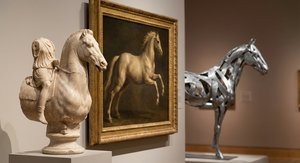
The Noble Steed: A Historical and Artistic Exploration of Horses in Fine Art
Explore the rich history of horses in fine art! From ancient depictions to Renaissance masterpieces & beyond, discover iconic artworks and artists. Learn about symbolism, techniques, and find museum-quality reproductions at OriginalUniqueArt.
