

 Visa i rummet
 Skicka
 Dela
Dela
 Detaljer
 Studentguide för konstverk

 Ladda ner
 Liknande objekt
 Röntgen
 Bildspel
 Besökstatistik
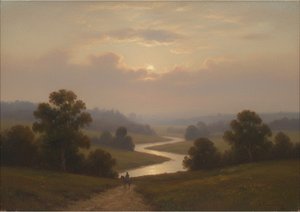
Misty Moonlight
 Oil On Canvas
- WallArt
- Tonalism & Symbolism
 1885
1885- 19th Century
 28.0 x 29.0 cm
 Crystal Bridges Museum of American Art
 Läs mer
Giclée / Konsttryck
Giclée- eller canvasprint av museumskvalitet med snabb produktion och flexibla ytbehandlingsalternativ. ( Köp handmålat konstverk Byt till digital bildförsäljning)




P118B Skr10

P118H Skr10

P118W Skr10

P438Z Skr10

P508JH Skr12

P508YH Skr12

P805H Skr10

P805Z Skr10

P919BZ Skr10

P919G Skr10

P919XJ Skr10

P959ZH Skr10

P968JZ Skr12

W106C Skr8

W218G Skr10

W218JH Skr8

W218Y Skr10

W307PJ Skr10

W316G Skr10

W316PJ Skr8

W316Y Skr10

W398PJ Skr8

W4111J Skr10

W500HY Skr15

W500JH Skr15

W692G Skr12

W849H Skr8

W940BG Skr15

W953PJ Skr8




Välj bland våra förinställda storlekar som motsvarar konstverkets ursprungliga proportioner.

Ange den bredd och höjd du behöver, för att passa din ram eller din vägg. Ett tryck kan endast beskäras, aldrig göras större än bilden, vilket innebär att ett format med en annan formform leder till att en del av bilden går förlorad. Vi skickar en digital mockup för godkännande innan vi trycker något. Bilden som visas på denna sida visar inte den faktiska beskärningen — det är endast mockuppen som gör det.
Leverans över hela världen () på 2 veckor istället för standard 4/5 veckor. (25 oktober)

Fri expressfrakt över hela världen

Högkvalitativ linnecanvas

Fullständig fraktförsäkring

Garantier för återbetalning av tullavgifter

Garantier för exakt färgåtergivning

100 dagars returrätt vid fabrikationsfel

100% pengarna tillbaka-garanti

Mängdrabatt erbjuds
 Glasalternativet är endast tillgängligt i storlekar under 110 cm.

Misty Moonlight
Giclée / Konsttryck
Reproduktionsstorlek
-


Totalpris
Skr 793
A Nocturne of Shadows and Light
In the quietude of the late nineteenth century, few artists captured the ephemeral essence of the American night as profoundly as Albert Pinkham Ryder. His masterpiece, Misty Moonlight (1885), serves as a hauntingly beautiful window into the soul of Tonalism, offering much more than a mere depiction of a seascape. The painting presents a serene yet melancholic vision of a nocturnal world, where a solitary sailing ship drifts through a sea of deep blacks and greenish grays. A luminous crescent moon hangs suspended in the hazy atmosphere, casting a soft, ethereal glow that seems to dissolve the boundaries between the water and the sky. This is not a scene of action, but one of profound stillness, inviting the viewer into a state of meditative contemplation.
The emotional resonance of this work lies in its ability to evoke a sense of mystery and longing. The sparse composition—a delicate dance of geometric forms including the rectangular expanse of the sea, the triangular silhouette of the vessel, and the circular moon—prevents any specific narrative from taking hold. Instead, the viewer is left to wander through the artist's dreamscape, feeling the weight of the heavy, damp air and the rhythmic, silent pulse of the tide. For the collector or interior designer, this piece offers a sophisticated anchor for a room, providing a focal point that commands attention through subtlety rather than spectacle.
The Alchemy of Unconventional Technique
To understand the mesmerizing texture of Misty Moonlight, one must look closely at Ryder’s radical approach to the medium. Eschewing the polished, academic precision favored by his contemporaries, Ryder embraced a method of deliberate instability. He was known for applying successive layers of oil paint while the underlying coats were still wet, a technique that allowed colors to bleed and merge in unpredictable ways. This process created the "gauzy" and atmospheric quality that defines his most celebrated works.
This layering does more than just create visual depth; it imbues the canvas with a physical materiality that feels alive. The resulting surface is often thick and textured, capturing light in a way that mimics the shifting mists of a coastal night. This mastery of atmosphere—achieved through what some might call "controlled chaos"—is precisely what makes a high-quality reproduction of this work so captivating. When rendered with care, the interplay of dark tones and soft highlights can transform a modern living space into a sanctuary of historical depth and artistic intrigue.
A Legacy of Symbolism and Inspiration
Ryder’s inspiration was deeply rooted in his formative years in New Bedford, Massachusetts, a bustling whaling port where the sea was an ever-present character in daily life. The maritime motifs found in Misty Moonlight are not merely decorative; they are echoes of a childhood spent amidst salt spray and moonlight. This connection to the American coast lends the painting an authentic, grounded spirit, even as it drifts into the realms of Symbolism.
As a pioneer of American Symbolism, Ryder used the landscape to represent internal emotional states. The ship, often a recurring motif in his oeuvre, can be seen as a symbol of the human journey through the unknown, navigating the murky waters of existence under the watchful eye of a distant, celestial light. For those seeking to decorate with purpose, incorporating such a piece allows for the introduction of profound storytelling into an environment. It is an invitation to look beyond the surface and find beauty in the shadows, making it an enduring choice for any curated collection of fine art.
Frågor och svar
Vilken färgharmoni uppvisar "Misty Moonlight" av Albert Pinkham Ryder?
"Misty Moonlight" av Albert Pinkham Ryder uppvisar en Unified Palette färgharmoni.
Vilken färg dominerar kompositionen i "Misty Moonlight" av Albert Pinkham Ryder?
Den dominerande färgen i "Misty Moonlight" av Albert Pinkham Ryder är Phthalo Green (#2d2c27).
Vilken färgmättnad har "Misty Moonlight" av Albert Pinkham Ryder?
"Misty Moonlight" av Albert Pinkham Ryder är återgiven med en Subtle Color mättnad.
Om konstnären
Early Life and Artistic Beginnings
Albert Pinkham Ryder, born March 19, 1847, in New Bedford, Massachusetts, remains a somewhat enigmatic figure in American art history. Details of his childhood are scarce, shrouded in the mists that would later become so characteristic of his paintings. However, it is known that he began to explore his artistic inclinations early on, capturing the landscapes of his native New Bedford with nascent skill. This coastal upbringing, steeped in the atmosphere of a bustling whaling port, undoubtedly left an indelible mark on his imagination and would resurface throughout his career as a recurring source of inspiration. He was the youngest of four sons; little else is known of his formative years beyond accounts of his family’s involvement in the whaling industry—a profession that profoundly shaped the cultural landscape of New Bedford during Ryder's youth. Despite limited biographical information, evidence suggests he possessed an innate fascination with visual representation from a young age, sketching scenes of the harbor and coastline with considerable aptitude. This early exposure to natural beauty would become a cornerstone of his artistic vision for decades to come.Formal Training and European Influences
Ryder’s formal art education commenced with studies under William Edgar Marshall in New York City. Marshall, a respected portraitist and instructor, instilled in Ryder a foundational understanding of traditional painting techniques—particularly tonalism—which would become a defining element of his distinctive style. Recognizing Ryder's talent, Marshall encouraged him to pursue further artistic development, fostering connections within the burgeoning New York art world. Subsequently, Ryder enrolled at the National Academy of Design between 1870 and 1875, where he honed his skills alongside fellow artists like Julian Alden Weir—a friendship that endured throughout Ryder’s life. The Academy's curriculum emphasized classical composition and perspective, grounding Ryder in established artistic conventions while simultaneously encouraging experimentation. This balanced approach proved crucial to shaping his evolving aesthetic sensibilities. Between 1877 and 1903, Ryder embarked on four transformative journeys to Europe—a period that irrevocably altered the trajectory of his artistic career. Driven by an ardent desire to immerse himself in the artistic currents of the Old World, he traveled extensively throughout France and Holland, absorbing inspiration from masters such as Jean-François Millet and Rembrandt van Rijn. Notably, Ryder was particularly captivated by the French Barbizon school—characterized by its commitment to plein air painting and its celebration of naturalistic observation—and the Dutch Hague School—renowned for its muted color palettes and atmospheric landscapes. These influences profoundly shaped his artistic style, fostering a preoccupation with tonal harmonies and evocative depictions of light and shadow.A Distinctive Artistic Style: Tonalism and Symbolism
Ryder’s artistic method was to empty out unnecessary detail from the spaces he was painting and replace them with layers of moody light and color that tended towards abstractionism, but he never abandoned the representational. His paintings are always pictures of something but his distinctive approach—characterized by broad, expressive brushstrokes—was not merely a stylistic preference; it reflected a deeply held conviction that painting could elicit profound emotional responses from viewers. He sought to capture not just what was seen but also what was felt—a pursuit that aligns closely with the tenets of tonalism and symbolism. Ryder’s canvases are imbued with an ethereal quality, achieved through meticulous manipulation of color and texture. He favored a restricted palette—often dominated by shades of gray, brown, and ochre—to heighten the sense of atmosphere and convey moods of solitude, contemplation, and spiritual yearning. Unlike Impressionists who aimed to capture fleeting moments of visual sensation, Ryder prioritized conveying inner experience—a preoccupation that distinguishes him from many of his contemporaries. His landscapes are frequently illuminated by diffuse sunlight filtering through overcast skies or the soft glow of moonlight—creating dramatic contrasts of light and shadow that underscore the psychological depth of his compositions. Ryder’s masterful use of tonal harmonies—the subtle blending of colors to produce harmonious shades—further enhances this expressive effect, mirroring the aesthetic principles championed by artists like George Caleb Bingham and Frederic Church.Major Achievements and Legacy
Ryder achieved legendary status among artists during his lifetime and his work continues to influence contemporary American painters. He was recognized as one of the foremost proponents of tonalism—a movement that sought to express emotion through subtle variations in color and tone—and he stands apart from many other American artists for prioritizing form over mere visual representation. As Bill Jensen observed, Ryder’s entire oeuvre, religious or secular, might be seen as an act of devotion. Ryder's single-mindedness, modest lifestyle, shyness, and sometimes eccentric behavior, all contributed to the myth of his being a recluse. In fact, he had a small circle of devoted friends, who loved him for his gentleness and imagination, and he valued these friendships and the correspondence in which they engaged, not least because they helped him deal with life's practicalities, in which he was temperamentally uninterested. He famously stated that “it couldn’t go out then unless ‘twas done.” Ryder’s influence extends far beyond his immediate contemporaries. His emphasis on form, color, and emotional expression paved the way for later generations of artists—including Jackson Pollock—who acknowledged Ryder as a significant precursor to Abstract Expressionism. He remains celebrated as a pioneer of American Tonalism and Symbolism, an artist whose mystical paintings continue to inspire awe and wonder. A memorial exhibition held at the Metropolitan Museum of Art in New York in 1918 solidified his reputation as a major figure in American art—a testament to the enduring power of his visionary aesthetic.
Albert Pinkham Ryder
1847 - 1917 , USA
Snabbfakta
- Artistic Movement Or Style: Tonalism & Symbolism
- Artists Who Influenced This Artist:
- William Edgar Marshall
- J. Alden Weir
- Date Of Birth: March 19, 1847
- Date Of Death: March 28, 1917
- Full Name: Albert Pinkham Ryder
- Nationality: American
- Notable Artworks:
- Misty Moonlight
- The Race Track
- Siegfried & Rhine Maidens
- Place Of Birth: New Bedford, USA
Relaterade artiklar

Amerikansk realism: Topp 10 mästerverk som definierade en rörelse – konsttryck hos OriginalUniqueArt
Utforska de 10 mästerverk som definierade amerikansk realism! Lär känna Winslow Homer, Edward Hopper & andra ikoniska konstnärer. Högkvalitativa konsttryck och inredningsinspiration hos OriginalUniqueArt.com – upptäck tidlösa tavlor online.

Grant Wood & American Regionalism: Identity, Myth & the Rural Landscape
Explore the world of Grant Wood & American Regionalism with OriginalUniqueArt. Discover the symbolism behind 'American Gothic', recurring themes, and the movement's lasting impact on art history. High-quality reproductions available.
Atmospheric Visions: Exploring Tonalism in American Painting
Explore the captivating world of American Tonalism! Discover its history, key artists like Whistler & Inness, techniques, and lasting influence on art. Expert insights for collectors & enthusiasts.

Albert Bierstadt: Luminosity, Landscape & the American Ideal
Explore the breathtaking landscapes of Albert Bierstadt, master of the American West & a leading figure in the Hudson River School. Discover his luminous style and iconic paintings – a timeless investment for art lovers.

American Regionalism: A Crucible of Identity – Exploring Themes of Place, Labor & Social Commentary
Explore American Regionalism's powerful depiction of the American heartland during the Great Depression. Discover Grant Wood, Thomas Hart Benton & more. Expert analysis & high-quality art reproductions at OriginalUniqueArt.
