

 Visa i rummet
 Skicka
 Dela
Dela
 Detaljer
 Studentguide för konstverk

 Ladda ner
 Liknande objekt
 Röntgen
 Bildspel
 Besökstatistik
Louis Pasteur
 Acrylic On Canvas
- WallArt
- Realist Painting
 1885
1885- 19th Century
 154.0 x 126.0 cm
 Musée d'Orsay
 Läs mer
Giclée / Konsttryck
Giclée- eller canvasprint av museumskvalitet med snabb produktion och flexibla ytbehandlingsalternativ. ( Köp handmålat konstverk Byt till digital bildförsäljning)




P118B Skr10

P118H Skr10

P118W Skr10

P438Z Skr10

P508JH Skr12

P508YH Skr12

P805H Skr10

P805Z Skr10

P919BZ Skr10

P919G Skr10

P919XJ Skr10

P959ZH Skr10

P968JZ Skr12

W106C Skr8

W218G Skr10

W218JH Skr8

W218Y Skr10

W307PJ Skr10

W316G Skr10

W316PJ Skr8

W316Y Skr10

W398PJ Skr8

W4111J Skr10

W500HY Skr15

W500JH Skr15

W692G Skr12

W849H Skr8

W940BG Skr15

W953PJ Skr8




Välj bland våra förinställda storlekar som motsvarar konstverkets ursprungliga proportioner.

Ange den bredd och höjd du behöver, för att passa din ram eller din vägg. Ett tryck kan endast beskäras, aldrig göras större än bilden, vilket innebär att ett format med en annan formform leder till att en del av bilden går förlorad. Vi skickar en digital mockup för godkännande innan vi trycker något. Bilden som visas på denna sida visar inte den faktiska beskärningen — det är endast mockuppen som gör det.
Leverans över hela världen () på 2 veckor istället för standard 4/5 veckor. (21 oktober)

Fri expressfrakt över hela världen

Högkvalitativ linnecanvas

Fullständig fraktförsäkring

Garantier för återbetalning av tullavgifter

Garantier för exakt färgåtergivning

100 dagars returrätt vid fabrikationsfel

100% pengarna tillbaka-garanti

Mängdrabatt erbjuds
 Glasalternativet är endast tillgängligt i storlekar under 110 cm.

Louis Pasteur
Giclée / Konsttryck
Reproduktionsstorlek
-


Totalpris
Skr 787
The Genesis of a Masterpiece
Albert Edelfelt’s “Louis Pasteur,” painted in 1885, isn't merely a portrait; it’s a meticulously crafted distillation of an era – the burgeoning age of scientific discovery and the quiet revolution taking place within the laboratories of France. Commissioned during a period of intense intellectual ferment, this oil-on-canvas work transcends simple representation to embody Pasteur’s unwavering commitment to unraveling the mysteries of life and disease. Edelfelt, a Finnish artist deeply influenced by Northern European realism, chose to capture Pasteur not as a celebrated figure in public acclaim, but as a man profoundly engaged in his craft – a scientist immersed in the focused intensity of his laboratory.
The painting’s genesis lies within the context of Pasteur's groundbreaking work. His pioneering research into germ theory, vaccination against rabies and anthrax, and pasteurization were fundamentally reshaping medicine and public health. Edelfelt, keenly aware of this transformative impact, sought to immortalize not just Pasteur’s physical presence but also the spirit of relentless inquiry that defined his legacy. The choice of setting – a meticulously rendered laboratory filled with scientific instruments – immediately establishes this intellectual atmosphere, suggesting a space dedicated to observation, experimentation, and the pursuit of knowledge.
A Symphony of Detail: Technique and Style
Edelfelt’s masterful technique is evident in every brushstroke. He employs a rich, layered impasto—a thick application of paint—that lends texture and depth to the scene. The careful rendering of light and shadow creates a palpable sense of realism, drawing the viewer into Pasteur's world. Notice particularly the subtle gradations of color applied to the various glass bottles and scientific equipment; each element is rendered with painstaking detail, reflecting Edelfelt’s dedication to accuracy. The composition itself is carefully balanced, guiding the eye through the scene – from Pasteur himself, deeply absorbed in his work, to the surrounding apparatus that speaks volumes about his research.
- Color Palette: A muted palette of browns, greens, and blues dominates, reflecting the laboratory’s atmosphere.
- Brushwork: Edelfelt's brushstrokes are visible and deliberate, contributing to the painting's textured surface.
- Lighting: The use of chiaroscuro (strong contrasts between light and dark) emphasizes Pasteur’s figure and highlights the details of his workspace.
Symbolism and the Portrait of a Mind
Beyond its technical brilliance, “Louis Pasteur” is laden with symbolic meaning. The bottles scattered around the laboratory represent the countless experiments and observations that constitute Pasteur's scientific journey. The focused gaze of Pasteur himself embodies his intellectual rigor and unwavering dedication to his work. He’s not a triumphant hero; he’s a man consumed by curiosity, driven by an insatiable desire to understand the natural world. The inclusion of specific instruments—beakers, flasks, and retorts—are not merely decorative elements but rather visual cues that underscore Pasteur's scientific pursuits.
The painting subtly suggests the transformative power of science – a quiet revolution unfolding within the confines of the laboratory, with profound implications for humanity’s future.A Legacy Preserved: Emotional Resonance and Artistic Significance
“Louis Pasteur” is more than just a portrait; it's a testament to the enduring legacy of scientific innovation. It captures not only the likeness of a brilliant mind but also the spirit of inquiry that defines the modern era. The painting’s emotional resonance lies in its portrayal of focused concentration and unwavering dedication—qualities that continue to inspire scientists, artists, and thinkers today. It serves as a poignant reminder of the transformative power of knowledge and the profound impact one individual can have on the world. Reproductions of this iconic work offer a beautiful way to bring this powerful image into your home or office, celebrating both artistic mastery and scientific achievement.
Frågor och svar
Vilken storlek bör jag välja för tryck av "Louis Pasteur" till mitt rum?
För ett Living Room är den rekommenderade tryckstorleken för "Louis Pasteur" av Albert Edelfelt Medium.
När skapades "Louis Pasteur" och vilken stilriktning tillhör det?
"Louis Pasteur" av Albert Edelfelt är daterat till 1885 och tillhör Realist Painting.
Var kan jag hitta statistik om "Louis Pasteur" av Albert Edelfelt?
En Statistik-sida finns för "Louis Pasteur". Den visar månatliga besök för konstverket och konstnärens övriga verk, med uppdelning per land och språk.
Om konstnären
Early Life and Education
Albert Gustaf Aristides Edelfelt, a Finnish painter celebrated for his masterful depictions of rural landscapes and portraits imbued with humanist values, was born on July 21, 1854, in Porvoo, Finland. His parents, Carl Albert Edelfelt—a Swedish-speaking architect who had emigrated to Finland seeking artistic inspiration—and Alexandra Edelfeldt née Brandt—an amateur poet deeply attuned to the beauty of Finnish culture—established a household rooted in intellectual curiosity and artistic appreciation. From an early age, Edelfelt demonstrated a remarkable aptitude for drawing and painting, nurtured by his mother’s encouragement and fueled by a profound connection to the natural world surrounding his birthplace. He began his formal education at Svenska Normalyceum in Helsinki where he excelled as a student of Adolf von Becker, delving into the intricacies of history painting and honing his technical skills. This formative period instilled in him a disciplined approach to artistic practice and exposed him to influential pedagogical figures who championed realism and observation. Recognizing Edelfelt’s exceptional talent, the Finnish government awarded him a scholarship to pursue advanced studies at Saint Petersburg Academy of Fine Arts, where he immersed himself in Russian artistic traditions alongside Gunnar Berndtson—a fellow student who would become a lifelong collaborator. This experience broadened his artistic horizons and solidified his commitment to capturing the essence of human emotion and experience through meticulous detail.Artistic Journey
Edelfelt’s artistic trajectory unfolded against the backdrop of Finland's burgeoning cultural landscape, marked by a fervent desire to elevate Finnish art to international prominence. Driven by an unwavering belief in the power of plein air painting—the practice of capturing landscapes directly from nature—he embraced this revolutionary technique championed by Impressionists like Jules Bastien-Lepage and Gustave Courtois. His studio in Paris became a hub for artistic experimentation, fostering friendships with fellow artists who shared his passion for innovation and authenticity. He quickly gained recognition for his historical costume paintings, notably *Kuningatar Blanka*, which vividly portrayed the Swedish medieval Queen Bianca caring for her son Haakon Magnusson—a scene brimming with tenderness and symbolic resonance. This masterpiece earned him a prestigious medal at the Paris Universal Exposition of 1889, propelling him to the forefront of Finnish artistic achievement. Simultaneously, Edelfelt cultivated an enduring fascination with portraiture, capturing the dignity and complexity of his subjects with remarkable sensitivity and precision. His portraits of Louis Pasteur—a pioneering scientist whose groundbreaking discoveries revolutionized medicine—became iconic representations of intellectual brilliance and human compassion.Notable Works
Edelfelt’s oeuvre encompasses a diverse range of artistic expressions, reflecting his multifaceted engagement with both Finnish landscapes and humanist themes. Among his most celebrated paintings are *Young Woman in Her Boudoir*, which delicately portrays the intimacy of domestic life—a testament to Edelfelt's ability to convey subtle emotions through nuanced observation—and *Under the Birches*, a breathtaking depiction of Finnish birch forests bathed in ethereal sunlight—a quintessential example of plein air painting that captures the sublime beauty of the natural world. These works stand as enduring symbols of Finnish artistic identity and continue to inspire admiration for their masterful execution and profound emotional depth. Furthermore, Edelfelt’s contribution to Finnish cultural heritage extends beyond his paintings themselves. He served as an illustrator for Runeberg's poems—a role that cemented his reputation as a champion of Finnish literature and bolstered the nation's artistic legacy. His influence resonated throughout Finland’s artistic community, nurturing the talents of younger painters like Akseli Gallen-Kallela and Gunnar Berndtson—artists who would forge their own distinctive paths while honoring Edelfelt’s pioneering spirit.Legacy and Impact
Albert Edelfelt remains a towering figure in Finnish art history—a visionary artist whose unwavering commitment to realism and humanist values profoundly shaped the trajectory of Finnish artistic expression. His legacy transcends mere stylistic innovation; it embodies a deep appreciation for the natural world, an empathy for human experience, and a steadfast belief in the transformative power of art. As one of Finland’s foremost painters, Edelfelt secured his place among the nation's cultural icons—a testament to his enduring artistic brilliance and his indelible contribution to Finnish identity. His works continue to captivate audiences worldwide, serving as reminders of the beauty and dignity inherent in human existence and the profound significance of capturing the essence of our surroundings with unwavering honesty and compassion.
Albert Edelfelt
1854 - 1905 , Finland
Snabbfakta
- Artistic Movement Or Style: Realist
- Artists Or Movements Influenced By This Artist: ['Akseli Gallen-Kallela']
- Artists Who Influenced This Artist: ['Jean-Léon Gérôme']
- Date Of Birth: July 21, 1854
- Date Of Death: August 18, 1905
- Full Name: Albert Gustaf Aristides Edelfelt
- Nationality: Finnish
- Notable Artworks:
- Portrait of Louis Pasteur
- Young woman in her boudoir
- Under the birches
- Place Of Birth: Porvoo, Finland
Relaterade artiklar

Anne-Louis Girodet: Bridging Neoclassicism & Romanticism with Emotional Truth
Explore the captivating world of Anne-Louis Girodet, a pivotal figure bridging Neoclassicism & Romanticism. Discover his masterpieces and unique artistic vision with OriginalUniqueArt.

Morris Louis: Pioneering Color Field Painting & Abstract Expressionism's Legacy
Explore the groundbreaking abstract expressionism of Morris Louis, a pioneer of Color Field painting. Discover his innovative techniques, influential series & lasting legacy in post-war American art. Learn more at OriginalUniqueArt.

Albert Charles Lebourg: A Study in Atmospheric Impressionism & Rural France
Explore the serene landscapes of Albert Charles Lebourg, a master of the Rouen School Impressionists. Discover his atmospheric paintings of the Seine and enduring legacy in 19th-century French art.
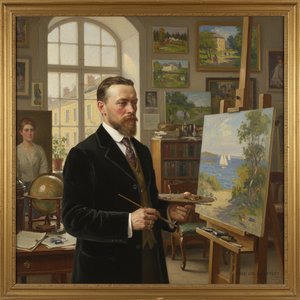
Albert Edelfelt: A Pioneer of Finnish Realism & International Impressionist Circles
Explore the life & work of Albert Edelfelt, a pioneering Finnish Realist painter who bridged Impressionism & national identity. Discover his masterpieces and lasting influence on art history.
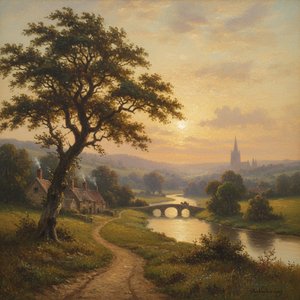
Albert Goodwin: Capturing Victorian Light & Atmosphere – A Study in Landscape Painting
Explore the captivating landscapes of Albert Goodwin (1845-1932), a celebrated Victorian watercolourist influenced by Turner & Ruskin. Discover his techniques, prolific collection, and lasting legacy in British art history.
