

 Visa i rummet
 Skicka
 Dela
Dela
 Detaljer
 Studentguide för konstverk

 Ladda ner
 Liknande objekt
 Röntgen
 Bildspel
 Besökstatistik
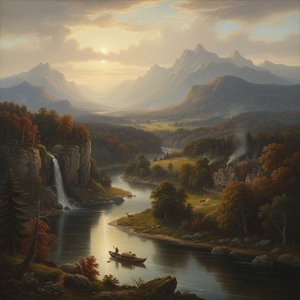
A Western Landscape
 Oil On Canvas
- WallArt
- Hudson River School
 1870
1870- 19th Century
 20.0 x 26.0 cm
 Läs mer
Giclée / Konsttryck
Giclée- eller canvasprint av museumskvalitet med snabb produktion och flexibla ytbehandlingsalternativ. ( Köp handmålat konstverk Byt till digital bildförsäljning)




P118B Skr10

P118H Skr10

P118W Skr10

P438Z Skr10

P508JH Skr12

P508YH Skr12

P805H Skr10

P805Z Skr10

P919BZ Skr10

P919G Skr10

P919XJ Skr10

P959ZH Skr10

P968JZ Skr12

W106C Skr8

W218G Skr10

W218JH Skr8

W218Y Skr10

W307PJ Skr10

W316G Skr10

W316PJ Skr8

W316Y Skr10

W398PJ Skr8

W4111J Skr10

W500HY Skr15

W500JH Skr15

W692G Skr12

W849H Skr8

W940BG Skr15

W953PJ Skr8




Välj bland våra förinställda storlekar som motsvarar konstverkets ursprungliga proportioner.

Ange den bredd och höjd du behöver, för att passa din ram eller din vägg. Ett tryck kan endast beskäras, aldrig göras större än bilden, vilket innebär att ett format med en annan formform leder till att en del av bilden går förlorad. Vi skickar en digital mockup för godkännande innan vi trycker något. Bilden som visas på denna sida visar inte den faktiska beskärningen — det är endast mockuppen som gör det.
Leverans över hela världen () på 2 veckor istället för standard 4/5 veckor. (22 oktober)

Fri expressfrakt över hela världen

Högkvalitativ linnecanvas

Fullständig fraktförsäkring

Garantier för återbetalning av tullavgifter

Garantier för exakt färgåtergivning

100 dagars returrätt vid fabrikationsfel

100% pengarna tillbaka-garanti

Mängdrabatt erbjuds
 Glasalternativet är endast tillgängligt i storlekar under 110 cm.

A Western Landscape
Giclée / Konsttryck
Reproduktionsstorlek
-


Totalpris
Skr 787
A Vision of the American West: Albert Bierstadt’s “A Western Landscape”
Albert Bierstadt's "A Western Landscape," rendered in meticulous detail and measuring 20 x 26 cm, offers a captivating glimpse into the idealized vision of the American West that captivated audiences during the late 19th century. Painted in 1870, this stunning landscape is more than just a depiction of mountains and water; it’s a powerful statement about America's burgeoning ambitions and its yearning for untamed wilderness. Bierstadt, a key figure in the Hudson River School movement, meticulously crafted scenes that blended scientific observation with Romantic sensibility, aiming to evoke awe and wonder at the grandeur of nature.
The Painter's Process and Technical Mastery
Bierstadt’s artistic journey began with self-taught sketching but was significantly shaped by his formal training in Düsseldorf, Germany. This European education instilled within him a profound understanding of light, atmosphere, and meticulous detail – hallmarks evident in every brushstroke of “A Western Landscape.” The painting showcases his signature technique: layering thin glazes of oil paint to build up luminous color and create an almost photographic realism. Notice the careful rendering of the snow-capped peaks, reflecting the sunlight with a dazzling brilliance, and the subtle gradations of color in the lake’s surface. His use of atmospheric perspective – diminishing detail and color with distance – effectively conveys the immense scale of the mountainous terrain.
Historical Context: The American West and the Hudson River School
"A Western Landscape" emerged during a pivotal moment in American history—the westward expansion fueled by Manifest Destiny. Bierstadt’s paintings, like many within the Hudson River School, played a crucial role in shaping public perception of the West. These artists weren't simply documenting landscapes; they were actively constructing an idealized image of America’s future – one filled with vast resources and opportunities for settlement. The painting reflects this sentiment, presenting a serene and majestic vista designed to inspire confidence and encourage further exploration and development. It was intended to fuel the dreams of Eastern investors and settlers eager to claim their stake in the West.
Symbolism and Emotional Impact
Beyond its technical brilliance, “A Western Landscape” is rich with symbolic meaning. The towering mountains represent strength, resilience, and the untamed spirit of America. The tranquil lake symbolizes peace, reflection, and the potential for renewal. The lone bird soaring above adds a sense of freedom and aspiration. Bierstadt’s masterful use of light and color evokes a profound emotional response – a feeling of awe, serenity, and perhaps even a touch of melancholy at the vastness of nature. This painting continues to resonate with viewers today, offering a timeless reminder of humanity's relationship with the natural world.
Frågor och svar
Vilka är måtten på originalet av "A Western Landscape" av Albert Bierstadt?
Originalet av "A Western Landscape" av Albert Bierstadt mäter 20 x 26 cm.
Vad är luminansen i "A Western Landscape" av Albert Bierstadt?
"A Western Landscape" av Albert Bierstadt har en luminans på Gentle Luminance. Luminans beskriver hur mycket ljus färgerna tycks reflektera.
Vad rekommenderas en reproduktion av "A Western Landscape" av Albert Bierstadt för?
Det rekommenderade användningsområdet för "A Western Landscape" av Albert Bierstadt är Statement. Den kan även användas till andra ändamål.
Om konstnären
A Pioneer of the American West: The Life and Art of Albert Bierstadt
Albert Bierstadt’s story is deeply intertwined with the formation of America itself. His early life, beginning in Prussia in 1830, set the stage for a lifelong fascination with the landscapes that would become the cornerstone of his artistic legacy. Following his family's emigration to New Bedford, Massachusetts, when he was just one year old, the seeds of this passion were sown. Initially self-taught, sketching with crayons as a youth, Bierstadt quickly recognized the need for formal training and embarked on studies in Düsseldorf, Germany, in 1853. This European grounding proved crucial, providing him with technical mastery—a meticulous attention to detail and a sophisticated understanding of light and atmosphere—that he would later apply to his depictions of the American wilderness. It wasn’t merely replication that Bierstadt sought; he aimed to convey the sublime power and beauty of nature, creating immersive experiences for viewers.Capturing the Majesty: The Hudson River School and Beyond
Upon his return to the United States in 1857, Bierstadt swiftly became associated with the Hudson River School, a group of artists dedicated to portraying the American landscape with both accuracy and romantic idealism. While sharing their reverence for nature, Bierstadt distinguished himself through his ambitious scale and dramatic compositions. He wasn’t content with simply painting pretty pictures; he aimed to create immersive experiences that transported viewers directly into the heart of the wilderness. His breakthrough came in 1858 with a Swiss landscape exhibited at the National Academy of Design, earning him immediate acclaim and honorary membership. However, it was his subsequent expeditions westward—first with land surveyor Frederick W. Lander in 1859, then with author Fitz Hugh Ludlow in 1863 to Yosemite Valley—that truly ignited his artistic vision. These journeys weren’t merely observational; they were deeply immersive, allowing Bierstadt to absorb the grandeur of the Rocky Mountains, the vastness of the plains, and the awe-inspiring scale of canyons and waterfalls. He meticulously documented these scenes, translating them onto canvas with a remarkable ability to capture both the physical reality and the emotional impact of the wilderness.The Painter of Empires: Shaping Perceptions of the West
Bierstadt’s paintings weren't simply landscapes; they were statements about national identity and Manifest Destiny. His canvases—often enormous in size—depicted the American West not as a harsh, untamed frontier, but as a land of promise, abundance, and divine beauty. The Rocky Mountains, Lander’s Peak, completed in 1863 and purchased for an astonishing $25,000 (equivalent to nearly $400,000 today), exemplifies this approach. The painting isn't a precise topographical rendering; it’s a carefully constructed vision of idealized grandeur, bathed in golden light and imbued with a sense of spiritual significance. This ability to evoke emotion, to inspire awe, made Bierstadt immensely popular during his lifetime. He wasn’t just an artist; he was a cultural ambassador, shaping how Americans—and the world—perceived the West. His work fueled westward expansion by presenting it as a noble and divinely ordained undertaking. The dramatic lighting and monumental scale of his works contributed to a romanticized vision of the frontier, often divorced from the realities of hardship and conflict faced by settlers.Technique and Style: Luminism and Romantic Detail
Bierstadt’s artistic style was characterized by a unique blend of technical skill and emotional expression. He drew heavily on the principles of *luminism*, a technique emphasizing the use of light to create atmosphere and mood, often employing subtle gradations of color and soft focus. However, he also incorporated elements of Romanticism—a fascination with grand landscapes, dramatic lighting, and idealized figures—to heighten the emotional impact of his paintings. His meticulous attention to detail was legendary; he spent countless hours sketching and studying nature before committing a scene to canvas. He utilized layering techniques and carefully blended brushstrokes to create a sense of depth and realism, while simultaneously imbuing his landscapes with an ethereal quality. The use of warm colors—particularly gold and amber—further enhanced the feeling of light and warmth, contributing to the overall sense of wonder and majesty that defined his work.Legacy and Influence: A Lasting Impression
While Bierstadt’s popularity waned somewhat in the late 19th century as artistic tastes shifted towards Impressionism and photography, his influence on American landscape painting remains undeniable. He demonstrated the power of large-scale canvases to create immersive experiences, a technique later adopted by many artists. His meticulous attention to detail and masterful use of light continue to inspire painters today. Beyond his technical achievements, Bierstadt’s work serves as a valuable historical document, offering insights into the evolving perceptions of the American West during a period of rapid change and expansion. He captured a moment in time—a vision of pristine wilderness before it was irrevocably altered by human intervention. His paintings are not just beautiful images; they are windows into a pivotal era in American history, reminding us of both the promise and the cost of westward expansion. His legacy endures, ensuring that his breathtaking landscapes will continue to captivate and inspire generations to come.
Albert Bierstadt
1830 - 1902 , Tyskland
Snabbfakta
- Artistic Movement Or Style: Hudson River School
- Artists Or Movements Influenced By This Artist: ['Rocky Mountain School']
- Artists Who Influenced This Artist:
- Carl Friedrich Lessing
- Andreas Achenbach
- Date Of Birth: 7 januari 1830
- Date Of Death: 18 februari 1902
- Full Name: Albert Bierstadt
- Nationality: Tysk-amerikansk
- Notable Artworks:
- Rocky Mountains
- Yosemite
- Place Of Birth: Solingen, Tyskland
Relaterade artiklar

The Sublime Landscape: Exploring the Hudson River School Movement
Explore the captivating world of the Hudson River School! Discover the history, artists, and defining characteristics of this iconic American art movement. Learn about Romanticism's influence & find inspiration for your collection.

Wild & Untamed: The High-Impact Energy of American Romanticism and the Hudson River School
Experience the raw power of American Romanticism. Explore the high-impact energy of the Hudson River School through premium, hand-painted oil reproductions that capture the sublime beauty and untamed spirit of the American wilderness for discerning collectors.

Albert Bierstadt: Luminosity, Landscape & the American Ideal
Explore the breathtaking landscapes of Albert Bierstadt, master of the American West & a leading figure in the Hudson River School. Discover his luminous style and iconic paintings – a timeless investment for art lovers.
Capturing the American Spirit: A Journey Through Iconic Landscapes and the Legacy of the Hudson River School
Explore the profound beauty of American art history. From the Hudson River School to iconic landscapes, discover a curated journey through the masterpieces that defined a nation's spirit and the enduring legacy of American Romanticism.

Hudson River School: Topp 10 mästerverk för ditt hem – Konst & Historia | OriginalUniqueArt.com
Upptäck de 10 mest ikoniska mästerverken från Hudson River School! Lär känna Thomas Cole, Frederic Church och andra amerikanska landskapsmålare. Köp högkvalitativa konsttryck & inred med storslagen naturkonst på OriginalUniqueArt.com.


