Förhandsvisa
 Skicka
 Dela
Dela
 Visa detaljer
 Guide
Guide

 Ladda ner
 Liknande objekt
 Röntgen
 Bildspel
 Statistik
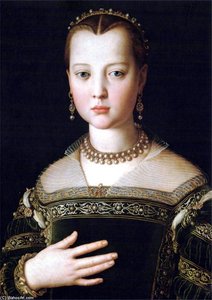
Vault decoration


 Visa mer
Handgjord oljereproduktion
Handmålad olja på duk i din valda storlek och ram, tillverkad efter beställning av våra konstnärer. ( Byt till tryck Byt till digital bild)




P118B Skr10

P118H Skr10

P118W Skr10

P438Z Skr10

P508JH Skr12

P508YH Skr12

P805H Skr10

P805Z Skr10

P919BZ Skr10

P919G Skr10

P919XJ Skr10

P959ZH Skr10

P968JZ Skr12

W106C Skr8

W218G Skr10

W218JH Skr8

W218Y Skr10

W307PJ Skr10

W316G Skr10

W316PJ Skr8

W316Y Skr10

W398PJ Skr8

W4111J Skr10

W500HY Skr15

W500JH Skr15

W692G Skr12

W849H Skr8

W940BG Skr15

W953PJ Skr8




Välj bland våra förinställda storlekar som motsvarar konstverkets ursprungliga proportioner.

Ange den bredd och höjd du behöver för att passa din ram eller din vägg. Eftersom detta är handmålat kan konstnären, vid ett annat format, måla lite mer runt bilden eller beskära den något – det är du som väljer. Vi skickar en digital mockup för godkännande innan målningen påbörjas. Bilden som visas på denna sida representerar inte det slutgiltiga resultatet — det är endast mockuppen som visar det.
Efter beställning kommer OriginalUniqueArt.com team att mejla kunden för instruktioner och tillhandahålla en skissförhandsvisning
Leverans över hela världen () på 3–4 veckor istället för standard 5 veckor. (27 oktober). Inga kompromisser med kvaliteten.

Fri expressfrakt över hela världen

Högkvalitativ linnecanvas

Fullständig fraktförsäkring

Garantier för återbetalning av tullavgifter

Garantier för exakt färgåtergivning

100 dagars returrätt (endast vid fel)

100% pengarna tillbaka-garanti

Mängdrabatt erbjuds
 Glasalternativet är endast tillgängligt i storlekar under 110 cm.

Vault decoration
Reproduktionsmetod
Storlek på reproduktion
-


Slutgiltigt pris
Skr 2987
A Glimpse of Celestial Grace: Agnolo Bronzino’s “Vault Decoration”
Within the opulent Palazzo Vecchio in Florence resides a breathtaking fresco—Agnolo Bronzino's "Vault Decoration," completed in 1541 for Duchess Eleonora di Toledo. More than just a decorative scheme, this monumental work offers a profound meditation on divine order, classical beauty, and the burgeoning complexities of Renaissance courtly life. It’s a visual symphony that invites contemplation, revealing layers of symbolism woven into its meticulously rendered figures and vibrant palette.
Bronzino, a master of Mannerism, eschewed the dramatic emotionality favored by his predecessors like Pontormo in favor of a refined elegance and controlled composition. His style is characterized by elongated forms, subtle distortions, and an almost disconcerting stillness—a deliberate departure from the dynamism of earlier Renaissance painting. “Vault Decoration” exemplifies this perfectly; each figure possesses a serene composure, their gazes fixed with an unnerving intensity that draws the viewer into a world both familiar and subtly unsettling.
A Tapestry of Myth and Religion
The fresco’s central theme is deeply rooted in biblical narrative and classical mythology. The vault itself depicts a celestial scene, dominated by St. Michael, St. John the Evangelist, St. Jerome, and St. Francis—figures representing key virtues and patrons of the Medici court. Below them unfolds a series of allegorical scenes: “Moses Striking the Rock,” illustrating the miraculous parting of the Red Sea; “Moses Gathering Manna,” depicting God’s provision for his people in the wilderness; and “Crossing of the Red Sea.” These stories, rendered with exquisite detail and bathed in a rich, jewel-toned palette of reds, blues, and golds, speak to themes of faith, obedience, and divine guidance.
However, Bronzino doesn’t simply present these narratives as straightforward accounts. He imbues them with a distinctly Mannerist sensibility—figures are often idealized, their bodies rendered with an almost sculptural quality, reminiscent of ancient Greek sculpture. The drapery is voluminous and complex, creating intricate patterns that seem to shimmer with light. The use of gold leaf further enhances the sense of opulence and divinity, transforming the vault into a veritable temple of beauty.
Symbolism and Courtly Intrigue
Beyond the readily apparent religious iconography, “Vault Decoration” is laden with subtle symbolic meaning. The placement of each figure—their gestures, their attire—holds significance within the context of Renaissance courtly life. The Duchess herself, Eleonora di Toledo, was a woman of considerable influence and intelligence; her presence in this grand design underscores the power and sophistication of the Medici court.
Furthermore, the fresco’s meticulous detail suggests an underlying concern with status and prestige—a reflection of the patronage system that fueled Renaissance art. Bronzino's skill was highly sought after by wealthy families and powerful figures, and this work stands as a testament to his ability to fulfill their desires for artistic expression and social affirmation.
A Legacy of Elegance
“Vault Decoration” remains a pivotal masterpiece in the history of Renaissance art. It showcases Bronzino’s mastery of technique, his profound understanding of classical ideals, and his unique Mannerist vision. The fresco's enduring appeal lies not only in its technical brilliance but also in its ability to evoke a sense of awe and wonder—a reminder of the beauty, complexity, and spiritual depth that characterized the High Renaissance.
Today, reproductions of this extraordinary work continue to captivate audiences worldwide. Its timeless elegance and profound symbolism make it an ideal addition to any discerning collection or a stunning focal point for interior design, transporting viewers to a world of celestial grace and courtly splendor.
Frågor och svar
Vilket tryckformat rekommenderas för "Vault decoration" av Agnolo Bronzino?
Storlek Large, Portrait-orientering: detta är den rekommenderade tryckinställningen för "Vault decoration" av Agnolo Bronzino.
Förvaras "Vault decoration" av Agnolo Bronzino i konstnärens hemland?
Ja – konstverket förvaras i konstnärens hemland. "Vault decoration" finns i Italien, medan Agnolo Bronzino föddes i Italien.
Vilken färgharmoni uppvisar "Vault decoration" av Agnolo Bronzino?
Färgharmonin i "Vault decoration" beskrivs som Softly Mixed Palette.
Konstnärsbiografi
Agnolo Bronzino – Florentine Mannerist Master & Court Painter
Agnolo di Cosimo, known to history as Bronzino, emerged from the vibrant artistic landscape of Renaissance Florence in 1503, a period already brimming with genius. Born the son of a butcher, his path diverged sharply from familial trade, guided instead by an innate talent that would see him become one of the most sought-after portraitists of his era and a defining figure of Mannerism. His early training began with Raffaellino del Garbo, but it was under the tutelage of Jacopo da Pontormo that Bronzino’s artistic sensibilities truly took shape. While absorbing Pontormo's innovative style, he ultimately forged his own distinct voice—one characterized by a cool composure and refined detail markedly different from his teacher’s often emotionally charged works. This early period was also influenced by studies with Andrea del Sarto, exposing him to the legacies of Michelangelo and Leonardo da Vinci, foundational influences that would subtly permeate his mature style. The young Bronzino quickly demonstrated an aptitude for capturing not just physical likeness but a certain psychological depth, even in his earliest commissions.Early Influences & Artistic Formation
Bronzino’s formative years were marked by exposure to the artistic currents of Florence under Pontormo and Sarto. Pontormo's expressive style—characterized by swirling draperies, distorted perspectives, and emotionally charged figures—challenged the prevailing conventions of High Renaissance art. Bronzino absorbed these innovations, adapting them into his own distinctive aesthetic. Simultaneously, he studied Michelangelo’s monumental sculptures and Leonardo da Vinci’s meticulous anatomical drawings, imbibing their mastery of form and observation. These influences instilled in him a profound respect for technical precision and an unwavering commitment to conveying psychological complexity—traits that would become hallmarks of his artistic practice. His early portraits already hinted at the stylistic refinements that would characterize his later oeuvre.Ascension at the Medici Court
Bronzino’s career ascended dramatically with the patronage of Cosimo I de’ Medici, Duke of Tuscany. This relationship, solidified after Bronzino contributed to the lavish decorations celebrating Cosimo’s wedding to Eleonora di Toledo in 1539—a spectacle designed to impress both domestic and foreign dignitaries—cemented his position as the official court painter for much of his life. It was a role he fulfilled with unwavering dedication and remarkable skill. The portraits emanating from this period are not merely likenesses; they are carefully constructed statements of power, status, and dynastic ambition. Cosimo and Eleonora themselves became frequent subjects, immortalized in paintings that exude an aristocratic aloofness and polished elegance. These works weren’t simply about capturing physical resemblance but crafting enduring symbols of Medici authority—visual representations intended to convey prestige and reinforce the ruler's dominion. He skillfully utilized techniques such as sfumato (a subtle blending of colors) and chiaroscuro (the dramatic interplay of light and shadow) to heighten emotional impact and create an illusionistic depth that captivated viewers.The Mannerist Style – Refinement & Innovation
Bronzino’s artistic style is quintessentially Mannerist—a movement that flourished in Italy during the mid-16th century as a reaction against the High Renaissance's emphasis on naturalism and harmonious balance. He embraced elongated forms, stylized poses, and an often cool, detached emotionality. His figures are rarely caught in moments of spontaneous action; instead, they appear carefully posed, almost sculptural in their stillness. This deliberate distancing from naturalistic representation—a hallmark of Mannerist aesthetics—was achieved through meticulous attention to detail and a masterful manipulation of visual illusion. Bronzino’s palette was subdued compared to the vibrant hues favored by his predecessors, prioritizing tonal harmonies and subtle gradations of color. He employed techniques such as glazing—applying thin layers of translucent pigment over underlying colors—to create luminous surfaces and enhance textural richness. His portraits are renowned for their meticulous attention to detail—the textures of fabrics, the gleam of jewels, the subtle nuances of expression—all rendered with an almost enamel-like precision. This dedication to surface refinement and intellectual complexity distinguishes Bronzino’s work from that of his contemporaries. He wasn't interested in simply replicating reality; he sought to elevate it through artifice and stylistic control.Legacy & Enduring Influence
Bronzino’s influence extended far beyond Florence, impacting court portraiture throughout Europe for generations. The cool elegance and refined technique he championed became hallmarks of aristocratic representation—a deliberate departure from the emotional fervor of earlier artistic traditions. His masterful compositions and meticulous rendering of detail continue to inspire admiration among art historians and collectors alike. Though his style fell somewhat out of favor during periods that prioritized more emotive or naturalistic approaches, Bronzino’s work has experienced a resurgence in appreciation in recent decades. Scholars now recognize the intellectual depth and stylistic innovation inherent in his art—a testament to his enduring contribution to Renaissance painting and a symbol of Florentine artistic excellence. He passed away in Florence in 1572, leaving behind a legacy as one of the most important Mannerist painters—a master of reserved elegance whose portraits continue to captivate and intrigue viewers centuries later.
Agnolo Bronzino
1503 - 1572 , Italien
Kortfakta
- Artistic Movement Or Style: Mannerism
- Artists Who Influenced This Artist:
- Pontormo
- Michelangelo
- Leonardo da Vinci
- Date Of Birth: November 17, 1503
- Date Of Death: November 23, 1572
- Full Name: Agnolo di Cosimo
- Nationality: Italien
- Notable Artworks:
- Venus, Cupid och Tid
- Ugolino Martelli
- The Holy Family
- Place Of Birth: Florence, Italien
Relaterade artiklar

Celestial Messengers: A Comprehensive Exploration of Angelic Representation in Art History
Explore the captivating history of angels in art! Discover symbolism, iconic Renaissance masterpieces & renowned artists. Expert insights for art lovers & collectors at OriginalUniqueArt.

Celestial Messengers: Angels in Painting – A Historical & Artistic Exploration
Explore the captivating history of angels in painting! Discover symbolism, iconic Renaissance & Byzantine masterpieces, and renowned artists. Expert insights for art lovers & collectors at OriginalUniqueArt.

The Enduring Legacy of Fresco Painting: Techniques, History & Contemporary Relevance
Explore the rich history & enduring artistry of fresco painting – from Giotto to Michelangelo! Discover techniques, conservation efforts, & modern applications. Learn how OriginalUniqueArt brings this timeless art form to your home.

Frescens arv som familjetradition: Måla din historia på väggarna
Utforska väggmålningens historia och teknik! Lär dig skapa din egen familjetradition med konst på väggen. Expertguider, inspiration & tips.

The Enduring Legacy of Fresco: Technique, History & Artistic Expression Across Cultures
Explore the rich history & enduring legacy of fresco painting! Discover ancient techniques, Giotto's masterpieces, and modern applications. Expert insights for art lovers & professionals.