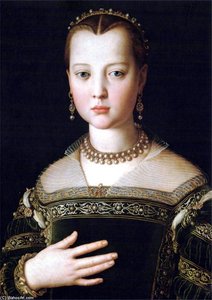
Visa i rummet
 Skicka
 Dela
Dela
 Detaljer
 Studentguide för konstverk

 Ladda ner
 Liknande objekt
 Röntgen
 Bildspel
 Besökstatistik
Deposition from the Cross
 Oil On Panel
- WallArt
- Mannerism
 1545
1545- Renaissance
 173.0 x 268.0 cm
 Läs mer
Giclée / Konsttryck
Giclée- eller canvasprint av museumskvalitet med snabb produktion och flexibla ytbehandlingsalternativ. ( Köp handmålat konstverk Byt till digital bildförsäljning)




P118B Skr10

P118H Skr10

P118W Skr10

P438Z Skr10

P508JH Skr12

P508YH Skr12

P805H Skr10

P805Z Skr10

P919BZ Skr10

P919G Skr10

P919XJ Skr10

P959ZH Skr10

P968JZ Skr12

W106C Skr8

W218G Skr10

W218JH Skr8

W218Y Skr10

W307PJ Skr10

W316G Skr10

W316PJ Skr8

W316Y Skr10

W398PJ Skr8

W4111J Skr10

W500HY Skr15

W500JH Skr15

W692G Skr12

W849H Skr8

W940BG Skr15

W953PJ Skr8




Välj bland våra förinställda storlekar som motsvarar konstverkets ursprungliga proportioner.

Ange den bredd och höjd du behöver, för att passa din ram eller din vägg. Ett tryck kan endast beskäras, aldrig göras större än bilden, vilket innebär att ett format med en annan formform leder till att en del av bilden går förlorad. Vi skickar en digital mockup för godkännande innan vi trycker något. Bilden som visas på denna sida visar inte den faktiska beskärningen — det är endast mockuppen som gör det.
Leverans över hela världen () på 2 veckor istället för standard 4/5 veckor. (25 oktober)

Fri expressfrakt över hela världen

Högkvalitativ linnecanvas

Fullständig fraktförsäkring

Garantier för återbetalning av tullavgifter

Garantier för exakt färgåtergivning

100 dagars returrätt vid fabrikationsfel

100% pengarna tillbaka-garanti

Mängdrabatt erbjuds
 Glasalternativet är endast tillgängligt i storlekar under 110 cm.

Deposition from the Cross
Giclée / Konsttryck
Reproduktionsstorlek
-


Totalpris
Skr 793
A Moment Suspended in Mannerist Grace
Step closer to observe the quiet intensity of this 1545 panel. In this scene, we witness the heavy, physical reality of the Deposition from the Cross. Agnolo Bronzino captures the precise moment when the body of Jesus is being lowered from the wood. There is a specific, controlled tension here. You can see it in the way the figures are arranged around the central weight of Christ. It is not a scene of chaotic movement, but rather one of carefully posed, almost sculptural stillness. The figures—some standing near the cross, others positioned further back—create a sense of depth that feels both compressed and deliberate.
The composition relies on a certain sprezzatura, a cultivated nonchalance that masks the profound gravity of the event. While the subject is deeply religious, Bronzino approaches it with the cool composure characteristic of his Florentine training. The limbs are elongated, and the poses possess an artificial, polished elegance. Even amidst the sorrow of the angels and the mourners, there is a refined detachment. It invites you to look at the textures: the way light catches the skin and the subtle nuances in the drapery.
The Language of Form and Color
Notice how the artist utilizes color to direct your eye through this sacred narrative. The palette is striking, using deep tones that give the figures a solid, physical presence. Bronzino was a master of surface refinement, and here he applies it to the very anatomy of grief. The flesh of Christ appears pale and limp against the more saturated hues surrounding him. This contrast emphasizes the transition from life to death. The detail in the fabrics—the weight of the cloth and the way it folds around the moving bodies—is rendered with an almost enamel-like precision.
The arrangement of the thirteen visible figures creates a complex visual rhythm. Some angels hover near the head of Christ, while others occupy the periphery, creating a sense of a celestial witness to this earthly descent. There is no unnecessary motion; every gesture feels calculated to maintain the balance of the composition. This is Mannerism at its most disciplined. The painting does not rely on outward hysteria to convey emotion, but rather on the subtle, controlled expressions and the precise, interlocking placement of each person in the scene. It is a study in how stillness can hold as much weight as action.
Frågor och svar
Vilken kontrastnivå uppvisar "Deposition from the Cross" av Agnolo Bronzino?
"Deposition from the Cross" av Agnolo Bronzino uppvisar en Statement kontrast mellan sina ljusa och mörka partier.
Vilken typ av färger används i "Deposition from the Cross"?
Färgpaletten i "Deposition from the Cross" av Agnolo Bronzino beskrivs som Earthy. Det är en kompakt beskrivning av verkets färger.
Vem är konstnären bakom "Deposition from the Cross"?
"Deposition from the Cross" tillskrivs Agnolo Bronzino.
Om konstnären
Agnolo Bronzino – Florentine Mannerist Master & Court Painter
Agnolo di Cosimo, known to history as Bronzino, emerged from the vibrant artistic landscape of Renaissance Florence in 1503, a period already brimming with genius. Born the son of a butcher, his path diverged sharply from familial trade, guided instead by an innate talent that would see him become one of the most sought-after portraitists of his era and a defining figure of Mannerism. His early training began with Raffaellino del Garbo, but it was under the tutelage of Jacopo da Pontormo that Bronzino’s artistic sensibilities truly took shape. While absorbing Pontormo's innovative style, he ultimately forged his own distinct voice—one characterized by a cool composure and refined detail markedly different from his teacher’s often emotionally charged works. This early period was also influenced by studies with Andrea del Sarto, exposing him to the legacies of Michelangelo and Leonardo da Vinci, foundational influences that would subtly permeate his mature style. The young Bronzino quickly demonstrated an aptitude for capturing not just physical likeness but a certain psychological depth, even in his earliest commissions.Early Influences & Artistic Formation
Bronzino’s formative years were marked by exposure to the artistic currents of Florence under Pontormo and Sarto. Pontormo's expressive style—characterized by swirling draperies, distorted perspectives, and emotionally charged figures—challenged the prevailing conventions of High Renaissance art. Bronzino absorbed these innovations, adapting them into his own distinctive aesthetic. Simultaneously, he studied Michelangelo’s monumental sculptures and Leonardo da Vinci’s meticulous anatomical drawings, imbibing their mastery of form and observation. These influences instilled in him a profound respect for technical precision and an unwavering commitment to conveying psychological complexity—traits that would become hallmarks of his artistic practice. His early portraits already hinted at the stylistic refinements that would characterize his later oeuvre.Ascension at the Medici Court
Bronzino’s career ascended dramatically with the patronage of Cosimo I de’ Medici, Duke of Tuscany. This relationship, solidified after Bronzino contributed to the lavish decorations celebrating Cosimo’s wedding to Eleonora di Toledo in 1539—a spectacle designed to impress both domestic and foreign dignitaries—cemented his position as the official court painter for much of his life. It was a role he fulfilled with unwavering dedication and remarkable skill. The portraits emanating from this period are not merely likenesses; they are carefully constructed statements of power, status, and dynastic ambition. Cosimo and Eleonora themselves became frequent subjects, immortalized in paintings that exude an aristocratic aloofness and polished elegance. These works weren’t simply about capturing physical resemblance but crafting enduring symbols of Medici authority—visual representations intended to convey prestige and reinforce the ruler's dominion. He skillfully utilized techniques such as sfumato (a subtle blending of colors) and chiaroscuro (the dramatic interplay of light and shadow) to heighten emotional impact and create an illusionistic depth that captivated viewers.The Mannerist Style – Refinement & Innovation
Bronzino’s artistic style is quintessentially Mannerist—a movement that flourished in Italy during the mid-16th century as a reaction against the High Renaissance's emphasis on naturalism and harmonious balance. He embraced elongated forms, stylized poses, and an often cool, detached emotionality. His figures are rarely caught in moments of spontaneous action; instead, they appear carefully posed, almost sculptural in their stillness. This deliberate distancing from naturalistic representation—a hallmark of Mannerist aesthetics—was achieved through meticulous attention to detail and a masterful manipulation of visual illusion. Bronzino’s palette was subdued compared to the vibrant hues favored by his predecessors, prioritizing tonal harmonies and subtle gradations of color. He employed techniques such as glazing—applying thin layers of translucent pigment over underlying colors—to create luminous surfaces and enhance textural richness. His portraits are renowned for their meticulous attention to detail—the textures of fabrics, the gleam of jewels, the subtle nuances of expression—all rendered with an almost enamel-like precision. This dedication to surface refinement and intellectual complexity distinguishes Bronzino’s work from that of his contemporaries. He wasn't interested in simply replicating reality; he sought to elevate it through artifice and stylistic control.Legacy & Enduring Influence
Bronzino’s influence extended far beyond Florence, impacting court portraiture throughout Europe for generations. The cool elegance and refined technique he championed became hallmarks of aristocratic representation—a deliberate departure from the emotional fervor of earlier artistic traditions. His masterful compositions and meticulous rendering of detail continue to inspire admiration among art historians and collectors alike. Though his style fell somewhat out of favor during periods that prioritized more emotive or naturalistic approaches, Bronzino’s work has experienced a resurgence in appreciation in recent decades. Scholars now recognize the intellectual depth and stylistic innovation inherent in his art—a testament to his enduring contribution to Renaissance painting and a symbol of Florentine artistic excellence. He passed away in Florence in 1572, leaving behind a legacy as one of the most important Mannerist painters—a master of reserved elegance whose portraits continue to captivate and intrigue viewers centuries later.
Agnolo Bronzino
1503 - 1572 , Italien
Snabbfakta
- Artistic Movement Or Style: Mannerism
- Artists Who Influenced This Artist:
- Pontormo
- Michelangelo
- Leonardo da Vinci
- Date Of Birth: November 17, 1503
- Date Of Death: November 23, 1572
- Full Name: Agnolo di Cosimo
- Nationality: Italien
- Notable Artworks:
- Venus, Cupid och Tid
- Ugolino Martelli
- The Holy Family
- Place Of Birth: Florence, Italien
Relaterade artiklar

Jacopo Pontormo: A Bridge Between Renaissance Tradition & Mannerist Emotion
Explore the captivating world of Jacopo Pontormo, a pivotal Italian Mannerist painter. Discover his unique style, influences & masterpieces – and find museum-quality reproductions at OriginalUniqueArt.

Renaissance Mannerism: Style, Subtlety & the Transition from Harmony to Artifice
Explore the captivating world of Renaissance Mannerism! Discover its key characteristics, pioneering artists like Pontormo & Bronzino, and its pivotal role in art history. Expert insights & museum-quality reproductions at OriginalUniqueArt.

Mannerism: Bridging Renaissance Harmony & Baroque Drama – A Study of Style & Affectation
Explore the fascinating world of Mannerism! Discover its key characteristics, pioneering artists like Pontormo & Bronzino, and its pivotal role in bridging Renaissance harmony to Baroque drama. A comprehensive guide for art enthusiasts.
Fra Angelicos 25 Mästerverk: Upptäck Renässansens Andliga Skönhet | OriginalUniqueArt
Utforska Fra Angelicos 25 mest ikoniska mästerverk – en resa genom renässansens andliga skönhet. Upptäck historien bakom varje fresk och panelmålning. Köp museumkvalitativa konsttryck på OriginalUniqueArt.com.

Northern Mannerism: The Dramatic Evolution of European Art through Elegant Distortion and Tension
Explore the dramatic evolution of Northern Mannerism. Discover how 16th-century artists moved from Renaissance harmony to elegant distortion, tension, and complex symbolism in European art history.