

 Förhandsvisa
 Skicka
 Dela
Dela
 Visa detaljer
 Guide
Guide

 Ladda ner
 Liknande objekt
 Röntgen
 Bildspel
 Q&A
Q&A Statistik
Spray
 Abstract Expressionism
 1959
1959 229.0 x 184.0 cm
 Visa mer
Konstverket som visas på denna sida skyddas av upphovsrättslagen, vilket innebär att vi inte lagligt kan skapa eller sälja en identisk reproduktion. Detta skydd upprätthålls genom internationella avtal såsom den Bernkonventionen och genom nationella lagar, inklusive de som fastställs av Amerikansk upphovsrättslag – Titel 17. Alla rättigheter förbehållna. Återgivning av konstverk är förbjuden utan skriftligt tillstånd från WahooArt.
Denna metod följer fullt ut upphovsrättsliga regler eftersom den inte innebär kopiering eller duplicering av det skyddade konstverket. Istället är det en kreativ nytolkning – en ny målning som är influerad av originalet men inte identisk med det.
Giclée / Konsttryck
Giclée- eller canvasprint av museumskvalitet med snabb produktion och flexibla ytbehandlingsalternativ. ( Beställ handmålad reproduktion Byt till digital bild)




P118B Skr10

P118H Skr10

P118W Skr10

P438Z Skr10

P508JH Skr12

P508YH Skr12

P805H Skr10

P805Z Skr10

P919BZ Skr10

P919G Skr10

P919XJ Skr10

P959ZH Skr10

P968JZ Skr12

W106C Skr8

W218G Skr10

W218JH Skr8

W218Y Skr10

W307PJ Skr10

W316G Skr10

W316PJ Skr8

W316Y Skr10

W398PJ Skr8

W4111J Skr10

W500HY Skr15

W500JH Skr15

W692G Skr12

W849H Skr8

W940BG Skr15

W953PJ Skr8




Välj bland våra förinställda storlekar som motsvarar konstverkets ursprungliga proportioner.

Ange den bredd och höjd du behöver för att passa din ram eller vägg. Ett tryck kan endast beskäras, aldrig göras större än originalbilden, vilket innebär att ett format med en annan proportion leder till att en del av bilden går förlorad. Vi skickar en digital mockup för godkännande innan vi påbörjar tryckningen. Bilden som visas på denna sida visar inte den faktiska beskärningen — det är endast mockuppen som gör det.
Leverans över hela världen () på 2 veckor istället för standard 4/5 veckor. (30 oktober)

Fri expressfrakt över hela världen

Högkvalitativ linnecanvas

Fullständig fraktförsäkring

Garantier för återbetalning av tullavgifter

Garantier för exakt färgåtergivning

100 dagars returrätt (endast vid fel)

100% pengarna tillbaka-garanti

Mängdrabatt erbjuds
 Glasalternativet är endast tillgängligt i storlekar under 110 cm.

Spray
Giclée / Konsttryck
Storlek på reproduktion
-


Slutgiltigt pris
Skr 800
A Burst of Energy: Exploring Adolph Gottlieb’s ‘Spray’ (1959)
Adolph Gottlieb's Spray, created in 1959, is a commanding example of Abstract Expressionism at its most visceral. Measuring an impressive 229 x 184 cm, this painting doesn’t simply occupy space; it *fills* it with dynamic energy and raw emotion. The work presents a dramatic interplay between form and color, inviting viewers into a world of pure sensation.
Deconstructing the Composition & Technique
- Dynamic Contrast: A substantial, dark circular mass dominates the upper canvas, acting as both an anchor and a counterpoint to the explosive energy below. This stark contrast immediately draws the eye and establishes a powerful visual tension.
- Impasto & Gesture: Gottlieb masterfully employs impasto – thickly applied paint – particularly in the vibrant yellow section. This technique isn’t merely about texture; it's about physicality, conveying a sense of immediacy and the artist’s direct engagement with the canvas. Loose, gestural brushwork further enhances this feeling of spontaneous creation.
- Color & Form: The chaotic ‘spray’ of yellow isn’t simply random. While amorphous in shape, these masses radiate outwards, suggesting expansion and release. The muted brown background serves as a grounding force, allowing the black and yellow to truly pop.
Symbolism & Historical Context
Gottlieb, deeply influenced by his experiences with European modernism – particularly Constructivism and Surrealism – and grappling with post-war anxieties, sought a visual language that could express the complexities of the human condition. While abstract, Spray isn’t devoid of symbolic resonance. The black circle can be interpreted as representing darkness, the void, or even the unknown, while the yellow explosion suggests light, energy, or liberation. Created in 1959, during a period of intense artistic innovation in America, ‘Spray’ embodies the Abstract Expressionist movement's rejection of traditional representation in favor of subjective emotional expression.
Emotional Impact & Interior Design Considerations
Spray is not a passive artwork; it demands attention. Its bold colors and dynamic composition evoke feelings of both power and vulnerability, chaos and control. For collectors and interior designers, this piece offers a striking focal point. The strong visual presence would be particularly effective in modern or contemporary spaces, adding depth and sophistication to a living room, office, or gallery setting. The interplay of dark and light also allows for versatile pairing with various color palettes – from minimalist neutrals to bolder, complementary hues.
Frågor och svar
Hur hög är kontrasten i "Spray" av Adolph Gottlieb?
"Spray" av Adolph Gottlieb uppvisar en Bold kontrast mellan sina ljusa och mörka partier.
Är "Spray" av Adolph Gottlieb fri från upphovsrätt, och varför?
Upphovsrättsläget för "Spray" - fortfarande skyddat av upphovsrätt - baseras på konstnärens dödsår 1974.
Var kan jag hitta statistik för "Spray" av Adolph Gottlieb?
Sidan Besöksstatistik för "Spray" av Adolph Gottlieb presenterar statistik över publika besök: månatliga besök för detta konstverk, en jämförelse med konstnärens mest sedda verk samt varifrån besökarna kommer.
Konstnärsbiografi
A Pioneer of Abstract Expressionism: The Life and Art of Adolph Gottlieb
Adolph Gottlieb, born in New York City on March 14, 1903, emerged as a pivotal figure in the burgeoning landscape of American Abstract Expressionism. His journey was one of constant exploration—a relentless pursuit to distill universal human experiences into a visual language that resonated with both ancient symbolism and modern anxieties. Growing up as the son of Jewish immigrants, Gottlieb’s early life instilled within him a sensitivity to cultural displacement and the search for meaning in a rapidly changing world, themes that would profoundly shape his artistic vision. He received foundational training at the Art Students League and Parsons The New School for Design, but it was his subsequent travels through Europe during the 1920s that truly ignited his aesthetic sensibilities. Immersing himself in the art and philosophies of Germany and France, he absorbed influences from Constructivism and Surrealism, laying the groundwork for his future innovations.Early Influences and Artistic Formation
Gottlieb’s initial artistic inclinations leaned toward representational painting, particularly landscapes inspired by the American Southwest. However, he quickly recognized the limitations of depicting reality faithfully and sought a more expressive approach. His exposure to European avant-garde movements—particularly Surrealism—challenged his preconceptions about artmaking and encouraged him to embrace experimentation. Artists like Giorgio Morandi and Fernand Léger served as important models during this formative period, demonstrating the power of simplification and abstraction to convey emotion and psychological depth. He honed his skills through meticulous observation of nature and diligently studied the techniques of Old Masters, absorbing lessons in composition and color theory that would inform his later work.The Founding of “The Ten” and Collaborative Exploration
A crucial turning point arrived in 1935 when Gottlieb joined forces with fellow artists Mark Rothko, John D. Graham, Franz Kline, Barnett Newman, Philip Guston, Lester Thomson, William Lehrer, Ivan Zakish, Robert Delaunay, and George Porter to form “The Ten,” later known as the New York Artists Painters group. This collective was instrumental in establishing a distinctly American voice within the international art scene, challenging European dominance and fostering a spirit of collaboration. They actively debated artistic ideas and pushed each other to explore new frontiers—a dynamic that fueled their creative breakthroughs. The group’s discussions centered on questions of form, content, and technique, prompting them to reconsider established conventions and forge their own unique visual languages.The Pictographs Series: Symbolism and Ancient Roots
Gottlieb's artistic development wasn't immediate; it was a gradual evolution away from representational forms toward abstraction. Initially grappling with traditional techniques, he began to experiment with fragmented imagery and symbolic motifs, hinting at the deeper psychological currents that would define his mature style. A breakthrough occurred in 1940 when Gottlieb embarked on his iconic *Pictographs* series—a monumental undertaking that cemented his reputation as a visionary artist. These paintings feature biomorphic shapes arranged within rectangular fields, resembling ancient hieroglyphs or tribal markings. He deliberately drew inspiration from diverse sources—classical mythology, Amerindian art, African motifs—creating a compelling dialogue between modernity and ancient traditions. The *Pictographs* weren’t merely abstract compositions; they were attempts to tap into universal archetypes, exploring themes of myth, ritual, and the human condition. Gottlieb meticulously crafted each painting with painstaking attention to detail, utilizing a limited palette of colors to heighten their expressive impact.Legacy and Recognition
Throughout his prolific career, Gottlieb exhibited extensively in galleries and museums across the United States and Europe, garnering critical acclaim for his distinctive style and profound artistic vision. He received numerous awards and accolades—including the Guggenheim Fellowship and the National Medal of Arts—recognizing his contribution to American art history. His work is now housed in prestigious collections worldwide, including MoMA and Tate Modern, ensuring that his legacy continues to inspire artists and scholars alike. Adolph Gottlieb’s unwavering commitment to exploring universal themes through abstraction solidified his place as one of the most influential figures in Abstract Expressionism—a movement that irrevocably transformed the course of 20th-century art. His enduring influence can be seen in subsequent generations of artists who embraced similar stylistic approaches and thematic concerns, demonstrating the lasting power of Gottlieb’s pioneering vision.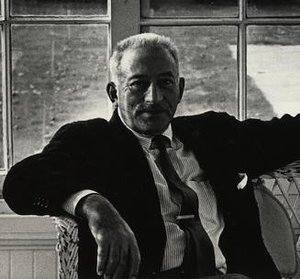
Adolph Gottlieb
1903 - 1974 , USA
Kortfakta
- Artistic Movement Or Style: Abstrakt expressionism
- Artists Who Influenced This Artist:
- Konstruktivismen
- Surrealismen
- Date Of Birth: 14 mars 1903
- Date Of Death: 1974
- Full Name: Adolph Gottlieb
- Nationality: Amerikanare
- Notable Artworks:
- Pictographs
- Burst Paintings
- Signs
- Place Of Birth: New York City, USA
Relaterade artiklar
Lyrical Abstraction: The Emotional Power of Color and Form in Modern Art History
Explore the profound emotional depth of Lyrical Abstraction. Discover how masters like Raymond Parker used color and form to bridge Impressionism and Abstract Expressionism. Learn about this pivotal movement through our expert-led art history guide.

Topp 10 mästerverk inom abstrakt expressionism – konst för ditt hem | OriginalUniqueArt.com
Utforska de 10 mest inflytelserika verken inom abstrakt expressionism – från Rothkos färgfält till Pollocks action painting. Lär känna konstnärerna och deras teknik. Hitta museumskvalitativa tryck på OriginalUniqueArt.com och förvandla ditt hem med tidlös konst!
Beyond the Lines: Mastering the High-Impact World of Contemporary Abstraction
Master the high-impact world of contemporary abstraction. Discover how bold colors, textures, and modern movements like Abstract Expressionism can transform your space with premium, high-energy art curated for the design-conscious professional.
The Soul of Color: A Journey into the Emotional Resonance of Lyrical Abstraction
Embark on a cultural journey through Lyrical Abstraction. Explore how masters like Kandinsky used color and motion to translate emotion into visual poetry. Discover the profound beauty of abstract expressionism and learn to curate emotional resonance in your own art collection.

Kandinskys 25 Mästerverk: En Färgstark Resa i Abstrakt Konst | OriginalUniqueArt
Utforska Wassily Kandinskys 25 mest ikoniska verk – från expressionism till abstrakt konst. Lär känna historien bakom mästerverken och hitta inspiration för din heminredning med OriginalUniqueArt.com. Upptäck hela samlingen online!