

 Förhandsvisa
 Skicka
 Dela
Dela
 Visa detaljer
 Guide
Guide

 Ladda ner
 Liknande objekt
 Röntgen
 Bildspel
 Statistik
Landscape with Peasants Resting
 Oil On Canvas
- WallArt
- Dutch Golden Age
 1650
1650 91.0 x 133.0 cm
 Staatliche Museen zu Berlin
 Visa mer
Giclée / Konsttryck
Giclée- eller canvasprint av museumskvalitet med snabb produktion och flexibla ytbehandlingsalternativ. ( Beställ handmålad reproduktion Byt till digital bild)




P118B Skr10

P118H Skr10

P118W Skr10

P438Z Skr10

P508JH Skr12

P508YH Skr12

P805H Skr10

P805Z Skr10

P919BZ Skr10

P919G Skr10

P919XJ Skr10

P959ZH Skr10

P968JZ Skr12

W106C Skr8

W218G Skr10

W218JH Skr8

W218Y Skr10

W307PJ Skr10

W316G Skr10

W316PJ Skr8

W316Y Skr10

W398PJ Skr8

W4111J Skr10

W500HY Skr15

W500JH Skr15

W692G Skr12

W849H Skr8

W940BG Skr15

W953PJ Skr8




Välj bland våra förinställda storlekar som motsvarar konstverkets ursprungliga proportioner.

Ange den bredd och höjd du behöver för att passa din ram eller vägg. Ett tryck kan endast beskäras, aldrig göras större än originalbilden, vilket innebär att ett format med en annan proportion leder till att en del av bilden går förlorad. Vi skickar en digital mockup för godkännande innan vi påbörjar tryckningen. Bilden som visas på denna sida visar inte den faktiska beskärningen — det är endast mockuppen som gör det.
Leverans över hela världen () på 2 veckor istället för standard 4/5 veckor. (26 oktober)

Fri expressfrakt över hela världen

Högkvalitativ linnecanvas

Fullständig fraktförsäkring

Garantier för återbetalning av tullavgifter

Garantier för exakt färgåtergivning

100 dagars returrätt (endast vid fel)

100% pengarna tillbaka-garanti

Mängdrabatt erbjuds
 Glasalternativet är endast tillgängligt i storlekar under 110 cm.

Landscape with Peasants Resting
Giclée / Konsttryck
Storlek på reproduktion
-


Slutgiltigt pris
Skr 793
A Window Into Seventeenth Century Dutch Pastoral
The painting “Landscape with Peasants Resting,” attributed to Abraham Bloemaert and completed in 1650, offers a captivating glimpse into the artistic sensibilities of the Dutch Golden Age—a period characterized by unparalleled creativity and intellectual fervor. Currently residing at Staatliche Museen Berlin, this monumental canvas (91 x 133 cm) transcends mere depiction; it embodies an idealized vision of rural tranquility deeply rooted in humanist ideals prevalent during its creation. Bloemaert’s masterful command of oil paint on canvas—a technique perfected by artists like Rembrandt and Frans Hals—allows for a remarkable level of textural detail, capturing the subtle nuances of light and shadow that imbue the scene with palpable atmosphere.Style and Technique: Echoes of Mannerism and Embracing Baroque Luminosity
Bloemaert’s stylistic approach skillfully blends elements characteristic of Mannerism – notably asymmetrical compositions and stylized figures – with burgeoning Baroque principles emphasizing dramatic lighting and vibrant color palettes. The artist eschews strict realism, favoring instead a carefully crafted illusion that prioritizes expressive beauty over photographic accuracy. Observe how Bloemaert employs chiaroscuro—the interplay between light and dark—to sculpt the forms of the peasants beneath the sheltering branches of an ancient oak tree. This technique not only enhances visual impact but also serves to convey a profound sense of solemn contemplation, mirroring the spiritual concerns that underpinned much Baroque art.Historical Context: Reflecting Religious Reform and Societal Values
Painted amidst the turbulent backdrop of the Dutch Reformation—a movement aimed at purging Catholicism from Dutch society—Bloemaert’s landscape reflects broader societal anxieties regarding morality and faith. The depiction of peasants engaging in quiet repose underscores the importance of piety and contemplation within the everyday lives of ordinary citizens. Furthermore, the inclusion of livestock – cows and chickens – speaks to the economic realities of rural communities and reinforces the prevailing belief in God's provision for humankind. Bloemaert’s work stands as a testament to the humanist conviction that beauty could inspire moral virtue and elevate the human spirit.Symbolism: Oak Tree, Hearth Fire, and the Cycle of Life
The oak tree dominating the composition symbolizes strength, resilience, and longevity—attributes revered in medieval symbolism and retained throughout the Baroque era. Its expansive branches provide refuge from the sun’s glare, representing divine protection and fostering a sense of serenity among the resting peasants. Equally significant is the depiction of a humble wooden house with a thatched roof and a flickering hearth fire. This domestic emblem embodies warmth, comfort, and familial unity—values central to Dutch cultural identity during Bloemaert's time. The presence of animals reinforces the cyclical nature of life – birth, growth, decay, and renewal – mirroring God’s eternal dominion over creation.Emotional Impact: A Balm for Troubled Times
Ultimately, “Landscape with Peasants Resting” transcends its formal qualities to evoke a powerful emotional response in the viewer. The painting's serene beauty offers respite from the anxieties of Reformation-era Holland—a balm for troubled souls seeking solace amidst worldly concerns. Bloemaert’s masterful use of color and light creates an immersive experience that transports us back to a bygone era, reminding us of the enduring power of art to inspire contemplation and reaffirm our connection to the natural world. It remains a timeless masterpiece—a testament to the artistic genius of Abraham Bloemaert and the profound spiritual values of the Dutch Golden Age.Frågor och svar
Går det att förhandsvisa "Landscape with Peasants Resting" i augmented reality?
"Landscape with Peasants Resting" har en förhandsvisning med förstärkt verklighet: konstverkets Förhandsvisning i AR-sida visar det i ditt eget utrymme på en kompatibel enhet.
Vilka är måtten på originalet av "Landscape with Peasants Resting" av Abraham Bloemaert?
De registrerade måtten för "Landscape with Peasants Resting" av Abraham Bloemaert är 91 x 133 cm. Reproduktioner kan beställas i andra storlekar med bibehållna proportioner.
Hur harmoniska är färgerna i "Landscape with Peasants Resting" av Abraham Bloemaert?
"Landscape with Peasants Resting" av Abraham Bloemaert uppvisar en Unified Palette färgharmoni.
Konstnärsbiografi
Ett liv nedsänkt i konsten: Abraham Bloemaerts värld
Abraham Bloemaert, född i Gorinchem 1564 och avliden i Utrecht 1651, framstår som en central gestalt som överbryggade manierismen och barocken inom det nederländska måleriet. Hans långa och produktiva karriär utspelade sig mot en bakgrund av religiös och politisk oro, men trots detta skapade han konsekvent verk genomsyrade av både dramatisk intensitet och subtil skönhet. Bloemaerts resa tog sin början under hans far, Cornelis Bloemaert I, en arkitekt som gav honom en grundläggande förståelse för form och komposition. Denna tidiga träning förfinades ytterligare genom studier hos Gerrit Splinter och Joos de Beer i Utrecht, vilket lade grunden för hans konstnärliga utforskande. En avgörande period följde – tre år tillbringade i Paris mellan 1581 och 1583. Där tog han till sig influenser från Jehan Bassot och Maistre Herry, samtidigt som han mötte verken av Hieronymus Francken, en medkonstnär från Nederländerna som vidgade hans stilistiska horisonter. Denna parisiska vistelse visade sig vara formativ; den exponerade honom för den franska skolans förfinade elegans och beredde vägen för hans senare innovationer.Från manierism till barock: En föränderlig estetik
Vid hemkomsten till Utrecht etablerade sig Bloemaert snablob som en ledande konstnär. Inledningsvis var hans stil i linje med den rådande Haarlem-manierismen – kännetecknad av utdragna figurer, eleganta poser och ofta komplexa allegoriska berättelser. Han nöjde sig dock inte med att förbli inom denna ram. När 1600-talet grydde började Bloemaert omfamna den framväxande barockestetiken, ett skifte präglat av ökad dynamik, emotionell intensitet och en förstärkt känsla av realism. Denna övergång var inte abrupt; snarare representerade den en gradvis evolution där element från båda stilarna smältes samman till ett unikt personligt konstnärligt språk. Han vävde skickligt in dramatiska ljuseffekter, rika färgpaletter och uttrycksfulla gester för att förmedla kraftfulla narrativ och väcka djupa känslor hos betraktaren. Hans målningar började vibrera av en ny energi som speglade det föränderliga kulturella landskapet i den nederländska republiken.En mästare av mångfald i motiv och teknik
Bloemaerts konstnärliga produktion var anmärkningsvärt varierad. Han utmärkte sig inom historiemåleriet, där han gav bibliska berättelser och klassiska myter liv med fängslande detaljrikedom och emotionellt djup. Även landskap intog en speciell plats i hans repertoar; de fungerade ofta som kulisser för religiösa eller mytologiska scener, men blev alltmer motiv i egen rätt – pittoreska vyer befolkade av gestalter engagerade i vardagliga sysslor. Utöver måleriet var Bloemaert en högt skicklig grafiker, kunnig inom både etsning och kopparstick. Dessa tryck tjänade till att sprida hans konstnärliga vision vidare, vilket bidrog betydligt till hans rykte och inflytande. Hans tekniska mästerskap sträckte sig även till stilleben och djurmåleri, vilket demonstrerade en exceptionell mångsidighet som skilde honom från många av hans samtida. Framstående verk såsom ”Hagar och Ismael fördrivs”, ”Venus och Adonis” samt ”Krigaren och den unge fån bärare” exemplifierar denna bredd och visar hans förmåga att hantera komplexa kompositioner och förmedla nyanserade känslor med lika stor skicklighet.En flitig lärare och ett bestående arv
Abraham Bloemaert var inte bara en begåvad konstnär utan även en inflytelserik lärare. Han etablerade en blomstrande ateljé i Utrecht som lockade till sig ett flertal elever som själva skulle komma att bli framstående konstnärer. Det är anmärkningsvärt att hans fyra söner – Hendrick, Frederick, Cornelis och Adriaan – alla följde i hans fotspår och nådde betydande framgång som målare och gravörer. Utöver sin närmaste familj agerade Bloemaert mentor åt en hel generation nederländska konstnärer, däribland Jan Aerntsz de Hel, Nicolaes van Bercheyck, Leonaert Bramer, Bartholomeus Breenbergh, Hendrick ter Brugghen och Gerrit van Honthorst. Hans inflytande var särskilt djuptgående för Utrecht-karavaggisterna – en grupp målare som omfamnade den dramatiska realismen och tenebrismen (användningen av starka kontraster mellan ljus och mörker) som introducerats av Caravaggio. Bloemaerts undervisning hjälpte till att forma deras särpräglade stil och befäste hans position som en central figur i utvecklingen av det nederländska barockmåleriet. Hans arv fortsätter att resonera än idag, där hans verk beundras för sin tekniska briljans, emotionella kraft och historiska betydelse. De står som vittnesbörd om ett liv tillägnat konstnärligt utforskande och innovation, och har lämnat ett outplånligt avtryck på konstvärlden.
Abraham Bloemaert
1564 - 1651 , Nederländerna
Kortfakta
- Artistic Movement Or Style: Barock, manierism
- Artists Or Movements Influenced By This Artist: ['Utrecht Caravaggisti']
- Artists Who Influenced This Artist: ['Hieronymus Francken']
- Date Of Birth: 1564
- Date Of Death: 1651
- Full Name: Abraham Bloemaert
- Nationality: Holländsk
- Notable Artworks:
- Fördrivandet av Hagar
- Venus och Adonis
- Landskap med bönder
- Place Of Birth: Gorinchem, Nederländerna
Relaterade artiklar
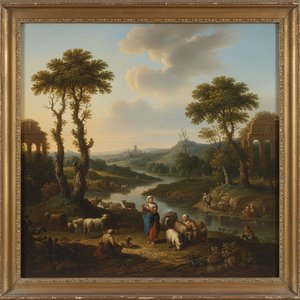
Nicolaes Berchem: Dutch Golden Age Pastoralism & the Evolution of Landscape Painting
Explore the captivating world of Nicolaes Berchem, a leading Dutch Golden Age painter. Discover his idyllic landscapes, masterful technique & lasting influence on art history. Learn more at OriginalUniqueArt.

Golden Light & Dutch Skies: Bringing the Magic of Dutch Golden Age Landscapes into Your Home
Transform your home with the breathtaking light of Dutch Golden Age landscapes. Discover how hand-painted oil reproductions of masterworks like Ruisdael and Vermeer bring timeless elegance, atmosphere, and soulful texture to modern interiors. Elevate your space with museum-quality art.

Nederländsk Guldålder: Topp 10 mästerverk som definierade epoken – konst & heminredning
Utforska de 10 ikoniska mästerverken från den nederländska guldåldern! Lär känna Rembrandt, Vermeer och Hals – deras teknik & berättelser. Hitta konsttryck och inspiration för din heminredning på OriginalUniqueArt.com. Upptäck hela samlingen online!
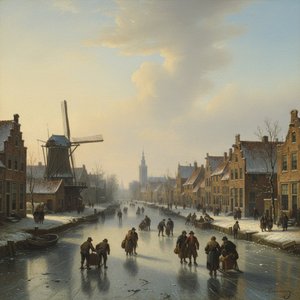
Charles Leickert: Capturing the Dutch Golden Age Light – A Comprehensive Study of Technique, Context, and Legacy
Explore the captivating winter landscapes of Charles Leickert, a master of Dutch Golden Age light & atmosphere. Discover his techniques, symbolism, and lasting legacy – a comprehensive study for art enthusiasts and collectors.

Golden Light & Dutch Skies: The Timeless Magic of Dutch Golden Age Landscapes
Discover the breathtaking beauty of Dutch Golden Age landscapes. Explore the mastery of light, chiaroscuro, and 17th-century realism through an expert art history lens, celebrating the enduring legacy of the Dutch Masters for discerning collectors and art lovers.


