


1


Ažurirano: новембар 2026 · rangirano prema našem koeficijentu popularnosti (pretrage, posete i porudžbine za svako delo) · 7 dela William Sommer u našem katalogu
Ukratko
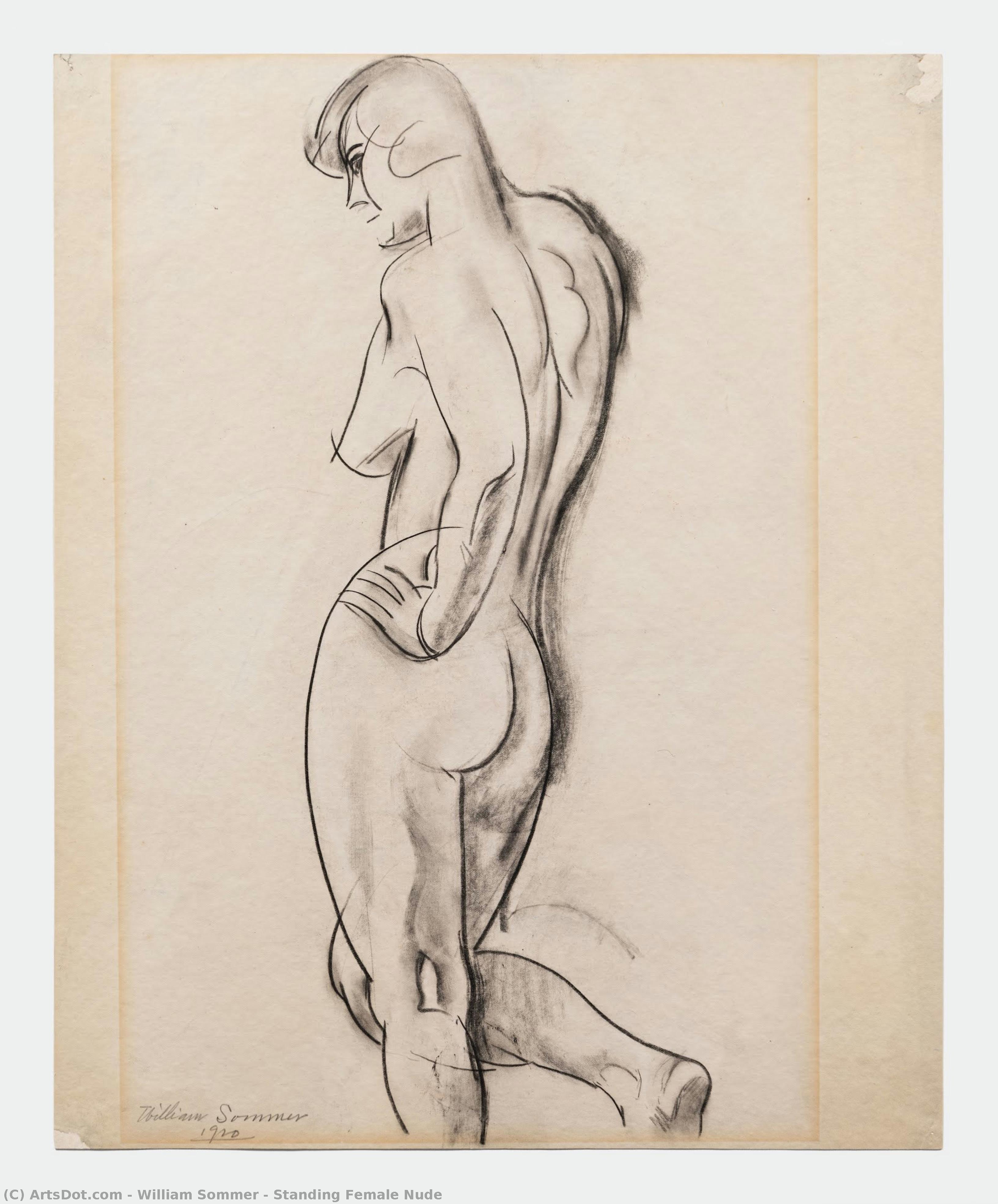
Od svih originala koje je William Sommer ostavio, najpoznatiji je June (recto) (1926), koji se nalazi u kolekciji Cleveland Museum of Art, Klivlend. Odmah za njima slede A Group of Drawings and Studies: Man i Standing Female Nude (1920). Naš katalog sadrži 7 dela umetnika William Sommer; galerija je čuvala 7 dela koja svet najviše admira, od kojih je svako prikazano sa svojim datumom, muzejom i pričom.



In Landscape, William Sommer presents a country road flanked by trees, capturing a moment of quiet activity within a rural setting. Created about 1900, the composition features several people walking along the path, though the road itself maintains an air of emptiness. Two horses are integrated into the scene: one positioned near the center and another toward the right side. This intersection of animal and human presence defines the pastoral…
2 muzeja u kojima se nalazi najviše slika sa ove stranice.
| Muzej | Grad | Radovi umetnika William Sommer | Slike iz ovog spiska |
|---|---|---|---|
 Akron Art Museum |
Akron | 5 | A Group of Drawings and Studies: Man, Standing Female Nude, Portrait of Martha Sommer Seated |
 Cleveland Museum of Art |
Klivlend | 2 | June (recto), Girl with Apple (recto); Head of a Woman (verso) |
Izaberite deceniju da biste videli original koji je definiše.
In Landscape, William Sommer presents a country road flanked by trees, capturing a moment of quiet activity within a rural setting. Created about 1900, the composition features several people walking along the path, though the road itself maintains an air of emptiness. Two horses are integrated into the scene: one positioned near the center and another toward the right side. This intersection of animal and human presence defines the pastoral…
June (recto) (1926), Cleveland Museum of Art, Klivlend. Slede A Group of Drawings and Studies: Man i Standing Female Nude (1920).
59 godina: June (recto) datira iz 1926, a William Sommer je rođen/a 1867.
Naš katalog sadrži 7 dela umetnika William Sommer, datiranih od 1900 do 1947.
Većinom u Akron Art Museum (Akron) i Cleveland Museum of Art (Klivlend). Tabela muzeja iznad sadrži njih sve.
U 1920s: 3 od 7 dela na ovoj stranici nastalo je tada, od čega je June (recto).
Na ovoj stranici, najstarije delo je iz Landscape (1900), a najnovije iz Portrait of Martha Sommer Seated (1947).
A Group of Drawings and Studies: Man, Standing Female Nude i Portrait of Martha Sommer Seated: Akron Art Museum, Akron čuva 5 dela sa ove stranice.
William Sommer, born in Detroit, Michigan, in 1867, emerged from a landscape steeped in the burgeoning industrial spirit of America. Though largely self-taught, his artistic journey began with foundational lessons from Julius Gari Melchers, an artist and commercial lithographer who instilled early discipline and observation skills. For seven years, Sommer immersed himself in the world of printmaking as an apprentice at the Detroit Calvert Lithograph Company. This period wasn’t merely technical training; it was a crucial education in visual communication, color theory, and the demands of a commercial art market—experiences that would subtly inform his later, more personal explorations.
In 1890, Sommer embarked on a transformative journey to Europe, seeking formal training and exposure to the artistic currents shaping the continent. He studied under esteemed professors Johann Herterich, Ludwig Schmid, and Adolph Menzel, absorbing academic techniques and broadening his understanding of art history. This period was pivotal; it wasn’t simply about mastering established styles but also about encountering diverse perspectives and developing a critical eye. Upon returning to New York City in 1891, Sommer continued working as a lithographer while privately nurturing his own artistic vision. He became involved with the Kit Kat Klub, a bohemian artists' group that fostered experimentation and challenged conventional norms.
A move to Cleveland in 1907 marked another turning point in Sommer’s career. Working for the Otis Lithograph Company provided stability, but it was his encounter with William Zorach that truly ignited his passion for modern art. Inspired by Zorach's experiences in Paris, Sommer began experimenting with Impressionistic and Fauvist techniques, embracing vibrant colors and dynamic brushwork. Recognizing a need for a dedicated space to promote avant-garde ideas, he co-founded the Kokoon Arts Club in 1911. This collective became a vital hub for artists seeking to break free from traditional constraints, fostering lively discussions, exhibitions, and a shared commitment to artistic innovation.
In 1914, Sommer relocated to Brandywine, Ohio, transforming an abandoned schoolhouse into his studio—a sanctuary where he could fully dedicate himself to painting. This rural setting profoundly influenced his subject matter, as he turned his attention to the landscapes, children, and farm scenes of the American Midwest. His style continued to evolve, blending European modernism with a distinctly American sensibility. During the Depression era, Sommer found crucial support through the Federal Art Project, creating several large-scale murals for public buildings, including *Rural Homestead* in Geneva, Ohio. These murals weren’t merely decorative; they were powerful statements about community, resilience, and the dignity of rural life.
William Sommer's artistic journey was one of continuous exploration and adaptation. He wasn’t confined by a single style or movement but rather synthesized diverse influences into a unique visual language. His work, characterized by its energetic brushwork, vibrant colors, and evocative subject matter, captured the spirit of his time—a period of rapid change and artistic experimentation. Though he faced periods of hardship and recognition came relatively late in life, Sommer left an indelible mark on the Cleveland art scene and beyond. He is now celebrated as a leading figure of American Modernism, whose paintings offer a compelling glimpse into the heartland of America and the enduring power of artistic vision.