Portret Василиј Кандински

100 najpoznatijih slika umetnika Василиј Кандински, izbor iz galerije

Ažurirano: новембар 2026 · rangirano prema našem koeficijentu popularnosti (pretrage, posete i porudžbine za svako delo) · 729 dela Василиј Кандински u našem katalogu

Ukratko

Od svih originala koje je Василиј Кандински ostavio, najpoznatiji je Композиција VII (1913), koji se nalazi u kolekciji Tretyakovljeva galerija, Moskva. Odmah za njima slede Plavi jahač i Жута, Црвена, Сива (1925). Naš katalog sadrži 729 dela umetnika Василиј Кандински; galerija je čuvala 100 dela koja svet najviše admira, od kojih je svako prikazano sa svojim datumom, muzejom i pričom.

1866 – 1944, Москва Ekspresionizam Najviše dela: Centre Pompidou

Top 10 slika umetnika Василиј Кандински: izbor galerije

1
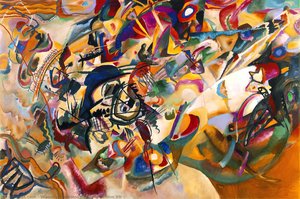
Композиција VII (1913) čiji je Василиј Кандински

Композиција VII

1913 · Ulje na platnu · Tretyakovljeva galerija, Moskva

Naslikano 1913. godine, ovo kultno delo predstavlja ključni trenutak u evoluciji apstraktne umetnosti i stoji kao najambicioznija komposiciona izjava Vasilija Kandinskog pre njegovog povratka u Rusiju. Daleko od običnog, šarenog rasporeda boja, ovo je duboko promišljeno istraživanje duhovnog odjeka i emocionalne snage, koje otelovljuje Kandinskog uverenje da slikarstvo može – i mora – izraziti „unutrašnju potrebu“. Ovo platno velikih dimenzija prevazilazi reprezentativni oblik, uvodeći posmatrače u svet čistog osećaja i…

2
Plavi jahač čiji je Василиј Кандински

Plavi jahač

Ulje na platnu

Plavi jahač predstavlja ključnu prekretnicu u evoluciji apstraktne umetnosti, nudeći duboki uvid u jedinstvenu viziju koju je nosio Kandinsky. Za ljubitelje umetnosti, ovo delo je neprocenjivo, dok kolekcionarima njihova reprodukcija donosi notu ranog modernizma i intelektualnu dubinu koju svaki izbor u kolekciji zaslužuje.

3
Жута, Црвена, Сива (1925) čiji je Василиј Кандински

Жута, Црвена, Сива

1925 · Ulje na platnu · Centre Pompidou, Pariz

Wassily Kandinsky’s “Yellow, Red, Blue”: A Pioneer of Abstract Expressionism Kandinsky's "Yellow, Red, Blue" stands as an undeniable cornerstone of 20th-century art—a bold declaration that visual representation wasn’t the sole path to artistic expression. Created in Munich during his formative years at the Bauhaus school (1922-1933), this monumental canvas embodies the revolutionary spirit of its time, reflecting a profound shift away from traditional academic conventions toward a more intuitive and…

4
Kompozicija VIII (1923) čiji je Василиј Кандински

Kompozicija VIII

1923 · Ulje na platnu · Solomon R. Gugenhajm Muzej, Njujork

Kompozicija VIII: Kandinskog Simfonija Oblika i Boje Vasilij Kandinski, jedan od najuticajnijih slikara XX veka, zauvek je promenio tok moderne umetnosti svojim revolucionarnim pristupom apstraktnom slikarstvu. "Kompozicija VIII," nastala 1923. godine, predstavlja vrhunsko ostvarenje ovog umetnika i simbol njegovog dubokog razumevanja veze između forme, boje i duhovne ekspresije. Ova monumentalna kompozicija, dimenzija 140 x 201 cm, nije samo slika; to je vizuelno istraživanje unutrašnje potrebe – Kandinskog uverenja da umetnost…

5
Vasili Vasiljevič Kandinski

Vasili Vasiljevič Kandinski je rođen u Moskvi 1866. godine, a bio je revolucionarna figura koja je neizmenjeno uticala na tok moderne umetnosti. Njegov put nije bio odmah usmeren ka umetnosti; prvobitno je bio predodređen za k (1914) čiji je Василиј Кандински

Vasili Vasiljevič Kandinski Vasili Vasiljevič Kandinski je rođen u Moskvi 1866. godine, a bio je revolucionarna figura koja je neizmenjeno uticala na tok moderne umetnosti. Njegov put nije bio odmah usmeren ka umetnosti; prvobitno je bio predodređen za k

1914 · Ulje na platnu · Stadtische Galerie im Lenbachhaus, Minhen

“Improvisacija. Ždrelo” (1914) od Vasilija Kandinskog nije samo slika; to je portal ka unutrašnjem svetu emocija, intuitivnog osećanja i duhovne potrage. Ovo monumentalno delo, trenutno čuvano u Städtische Galerie im Lenbachhaus u Minhenu, predstavlja ključni momenat u evoluciji apstraktne umetnosti, odvažnu deklaraciju oslobađanja od okova tradicionalnog predstavljanja sveta.

6
Na belini II (1923) čiji je Василиј Кандински

Na belini II

1923 · Ulje na platnu · Centre Pompidou, Pariz

Simfonija Oblika i Boje: Istraživanje Kandinskog Majstorskog dela "Na Belom II" “Na Belom II” (1923) Vasilija Kandinskog predstavlja ključno delo u evoluciji apstraktne umetnosti, izraz njegovog celoživotnog istraživanja duhovne moći boja i oblika. Ova dinamična kompozicija, dimenzija 105 x 98 cm, ne prikazuje vidljivi svet; to je poziv da se iskusiti čista osećanja kroz vizuelni jezik. Umetnik nas vodi u prostor gde logika gubi značaj, a emocije postaju jedini merilac…

7
Kompozicija X čiji je Василиј Кандински

Kompozicija X

Ulje na platnu · Kunstsammlung Nordrhein-Westfalen, Diseldorf

"Kompozicija X" je živopisna i dinamična apstraktna kompozicija koja zrači energijom i pokretom. Ovo očaravajuće umetničko delo prikazuje majstorstvo Vasilija Kandinskog u upotrebi boje, forme i linije, pozivajući posmatrače u svet čiste apstrakcije gde se emocije i duhovnost prepliću.

8
Прва Абстрактна Ватерколора, Колекција Луда (1910) čiji je Василиј Кандински

Прва Абстрактна Ватерколора, Колекција Луда

1910 · Akvarel

Vibratna apstrakcija: Pionirsko delo moderne umetnosti Prva apstraktna akvarel slika Vasilija Kandinskog predstavlja prekretnicu u istoriji moderne umetnosti, označavajući njegov prelazak u čistu apstrakciju. Kreirana 1910. godine, ova dinamična kompozicija otelotvoruje revolucionarni pristup umetnika boji i formi, hvatajući samu suštinu njegove avangardne vizije. Stil i tehnika: Ples boje i forme Ovaj apstraktni akvarel odlikuju se labavom, slobodnom kompozicijom i živopisnom paletom boja. Kandinski koristi fluidne poteze četkicom koji variraju od…

9
Kompozicija IX (1936) čiji je Василиј Кандински

Kompozicija IX

1936 · Ulje na platnu · Centre Pompidou, Pariz

Suština apstrakcije Kandinskijeva Kompozicija IX (1936) predstavlja remek-delo apstraktne umetnosti koje verno beleži samu suštinu čiste vizuelne ekspresije. Ova vibrantna i dinamična kompozicija zrači energijom i pokretom, čineći je očaravajućim dodatkom svakoj kolekciji moderne umetnosti ili savremenom enterijeru. Simfonija boje i forme Kandinskija Kompozicija IX je prava eksplozija boja i oblika, koja se oslanja na smelu paletu žutih, crvenih, plavih, zelenih i ljubičastih tonova. Umetničko delo je podeljeno na nekoliko…

10
Импровизация 28 (вторая версия) čiji je Василиј Кандински

Импровизация 28 (вторая версия)

Ulje na platnu · Solomon R. Guggenheim Museum, New York

Vibratna apstrakcija: Ples boje i forme Uronite u električni svet apstraktnog ekspresionizma uz ovo očaravajuće umetničko delo Vasilija Kandinskog. Eksplozija živopisnih nijansi i dinamičnih formi predstavlja svedočanstvo o Kandinskom pionirskom duhu i njegovoj sposobnosti da izazove duboke emocije kroz čistu apstrakciju. Stil i tehnika: Rođenje apstraktnog ekspresionizma Kandinski, jedan od utemeljitelja apstraktne umetnosti, stvorio je ovo remek-delo tokom perioda intenzivnog umetničkog istraživanja. Njegov rad prevazilazi tradicionalnu reprezentaciju, fokusirajući se umesto…

Izbor umetnika Василиј Кандински se nastavlja, od 11 do 100

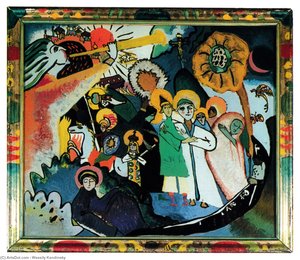
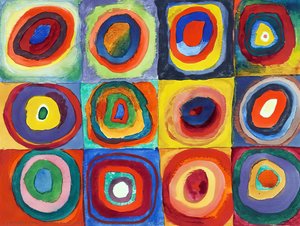
11Svetitelja I (1911) čiji je Василиј КандинскиSvetitelja I1911 12Арби И (Кремијерја) (1909) čiji je Василиј КандинскиАрби И (Кремијерја)1909 · Hamburger Kunsthalle 13Интерijer (Моја трпезарија) (1909) čiji je Василиј КандинскиИнтерijer (Моја трпезарија)1909 14Слика са стакла са сунцем (Мале радости) (1910) čiji je Василиј КандинскиСлика са стакла са сунцем (Мале радости)1910 15Gabriela Münterova boja u Kallmunzu (1903) čiji je Василиј КандинскиGabriela Münterova boja u Kallmunzu1903 · Lenbachhaus 16Nekoliko krugova, Solomon R. G (1926) čiji je Василиј КандинскиNekoliko krugova, Solomon R. G1926 · Solomon R. Gugenhajm Muzej 17Omekšena konstrukcija čiji je Василиј КандинскиOmekšena konstrukcija 18Ulica u Murnauu sa ženama čiji je Василиј КандинскиUlica u Murnauu sa ženama 19Studija za naslovnicu Der Blaue Reiter Almanah (1911) čiji je Василиј КандинскиStudija za naslovnicu Der Blaue Reiter Almanah1911 · Centre Pompidou 20Studija za "Kompoziciju VII" (1913) čiji je Василиј КандинскиStudija za "Kompoziciju VII"1913 21Бела Црвена Арка čiji je Василиј КандинскиБела Црвена Арка 22Zimski pejzaž (1909) čiji je Василиј КандинскиZimski pejzaž1909 · Ermitaž 23La Calleja Grün en Murnau čiji je Василиј КандинскиLa Calleja Grün en Murnau 24Composition VI (1913) čiji je Василиј КандинскиComposition VI1913 25Ahrtirka. Dača blizu bara (1917) čiji je Василиј КандинскиAhrtirka. Dača blizu bara1917 · Centre Pompidou 2607 riding couple čiji je Василиј Кандински07 riding couple 27Composition X (1939) čiji je Василиј КандинскиComposition X1939 28Drawing for Point and Line to Plane (1925) čiji je Василиј КандинскиDrawing for Point and Line to Plane1925 · Centre Pompidou 29Abschied (small version) (Goodbye) (1903) čiji je Василиј КандинскиAbschied (small version) (Goodbye)1903 · Centre Pompidou 30Murnau with Rainbow, , Gabriele Münter Founda (1909) čiji je Василиј КандинскиMurnau with Rainbow, , Gabriele Münter Founda1909 31Studija boja kvadrata i krugova (1913) čiji je Василиј КандинскиStudija boja kvadrata i krugova1913 · Gradska galerija Lenbachhaus 32Сини коњ (1903) čiji je Василиј КандинскиСини коњ1903 33Tunis, Strasse (Tunis, Street) (1905) čiji je Василиј КандинскиTunis, Strasse (Tunis, Street)1905 · Centre Pompidou 34Orange-Violet (1935) čiji je Василиј КандинскиOrange-Violet1935 · Solomon R. Guggenheim Museum 35Импровизация (Мечтательно) (1913) čiji je Василиј КандинскиИмпровизация (Мечтательно)1913 · Bavarske državne slikopisne kolekcije 36An Intimate Party (1942) čiji je Василиј КандинскиAn Intimate Party1942 · Centre Pompidou 37Гора (1909) čiji je Василиј КандинскиГора1909 38Мурнау са црквом čiji je Василиј КандинскиМурнау са црквомLenbachhaus 39Mala snena u crvenom (1925) čiji je Василиј КандинскиMala snena u crvenom1925 40Orientalno (Orijentalno) (1911) čiji je Василиј КандинскиOrientalno (Orijentalno)1911 · Centre Pompidou 41Ptice (1916) čiji je Василиј КандинскиPtice1916 · Centre Pompidou 42Devet elemenata hromatičnog kruga (1928) čiji je Василиј КандинскиDevet elemenata hromatičnog kruga1928 · Centre Pompidou 43Kochel - Waterfall II (1902) čiji je Василиј КандинскиKochel - Waterfall II1902 44Лудвигкирхе у Мурнау (1908) čiji je Василиј КандинскиЛудвигкирхе у Мурнау1908 · Музеј Тисен-Борнемиза 45Minhen, Severno groblje (Munich, The Northern Cemetary) (1903) čiji je Василиј КандинскиMinhen, Severno groblje (Munich, The Northern Cemetary)1903 · Centre Pompidou 46Last watercolour (1944) čiji je Василиј КандинскиLast watercolour1944 47Munich - English Garden (also known as English Garden in Munich) (1901) čiji je Василиј КандинскиMunich - English Garden (also known as English Garden in Munich)1901 · Lenbachhaus 48Neko Polukružje (1926) čiji je Василиј КандинскиNeko Polukružje1926 49Импровизация. Кламмская Равина čiji je Василиј КандинскиИмпровизация. Кламмская Равина 50Autumn in Bavaria čiji je Василиј КандинскиAutumn in BavariaCentre Pompidou 51Study for Im Schwarzen Viereck (1923) čiji je Василиј КандинскиStudy for Im Schwarzen Viereck1923 · Centre Pompidou 52Houses at Murnau (1909) čiji je Василиј КандинскиHouses at Murnau1909 53Park von Saint-Cloud, Waldlichtung (Park Sen-Klod, proplanak) (1907) čiji je Василиј КандинскиPark von Saint-Cloud, Waldlichtung (Park Sen-Klod, proplanak)1907 · Centre Pompidou 54Painting with Troika (1911) čiji je Василиј КандинскиPainting with Troika1911 · Art Institute of Chicago 55Lyrical (Lyrics) (1911) čiji je Василиј КандинскиLyrical (Lyrics)1911 56Black Triangle (1925) čiji je Василиј КандинскиBlack Triangle1925 · Museum Boijmans Van Beuningen 57Crveni Ovaj (1920) čiji je Василиј КандинскиCrveni Ovaj1920 58Two green dots čiji je Василиј КандинскиTwo green dots 59Hard in soft (1927) čiji je Василиј КандинскиHard in soft1927 · Sezon Museum of Modern Art 60Study for Chacun pour soi (1934) čiji je Василиј КандинскиStudy for Chacun pour soi1934 · Centre Pompidou 61Долина Импровизации čiji je Василиј КандинскиДолина Импровизации 62Импровизация №20 (1911) čiji je Василиј КандинскиИмпровизация №201911 · Pushkin State Museum 63Painting with White Form (1913) čiji je Василиј КандинскиPainting with White Form1913 · Kunstmuseum Den Haag 64Image with a White Shape (1913) čiji je Василиј КандинскиImage with a White Shape1913 · Kunstmuseum Den Haag 65Study for ''Circles on Black'' (1921) čiji je Василиј КандинскиStudy for ''Circles on Black''1921 66Unfinished Painting (1944) čiji je Василиј КандинскиUnfinished Painting1944 · Centre Pompidou 67Horses (1909) čiji je Василиј КандинскиHorses1909 68Kochel, Mountain Meadow (1902) čiji je Василиј КандинскиKochel, Mountain Meadow1902 · Centre Pompidou 69Bojni trougao (1933) čiji je Василиј КандинскиBojni trougao1933 · Getty Research Institute 70Improvisation No. 2 Funeral March (study) (1909) čiji je Василиј КандинскиImprovisation No. 2 Funeral March (study)1909 · Lenbachhaus 71Kochel - Straight road (1909) čiji je Василиј КандинскиKochel - Straight road1909 · Lenbachhaus 72View of Murnau (1908) čiji je Василиј КандинскиView of Murnau1908 · Ermitaž 73Abstract Interpretation (1925) čiji je Василиј КандинскиAbstract Interpretation1925 · Yale University Art Gallery 74Landscape with Two Poplars (1912) čiji je Василиј КандинскиLandscape with Two Poplars1912 · Art Institute of Chicago 75Bild II. Gnomus (Painting II. Gnomus) (1928) čiji je Василиј КандинскиBild II. Gnomus (Painting II. Gnomus)1928 · Centre Pompidou 76Isolated Sounds (1927) čiji je Василиј КандинскиIsolated Sounds1927 · Centre Pompidou 77Prvi studije za Einige Kreise (1926) čiji je Василиј КандинскиPrvi studije za Einige Kreise1926 · Centre Pompidou 78St. George and the dragon čiji je Василиј КандинскиSt. George and the dragon 79Improvisation 19a (1911) čiji je Василиј КандинскиImprovisation 19a1911 · Lenbachhaus 80Improvisation No. 7 (Storm) (1910) čiji je Василиј КандинскиImprovisation No. 7 (Storm)1910 · Yale University Art Gallery 81Untitled Improvisation III (1914) čiji je Василиј КандинскиUntitled Improvisation III1914 · Los Angeles County Museum of Art 82Murnau Landscape čiji je Василиј КандинскиMurnau Landscape 83Kochel - Gabriele Münter (1902) čiji je Василиј КандинскиKochel - Gabriele Münter1902 84Rainy landscape čiji je Василиј КандинскиRainy landscapeSolomon R. Guggenheim Museum 85Decisive Pink (1932) čiji je Василиј КандинскиDecisive Pink1932 · Solomon R. Guggenheim Museum 86Pequeños mundos VI čiji je Василиј КандинскиPequeños mundos VI 87Storeys, oil on cardboard, Solomon R. Guggen (1929) čiji je Василиј КандинскиStoreys, oil on cardboard, Solomon R. Guggen1929 88Impression VI (Sunday) (1911) čiji je Василиј КандинскиImpression VI (Sunday)1911 · Lenbachhaus 89Conglomerat (1943) čiji je Василиј КандинскиConglomerat1943 · Centre Pompidou 90Pink Compensation (1933) čiji je Василиј КандинскиPink Compensation1933 · Centre Pompidou 91Two Squares (1930) čiji je Василиј КандинскиTwo Squares1930 · Centre Pompidou 92Improvisation 5 čiji je Василиј КандинскиImprovisation 5 93Study for Composition VII čiji je Василиј КандинскиStudy for Composition VII 94Landscape with red spots (1913) čiji je Василиј КандинскиLandscape with red spots1913 95Studija za Auf Weiss II (1922) čiji je Василиј КандинскиStudija za Auf Weiss II1922 · Centre Pompidou 96Akhtyrka, Landscape with Red Church (1917) čiji je Василиј КандинскиAkhtyrka, Landscape with Red Church1917 · Centre Pompidou 97St. Georg III (1911) čiji je Василиј КандинскиSt. Georg III1911 · Lenbachhaus 98Sign (1925) čiji je Василиј КандинскиSign1925 · Los Angeles County Museum of Art 99Little Painting with Yellow (Improvisation) (1914) čiji je Василиј КандинскиLittle Painting with Yellow (Improvisation)1914 · Philadelphia Museum of Art 100White Sharpness (1930) čiji je Василиј КандинскиWhite Sharpness1930 · Museum Boijmans Van Beuningen

Čuvena dela Василиј Кандински po periodima

Motivi koji su privlačili pažnju Василиј Кандински

Četiri teme koje se najčešće ponavljaju u ovim originalima, svaka sa svojim vrhunskim primerom.

Muzeji u kojima se čuvaju originalna dela umetnika Василиј Кандински

8 muzeja u kojima se nalazi najviše slika sa ove stranice.

Muzej Grad Radovi umetnika Василиј Кандински Slike iz ovog spiska
Centre Pompidou, ParizCentre Pompidou Pariz 176 Жута, Црвена, Сива, Na belini II, Kompozicija IX
Lenbachhaus, MinhenLenbachhaus Minhen 57 Gabriela Münterova boja u Kallmunzu, Мурнау са црквом, Munich - English Garden (also known as English Garden in Munich)
Solomon R. Guggenheim Museum, New YorkSolomon R. Guggenheim Museum New York 50 Импровизация 28 (вторая версия), Orange-Violet, Rainy landscape
Museum Boijmans Van Beuningen, RotterdamMuseum Boijmans Van Beuningen Rotterdam 11 Black Triangle, White Sharpness
Ermitaž, Sankt PeterburgErmitaž Sankt Peterburg 5 Zimski pejzaž, View of Murnau
Art Institute of Chicago, ČikagoArt Institute of Chicago Čikago 5 Painting with Troika, Landscape with Two Poplars
Kunstmuseum Den Haag, HagKunstmuseum Den Haag Hag 5 Painting with White Form, Image with a White Shape
Yale University Art Gallery, New HavenYale University Art Gallery New Haven 4 Abstract Interpretation, Improvisation No. 7 (Storm)

Василиј Кандински deceniju po deceniju: original koji definiše svaku od njih

Radovi po decenijama

Izaberite deceniju da biste videli original koji je definiše.

Pitanja kolekcionara o slikama umetnika Василиј Кандински

Po kojem delu je Василиј Кандински najpoznatiji/a?Otkrij odgovor

Композиција VII (1913), Tretyakovljeva galerija, Moskva. Slede Plavi jahač i Жута, Црвена, Сива (1925).

Koliko je godina imao/la Василиј Кандински kada je nastalo delo Композиција VII?Otkrij odgovor

47 godina: Композиција VII datira iz 1913, a Василиј Кандински je rođen/a 1866.

Koja su deset najpoznatijih slika umetnika Василиј Кандински?Otkrij odgovor

Композиција VII, Plavi jahač, Жута, Црвена, Сива, Kompozicija VIII, Vasili Vasiljevič Kandinski Vasili Vasiljevič Kandinski je rođen u Moskvi 1866. godine, a bio je revolucionarna figura koja je neizmenjeno uticala na tok moderne umetnosti. Njegov put nije bio odmah usmeren ka umetnosti; prvobitno je bio predodređen za k, Na belini II, Kompozicija X, Прва Абстрактна Ватерколора, Колекција Луда, Kompozicija IX i Импровизация 28 (вторая версия). Gornji rang pokazuje godinu i muzej za svako od njih.

Koliko je slika ostavio Василиј Кандински?Otkrij odgovor

Naš katalog sadrži 729 dela umetnika Василиј Кандински, datiranih od 1901 do 1944.

U kojim muzejima se nalaze remek-dela umetnika Василиј Кандински?Otkrij odgovor

Većinom u Centre Pompidou (Pariz), Lenbachhaus (Minhen) i Solomon R. Guggenheim Museum (New York). Tabela muzeja iznad sadrži njih sve.

U kojim godinama je Василиј Кандински naslikao svoja najpoznatija dela?Otkrij odgovor

U 1910s: 27 od 100 dela na ovoj stranici nastalo je tada, od čega je Композиција VII.

Koja su prva i poslednja čuvena originalna dela umetnika Василиј Кандински?Otkrij odgovor

Na ovoj stranici, najstarije delo je iz Munich - English Garden (also known as English Garden in Munich) (1901), a najnovije iz Last watercolour (1944).

Koje je motive Василиј Кандински najčešće birao/la?Otkrij odgovor

Geometric shapes (21), Landscape (12) i Spirituality (10), kroz svih 100 dela na ovoj stranici.

Koju je tehniku najčešće koristio/la Василиј Кандински?Otkrij odgovor

Ulje na platnu, za 32 od 100 dela na ovoj stranici.

Kojem umetničkom pravcu pripada Василиј Кандински?Otkrij odgovor

Ekspresionizam, sudeći po originalima na ovoj stranici.

Čija se dela umetnika Василиј Кандински nalaze u Centre Pompidou?Otkrij odgovor

Жута, Црвена, Сива, Na belini II i Kompozicija IX: Centre Pompidou, Pariz čuva 27 dela sa ove stranice.

Василиј Кандински: život i delo

Early Life and Academic Training

Wassily Wassilyevich Kandinsky was born in Moscow to Lidia Ticheeva and Vassily Silvestrovich Kandinsky. His early years were shaped by the sounds of music, as he spent time studying the piano and the cello. These early lessons in rhythm and sound would stay with him long after he left his childhood home.

His path did not lead immediately to a canvas. Instead, he pursued a formal education at the University of Moscow, where he focused on law, economics, and ethnography. He eventually took a position as a lecturer after graduating. It was not until he reached the age of 30 that he began his formal painting studies, shifting his focus from the study of social and legal structures to the physical act of drawing and sketching.

This shift brought him to Munich. There, he sought out more rigorous training at the Anton Ažbe School and the Academy of Fine Arts. He spent his time there learning the mechanics of form and the way light interacts with objects, moving away from his previous academic life to settle into the life of a student of art.

The Transition to Artistic Life

The shift began in 1896 during an exhibition in Moscow. Seeing Claude Monet’s “Haystacks” changed the way he perceived light and color. This encounter with Impressionism sparked a deep, persistent pull toward painting. It was a quiet redirection of a life once focused on the structured world of law and economics. The pull of the canvas proved stronger than the stability of his academic path.

He eventually left his position as a professor of law at Dorpat University to follow this new impulse. By about 1896, he had moved to Munich to begin formal studies in art. He sought out the Anton Ažbe School and the Academy of Fine Arts to learn the mechanics of his chosen craft. The transition was a move from the lecture hall to the studio, trading legal theory for the study of form and pigment.

The Murnau Period and Expressionism

In 1901, Kandinsky met the artist Gabriele Münter. Their connection grew as they shared a focus on the expressive power of color. By 1909, they had bought a house in Murnau. This setting provided the backdrop for a landscape series, where the shapes of the natural world began to shift. The works from this time carry the weight of his earlier studies, particularly the influence of Russian folk art. He used bright colors against dark backgrounds, a habit that spoke of his roots in the traditions of his youth.

The landscapes of Murnau were not mere copies of the scenery. He looked at the hills and the houses through a lens that favored emotional intensity over literal accuracy. The colors became more assertive, moving away from the quietude of traditional representation. He sought a way to make the canvas pulse with a sense of life, using the landscape as a starting point for something more internal. The brushstrokes grew broader, and the boundaries between objects began to soften.

  • Murnau. Landscape with Green House (1909)

The Blue Rider and Abstraction

In Munich, the focus shifted toward a new way of seeing. Kandinsky co-founded the Der Blaue Reiter (The Blue Rider) group, a circle that sought to move beyond the surface of things. This period saw him closely linked with the Expressionism movement, where the goal was to find a visual language for the internal spirit. He began to move away from the recognizable shapes of the landscape, favoring a style that prioritized the emotional weight of color and form. This was a departure from the literal world, leaning instead into the non-objective.

His work became a study in how a line or a hue could act like a musical note. He was a pioneer of the abstract art movement, stripping away the need for a subject to be a recognizable object. Instead, he focused on the interplay of shapes and the way they could communicate without a direct reference to nature. This development of non-representational painting was not a sudden break but a steady movement toward the essence of feeling. The canvas became a space for pure composition, where the arrangement of elements spoke directly to the viewer's intuition.

Teaching and the Bauhaus Years

After his time in Russia, where he served as the first director of the Institute of Artistic Culture in Moscow, Kandinsky moved toward the academic circles of Germany. In 1921, he was invited to attend the Bauhaus in Weimar. This period marked a shift toward a more structured exploration of how color and form interact on the canvas. He spent much of his time there, teaching at the Bauhaus school of art and architecture from 1922 until 1933.

His presence in the classroom was defined by a focus on the mechanics of visual language. He looked at the way a circle or a line could carry weight and meaning without needing to resemble a physical object. This was a time of experimentation with geometry and the psychological impact of specific hues. The work from these years often carries a sense of precision, moving away from the fluid, organic shapes of his earlier years toward a more calculated arrangement of elements.

The era of his teaching came to an abrupt end when the Nazi regime closed the Bauhaus in 1933. This forced a departure from the structured environment of the school and led him toward a new chapter in France. His time in Germany had been a period of deep theoretical development, where the abstract became a way to map the internal landscape of the mind.

Later Years and Final Residence

The closure of the Bauhaus in 1933 prompted a move toward France. He settled there and remained in the country from 1933/1934 until his death. During this time, his connection to his adopted home deepened, and he became a French citizen in 1939.

His final years were spent in this French landscape, continuing to work with the layered impasto techniques that gave his canvases a physical, textured presence. One such piece from this period is An Intimate Party (1942). He passed away on 13 December 1944.

Key Works and Artistic Milestones

Looking closely at his early output, one finds the roots of his shift toward abstraction. In 1903, he painted The Blue Rider, a work where a dark-blue cloaked figure rides a horse through a sparse, verdant landscape. This piece captures a moment of transition, where the recognizable forms of the world begin to lose their grip to the pull of color. His brushwork during this time often used broad strokes, hinting at the non-objective directions his work would eventually take.

As his focus moved toward geometric precision and the interplay of form, his compositions became more structured. In 1923, he produced Composition VIII, a work defined by the interaction of circles and lines. By 1925, his palette had shifted again in Yellow, Red, Blue, where the colors themselves became the primary subject. These years show a steady movement away from the landscapes of his youth toward a language of pure shape and hue. Even in his later years, the experimentation continued; Composition X was created about 1939, showing the continued evolution of his visual vocabulary.

Where to See His Works Today

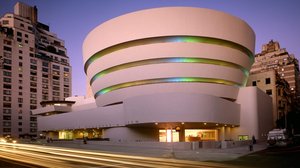
His canvases are scattered across several major institutions, inviting a close look at how his use of color and form evolved. In Paris, the Centre Pompidou holds many of his paintings, offering a chance to see his shift toward non-objective compositions. The Solomon R. Guggenheim Museum in New York City also maintains a collection of his works, including pieces from his more geometric phases.

In Munich, the Lenbachhaus contains a significant selection of his paintings, reflecting his time with the Blue Rider group. For those looking to see his large-scale, complex arrangements, the Tretyakov Gallery in Moscow houses his monumental "Composition VII." These locations provide different perspectives on his development, from his early expressive landscapes to his later, more structured abstractions.